Why PDW Plants Fail Between Scheduled Shutdowns
Reactive dyes with vinyl sulfone or chlorotriazine reactive groups, and most disperse dyes, carry aromatic azo or anthraquinone chromophores that survive aerobic treatment intact; when biology slips, those chromophores reach the AOP and RO stages unbroken and shorten the interval between cleans. Azo dyes account for roughly 70% of overall dye consumption globally, so most PDW plants run an azo-laden feed every shift (ScienceDirect, 2022). Dyeing and finishing generates up to 20% of all industrial wastewater discharged globally, and approximately 0.3 million tons of toxic dye and ink effluent enter waterways untreated each year — much of it from plants whose biology collapsed between shutdowns (ScienceDirect, 2022).
Influent that drifts out of the 30–60 °C, 500–5,000 Pt-Co color, 800–3,000 mg/L COD, or 2,000–15,000 mg/L TDS envelope shortens the time between cleans and pushes MBR TMP up within weeks. Before any redesign, the daily log should be mapped against these envelopes — a maintenance gap almost always shows up before a design gap does. The 2026 process context, including how the stages fit together, is laid out in the 2026 printing and dyeing wastewater process guide.
Stage 1 — Equalization, Screening, and DAF Maintenance
Equalization must hold an 8–24 h HRT so biology downstream never sees BOD swings of 3–5× within a shift; without that buffer, nitrification collapses and the AOP ends up polishing what the bioreactor was supposed to eat. Cool influent to below 38 °C before the MBR to protect biomass and membrane integrity, and inspect the heat-exchanger tube bundle monthly — a fiber-lint-fouled exchanger is the most overlooked cause of temperature drift into the membrane tank.
DAF micro-bubbles at 20–50 µm attach to negatively charged dye particles at hydraulic loading of 4–6 m³/m²·h, and a clogged saturator or worn nozzle will raise MBR TSS load within days. Coagulant setpoints are stream-specific: ferric chloride at 50–200 mg/L plus anionic PAM at 1–5 mg/L on wash water typically removes 70–90% of color and 80–95% of TSS, but the same dose on dye-bath concentrate is wasteful and inflates sludge yield. Daily: skim the DAF float, log equalization pH/temperature, and verify compressor output. Weekly: verify PAM make-down concentration and FeCl₃ residual on the centrate. Monthly: inspect saturator pump packing, recycle ring, and nozzles. These are the daily and weekly tasks the generic process pages leave out, and the full sequence sits in the pressure flotation maintenance protocol. For capacity headroom without new tanks, work through the 2026 DAF retrofit guide and pair the front end with a DAF system for color and suspended solids removal and an automatic chemical dosing skid to keep FeCl₃ and PAM on setpoint.
Stage 2 — MBR (Membrane Bioreactor) Maintenance: The Highest-ROI Task
Hold MLSS at 8,000–12,000 mg/L and SRT at 30–60 days; below the band, biology cannot decolorize reactive dyes, and above it, mixed-liquor viscosity kills aeration scour and TMP climbs within a week. Submerged PVDF flat-sheet modules at 0.1–0.4 µm outperform hollow-fiber for textile effluent because the fiber and hair debris that trap hollow fibers can be brushed off a flat sheet in place, and the flat-sheet geometry is easier to clean in place than hollow-fiber.
Effluent targets are COD ≤80 mg/L, color ≤50 Pt-Co, and TSS ≤5 mg/L — when color drifts above 50 Pt-Co but MLSS and DO look fine, the cause is almost always reactive-dye vinyl sulfone carryover from a pH excursion in the equalization tank (pH should be 7–8.5 going into the bioreactor). Recovery clean protocol: 1,000–2,000 mg/L NaOCl soak for 2–4 h followed by 1–2% citric acid soak, then a permeate-side backwash; never let Fenton iron reach the MBR — iron hydroxide pins into the membrane cake and is effectively irreversible. Daily: log TMP per train, scour-air flow, MLSS, and DO. Weekly: cross-check permeate color against 50 Pt-Co. Monthly: in-place recovery clean on the highest-TMP train. Quarterly: pull a panel at the cassette end for visual inspection. Specify an integrated MBR membrane bioreactor system with PVDF flat-sheet MBR modules, and align daily tasks to the broader MBR plant O&M guide for 2026.
Stage 3 — AOP Maintenance: Fenton, Ozone, and Catalysts
Fenton at Fe²⁺ 50–100 mg/L with H₂O₂/COD mass ratio 1–2 at pH 3–4 typically removes an additional 50–70% of COD and more than 80% of color from MBR effluent, but dissolved iron that escapes the post-Fenton clarifier fouls RO membranes irreversibly — this is the single most common cause of premature RO replacement in textile plants. A Fenton-stage pH probe drift of 0.5 units can halve the OH· yield and double sludge volume; calibrate the pH probe weekly and verify Fenton effluent pH is ≥7 before it reaches the next stage.
Catalytic ozone avoids the iron problem: ozone with MnOx loaded on granular activated carbon achieved 58.26% COD removal on bio-treated PDW in a 2024 reuse study, a realistic sizing number for 2026 builds. The catalyst loses activity over months, so log off-gas ozone monthly with a hand-held detector at the destructor outlet and replace the catalyst when breakthrough exceeds 1–2 ppm. Photocatalytic Cu/N-TiO₂ on foam ceramic remains pilot-scale; do not design the maintenance plan around it in 2026. For new builds, choose ozone over Fenton whenever the RO feed must stay iron-free, and pair the polishing stage with an ozone generator for AOP polishing sized off the 58.26% benchmark.
Stage 4 — RO, UF Pretreatment, and Brine System Maintenance
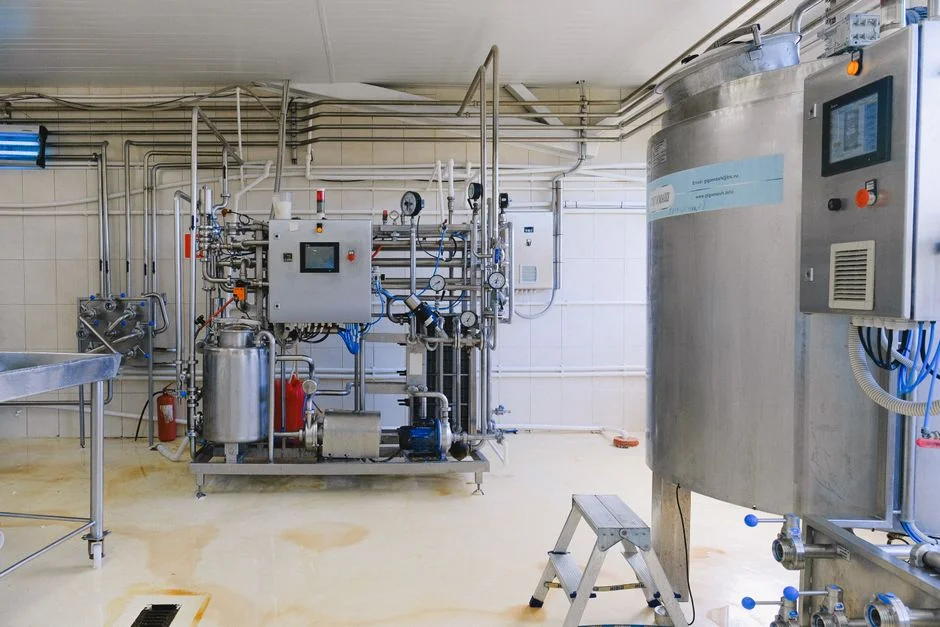
UF at 0.01–0.1 µm upstream of RO is mandatory: it captures AOP catalyst fines, residual colloids, and any biomass that escaped the MBR, and the multi-media filter upstream of UF must drop SDI₁₅ below 3 — that single number decides whether the RO lasts one year or four. The RO operating window is 70–80% permeate recovery with greater than 99% NaCl rejection; for dye-rinse reuse target permeate TDS ≤500 mg/L, and for shade-sensitive finishing target ≤150 mg/L.
RO concentrate at 70–80% recovery lands at 5,000–40,000 mg/L TDS — seal any leak in the concentrate line immediately, since it is the highest-TDS fluid in the plant and corrodes mild-steel fittings within weeks. CIP trigger: permeate flow drop greater than 10% at constant pressure, or differential pressure rise greater than 15%; use non-ionic surfactant plus high-pH detergent first, then acid CIP only if scaling is confirmed by autopsy. In water-scarce regions, route concentrate to a brine concentrator and forced-circulation crystallizer for ZLD — sea disposal is no longer ZDHC-compliant and most 2026 EPR rules forbid it. Pair the RO train with a multi-media filter for RO pretreatment and keep RO membrane elements and spares on the shelf, sized off the RO system for textile wastewater reuse configuration.
The 2026 PDW Plant Maintenance Schedule at a Glance
The matrix below maps every task to frequency and to the alarm limit that should fire it. Pin it in the control room and use the daily column during handover.
| Frequency | Equalization / DAF | MBR | AOP | RO / UF |
|---|---|---|---|---|
| Daily | EQ pH 7–8.5, T <38 °C; DAF float skim; compressor output check | TMP, MLSS 8,000–12,000 mg/L, scour-air flow, DO log per train | Fenton pH 3–4 then ≥7 at outlet; ozone off-gas detector | Permeate conductivity, SDI₁₅ <3, ΔP baseline |
| Weekly | FeCl₃ 50–200 mg/L, PAM 1–5 mg/L dose audit; PAM make-down | Permeate color ≤50 Pt-Co cross-check; pH probe calibration | Fenton Fe²⁺ 50–100 mg/L and H₂O₂/COD 1–2 audit; catalyst off-gas log | CIP trigger check (ΔP +15% or flow −10%) |
| Monthly | Saturator pump packing, recycle ring, nozzle inspection | Recovery clean (NaOCl 1,000–2,000 mg/L + 1–2% citric acid) on highest-TMP train | Ozone catalyst inspection; chemical tank levels; dosing skid calibration | RO CIP on at least one train if recovery is at 70–80% with rising ΔP |
| Quarterly | DAF saturator service; compliance check vs GB 4287-2012 (COD ≤80, BOD ≤20, color ≤50 Pt-Co, SS ≤50 mg/L) or local equivalent | Cassette-end panel pull and visual inspection; spare-membrane inventory review | Catalyst replacement decision when breakthrough >1–2 ppm | RO membrane autopsy on a leading element; UF integrity test |
| Annual | EQ tank inspection; heat-exchanger bundle pull | Full cassette pull; train rotation | Catalyst replacement; full instrumentation calibration | RO train rotation; top-to-bottom mass balance to find hidden bypasses |
Symptom-to-Cause Diagnostic for the Most Common Failures
The four failures below consume the most overtime in PDW plants; this matrix maps symptom to root cause and to the first corrective action. Use it before opening a work order.
| Symptom | Likely Root Cause | First Corrective Action |
|---|---|---|
| MBR TMP rising fast with stable MLSS and DO | Reactive-dye vinyl sulfone carryover from EQ tank; DAF coagulant under-dose | Verify EQ pH 7–8.5; re-check FeCl₃ and PAM dose; trigger MBR recovery clean (NaOCl + citric acid) |
| RO permeate TDS climbing with stable feed pressure | Concentrate seal failure, or membrane scale on a leading element | Run non-ionic surfactant + high-pH CIP; autopsy a leading element before re-pressurizing |
| AOP off-gas ozone >2 ppm with no COD drop on MBR effluent | Catalyst exhaustion; high inlet humidity choking the contactor | Schedule catalyst replacement; check inlet air dryer and contactor temperature |
| DAF float thin and watery, TSS climbing on MBR feed | Saturator pump recycle ratio off; nozzle wear; compressor issue | Check recycle rate, nozzle, and compressor — do not compensate by raising FeCl₃ dose |
| Sludge yield rising with no flow rise | FeCl₃ overdosing, or runaway Fenton from H₂O₂/Fe²⁺ ratio drift | Audit Fenton H₂O₂/Fe²⁺ ratio and pH probe; recalibrate dosing skid |
Consumables and Spare Parts to Stock in 2026
Always keep on the shelf: one spare MBR flat-sheet cassette per train, one RO membrane element per stage, NaOCl and citric acid for two MBR recovery cleans, surfactant and alkaline detergent for two RO CIPs, and one drum of each dosing chemical. Hold a 90-day buffer of replacement diffusers and DAF nozzles — they are the cheapest consumables in the plant and the most common cause of hidden performance drift. Rinse-water reuse loops (permeate blended with fresh water at a 50/50 mix) are common in Chinese and Vietnamese mills; design the maintenance plan to keep permeate TDS ≤500 mg/L so the blend stays safe for the dye bath. Sludge handling ties back to a plate-frame filter press and a high-efficiency sedimentation tank ahead of the press.
Frequently Asked Questions
How often should we CIP the MBR on a printing and dyeing wastewater plant in 2026?
Trigger an in-place recovery clean on the highest-TMP train monthly using 1,000–2,000 mg/L NaOCl soak for 2–4 h followed by 1–2% citric acid soak and a permeate-side backwash. If TMP rises faster than the monthly cadence, the cause is usually upstream — verify equalization pH 7–8.5 and the FeCl₃ 50–200 mg/L plus PAM 1–5 mg/L dose band before shortening the clean interval.
What consumables and spares should a 500–2,000 m³/day PDW plant keep on the shelf?
Stock one spare MBR flat-sheet cassette per train, one RO membrane element per stage, NaOCl and citric acid for two MBR recovery cleans, surfactant and alkaline detergent for two RO CIPs, one drum of each dosing chemical, and a 90-day buffer of replacement diffusers and DAF nozzles. Confirm lead times with each supplier in writing so a 02:00 failure does not stop the plant — request the supplier's documented lead time and a quoted emergency-response window before placing the spare-membrane order.
How do we pick a supplier for RO membrane elements and MBR cassettes for a textile plant?
Match the element to the documented operating window: PVDF flat-sheet MBR modules rated for the 0.1–0.4 µm range and an RO element rated for 70–80% recovery with greater than 99% NaCl rejection on feeds up to 15,000 mg/L TDS. Request a conformance certificate against GB 4287-2012 (COD ≤80 mg/L, BOD ≤20 mg/L, color ≤50 Pt-Co, SS ≤50 mg/L) or the local discharge standard, a written chemical-resistance list covering the dyes actually in your influent, and a confirmed lead time plus a 24/7 technical contact — those three documents separate a textile-experienced supplier from a generalist.
Can RO permeate from textile wastewater be reused in the dye house?
Yes, on most reactive-dye rinse lines if RO permeate TDS is held ≤500 mg/L and color is below detection; for shade-sensitive or light-color finishing, target ≤150 mg/L TDS and consider blending permeate with fresh water, with many Chinese and Vietnamese mills running a 50/50 blend in the final rinse. To keep that blend safe, design the maintenance plan around the SDI₁₅ <3 limit and trigger a CIP on the first sign of a 10% permeate flow drop or a 15% ΔP rise, then autopsy a leading element before scale damage propagates down the vessel.