What a DAF Retrofit Actually Changes (and What It Doesn't)
A DAF retrofit reuses the existing flotation tank and replaces the saturator, recycle loop, and bubble-generation hardware — typically LSGM mixing heads, eductors, or nozzle banks — to raise hydraulic capacity by 2-3x and improve TSS/FOG removal without civil works. Most 2026 retrofits pay back in 6-18 months versus installing a new tank because only the internal mixing and whitewater systems are replaced.
The retrofit envelope is narrow and well-defined. The tank shell, inlet and outlet piping, scum beach, sludge scraper, and skimmer assembly stay in place. What gets pulled out is the whitewater-generation train: the pressure vessel (saturator), the recycle pump, the air-injection and pressure-regulation plumbing, and the bubble-release internals at the bottom of the tank. The replacement hardware — covered in detail in the 2026 DAF engineering specs and decision framework — is what determines whether the project delivers the 2-3x capacity uplift the vendor promises or just replaces aging components at parity.
Distinguish retrofit from upgrade. A retrofit replaces internals to raise hydraulic capacity or restore removal efficiency inside the existing footprint. An upgrade adds downstream polish — a sand filter, an MBR stage, a plate pack, or a sludge densifier — to tighten effluent quality or thicken float sludge. The two overlap when a plate pack is installed inside the same DAF tank as part of the retrofit scope, and they stack cleanly when polish is added after the retrofit. Most plants evaluating scope in 2026 are doing both at once, because the HydropureWater DAF system (4-300 m³/h, 13 standard models) is commonly specified as the reference envelope when sizing the replacement internals.
Five Signs Your DAF Is a Retrofit Candidate, Not a Replacement
These five measurable triggers tell a plant engineer whether the tank is salvageable with an internal-component swap or whether the vessel itself is the problem. The diagnosis is hydraulic and chemical, not visual.
- HRT collapse during morning surge. Hydraulic retention time is tank volume divided by peak forward flow. If the morning CIP push drops HRT below 15 minutes at peak while average flow keeps HRT above 20 minutes, the bubble contact zone is too short to float the floc — retrofit the bubble-release internals first, not the tank.
- Effluent TSS rising above 80 mg/L while influent is steady. Typical industrial pretreatment ceilings sit at 30-60 mg/L daily maximum, so 80 mg/L is already in surcharge territory. Rising effluent TSS with stable influent points at whitewater quality collapse — saturator backpressure has dropped or the bubble cloud is too coarse.
- Polymer dose creeping past 5-8 mg/L year over year. Healthy industrial DAF operation runs polymer at the lower end of that range for clarified water and higher only for high-FOG or high-solids streams. A failing bubble generator forces the operator to compensate with more flocculant; a 30-50% polymer reduction is a typical retrofit dividend.
- Visible pin-floc carryover. A white cloud in the effluent weir or a milky film on the surface of the polishing tank signals bubble diameter has drifted above the 10-100 µm micro-bubble target. Above 120 µm, attachment efficiency to floc particles drops sharply and the float blanket fragments.
- A/S ratio has slipped below 0.02. The design band is 0.02-0.06, with 0.04-0.05 typical for high-FOG dairy and meat-processing streams. If the saturator pressure-gauge trend shows a slow decline from the original 5-6 bar setpoint down to 3.5-4 bar, the air-to-solids ratio is following it down — confirming the saturator, not the tank, is the failure mode.
| Symptom | Measurable trigger | Healthy band | Likely root cause |
|---|---|---|---|
| HRT at peak flow | Volume / peak flow (min) | ≥ 20 min design, ≥ 15 min peak | Bubble contact zone too short |
| Effluent TSS | Lab daily composite (mg/L) | 30-60 mg/L (permit-dependent) | Whitewater quality collapse |
| Polymer dose | Daily average (mg/L) | 5-8 mg/L (industrial benchmark) | Bubble generator losing efficiency |
| Bubble diameter | Visual or particle-size probe | 10-100 µm | Nozzle wear / saturator pressure loss |
| A/S ratio | Back-calculated from saturator | 0.02-0.06 | Saturator backpressure drift |
The Four DAF Retrofit Options Compared
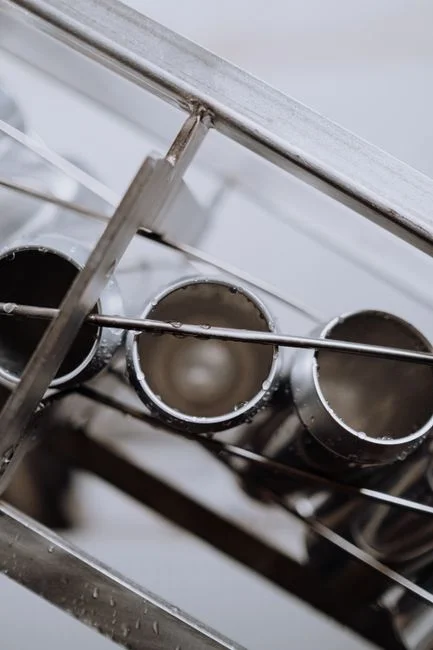
The single-vendor commercial literature (CWT S3) pushes one path: replace existing nozzles with patented LSGM (Liquid, Solid, Gas Mixing) heads and claim a 2-3x capacity uplift. That path is real and well-documented, but it is not the only path. A defensible engineering evaluation weighs all four options against the existing tank geometry, influent matrix, and outage window before a single supplier scope is written.
Option A — LSGM head bank retrofit. The proprietary mixing-head approach cited in CWT's commercial literature (S3) replaces nozzles with engineered mixing heads that shear air into the recycle stream at controlled bubble size. Capacity uplift 2-3x, capex mid-range, best fit for high-strength FOG and emulsion streams where fine-bubble attachment is the limiting step. Vendor lock-in is the trade-off — the heads are patented and replacement parts flow through one supplier.
Option B — Eductor / nozzle bank replacement. Swap standard whitewater nozzles for high-efficiency eductors delivering 30-80 µm bubbles. Capacity uplift typically 1.3-1.8x. Lowest capex of the four options, shortest outage, broadest supplier base. The right answer when the existing saturator and recycle pump are still healthy and the failure is at the bubble-release stage.
Option C — Saturator and recycle loop upgrade only. Keep the bubble-release internals; replace the aging pressure vessel, recycle pump, and air-injection system. Capacity uplift 1.1-1.4x on hydraulic duty but a large efficiency gain on compressed-air use — modern saturators reach 90%+ air dissolution efficiency at 4-6 bar versus 60-70% on a worn unit at 3.5 bar. The conservative choice when the existing tank is well within its hydraulic rating and the symptom is rising polymer demand rather than rising effluent TSS.
Option D — Inline flocculation tube plus plate-pack densifier. Adds coagulation residence time and a lamella-style sludge thickening zone inside the existing tank footprint. Capacity uplift 1.5-2.0x with a thicker, drier float sludge (typically 4-6% dry solids versus 2-3% from a conventional DAF). Best fit when the binding constraint is downstream sludge handling cost, not hydraulic throughput. The trade-off is a taller tank freeboard requirement and a more complex retrofit scope.
| Option | Capacity uplift | Relative capex | Downtime | Best-fit influent |
|---|---|---|---|---|
| A — LSGM head bank | 2.0-3.0x | Mid ($$$) | 2-5 days | High FOG, emulsions, refinery/desalter |
| B — Eductor / nozzle replacement | 1.3-1.8x | Low ($$) | 1-3 days | General industrial, food, pulp & paper |
| C — Saturator + recycle upgrade | 1.1-1.4x | Low-mid ($$) | 2-4 days | Tanks within hydraulic rating; rising polymer use |
| D — Inline floc tube + plate pack | 1.5-2.0x | High ($$$$) | 4-7 days | Sludge-handling-bound; high-solids streams |
Engineering Parameters That Drive Retrofit Success
These five parameters are the contract between the plant engineer and the retrofit vendor. Any proposal that does not commit to delivering values inside these bands on the same influent is selling hardware, not performance.
Hydraulic retention time (HRT). Target ≥ 20 minutes at design peak flow. Below 15 minutes, retrofit alone will not fix floc carryover — the bubble-floc contact window is too short regardless of bubble size. HRT = V_tank / Q_peak.
Recycle ratio. Typical 10-30% of forward flow. For high-FOG dairy, meat, and poultry streams, design to 20-30% to keep the air-to-solids ratio in band; for low-FOG industrial streams, 10-20% is sufficient and saves on recycle-pump energy.
Air-to-solids (A/S) ratio. Design band 0.02-0.06, with 0.04-0.05 typical for high-FOG duty. Back-calculate from saturator pressure (typically 4-6 bar), recycle flow, and Henry's-law-derived dissolved-air concentration; cross-check against the mass of suspended solids entering the contact zone.
Microbubble size. Target 10-100 µm diameter. Above 120 µm, attachment efficiency to floc particles drops sharply and the effluent turns cloudy. Below 20 µm, the bubbles have insufficient buoyancy to lift dense floc — fine for clarification, poor for thickening.
Surface overflow rate (SOR). Design range 5-25 m/h. Lower end (5-12 m/h) for clarification duty; upper end (15-25 m/h) for thickening duty where float sludge dryness matters more than polish clarity.
| Parameter | Design band | 2026 retrofit target | If outside band |
|---|---|---|---|
| HRT (at peak flow) | ≥ 20 min | ≥ 20 min design, ≥ 15 min peak | Retrofit cannot fix volume shortfall |
| Recycle ratio | 10-30% | 20-30% for high-FOG | A/S ratio drops; polymer demand rises |
| A/S ratio | 0.02-0.06 | 0.04-0.05 for FOG duty | Float blanket fragments; TSS rises |
| Bubble diameter | 10-100 µm | 30-80 µm post-retrofit | > 120 µm = pin-floc carryover |
| Surface overflow rate | 5-25 m/h | 5-12 clarification / 15-25 thickening | Mis-specified SOR defeats the retrofit |
Worked Example: 80 m³/h DAF Upgraded to 200 m³/h in the Same Tank
The 2-3x capacity claim is reproducible when the hydraulics support it. The worked example below is the calculation a plant engineer should run on their own tank before approving any retrofit scope.
Start state. Forward flow 80 m³/h. Recycle 30% (24 m³/h). Tank volume sized for 16 minutes HRT at peak (≈ 21.3 m³ effective). Baseline 92% TSS removal on a 1,200 mg/L feed. Saturator at 4 bar, A/S ratio ≈ 0.025, polymer dose 7 mg/L.
Retrofit step. LSGM head bank replaces existing nozzles. Recycle pump upsized to maintain 20-30% recycle at the higher forward flow. Saturator backpressure raised to 5.5 bar to increase dissolved-air mass per unit recycle, restoring A/S ratio at the new flow without increasing polymer dose.
End state. Same tank, 200 m³/h forward flow. Recycle drops to 18% (36 m³/h) because A/S ratio is now met with fewer dissolved-air-deficient gallons per minute. HRT at peak stays at 15 minutes (50 m³ effective volume needed at 200 m³/h × 0.25 h, satisfied by the existing tank). The 2-3x capacity multiplier cited in CWT's commercial literature (S3) anchors the upper end of this calculation. The full cost basis for sizing the upgrade against a replacement skid is in the 2026 industrial DAF cost and ROI guide.
Retrofit vs. New DAF Skid: Capex, Downtime, and Payback
The financial case for retrofit rests on three numbers: installed capex, outage duration, and the time it takes the operating savings to cover the spend. For a typical industrial facility running above 70% of design hydraulic load, retrofit wins on all three.
Retrofit capex (2026). Typically 30-50% of a full replacement DAF skid. The HydropureWater cost reference spans $3,600 for small packaged units up to $100,000+ for large 200-300 m³/h stainless systems. A retrofit to an existing 80 m³/h unit, with new LSGM heads or eductors, upsized recycle pump, and saturator rebuild, typically lands in the $25,000-60,000 all-in installed band.
New skid capex (2026). 2-3x the retrofit figure for the same 200 m³/h hydraulic duty once civils, pipework, and electrical are included. Greenfield installation also picks up permitting and commissioning labor that retrofit bypasses entirely.
Downtime. Retrofit 2-5 days of bypass or upstream equalization. Full replacement 2-4 weeks including commissioning and performance testing. For a plant with no redundant pretreatment train, that difference is a production-loss number, not an inconvenience.
Payback. 6-18 months for facilities running above 70% of design hydraulic load, via reduced polymer use (typically 30-50% lower dose post-retrofit), lower effluent surcharge (TSS and FOG penalties drop sharply once removal is restored), and avoided capacity-related production slowdowns. The local regulatory context for surcharge limits is covered in the regional DAF industrial wastewater solutions guide for one common jurisdiction; comparable structures apply across U.S. and EU pretreatment frameworks.
| Metric (2026, 200 m³/h duty) | DAF retrofit | New DAF skid |
|---|---|---|
| Installed capex | $25,000-60,000 | $80,000-180,000+ (civils + electrical) |
| Outage duration | 2-5 days | 2-4 weeks |
| Payback | 6-18 months | 24-48 months |
| Polymer reduction | 30-50% | 30-50% |
| Civil works required | None | Yes — foundations, piping, electrical |
A Six-Step DAF Retrofit Execution Plan
A retrofit is short-duration but long-lead. The plan below sequences the activities so the outage window is the only downtime, not the procurement window.
- Baseline audit (weeks -12 to -8). Pull the last 90 days of flow, TSS, FOG, and polymer dose data. Measure existing HRT at peak and average flow. Back-calculate the current A/S ratio from saturator pressure and recycle flow. This is the dataset every vendor proposal will be measured against.
- Vendor shortlist (weeks -10 to -6). Request written proposals for at least two of the four retrofit options to avoid being steered to a single proprietary path. Insist each proposal commits to specific post-retrofit numbers for TSS, FOG, polymer dose, and hydraulic capacity on your influent.
- Pilot test (weeks -6 to -2, if flow exceeds 100 m³/h). Run a slip-stream pilot on a 5-10% side stream for 2-4 weeks. Confirm the 1.3-3x capacity claim under actual influent variability — including the morning CIP surge, not just average daytime flow.
- Outage planning and long-lead procurement (weeks -8 to -1). Order long-lead items (saturator vessel, LSGM heads or eductors, recycle pump) 8-12 weeks ahead. Schedule a 2-5 day bypass or upstream equalization window tied to a planned production slowdown, not a random weekday.
- Installation and commissioning (days 1-5). Verify bubble size distribution, saturator pressure stability, recycle ratio, and skimmer speed before restarting feed flow. Do not accept hand-off on nameplate-only commissioning — insist on a performance run with the actual plant influent.
- Post-retrofit verification (weeks 1-8). Sample influent and effluent TSS, FOG, and polymer dose weekly for 8 weeks. Document the new performance baseline. This dataset is the proof of payback for the capex meeting and the reference for the next maintenance cycle.
The same six-step logic applies to specialized duty cycles such as desalter brine dilution, covered in the DAF configuration for desalter brine guide.
When a Retrofit Is the Wrong Answer
Retrofit has a finite envelope. Four conditions make replacement the correct call, and recognizing them early saves the cost of a retrofit that does not solve the problem.
Tank shell corrosion or seam leaks. Wall thickness below 4-6 mm after ultrasonic inspection, or active leakage at seams or flanges, makes the vessel itself the failure mode. Replacement is mandatory — no internal upgrade compensates for a tank that is losing integrity.
Fundamental HRT shortfall. If the existing HRT is below 10 minutes even at average flow, the tank was undersized from day one. Retrofit cannot create volume; it can only use the volume that exists more efficiently. Re-baseline the pretreatment train with a larger tank or a parallel unit.
Influent matrix has fundamentally changed. A new product line, a higher-FOG feedstock, a new cleaning chemistry, or a pH shift that the existing chemistry cannot buffer. Patching the bubble-release stage when the problem is upstream chemistry produces a brief improvement followed by a return to baseline failure. Re-baseline the whole pretreatment train.
End-of-life mechanicals. If the sludge scraper, skimmer, and scum beach are simultaneously at end-of-life, the mechanical refurbishment cost erases the retrofit savings. A full replacement skid, with new mechanicals warrantied together, becomes the better financial answer.
Frequently Asked Questions About DAF Retrofit and Upgrade
What is a DAF retrofit and how much capacity can it add?
A DAF retrofit replaces the saturator, recycle loop, and bubble-release internals while reusing the existing flotation tank. Vendor-published and field data both show a 2-3x hydraulic capacity uplift when the tank hydraulics support it, with no civil works required.
How long does a DAF retrofit take to pay back?
For facilities running above 70% of design hydraulic load, retrofit pays back in 6-18 months through 30-50% polymer reduction, lower effluent surcharge, and avoided production slowdowns. The full replacement skid payback runs 24-48 months on the same site conditions.
When should a DAF be replaced instead of retrofitted?
Replace the DAF when wall thickness is below 4-6 mm, HRT is under 10 minutes at average flow, the influent matrix has fundamentally changed, or the skimmer, scraper, and beach are all at end-of-life. Retrofit addresses the whitewater system, not vessel integrity or volume shortfall.
What air-to-solids ratio should a retrofitted DAF achieve?
Target an A/S ratio of 0.04-0.05 for high-FOG dairy, meat, and poultry streams, and 0.02-0.04 for general industrial clarification. Below 0.02, float-blanket fragmentation and rising effluent TSS are the predictable failure modes regardless of the bubble-release hardware installed.
Related Equipment
- PLC-controlled automatic chemical dosing system — specifications, capacity range, and technical data
Frequently Asked Questions
How much does a DAF retrofit cost in 2026?
In 2026, a standard DAF retrofit typically ranges from $45,000 to $120,000 depending on the scope of internal modifications. This investment generally represents 30% to 50% of the capital expenditure required for a complete system replacement of equivalent capacity.
Can a DAF system be upgraded to handle more flow without replacing the tank?
Yes, by upgrading the internal lamella plate pack density and optimizing the micro-bubble saturation system, capacity can be increased by 200% to 300%. These modifications enhance the effective settling area and air-to-solids ratio within the existing vessel footprint, allowing the system to process higher hydraulic loading rates without requiring new tank construction.
What is the difference between a DAF retrofit and a full DAF replacement?
A retrofit utilizes the existing steel or concrete tank structure while replacing core components such as the saturator, nozzles, skimmer mechanisms, and plate packs. A full replacement involves decommissioning the old unit, civil engineering work for new foundations, and the installation of an entirely new vessel, which significantly increases both mobilization costs and project timelines.
How long does a DAF retrofit take to install?
A typical retrofit project requires 5 to 10 days of on-site installation time, provided the internal components are pre-fabricated. This is a substantial reduction compared to a full system replacement, which often requires 8 to 14 weeks for demolition, civil works, and commissioning.
What is the payback period for a DAF retrofit compared to a new unit?
Retrofit projects typically achieve a return on investment within 12 to 18 months due to lower capital costs and improved operational efficiency. In contrast, a full system replacement often faces a payback period of 4 to 7 years, driven by higher initial equipment costs, site preparation expenses, and longer site downtime.