Why Printing and Dyeing Wastewater Demands a Dedicated Treatment Train
Dyeing and finishing generate up to 20% of all industrial wastewater discharged globally, and roughly 0.3 million tons of toxic dye effluent enter waterways untreated each year (per ScienceDirect S2214714422007176, 2022). A single-technology fix cannot handle that load because modern reactive and disperse dyes are engineered for colorfastness — they resist photolysis, resist chemical oxidation, and resist biological breakdown. The influent combines four punishing characteristics at once: deep visible color (500–5,000 Pt-Co), high COD (800–3,000 mg/L), high salinity from neutral salts used as dye-bath electrolytes (2,000–15,000 mg/L TDS), and temperatures of 30–60 °C that destabilize biological biomass. A 2026-compliant train addresses each of those pain points in sequence — equalization and dissolved air flotation (DAF) for colloids and bulk color, biological treatment for dissolved organics, advanced oxidation for the residual chromophores, and reverse osmosis for reuse. Skipping a stage typically means either an effluent that fails GB 4287-2012 or an RO membrane that fouls within weeks.
Influent Characteristics Engineers Must Define First
Before any equipment list, pull a 7-day composite sample and characterize the streams separately. Wash water from scouring and rinsing is coagulable with ferric chloride and represents 60–80% of total flow; concentrated dye-bath discharge is low-volume but carries most of the color and the salt load and usually needs an oxidation step upstream of biology. Reactive dyes with vinyl sulfone or chlorotriazine groups, and most disperse dyes, carry aromatic azo or anthraquinone chromophores that survive aerobic treatment. Equalization for 8–24 hours is non-negotiable — hydraulic and pH shocks will kill nitrification and overload DAF in minutes without it.
| Parameter | Typical PDW range | Design implication |
|---|---|---|
| pH | 8–11 | Neutralize to 7–8.5 before coagulation or biology |
| COD | 800–3,000 mg/L | Defines biological HRT and Fenton H₂O₂ dose |
| BOD | 200–600 mg/L | BOD/COD ≈ 0.2–0.3 indicates low biodegradability |
| TSS | 200–700 mg/L | Sets DAF underflow and sludge yield |
| Color | 500–5,000 Pt-Co | Drives coagulant dose and need for AOP polishing |
| TDS | 2,000–15,000 mg/L | Dictates RO recovery and brine strategy |
| Temperature | 30–60 °C | Cool to <38 °C before MBR to protect membranes |
Stage 1 — Equalization, Coagulation and DAF for Color and TSS
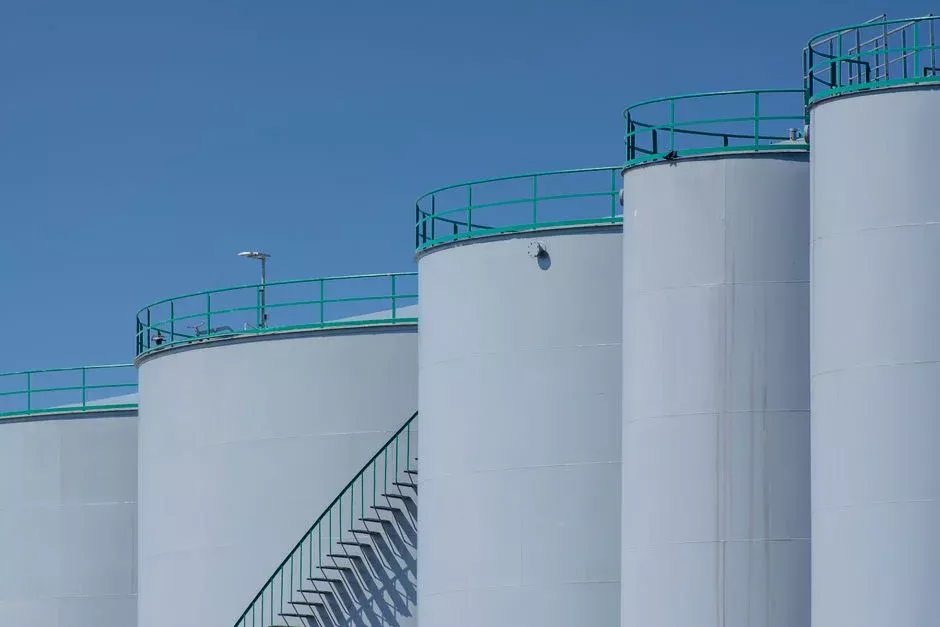
Equalization smooths pH to 7–8.5 and hydraulic surges over an 8–24 h HRT; without it, downstream biology sees BOD swings of 3–5× within a shift. Coagulation with ferric chloride at 50–200 mg/L plus anionic polyacrylamide at 1–5 mg/L typically removes 70–90% of color and 80–95% of TSS on wash water, according to the Effluent Treatment in the Printing and Dyeing Industry review. DAF outperforms sedimentation on the colloidal dye fraction because micro-bubbles (20–50 µm) attach to negatively charged dye particles and float them in a hydraulic loading of 4–6 m³/m²·h, producing a dry, easily handled float rather than a voluminous sludge. The commonly proposed alternative — granular activated carbon adsorption — is only effective on water-soluble dyes below 400 Da and becomes uneconomic at the flows a single dyeing line generates, so the 2026 default is a DAF system for color and suspended solids removal paired with an automatic chemical dosing for coagulation skid to keep FeCl₃ and PAM on setpoint. A high-efficiency sedimentation tank can be added upstream of the DAF when influent TSS exceeds 500 mg/L.
Stage 2 — Biological Treatment with MBR or A/O Process
Biological treatment breaks down the dissolved organics that coagulation leaves behind. A conventional anoxic-aerobic (A/O) activated-sludge train is the lower-cost option and typically achieves effluent COD of 120–150 mg/L with color still at 100–200 Pt-Co — adequate for discharge in many jurisdictions but not for a reuse loop. The 2026 default for printing and dyeing lines that target reuse is the membrane bioreactor (MBR): submerged PVDF flat-sheet membranes at 0.1–0.4 µm retain biomass and almost all suspended solids, delivering effluent COD ≤80 mg/L, color ≤50 Pt-Co, and TSS ≤5 mg/L. The Effluent Treatment review concludes that MBRs are the most suitable configuration for the organic and inorganic contaminants in general industrial wastewater, with consistent performance, low control complexity, and favorable throughput economics at scale. Biological systems alone cannot cleave azo bonds, so color polishing downstream remains mandatory.
| Design parameter | A/O activated sludge | Submerged MBR |
|---|---|---|
| Effluent COD | 120–150 mg/L | ≤80 mg/L |
| Effluent color | 100–200 Pt-Co | ≤50 Pt-Co |
| Effluent TSS | 20–40 mg/L | ≤5 mg/L |
| MLSS | 3,000–5,000 mg/L | 8,000–12,000 mg/L |
| HRT (aerobic) | 18–30 h | 12–24 h |
| SRT | 15–25 d | 30–60 d |
| F/M ratio | 0.1–0.3 kg COD/kg MLSS·d | 0.05–0.15 kg COD/kg MLSS·d |
| Footprint | Larger (clarifier needed) | 30–50% smaller |
For new textile builds, specify an MBR membrane bioreactor for textile wastewater with a flat-sheet PVDF MBR module; the flat-sheet geometry handles the fiber and hair debris that hollow-fiber modules trap and is easier to clean in place. The wider MBR market context is covered in the MBR market outlook 2026 for procurement planning.
Stage 3 — Advanced Oxidation to Break Residual Color
AOP targets the chromophores that biology cannot touch. Fenton oxidation (Fe²⁺ 50–100 mg/L, H₂O₂/COD mass ratio 1–2 at pH 3–4) typically removes an additional 50–70% of COD and >80% of color from MBR effluent, but it leaves dissolved iron that fouls RO membranes and must be precipitated out. Catalytic ozone avoids that problem: a 2024 Springer reuse study using ozone with MnOx loaded on granular activated carbon achieved 58.26% COD removal on bio-treated PDW — a realistic working number for ozone system sizing. The newest published route — Cu and N co-doped TiO₂ on foam-ceramic photocatalysts — is pilot-scale and not yet a commercial option, but it points to where 2027 designs are likely to converge. For 2026 builds, choose ozone over Fenton whenever the RO feed must stay iron-free, and walk through the AOP system engineering guide before locking in dose rates. A small polishing activated carbon stage is sometimes used as a guard filter downstream; mechanics are described in the activated carbon filter guide, but it is a polish step, not a primary color-removal unit.
Stage 4 — UF/RO for Reuse and Brine Management
UF at 0.01–0.1 µm is the standard pre-filter for RO, capturing any AOP catalyst fines, residual colloids, and biomass that escaped the MBR. RO then does the desalination work that makes reuse possible: a single-stage RO at 70–80% permeate recovery with >99% NaCl rejection takes the feed from 2,000–15,000 mg/L TDS down to <50–500 mg/L in the permeate. For a dyeing rinse line, target TDS ≤500 mg/L in the permeate; for sensitive finishing or shade-matching, target ≤150 mg/L. A industrial RO system for textile wastewater reuse preceded by a multi-media filter for RO pretreatment to drop SDI₁₅ below 3 is the standard 2026 configuration. Brine management is where reuse economics are won or lost: in water-scarce regions, route the RO concentrate (typically 5,000–40,000 mg/L TDS) to a brine concentrator and forced-circulation crystallizer for zero liquid discharge (ZLD); elsewhere a multi-effect evaporator at 3–5 effects is the lower-capex compromise.
| Process stage | Influent (mg/L or Pt-Co) | Effluent | Removal |
|---|---|---|---|
| Equalization + DAF/Coag | COD 1,500 / Color 2,500 Pt-Co / TSS 400 | COD 900 / Color 400 Pt-Co / TSS 40 | 40% / 84% / 90% |
| MBR (submerged PVDF) | COD 900 / Color 400 Pt-Co / TSS 40 | COD 75 / Color 40 Pt-Co / TSS 3 | 92% / 90% / 92% |
| Ozone/MnOx-GAC AOP | COD 75 / Color 40 Pt-Co | COD 30 / Color 8 Pt-Co | 60% / 80% |
| UF → RO | TDS 8,000 / Conductivity 12 mS/cm | TDS 80 / Conductivity 0.12 mS/cm | 99% salt rejection |
Compliance and 2026 Discharge Standards to Design Against
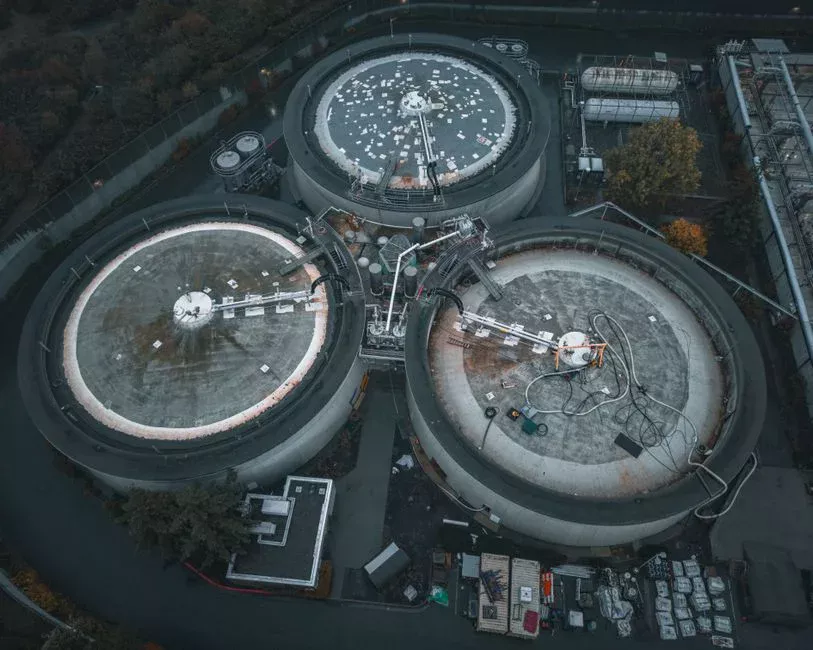
Design the train to the tightest applicable envelope so the same plant can discharge or sell reuse water without retrofitting. China GB 4287-2012 sets COD ≤80 mg/L, BOD ≤20 mg/L, color ≤50 Pt-Co, and SS ≤50 mg/L. The EU BAT Reference Document for textiles (2014, updated 2023) targets COD 130 mg/L and color visible only after a 1:20 dilution. India's CPCB textile effluent norms (2020 revision) cap TDS at 2,100 mg/L for discharge to inland surface water. Apparel supply chains increasingly demand alignment with the ZDHC Wastewater Guidelines, and global brands now audit reuse water against the ZDHC list. The 2026 design direction in water-stressed basins — Vietnam, India, Pakistan, southern China, Türkiye — has shifted from "treat to discharge" to "treat to reuse", with brine pushed to ZLD rather than to a river or the sea.
Frequently Asked Questions
What is the most effective single technology for color removal in textile wastewater? No single technology handles the full color load. Coagulation with ferric chloride plus DAF removes 70–90% of color on the wash-water fraction, but reactive and disperse dye chromophores require downstream advanced oxidation — typically ozone with a MnOx/GAC catalyst, which delivered 58.26% COD removal on bio-treated PDW in a 2024 reuse study.
Why is MBR preferred over conventional activated sludge for textile effluent in 2026? MBR delivers effluent COD ≤80 mg/L, color ≤50 Pt-Co, and TSS ≤5 mg/L at MLSS 8,000–12,000 mg/L and SRT 30–60 days, versus COD 120–150 mg/L for conventional A/O. The higher biomass retention decolorizes more of the dissolved organics and produces a stable feed for downstream RO without a clarifier.
Can RO permeate from textile wastewater be reused directly in the dye house? Yes, on most reactive-dye rinse lines if RO permeate TDS is held ≤500 mg/L and color below detection. For shade-sensitive or light-color finishing, target ≤150 mg/L TDS and consider blending with fresh water; many Chinese and Vietnamese mills run a 50/50 permeate/fresh blend in the final rinse.
How should brine from the RO stage be managed? At 70–80% RO recovery, concentrate TDS lands in the 5,000–40,000 mg/L range. In water-scarce regions, send it to a brine concentrator and crystallizer for ZLD. Elsewhere, a 3–5 effect multi-effect evaporator handles volume reduction at lower capex. Sea disposal is no longer compliant with ZDHC or most 2026 EPR rules.
What is the typical CAPEX range for a 2026 PDW treatment train sized at 2,000 m³/day? A full four-stage equalization–DAF–MBR–AOP–RO train for a 2,000 m³/day printing and dyeing line lands in the USD 2.5–4.5 million CAPEX range, with RO and MBR membranes driving roughly 35–45% of the total. For a side-by-side CAPEX/OPEX comparison framework across wastewater treatment plant builds, see the buyer's guide format for CAPEX comparison.