Why a Lisbon data center has a water problem before it has a power problem
A 100 MW hyperscale facility can draw up to 2 million liters of water per day — roughly the daily consumption of a small town (IDE, 2026). Applied to a Lisbon-class 10 MW site, that benchmark yields roughly 200,000 L/day of evaporative make-up; a 20 MW build approaches 400,000 L/day. At 4 cycles of concentration (CoC), 25% of that make-up exits as cooling-tower blowdown (CTBD), so a 10 MW site sends ~50,000 L/day and a 20 MW site ~100,000 L/day to drain (Genesis Water Technologies, 2026). Lisbon's ambient wet-bulb still requires evaporative cooling for high-density AI halls, so the way to meet efficiency targets is to reduce intake and reuse blowdown, not to abandon water-based cooling. The Climate Neutral Data Centre Pact (CNDCP) WUE limit of 0.4 L/kWh is the binding design ceiling for new cool-climate data centres using potable water after 1 January 2025 (CNDCP, 2025 Water Usage Proposal – Summary). Peak blowdown flow of 0.03–0.17 L/s per MW (Müller et al., 2024) means a 20 MW Lisbon site can push 0.6–3.4 L/s into the municipal sewer at peak — manageable in aggregate, but a hot-spot on a local collector during a July heatwave when the Tagus basin is already under allocation pressure from municipal supply, Alentejo irrigation transfers, and the Carregado logistics-industrial cluster. The chemistry question is therefore secondary to the regulatory and resource question: any new build in the Tagus basin must demonstrate that its design withdraws no more than the CNDCP allows and that its discharge receives a Título de Utilização de Recursos Hídricos from ARH Tejo before a single cubic meter is moved. For comparable coastal-temperate design choices at higher latitudes, the Seattle data center blowdown treatment guide shows how similar WUE constraints are met with milder ambient wet-bulb and softer make-up water.
The two wastewater trains a Lisbon data center must keep separate
Co-mingling sanitary and industrial streams is the most common early design error in Iberian data center builds, and ARH Tejo reviewers will reject any Title application that does not show hydraulic separation upstream of biological treatment. A Lisbon facility must run two parallel trains with a defined segregation point at the building drain manifold, plus an optional third for humidifier/adiabatic bleed that is chemically closer to CTBD than to sewage.
| Parameter | Train 1 — Sanitary/domestic | Train 2 — Cooling tower blowdown | Train 3 — Adiabatic/humidifier bleed |
|---|---|---|---|
| Typical flow basis | ~150 L/person/day | 25% of make-up at 4 CoC; 20% at 6 CoC | Site-specific; routed to Train 2 equalization |
| BOD | 200–300 mg/L | Low (typically < 10 mg/L) | Low |
| TSS | 200–250 mg/L | 10–50 mg/L (corrosion products, biofilm) | < 10 mg/L |
| NH₃-N | 20–40 mg/L | Negligible (but phosphonates/biocides present) | Negligible |
| TDS | < 1,000 mg/L | 1,200–6,000 mg/L at 4–6 CoC | Softened make-up profile |
| Hardness (as CaCO₃) | Municipal supply | 800–1,500 mg/L | < 50 mg/L if softened |
| Silica | Municipal supply | 40–100 mg/L | Low |
| pH | 6.5–8.0 | 8.0–9.0 (Langelier-controlled) | 7.0–8.0 |
| Temperature above ambient | Negligible | 5–15 °C — relevant to Decreto-Lei n.º 236/98 thermal-plume limits | Negligible |
| Treatment target | Decreto-Lei n.º 152/97 / Beirolas WWTP pre-treatment contract | Título de Utilização de Recursos Hídricos discharge limits or reuse as make-up | Equalization in Train 2 |
Sanitary sewage is treated with a packaged A/O or MBR module such as the WSZ packaged A/O sewage treatment plant, buried below the equipment yard, disinfected with ClO₂ or ozone, and discharged to the municipal sewer at Beirolas under a pre-treatment contract (HydropureWater, 2026). An MBR alternative is also available for tighter effluent BOD/TSS targets. CTBD is a different animal: elevated TDS, hardness, silica, residual biocides, and phosphonates make it incompatible with biological treatment and incompatible with any sewer line that feeds a biological plant without a pre-treatment contract. For a deeper look at the side-by-side engineering case for packaged sanitary units, the package STP vs alternatives comparison lays out the selection logic.
Lisbon's regulatory stack: which Portuguese and EU instruments actually sign off on a data center discharge
Engineering choices must feed the right application forms: a CTBD sizing that satisfies ARH Tejo is not the same document that satisfies Beirolas WWTP. The instruments below are the binding ones for any 5–50 MW data center in the Lisbon metropolitan area or the Tagus valley, and they need to be sequenced in the design calendar so that Title applications are not filed with equipment selections that the regulator will not accept.
| Instrument | Scope | Authority | Sign-off trigger |
|---|---|---|---|
| Decreto-Lei n.º 226-A/2007 (Lei da Água transposition) | Industrial discharge to surface water or groundwater; water use | ARH Tejo (Lisboa-Norte / Lisboa-Sul) or ARH Ribatejo (Carregado / Benavente) | Título de Utilização de Recursos Hídricos required for any abstraction > ~5 m³/day or any non-domestic discharge |
| Decreto-Lei n.º 152/97 (transposes EU Urban Waste Water Directive 91/271/EEC) | Sanitary stream and biodegradable industrial waste routed to municipal sewer | APA + municipal WWTP (Beirolas for Lisbon Norte) | Pre-treatment contract with flow, BOD, TSS, total nitrogen ceilings |
| Decreto-Lei n.º 151-B/2013 (AIA regime) | Environmental Impact Assessment for projects above thresholds | APA | Baseline hydrology and hydrogeology chapter characterizing both intake and discharge chemistry |
| APA Plano de Gestão de Região Hidrográfica do Tejo e Ribeiras do Oeste (RH5) | Abstraction caps and allocation rules for the Tagus basin | APA | No significant impact demonstration in July–September peak |
| Decreto-Lei n.º 236/98 quality annex | Surface-water discharge quality, including thermal-plume limits | ARH Tejo | CTBD temperature above ambient; thermal load to Tagus estuary if direct discharge is contemplated |
| CNDCP WUE 0.4 L/kWh (effective 1 Jan 2025 for cool-climate potable-water sites) | Voluntary EU self-regulation; design ceiling for new builds | Self-declared; reinforced by EU Energy Efficiency Directive (recast 2023) and ESRS E3 water disclosure (CSRD) | Anchor hyperscale tenancy and any operator reporting under EU sustainability rules |
For a 10–20 MW Lisbon project, the practical sequence is: (1) confirm the AIA threshold under Decreto-Lei n.º 151-B/2013 with APA before detailed engineering; (2) submit the Título de Utilização de Recursos Hídricos application to ARH Tejo with the proposed abstraction, peak discharge, and concentrate handling plan; (3) negotiate the Beirolas pre-treatment contract for the sanitary train; and (4) close the design to the CNDCP WUE number, because that single metric is what hyperscale tenants will check on the data sheet.
Building the cooling tower blowdown train for a Lisbon site
The CTBD train is a chemistry problem as much as a hydraulics problem. Tagus surface water and Lisbon municipal supply are relatively soft compared with southern Iberian sources, so silica and alkalinity are the dominant scalants rather than calcium sulfate; antiscalant selection and the choice between 80% conventional recovery and 95% high-recovery design follow from that profile. Each stage below has a defined purpose and a defined removal target, and the train is sized to the peak flow of 0.03–0.17 L/s per MW (Müller et al., 2024).
| Stage | Unit operation | Design parameter | Removal / output target |
|---|---|---|---|
| 1 — Equalization | Glass-fused steel tank with aeration grid and pH trim | 8–24 h HRT; ~150–300 m³ for 10 MW | Dampen 0.03–0.17 L/s-per-MW peak; oxidize Fe²⁺; stabilize pH at 7.0–7.5 |
| 2 — Coagulation / clarification | DAF unit for CTBD coagulation or lamella clarifier | 10–20 m³/h for 10 MW | TSS 10–50 mg/L removed; partial phosphonate reduction |
| 3 — Side-stream filtration | Self-cleaning spiral or sand filter (10–25 μm) | 1–5% of circulation flow | SDI < 3 ahead of UF (Genesis Water Technologies, 2026) |
| 4 — Ultrafiltration guard | Hollow-fiber UF system as the RO guard (PVDF, 0.01–0.1 μm) | 5–10 m³/h for 10 MW; 10–30 psi | Recovery 90–95%; permeate SDI < 2–3; handles turbidity events to 300 ppm |
| 5 — Scale-controlled BWRO | Industrial RO train for CTBD reuse with antiscalant tuned to silica | 8–12 m³/h permeate; 150–400 psi | 75–80% conventional recovery (IDE, 2026); 95% with brine-desalter / fluidized-bed salt precipitation |
| 6 — Permeate polish / blend | Industrial softener or direct blend; remineralize to Langelier Saturation Index +0.2 to +0.5 | LSI target +0.2 to +0.5 | Permeate TDS 10–50 mg/L returned to make-up tank |
| 7 — Concentrate handling | Municipal sewer (with pre-treatment contract) or plate-and-frame filter press for CTBD concentrate solids; MVC only at scale | 5–8 m³/h filter press for 10 MW; 10,000–30,000 GPD MVC envelope | 75–80% sludge volume reduction; ZLD CAPEX USD 1–3 million rarely justified in Lisbon (Genesis Water Technologies, 2026) |
For a hyperscale owner-operator that reports under ESRS E3, the WUE arithmetic must be auditable: total annual site water divided by IT energy, in L/kWh, and the CTBD reuse term must be netted in. The brine-desalter / fluidized-bed salt-precipitation path is the route to 95% recovery (IDE, 2026) and a 47,500 L/day permeate return at 10 MW; conventional 80% recovery returns 40,000 L/day. The first number cuts freshwater withdrawal by 20%, the second by 24% — both inside the CNDCP 0.4 L/kWh envelope at Lisbon wet-bulb, but only the second is defensible against a CSRD auditor asking where the WUE number came from. For an arid-baseline comparator where discharge is more constrained than reuse, the Phoenix blowdown ZLD economics show what changes when municipal concentrate disposal is not available.
Worked sizing for a 10 MW Lisbon data center at 4 CoC
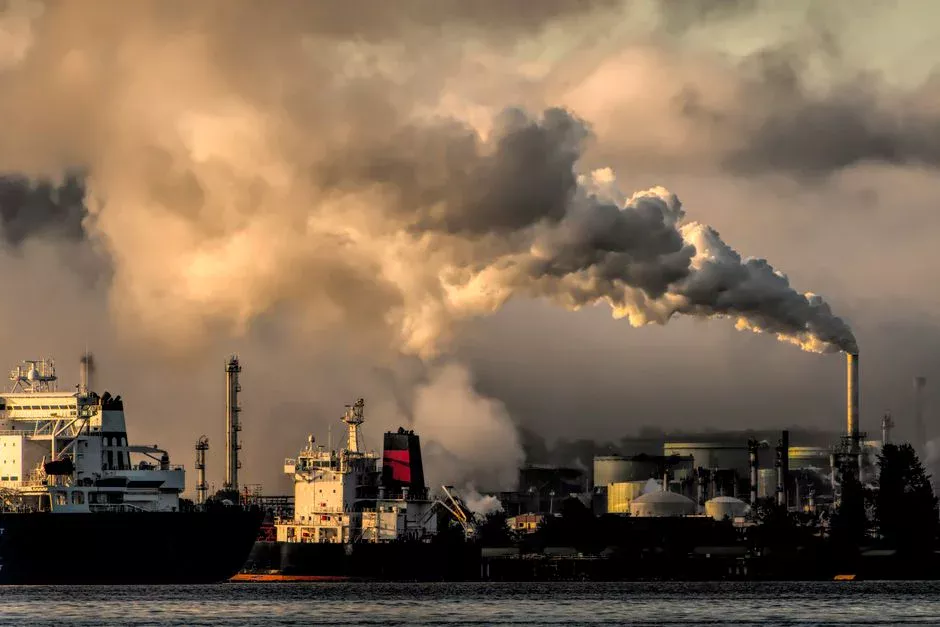
The numbers below convert the conceptual train into an engineering line item an MEP can defend in a pre-application meeting. Inputs are the IDE 2 million L/day per 100 MW benchmark, the Müller et al. peak flow band, and the 4 CoC blowdown ratio. Outputs are daily flows, peak discharge, and the RO permeate return at both 80% and 95% recovery.
| Term | Value at 10 MW | Basis |
|---|---|---|
| IT load | 10 MW | Design input |
| PUE | ~1.3 (Lisbon design target) | Hyperscale norm |
| Evaporative make-up (daily) | ~200,000 L/day | 2 million L/day per 100 MW (IDE, 2026) |
| Evaporative make-up (average hourly) | ~8.3 m³/h | Daily ÷ 24 |
| Blowdown at 4 CoC (daily) | ~50,000 L/day | 25% of make-up |
| Blowdown (average hourly) | ~2.1 m³/h | Daily ÷ 24 |
| Blowdown (peak) | ~3.4 L/s at 0.17 L/s-per-MW upper bound; ~0.6 L/s at 0.03 L/s-per-MW lower bound | Müller et al., 2024 |
| RO permeate at 80% recovery | 40,000 L/day returned to make-up | 20% net freshwater reduction |
| RO permeate at 95% recovery (brine desalter) | 47,500 L/day returned to make-up | IDE, 2026 |
| RO concentrate at 80% recovery | 10,000 L/day (20% of CTBD feed) | Routed to Beirolas pre-treatment contract or filter press |
| RO concentrate at 95% recovery | 2,500 L/day | Brine-desalter path |
| Equalization tank sizing | ~200 m³ | 8–24 h HRT at average CTBD flow |
| RO unit sizing | 8–12 m³/h permeate (single-pass BWRO) | Match to peak blowdown band |
The peak flow band is the dimension ARH Tejo will scrutinize: average 2.1 m³/h looks routine on a Title application, but 3.4 L/s peak for a 20 MW build (and up to 0.6–3.4 L/s for the 10 MW case) is the number that defines the equalization volume, the local sewer hydraulic check, and the on-site storage design. To compare against a colder-climate design at similar scale, the Seattle data center blowdown treatment guide shows the same 10 MW math with a different wet-bulb.
Equipment selection and indicative cost for a 10 MW Lisbon site
The table below is the procurement-ready list. CAPEX figures are 2026 USD installed, sourced from the commercial reference data and HydropureWater field experience; OPEX is per Genesis Water Technologies (2026) for membrane systems. Site-specific factors — Lisbon seismic class, salt-air corrosion for coastal sites, and ARH Tejo monitoring instrumentation — typically add 10–15% to the totals but do not change the unit selection.
| Equipment | Capacity / spec | Indicative CAPEX (USD, installed) | Notes |
|---|---|---|---|
| Equalization tank | 200 m³, glass-fused steel, aeration grid, pH trim | 40,000–60,000 | 8–24 h HRT at average CTBD flow |
| DAF | DAF line, 10–20 m³/h | 35,000–55,000 | Handles rotating biocide and phosphonate residuals better than lamella in Lisbon chemistry |
| Multi-media + self-cleaning spiral filter | Multi-media filter ahead of UF + 10–25 μm spiral | 30,000–50,000 | SDI < 3 to UF; automated backwash (Genesis Water Technologies, 2026) |
| UF system | PVDF hollow-fiber, 5–10 m³/h, with CIP skid | 25,000–45,000 | SDI < 2–3 permeate, 90–95% recovery |
| Industrial RO | 8–12 m³/h permeate, single-pass BWRO, 80% recovery, ERD | 80,000–150,000 | OPEX USD 1.50–3.00 per 1,000 gal treated (Genesis Water Technologies, 2026) |
| Plate-and-frame filter press | 5–8 m³/h, 75–80% sludge volume reduction | 30,000–60,000 | Concentrate solids handling; filtrate to sewer or off-site |
| WSZ packaged STP | 5–10 m³/h, ~200 staff plus visitors, buried, automated | 25,000–40,000 | Sanitary train; ClO₂ or ozone disinfection downstream |
| Sedimentation / ancillary tanks | Site-specific; high-efficiency sedimentation tank for backwash and clarifier upstream of UF | Variable | Pairs with valves and media for automated backwash cycles |
Across all unit operations, the CTBD reuse train at 80% recovery returns ~40,000 L/day and avoids an equivalent abstraction from the Tagus system or Lisbon municipal supply — a line item that the Title application will frame as a discharge reduction, not a cost saving. For sites that have already pushed beyond 4 CoC and need biological control on a closed loop, the anaerobic digester troubleshooting guide covers the side-stream biosolids handling that occasionally enters CTBD conversations at very large sites. For a colder-climate comparator at similar scale and a more humid baseline, the Warsaw data center blowdown treatment guide shows the same train with a different ambient wet-bulb and softer make-up water.
Frequently Asked Questions
Which Portuguese permit actually signs off on a Lisbon data center discharge to the municipal sewer?
The sanitary stream requires a pre-treatment contract with the municipal WWTP — Beirolas for Lisbon Norte — under Decreto-Lei n.º 152/97, which transposes EU Urban Waste Water Directive 91/271/EEC. The CTBD stream, if discharged to surface water or groundwater rather than reused, requires a Título de Utilização de Recursos Hídricos from ARH Tejo under Decreto-Lei n.º 226-A/2007, with thermal-plume limits checked against Decreto-Lei n.º 236/98 for any direct discharge to the Tagus estuary.
What is the binding water-efficiency ceiling for a new Lisbon data center using potable water?
The Climate Neutral Data Centre Pact sets a WUE limit of 0.4 L/kWh, effective 1 January 2025 for new cool-climate data centres using potable water (CNDCP, 2025 Water Usage Proposal – Summary). For a 10 MW IT load at PUE 1.3, the 0.4 L/kWh ceiling translates to roughly 41,000 L/day of total site water — well above the make-up need for an evaporative system but tight enough that 80–95% CTBD reuse is the design lever, not cycle-pushing alone.
How much blowdown does a 10 MW Lisbon site actually produce?
At the IDE benchmark of 2 million L/day per 100 MW, a 10 MW site draws ~200,000 L/day of evaporative make-up. At 4 cycles of concentration, blowdown equals 25% of make-up, so ~50,000 L/day (~2.1 m³/h average) is the routine number, peaking at 0.6–3.4 L/s across the Müller et al. (2024) 0.03–0.17 L/s-per-MW band during a July heatwave.
Can the CTBD concentrate be sent to the Lisbon municipal WWTP, or does it need zero liquid discharge?
Concentrate at 80% RO recovery is ~10,000 L/day for 10 MW, which the Beirolas WWTP can typically accept under a pre-treatment contract if BOD is low, heavy metals are absent, and the local collector has the hydraulic headroom. Zero liquid discharge via MVC is technically feasible at 95–98% recovery but CAPEX USD 1–3 million for 10,000–30,000 GPD (Genesis Water Technologies, 2026) and is rarely justified in Lisbon given the municipal option.
Does a Lisbon data center need an Environmental Impact Assessment?
Projects above the thresholds defined under Decreto-Lei n.º 151-B/2013 require an EIA, including a baseline hydrology and hydrogeology chapter that characterizes both intake and discharge chemistry. The APA decides the threshold based on receiving-water sensitivity and groundwater draw, and the AIA outcome is the gating document for the ARH Tejo Title application and the Beirolas pre-treatment contract.