Why Phoenix Changes the Cooling-Blowdown Math
ASU researchers measured downwind air 1.3–1.6°F warmer on average around Phoenix-area data centers — and up to 4°F warmer at peak — with the heat plume still detectable about a third of a mile from the fence line (ASU News, 2026-05-18). The two facilities they instrumented, a 36 MW single-building site in Mesa and a 169 MW co-location campus in Chandler, are the design point for "hyperscaler" campuses that drive Phoenix's treatment-train sizing. Air-cooled condensers discharge 14–25°F above ambient, which is one reason evaporative cooling remains the default even as liquid-to-chip and rear-door heat exchangers grow. U.S. data-center capacity is projected to more than double by 2030, and cooling alone accounts for 80–90% of the roughly 200 billion gallons/year that U.S. data centers draw (per Genesis Water Technologies, 2026).
The water math runs the other direction at the same time. The Central Arizona Project (CAP) allocation has been progressively cut under the 2023–2026 Colorado River shortage guidelines, and the Phoenix, Prescott, and Pinal Active Management Areas administered by the Arizona Department of Water Resources cap new groundwater withdrawals for industrial users. A hyperscaler planning a 50 MW IT load in Goodyear or Mesa is therefore designing against a tightening supply curve, not a flat one. That constraint pushes operators toward higher cycles of concentration, reclaimed-water makeup, or side-stream ZLD. The local interfaces a Phoenix project actually negotiates with are Phoenix Water Services, Scottsdale Water, EPCOR (for the 91st Avenue wastewater system and several north-valley jurisdictions), and the Salt River Project for power and, in some service areas, non-potable reuse water. For a contrasting southern U.S. process picture, see the Atlanta sister article on data-center blowdown treatment; the Austin sister article on data-center blowdown treatment covers a similarly hot but lower-TDS Colorado River profile; and the Boston sister article on data-center blowdown treatment is the cold-climate baseline where winter plume behavior and lower silica dominate.
What Comes Out of the Tower: Blowdown Chemistry in the Sonoran Desert
Phoenix's typical Sonoran source profile — groundwater blended with CAP canal water — runs TDS 600–900 mg/L, total hardness 200–350 mg/L as CaCO₃, sulfate 150–300 mg/L, chloride 50–150 mg/L, and silica 10–25 mg/L. Push that makeup through an evaporative cooling tower at 4–6 cycles of concentration and the blowdown lands at 1,500–3,500 mg/L TDS, which is at or above the 500–1,500 mg/L band most cooling-tower specs target for the loop (per Genesis Water Technologies, 2026). The math is simple — cycles = (makeup TDS) / (blowdown TDS) — but the consequences are not: every cycle multiplies calcium, sulfate, silica, and the corrosion by-products the loop picks up along the way. Suspended solids on the cooling-tower side must stay inside the 10–25 mg/L spec (per Genesis Water Technologies, 2026), and the Langelier Saturation Index (LSI) should run slightly negative on the loop to avoid CaCO₃ scale on fill and tube walls.
What actually shows up in a Phoenix blowdown sample sheet is more than just evaporated hardness. A February 2026 TNFD case study flagged concentrated salts, heavy metals from corrosion (Cu, Zn, Fe), residual biocides (oxidizing and non-oxidizing), phosphonates from the scale-inhibitor program, and pH drift as the constituents regulators are watching (per Water Utility Report, 2026-04-14). That is the working list of parameters the rest of this article is solving for.
| Parameter | Typical Phoenix source (groundwater/CAP blend) | Loop at 4–6 cycles | Cooling-tower spec / regulatory target |
|---|---|---|---|
| TDS | 600–900 mg/L | 1,500–3,500 mg/L | 500–1,500 mg/L on the loop (S3) |
| Total hardness as CaCO₃ | 200–350 mg/L | 800–2,100 mg/L | <120 mg/L after NF softening (S3) |
| Sulfate (SO₄²⁻) | 150–300 mg/L | 600–1,800 mg/L | POTW-specific; typically <500 mg/L |
| Chloride | 50–150 mg/L | 200–900 mg/L | <250 mg/L on loop to limit 304/316 corrosion |
| Silica (SiO₂) | 10–25 mg/L | 40–150 mg/L | <150 mg/L on loop; <120 mg/L pre-RO |
| Suspended solids | <5 mg/L | 10–60 mg/L | 10–25 mg/L on loop (S3) |
| LSI (calculated) | +0.1 to +0.4 | +0.5 to +1.5 | −0.3 to +0.3 on loop |
| Cu / Ni / Zn | <0.05 mg/L each | 0.1–2 mg/L each | <1 mg/L each at POTW |
| Free ClO₂ (loop) | — | 0.1–0.5 mg/L | 0.1–0.3 mg/L on loop |
The Arizona Regulatory Stack: APP, Pretreatment, and Reclaimed-Water Hooks
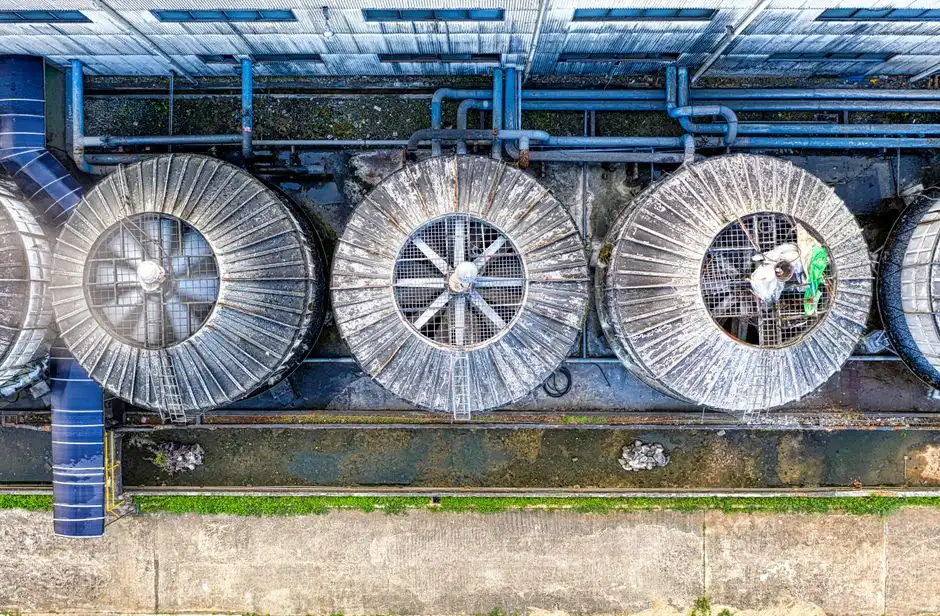
Any Phoenix data center sending blowdown to a sanitary sewer will sit under three overlapping control regimes. First, the Arizona Aquifer Protection Permit (APP) program under A.A.C. R18-9 and Arizona Revised Statutes Title 49 — ADEQ administers this for on-site discharges to soil, vadose, or surface water, and it sets site-specific discharge limits tied to the hydrogeologic setting. Second, the local POTW's pretreatment program — federal floor is 40 CFR 403, and the City of Phoenix, Scottsdale, and EPCOR all layer local limits on top. Copper and nickel at less than 1 mg/L, and zinc at a comparable level, are typically the tightest heavy-metal numbers a Phoenix POTW will enforce on a cooling-tower source, because Cu/Ni loadings track closely with corrosion-inhibitor failure and with galvanized or yellow-metal plumbing upstream of the loop.
For sites that pursue on-site non-potable reuse to offset potable demand, A.A.C. R18-11 sets the reclaimed-water classification framework (Class A through Class B+) and the treatment, monitoring, and signage requirements that come with it. The economic case is real: treated wastewater for cooling runs 30–50% below potable rates in most major U.S. data-center markets (per Genesis Water Technologies, 2026), and Amazon's AWS program has publicly targeted reclaimed-water use at 120+ U.S. sites to preserve roughly 530 million gallons of drinking water per year (per Water Utility Report, 2026-04-14). Phoenix-area reclaimed providers (the 91st Avenue and 23rd Avenue systems) have their own tap-in fees and delivery-pressure requirements, so the hydraulics of receiving reclaimed water at the cooling-tower make-up line need to be checked against the loop's net positive suction head before the permit is signed.
A Reference Treatment Train for Phoenix Cooling-Tower Blowdown
The flowsheet below is a defensible 2026 baseline for a 30–80 MW IT-load hyperscaler in the Phoenix metro. Recovery on the train is sized for 85–95% closed-loop reuse (per Genesis Water Technologies, 2026), with a side-stream ZLD polish if the POTW caps discharge or curtailments tighten.
- Equalization and side-stream lift. Balance the cooling-tower blowdown stream with any RO reject returning from the polishing loop. Include an antiscalant and pH dosing skid for sulfuric-acid trim (target 6.8–7.2 on RO feed), a threshold scale inhibitor dose of 2–5 mg/L, and a non-oxidizing biocide slug feed.
- Clarification. A lamella clarifier ahead of softening handles bulk TSS reduction at high overflow rates, with a DAF clarifier for cooling-tower blowdown pretreatment in series when the feed carries emulsified corrosion inhibitors or carryover from the cooling-tower basin. Polymer and coagulant doses typically run 5–15 mg/L cationic polyacrylamide plus 20–40 mg/L ferric chloride for high-sulfate Phoenix water. Clarifier sludge goes to a plate-and-frame filter press for clarifier sludge targeting 22–28% dry solids cake for off-site disposal.
- Softening. Pick cold-lime softening (Ca(OH)₂ + Na₂CO₃) when sulfate exceeds 250 mg/L — it precipitates both CaCO₃ and CaSO₄. Pick nanofiltration (NF) when silica is moderate (40–80 mg/L on the feed) and the operator wants to drop hardness from 200–350 mg/L down to the 120 mg/L band the cooling-tower spec confirms (per Genesis Water Technologies, 2026). NF also cuts sulfate by 90%+ and gives better downstream RO stability.
- Reverse osmosis. A brackish-water RO for blowdown reuse at 70–85% recovery with an energy-recovery device on the concentrate. Permeate returns to the cooling-tower makeup line; concentrate feeds side-stream ZLD or is sewered if the POTW capacity allows.
- Side-stream ZLD (optional). Mechanical vapor recompression (MVR) brine concentrator up to 200,000–250,000 mg/L TDS, then a forced-circulation crystallizer producing a dry NaCl/Na₂SO₄ mixed salt cake for off-site disposal. Sizing follows the same mass-balance logic as the E-coat UF reject case — see the ZLD sizing reference for the brine concentrator step.
- Disinfection. An on-site chlorine dioxide generator for Legionella control produces ClO₂ on demand at 0.1–0.3 mg/L free residual in the loop, with periodic slug dosing to 0.5 mg/L for biofilm knockdown. ClO₂ is preferred over chlorine here because it controls Legionella without forming the trihalomethanes that a Phoenix POTW's pretreatment program will flag. Tie the train to a remote SCADA monitoring for the blowdown train to keep daily logs audit-ready.
| Stage | Unit operation | Design parameter | Target / KPI |
|---|---|---|---|
| 1 | EQ basin + dosing skid | HRT 15–30 min; pH 6.8–7.2 | Stable feed to clarification |
| 2 | Lamella + DAF | Overflow 5–8 m/h; air:solids 0.02–0.05 | TSS <15 mg/L; turbidity <5 NTU |
| 3 | Lime softener or NF | Lime 200–400 mg/L; NF flux 15–25 LMH | Hardness <120 mg/L; SO₄ <50 mg/L post-NF |
| 4 | BWRO + ERD | Flux 14–18 LMH; recovery 70–85% | Permeate TDS <50 mg/L |
| 5 | MVR + crystallizer (optional) | Compressor ΔT 8–10°C; crystalizer at 110–120°C | Zero liquid discharge; dry cake 95%+ solids |
| 6 | ClO₂ generator + SCADA | 0.1–0.3 mg/L free; ORP 650–750 mV | Legionella <1 CFU/mL; HPC <10⁴ CFU/mL |
Reclaimed-Makeup vs. Side-Stream ZLD: Picking the Right Path
Both options are technically viable in Phoenix; the choice is mostly about who owns the supply risk and how the operator values uptime. Reclaimed-water makeup wins on OPEX (30–50% below potable per Genesis Water Technologies, 2026) and on the 530M+ gal/yr that AWS has publicly committed to preserving (per Water Utility Report, 2026-04-14), but it ties the site to a third-party reclaimed provider and raises pretreatment duty because the feed chemistry varies seasonally. Side-stream ZLD on blowdown eliminates blowdown discharge fees and protects uptime when the POTW caps discharge or curtailments tighten, at a meaningful CAPEX premium and 15–25 kWh/m³ of electrical load that has to be on the campus substation.
The hybrid that the 2026 Phoenix hyperscaler market is converging on is roughly 70% reclaimed makeup for the cooling demand, with on-site side-stream ZLD polishing the blowdown for the balance. For sites above ~50 MW IT load, this configuration is the lowest-risk hedge because the reclaimed contract can be re-papered if the city tightens supply, and the ZLD unit can absorb the swing without the operator buying emergency potable water. The decision should be framed in $/m³ treated plus risk-adjusted cost of downtime — not just CAPEX — and the $/m³ figure should include the avoided POTW discharge fees and the avoided water-rate escalation, both of which have been running well ahead of CPI in the Phoenix metro since 2022.
| Dimension | Reclaimed makeup (off-site) | Side-stream ZLD on blowdown | Hybrid (typical 2026 Phoenix) |
|---|---|---|---|
| OPEX ($/m³ treated) | $0.30–$0.60 | $1.20–$2.20 | $0.50–$0.90 |
| CAPEX ($/MGD capacity) | Low (tap-in + storage) | High (MVR + crystallizer) | Medium |
| Energy (kWh/m³) | 0.2–0.5 (pumping) | 15–25 | 5–10 |
| Discharge risk | Low (POTW absorbs) | None (zero liquid) | Low |
| Supply risk | Medium (provider contract) | Low (on-site) | Low |
| Reuse credit | High (offsets potable) | None directly | High |
What the Operator Should Monitor in Year One
The KPIs that decide whether the train is actually working are not the ones on the design sheet — they are the ones the operator can trend on a daily basis. Daily: cycles of concentration, conductivity, pH, ORP, free ClO₂, and LSI on the loop; trace Cu, Zn, Fe weekly as corrosion indicators (an uptick in Cu on a Phoenix loop is almost always a fouled biocide program, not a chemical-feed pump failure). Weekly: blowdown TDS, hardness, silica, sulfate, and total phosphorus (phosphonate breakdown) to confirm softening and RO performance against the parameter table earlier in this article. Monthly: biotesting (heterotrophic plate count, Legionella), and a side-stream ZLD mass balance if installed — crystalizer overhead TDS and condensate conductivity will catch a damaged MVR compressor before the condensate trips a permit. The TNFD 2026 call for transparent public records on blowdown volumes and chemistry (per Water Utility Report, 2026-04-14) means operators should keep their own audit trail; the daily SCADA log is the cheapest version of that record.
Frequently Asked Questions
What TDS is typical for Phoenix data-center cooling-tower blowdown?
Phoenix cooling-tower blowdown typically lands at 1,500–3,500 mg/L TDS when the tower runs 4–6 cycles of concentration on a 600–900 mg/L TDS Sonoran source water (groundwater/CAP blend). Most cooling-tower specs hold the loop at 500–1,500 mg/L, so the operator is usually throttling cycles or bleeding a side stream to keep the loop inside the spec (per Genesis Water Technologies, 2026).
Does cooling-tower blowdown from a Phoenix data center need an Arizona Aquifer Protection Permit?
An APP under A.A.C. R18-9 / A.R.S. Title 49 is required only if the discharge reaches a surface, vadose, or injection pathway that could impact an aquifer. Blowdown sent to a sanitary sewer falls under the receiving POTW's pretreatment program (40 CFR 403 floor) instead. Most Phoenix hyperscalers run both pathways — sewer for the bulk and an APP for any on-site landscape irrigation or cooling-tower evaporative drift basins that meet the APP triggers.
Can a Phoenix data center reuse city reclaimed water for cooling makeup?
Yes. A.A.C. R18-11 sets the reclaimed-water classification framework, and Phoenix-area reclaimed providers (the 91st Avenue and 23rd Avenue systems) can deliver Class A+ water that meets cooling-tower specs after on-site polishing. Treated wastewater typically costs 30–50% less than potable water in major U.S. data-center markets (per Genesis Water Technologies, 2026), and reclaimed chemistry is more variable than potable — plan for additional corrosion-inhibitor and scale-control capacity on the makeup line.
How much of cooling-tower blowdown can a side-stream RO + ZLD system actually recover?
A well-sized RO + side-stream ZLD train can recover 85–95% of cooling-tower blowdown for reuse (per Genesis Water Technologies, 2026). The RO handles 70–85% recovery to permeate; the brine concentrator + crystallizer polishes the RO concentrate to dry solids, leaving no liquid discharge from the blowdown stream.
What is the right biocide program for a Phoenix cooling loop to control Legionella without violating discharge limits?
On-site chlorine dioxide at 0.1–0.3 mg/L free residual on the loop, with periodic slug doses to 0.5 mg/L for biofilm knockdown, is the current best fit for a Phoenix loop. ClO₂ controls Legionella more effectively than chlorine at the same residual, and it does not form the trihalomethanes that a Phoenix POTW's pretreatment program flags. Oxidizing biocides (Cl₂, bromine) work but tend to drive up heavy-metal corrosion products; non-oxidizing biocides (DBNPA, isothiazolones) are usually reserved for slug doses because they will trip the POTW's toxicity limits if bled continuously.