

Why Boston data centers need a dedicated water strategy in 2026
U.S. data centers collectively rank in the top 10 of industrial water consumers, with more than 5,300 facilities touching roughly 90% of the country's watersheds either directly or through utility supply (per Marston et al., 2021, as reported by ASCE Civil Engineering, March 2024). That national picture matters less to a Boston engineer than the local one: Greater Boston sits in a moderate-to-high water-stress basin on the WRI Aqueduct atlas, the MWRA service area is nearing its permitted Deer Island flow envelope, and the 2025–2026 hyperscale buildout in Quincy, Somerville, and along the I-495 corridor is already pushing new connections through a permitting queue that did not exist 24 months ago.
A Boston facility in 2026 must plan for two distinct wastewater streams. The first is a low-flow domestic sewer connection from restrooms, showers, pantry, and floor drains — typically a few hundred gallons per day per thousand square feet of office space, well within MWRA's standard sanitary acceptance criteria. The second, much larger stream is cooling-tower blowdown: the concentrated bleed taken from the recirculating loop to keep total dissolved solids (TDS), hardness, silica, and treatment chemicals in check. At the 4 cycles of concentration (CoC) that most Boston evaporative systems are designed around, blowdown runs 20–30% of cooling-tower makeup volume (per Genesis Water Technologies, Oct 2025).
That second stream is what has changed the conversation. Per ASCE, "a growing number of municipalities will permit new data center developments only if they are designed to minimize direct water consumption," and operators increasingly need "the equivalent of a mini water treatment plant on-site" before MWRA will issue a sewer connection. A 2026 Boston project that treats blowdown as a simple sewer line will not get permitted.
Boston's regulatory ceiling: MWRA, local sewers, and NPDES triggers
Every Boston-area data center discharges through the Massachusetts Water Resources Authority (MWRA) service area, anchored by the Deer Island Treatment Plant. Deer Island operates under the federal Industrial Pretreatment Program (40 CFR 403), which gives MWRA the authority to set Local Limits — site-specific, technically justified numerical ceilings on pollutants an industrial user may pass to the public sewer. For a hyperscale data center, MWRA's discharge authorization and any local sewer district addendum are the binding permits; the engineering problem is to size on-site treatment so that flow, pH, temperature, and chemistry at the point of discharge sit below those limits on the worst day, not the average day.
MWRA's standard industrial-waste monitoring parameters, drawn from its Local Limit program and the Deer Island discharge guidance, fall into the categories shown below. The exact numerical ceilings are set per-user in the discharge authorization, but the parameter set is consistent.
| Parameter category | Typical industrial-user monitoring | Why MWRA flags it on data-center blowdown |
|---|---|---|
| Flow (MGD) | Continuous metering; cap set per discharge authorization | Blowdown can rival domestic flow at 20–30% of makeup |
| pH | 5–11 at point of discharge (typical industrial range) | Cooling chemical programs and acid-cleaning excursions shift pH outside the band |
| Temperature | < 100 °F (38 °C) at point of discharge, per MWRA | Warm blowdown can exceed sewer temperature limits in summer |
| Total suspended solids (TSS) | Local limit typically 250–500 mg/L for industrial users | Airborne dust, scale particles, corrosion products accumulate in the loop |
| Oil & grease | < 100 mg/L typical industrial ceiling | Compressor condensate and lubricant leaks |
| Ammonia / nitrogen | Local limit, often 20–50 mg/L NH3-N | Generally low for blowdown; relevant if reclaimed water is blended |
| Total metals (Cu, Zn, Pb, Ni, Cr) | Site-specific Local Limits per 40 CFR 403 | Galvanized piping, copper heat exchangers, corrosion inhibitors concentrate at 4 CoC |
| Total dissolved solids (TDS) | Local surcharge triggers often 1,000–1,500 mg/L | At 4 CoC, TDS of MWRA-supplied water (80–150 mg/L) becomes 320–600 mg/L |
| Chloride | Local limit, often 250–500 mg/L for sewer districts | Concentrates 4× at 4 CoC; corrosive to MWRA's concrete trunk sewers above threshold |
An NPDES permit only enters the picture if the site discharges directly to a surface water rather than to the sanitary sewer. A Boston site in the MWRA service area will almost always go the sewer-discharge route, and the design target becomes the MWRA Local Limit, not a federal NPDES effluent limit. A February 2026 TNFD case study, summarized by Water Utility Report, April 2026, notes that mismanaged evaporative-cooling discharge can carry concentrated salts, residual biocides, corrosion inhibitors, and metals — exactly the parameters MWRA monitors — which is why community scrutiny around Quincy and Somerville has tightened in parallel with the new buildout.
Sizing the blowdown: a Boston reference-site mass balance
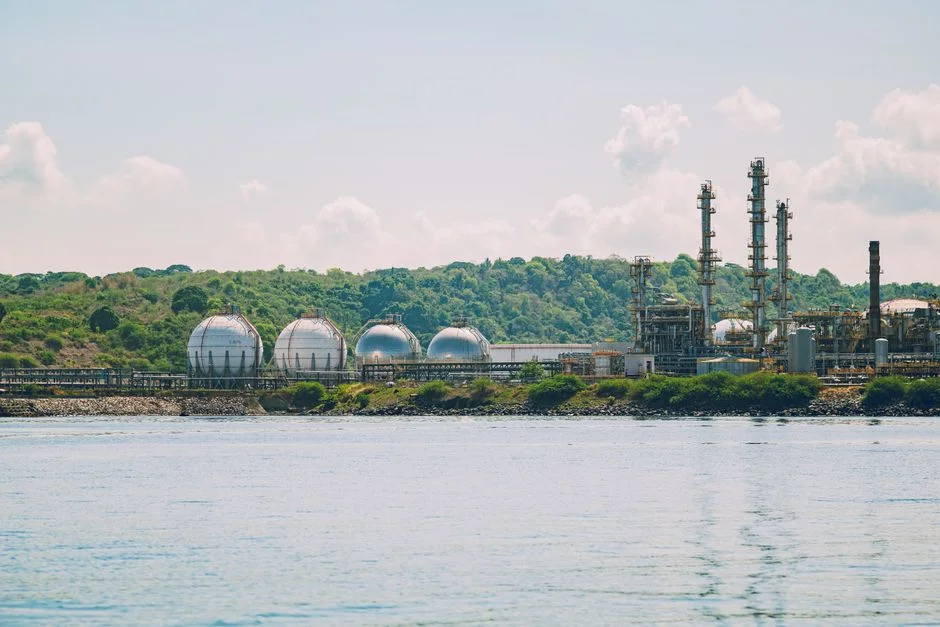
The engineering task starts with a working mass balance. A 20 MW IT-load facility on the MWRA system, running evaporative cooling with a cooling-tower effectiveness designed around 4 CoC, is a defensible Greater Boston reference point for an AI/hyperscale design. Using the standard blowdown ratio of 1/(CoC − 1) — which gives 33% of makeup at 4 CoC but is typically realized at 25–30% in practice because operators bleed on conductivity trends rather than at the theoretical limit — the arithmetic below maps out what the sewer connection actually has to handle.
| Parameter | Makeup (MWRA potable) | Blowdown at 4 CoC | Notes |
|---|---|---|---|
| Volume reference | 1.0–1.5 MGD makeup for 20 MW | 0.25–0.45 MGD blowdown (25–30%) | Per Genesis field data, Oct 2025 |
| Total dissolved solids (TDS) | 80–150 mg/L | 320–600 mg/L | 4× concentration at 4 CoC |
| Total hardness as CaCO3 | 40–80 mg/L | 160–320 mg/L | Drives scaling risk; typical of Massachusetts surface-water supplies |
| Chloride | 20–40 mg/L | 80–160 mg/L | Concentrates 4×; corrosive to concrete sewers above local limit |
| Silica (SiO2) | 5–10 mg/L | 20–40 mg/L | Limits RO recovery; softener and anti-scalant needed above ~30 mg/L |
| BOD/COD | Negligible | Negligible | Distinguishes blowdown from sanitary wastewater |
| Residual treatment chemicals | None in makeup | Phosphonates, biocides, dispersants, Zn/Cu corrosion inhibitors | Origin of most MWRA permit risk |
Two things fall out of this mass balance. First, blowdown chemistry — TDS, chloride, silica, residual chemicals — is what MWRA cares about; biochemical oxygen demand (BOD) and chemical oxygen demand (COD), which drive municipal plant design, are essentially absent. That is why data-center blowdown and a suburban san-sewer connection cannot be engineered with the same logic. Second, the volume (0.25–0.45 MGD for a single 20 MW site) is large enough that the MWRA Local Limit program will not let it pass without pretreatment, and it is small enough that on-site treatment is cheaper than paying discharge surcharges on a heavily concentrated stream.
The Boston treatment train: side-stream filtration → softening → RO or ZLD
The unit operations a Boston engineer should expect to spec, in order, are well established in the water-recovery literature. A side-stream multi-media filter sits at the head to drop suspended solids to roughly 15–25 µm so the softener and RO downstream do not foul prematurely; typical CAPEX for this unit at data-center scale is $50,000–$200,000 with minimal OPEX beyond solids disposal (per Genesis Water Technologies, 2025). Next, a softening and chemical-conditioning stage — either ion exchange, lime-soda, or an anti-scalant dose — protects reverse-osmosis membranes from CaCO3, silica, and metal-oxide scaling. The automatic chemical dosing skid is what ties this stage together and keeps the CoC target stable.
Reverse osmosis is the workhorse for blowdown recovery. An industrial RO system for blowdown recovery typically operates at 50–85% recovery and produces a 10–50 mg/L TDS permeate suitable for blending back into the cooling-tower makeup stream, with concentrate routed forward to the next decision point (per Genesis Water Technologies, 2025). At the concentrate end, the engineer chooses between three paths: send the smaller, treated concentrate to the sewer as a brine stream; concentrate further in a brine concentrator; or push to true zero liquid discharge (ZLD) at 95–99% overall recovery, with a $3–8M CAPEX envelope per published 2025 figures.
Domestic sewage is the small, separate stream that the permit package still has to address. A compact MBR unit for data-center domestic sewage or a packaged activated-sludge skid handles the few hundred gallons per day of low-BOD sanitary flow and meets MWRA BOD/TSS limits without operator intervention; it cannot be omitted from the site plan just because it is small.
| Stage | Unit operation | Function | Typical CAPEX band | Key operating risk |
|---|---|---|---|---|
| 1 | Side-stream multi-media filtration | Drop suspended solids to 15–25 µm; protect downstream equipment | $50,000–$200,000 | Media channeling if backwash poorly tuned |
| 2 | Softening / anti-scalant + chemical dosing | Prevent CaCO3, silica, metal-oxide scaling on RO | Included in RO package, $100,000–$400,000 | Silica breakthrough above 30 mg/L in concentrate |
| 3 | Reverse osmosis (RO) | Recover 50–85% as 10–50 mg/L TDS permeate for cooling-tower makeup | $0.5–$2M for 10–30 MW site | Membrane fouling from residual biocides |
| 4a | Brine concentrator → crystallizer (ZLD) | 95–99% recovery; solids to landfill | $3–$8M | Thermal-energy OPEX; permit risk if haul-off halts |
| 4b | Treated concentrate to sewer | Lowest CAPEX end-of-pipe | < $200,000 polish | MWRA surcharge if TDS or chloride exceed local limit |
| Domestic | MBR or packaged activated sludge | Sanitary sewage to MWRA BOD/TSS limits | $150,000–$500,000 | Negligible if sized correctly |
Reuse vs. discharge vs. ZLD: a Boston-aware decision framework
The three end-of-pipe options trade CAPEX, OPEX, and regulatory exposure in ways that map cleanly to site size and community context. Discharge-only — sending the blowdown to the MWRA sewer with minimal pretreatment — has the lowest CAPEX, but in water-stressed regions discharge fees of $5–$15 per 1,000 gal combined with MWRA sewer rates and any TDS surcharge (per Genesis Water Technologies, 2025) make this uneconomic above roughly 10 MW of IT load. A 20 MW site discharging 0.25–0.45 MGD of treated blowdown pays six figures a year in discharge alone.
Reuse — sending RO permeate back to the cooling tower and a smaller, treated brine stream to the sewer — carries moderate CAPEX ($0.5–$2M at 10–30 MW) and the lowest long-run OPEX of the three options, at the cost of operator complexity and a brine stream that still needs a discharge permit. ZLD, at $3–$8M CAPEX plus significant thermal-energy OPEX, insulates the project from MWRA capacity constraints and from future permit tightening; it is favored where local water is scarce, where hyperscale buildout is concentrating in one basin, or where community scrutiny is high enough that a zero-discharge narrative matters.
A defensible decision rule for a Boston project in 2026: ≤ 5 MW and not water-stressed → discharge-only with side-stream filtration; 5–30 MW with reuse-grade cooling → RO permeate blended to cooling-tower makeup with sewer-discharged brine; > 30 MW, hyperscale, or high community scrutiny → ZLD or near-ZLD with brine concentrator and a smaller crystallizer for the residual. The same logic explains why Quincy and Somerville hyperscale projects, which sit directly on top of MWRA's most-loaded interceptors, are increasingly being designed with brine concentration even when their makeup supply is MWRA potable.
CAPEX, OPEX, and risk: what to put in the owner's pro forma
Translating the technical choice into a pro forma is straightforward once the unit operations are fixed. Side-stream filtration runs $50,000–$200,000 CAPEX with low OPEX; a full RO blowdown-recovery package for a 10–30 MW site is $0.5–$2M, dominated by membrane skids and chemical dosing; a ZLD train adds $3–$8M on top, with significant thermal-energy OPEX. A 5–10% contingency for membrane replacement and chemical escalation should be reserved on every estimate, because biocide and anti-scalant pricing in 2025–2026 has moved more than the headline inflation rate (HydropureWater field data, 2026).
| Cost line | Low-case | High-case | Driver |
|---|---|---|---|
| Side-stream multi-media filter | $50,000 | $200,000 | Flow rate, vessel count |
| Softener / anti-scalant + dosing skid | $100,000 | $400,000 | Silica in makeup, target CoC |
| RO blowdown-recovery package (10–30 MW) | $500,000 | $2,000,000 | Recovery target, membrane area |
| Brine concentrator + crystallizer (ZLD) | $3,000,000 | $8,000,000 | Capacity, thermal-energy source |
| Domestic MBR / packaged sewage | $150,000 | $500,000 | Flow, peak-load redundancy |
| Annual OPEX (chemicals + energy + discharge) | $80,000 | $250,000 | CoC, local energy price, discharge fee |
A worked example: a 15 MW Boston reference site paying $4/1,000 gal for MWRA makeup and $8/1,000 gal for discharge, recovering 60% of blowdown through RO, sees roughly $24,000–$30,000 per year in net water savings. That is enough to support the RO CAPEX in 5–7 years on water alone, before any value is assigned to permitting certainty, ESG reporting, or reduced MWRA capacity exposure — which is why the RO-plus-sewer option is the default for mid-size Boston projects and ZLD is reserved for hyperscale or high-scrutiny sites.
Frequently Asked Questions
Does a Boston data center need on-site wastewater treatment?
Yes. A 2026 project in the MWRA service area needs on-site pretreatment to meet Local Limits on flow, pH, temperature, TDS, chloride, and metals, plus a separate blowdown-handling train sized for 20–30% of cooling-tower makeup at the design cycles of concentration (per ASCE, March 2024; per Water Utility Report, April 2026).
How much blowdown does a 20 MW data center produce?
At 4 CoC, blowdown is roughly 20–30% of makeup water. A 20 MW site with 1.0–1.5 MGD of cooling-tower makeup will produce 0.25–0.45 MGD of blowdown — flow that has to be addressed in the MWRA discharge authorization.
Can a data center in Massachusetts use reclaimed water for cooling?
Yes, and reclaimed water is being adopted by hyperscale operators to reduce pressure on drinking-water supplies, but it does not remove the blowdown-treatment requirement. Reclaimed water changes the chemistry challenge — more scaling, corrosion, and microbial-control burden — and the blowdown stream still has to meet MWRA Local Limits (per Water Utility Report, April 2026).
When is ZLD actually required in Boston?
ZLD is not mandatory by default in 2026, but it is increasingly expected for hyperscale sites, for projects where discharge volume or TDS would push the MWRA capacity envelope, and for projects where local community concern makes a zero-discharge narrative a permitting advantage. Above 30 MW, ZLD or near-ZLD with a brine concentrator is the defensible default (per Genesis Water Technologies, 2025; HydropureWater field data, 2026).
What domestic-wastewater equipment fits a data center?
A compact, fully buried MBR or a packaged activated-sludge unit — such as a buried packaged sewage plant paired with an automatic chemical dosing skid — handles the low-flow sanitary stream, meets MWRA BOD and TSS limits, and fits the constrained site footprint typical of a Boston infill data-center parcel.