Why Prague Data Centers Face a Unique Water Equation
Prague's Köppen Cfb climate delivers cool winters and mild summers with a mean annual air temperature of 9–10 °C, putting it well below Frankfurt or Dublin in cooling-water demand, but the ASHRAE TC 9.9 Class A1 envelope of 18–27 °C at 40–55% RH still pulls meaningful heat-rejection load off the cooling tower. Vltava river withdrawal is licensed by the Czech Ministry of the Environment under Water Act 254/2001, and Prague operators have a strong incentive to pursue reuse rather than expand abstraction permits or absorb rising water-abstraction fees. The city's district-heating backbone, Pražská teplárenská, is a parallel asset: residual heat-recovery loops can reduce cooling-tower load by 10–20%, which directly lowers blowdown volume. Only about 51% of operators worldwide track water use, per the Uptime Institute 2021 survey cited in ASCE 2024; the WRI Aqueduct Water Risk Atlas is the right baseline tool for benchmarking Prague against Frankfurt, Dublin, and Northern Virginia before sizing the reuse train.
The Four Wastewater Streams a Prague Site Produces
A Prague data center generates four distinct wet streams that must be treated separately, not blended. Domestic sewage runs 50–80 L/person-day and is handled by an MBR or packaged A/O skid targeting <50 mg/L TSS and <25 mg/L BOD per the EU Urban Waste Water Directive 91/271/EEC. Cooling-tower blowdown represents 1–5% of circulating flow at 4–6 cycles of concentration and carries hardness (Ca²⁺, Mg²⁺), silica, and treatment chemicals including HEDP, ATMP phosphonates, and free chlorine residual. RO reject from make-up and side-stream units is 15–25% of RO feed, with TDS in the 800–2,500 mg/L range plus boron, and demands either volume minimization or further treatment. Rainwater and air-handling condensate are low-TDS streams that, after multimedia filtration and ClO₂ disinfection, are suitable for toilet flushing, landscape irrigation, or adiabatic cooling make-up. MDPI's 2021 review of the Czech power sector frames a three-cycle model (make-up, cooling, specific) that extends cleanly to a data center's fourth stream of RO reject and condensate.
| Stream | Typical flow / share | Key contaminants | Default treatment |
|---|---|---|---|
| Domestic sewage | 50–80 L/person-day | BOD, TSS, pathogens | MBR or packaged A/O to UWWTD limits |
| Cooling-tower blowdown | 1–5% of circulation | Hardness 800–1,500 mg/L CaCO₃, silica 20–60 mg/L, HEDP/ATMP, free Cl₂ | Softening → DAF → side-stream RO → ClO₂ |
| RO reject (make-up + side-stream) | 15–25% of RO feed | TDS 800–2,500 mg/L, boron | Volume minimization or brine handling |
| Rainwater + AHU condensate | Site-dependent | Low TDS, occasional particulates | Multimedia filter + ClO₂ for non-potable reuse |
Cooling-Tower Blowdown Treatment Train, Step by Step
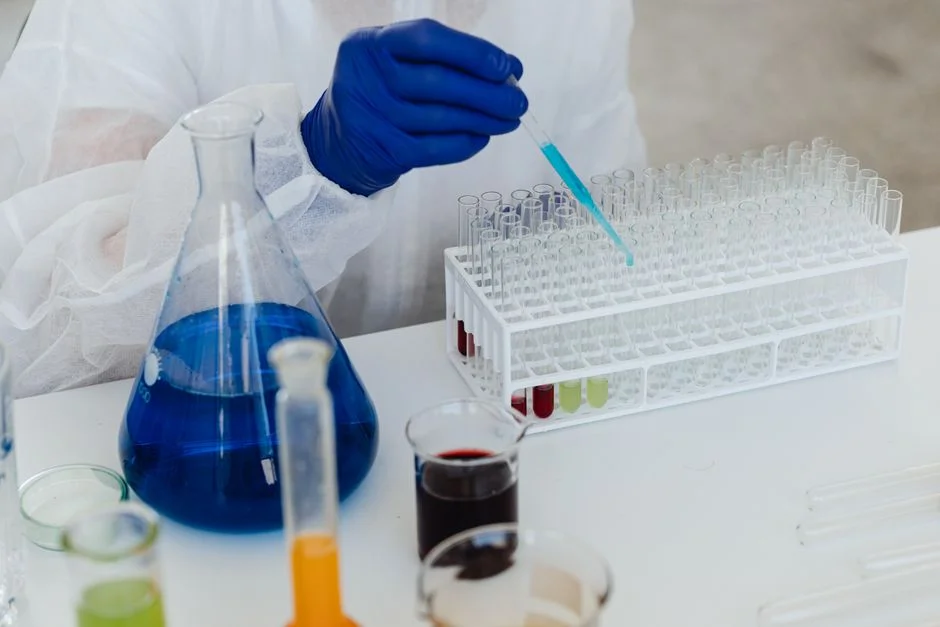
Step 1 is equalization plus screening: a rotary mechanical bar screen strips wind-blown debris, pipe scale, and plastic fines before the stream hits chemistry, and dual-feed loop redundancy should be specified per ASCE 2024 so a single line failure cannot interrupt blowdown handling. Step 2 is softening, either lime/soda or weak-acid cation exchange, designed to drop Ca²⁺ + Mg²⁺ hardness below 50 mg/L as CaCO₃ and bring the Langelier Saturation Index to a neutral −0.3 to +0.3 band; this is what enables cycles of concentration to climb without scale on heat-exchanger fill. Step 3 is DAF clarification downstream of a high-efficiency sedimentation tank (lamella clarifier) running at 20–40 m/h surface loading, polishing TSS to under 30 mg/L and floating off emulsified phosphonate and iron floc before the RO membranes see the stream. Step 4 is a side-stream RO unit sized for 75–90% recovery on the softened, clarified feed, producing reuse-quality permeate (TDS <50 mg/L) and a small brine reject under 5% of the original blowdown volume. Step 5 is disinfection with an on-site ClO₂ generator on the RO permeate to control Legionella and heterotrophic plate count before the water returns as cooling-tower make-up. Operating envelopes drawn from MDPI's 2021 Czech power-sector cases: influent hardness 800–1,500 mg/L as CaCO₃, silica 20–60 mg/L, pH 7.5–8.8, free chlorine 0.5–1.0 mg/L.
Make-Up, Side-Stream, and Reuse Water Quality Targets
The parameter table below consolidates feed, recirculating, and reuse targets so the engineer can size multimedia filters, softeners, and RO skids against concrete numbers. RO permeate for adiabatic cooling and humidification should hit conductivity <10 µS/cm, silica <0.5 mg/L, and TOC <1 mg/L. Cooling-tower make-up needs TDS <200 mg/L, hardness <50 mg/L as CaCO₃, silica <20 mg/L, and an LSI of −0.3 to +0.3. The Google Douglas County, GA facility, roughly 1.3 million sq ft and operating on recycled treated wastewater from the local authority (per ASCE 2024), is the cleanest operational analog that reuse-to-cooling works at hyperscale, and a multi-media filter followed by an automatic chemical dosing system is the standard guard bed ahead of the RO membranes.
| Parameter | Vltava surface (make-up) | Cooling-tower recirculating | Blowdown (to treatment) | Reuse target (cooling make-up) | RO permeate (adiabatic / humidification) |
|---|---|---|---|---|---|
| Turbidity (NTU) | 1–5 | 10–30 | 20–60 | <1 | <0.1 |
| Hardness (mg/L CaCO₃) | 100–250 | 600–1,200 | 800–1,500 | <50 | <5 |
| Silica (mg/L) | 3–10 | 15–40 | 20–60 | <20 | <0.5 |
| TDS (mg/L) | 150–400 | 600–1,500 | 800–2,500 | <200 | <50 |
| Free Cl₂ (mg/L) | 0.1–0.3 | 0.5–1.0 | 0.5–1.0 | 0.3–0.7 | n/a |
| LSI | −0.5 to 0 | 0.2–0.8 | 0.3–1.0 | −0.3 to +0.3 | n/a |
Czech and EU Compliance Path for Data Center Discharges
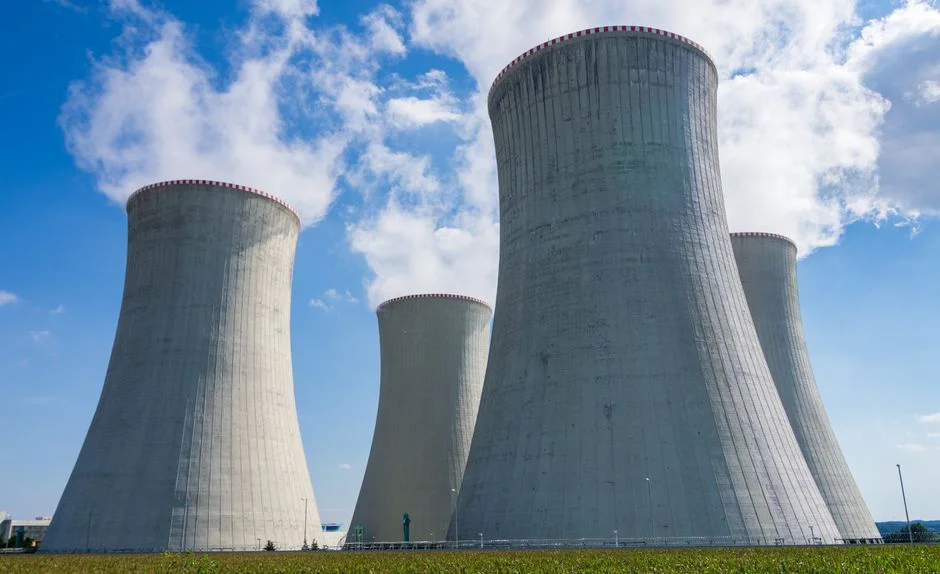
Czech Water Act 254/2001 governs the water permit and Water Act 274/2001 governs connection to the public sewer; PVK (Pražské vodovody a kanalizace) sets trade-effluent limits on a per-customer basis, with the typical Prague envelope sitting at 1,000 mg/L COD and 50 mg/L TSS at the discharge sampling point. EU UWWTD 91/271/EEC sets biological-treatment thresholds of BOD <25 mg/L and COD <125 mg/L for discharges to sensitive areas, and any site treating more than 2,000 PE equivalent must comply in full. EU Industrial Emissions Directive 2010/75/EEC does not capture standalone data centers unless co-located with combustion plant, but its BAT conclusions are still referenced for waste-handling practice. Sewer temperature is typically capped below 40 °C at the point of discharge, which means blowdown must be cooled before it reaches the PVK acceptance point. The MDPI 2021 paper documents how Czech power-sector sites have retrofitted membrane and novel-technology trains to keep tightening Czech and EU discharge envelopes compliant.
| Instrument | Authority | Key threshold for data center discharges |
|---|---|---|
| Water Act 254/2001 | Czech Ministry of the Environment | Surface/groundwater abstraction permit, Vltava licensing |
| Water Act 274/2001 | PVK / municipal | Connection to public sewer, trade-effluent contract |
| UWWTD 91/271/EEC | EU | BOD <25 mg/L, COD <125 mg/L post-bio for >2,000 PE |
| IED 2010/75/EEC | EU | Not directly applicable unless co-located with combustion |
| PVK trade-effluent limits | Prague Water Supply & Sewerage | COD ≤1,000 mg/L, TSS ≤50 mg/L, T <40 °C, pH 6.5–9 (typical) |
Designing for Reuse: How Much Blowdown Can Prague Realistically Recycle?
A softening → DAF → side-stream RO → ClO₂ train can return 60–85% of cooling-tower blowdown to the cooling-tower make-up basin, with the remainder routed either to RO reject volume minimization or to PVK sewer. Fresh-water savings run 30–50% per MW of IT load against a single-pass baseline, working from typical water usage effectiveness (WUE) of 1.0–1.5 L/kWh and a post-reuse target of 1.5–2.0 L/kWh, recognizing that Prague's cool climate already helps the absolute number. CAPEX is driven by civil works, RO skids, softeners, the ClO₂ generator, automation, and the PVK sewer connection; it scales linearly with IT load and with the targeted reuse percentage rather than as a flat fee. The Google Douglas County, GA precedent documented in ASCE 2024, a roughly 1.3 million sq ft hyperscale data center running on recycled treated wastewater, is the closest operational proof point. For operator-specific designs, the AWS hyperscale data center wastewater approach, Digital Realty's data center wastewater playbook, and the broader Equinix campus wastewater guide show how peers have laid out the same train, and the high-salinity RO design for 2026 covers the membrane-side detail.
Frequently Asked Questions
What wastewater and cooling blowdown treatment does a data center in Prague, Czech Republic need?
A Prague data center needs four treatment trains: domestic sewage via MBR or packaged A/O, cooling-tower blowdown softened then polished by side-stream RO and DAF, make-up water treated by multimedia filtration plus RO, and rainwater/greywater reuse polishing. Czech compliance follows EU UWWTD 91/271/EEC, Water Act 254/2001, and Prague PVK trade-effluent limits, typically 1,000 mg/L COD and 50 mg/L TSS at discharge to sewer.
What are PVK's typical trade-effluent discharge limits for cooling-tower blowdown?
PVK (Pražské vodovody a kanalizace) typically caps trade effluent at 1,000 mg/L COD, 50 mg/L TSS, pH 6.5–9, and discharge temperature below 40 °C at the sampling point. The exact envelope is set per customer under Water Act 274/2001, so a site-specific trade-effluent contract is required before commissioning.
How many cycles of concentration can a Prague cooling tower safely run?
With softening to <50 mg/L as CaCO₃ and an LSI held between −0.3 and +0.3, Prague cooling towers can safely run 4–6 cycles of concentration, with silica held below 20 mg/L and free chlorine at 0.5–1.0 mg/L. Pushing past 6 cycles typically requires side-stream RO on the blowdown to control silica and TDS scaling.
How much of cooling-tower blowdown can be recycled for reuse in Prague?
A softening → DAF → side-stream RO → ClO₂ train can return 60–85% of cooling-tower blowdown to the cooling-tower make-up basin, cutting fresh-water demand 30–50% per MW of IT load. The Google Douglas County, GA hyperscale facility (ASCE 2024) is the cleanest operational analog for this reuse rate at scale.
What reuse quality does RO permeate need to meet for adiabatic cooling and humidification?
RO permeate for adiabatic cooling and humidification should hit conductivity below 10 µS/cm, silica under 0.5 mg/L, and TOC below 1 mg/L to protect spray nozzles and humidifier membranes. A polishing ClO₂ step keeps Legionella and heterotrophic plate count under control on the reuse loop.
Related Equipment
- rotary mechanical bar screen — specifications, capacity range, and technical data