Why Warsaw data centers face a different water-reuse problem than Phoenix or Dublin
A Warsaw data center running evaporative cooling at 5-30 MW draws makeup water from the Vistula River Basin, where the World Resources Institute classifies central Mazovia as low-to-medium baseline water stress — a number that does not match operational reality during the 2024-2026 summer heatwaves, when per-MW evaporative demand has risen sharply above design. Compliance runs through two parallel regimes: the EU Water Reuse Regulation 2020/741 (in force since June 2023), which sets minimum requirements for four reclaimed-water risk classes and typically pushes cooling-tower makeup into Class C or D with mandatory validation monitoring, and the Polish Water Law Act (Journal of Laws 2017 item 1566, as amended), under which regional authorities issue site-specific permits with TDS, chloride, sulfate, and temperature limits. Some Mazovia permits cap discharge TDS below 1,500 mg/L — a threshold that effectively bans raw cooling-tower blowdown without treatment (Genesis Water Technologies, 2025).
The cost side is just as specific. MPWiK Warszawa and Veolia Energia Warszawa publish industrial potable tariffs in PLN/m³, and municipal sewer discharge fees in many Polish voivodeships add 60-90% on top of supply cost. Combined water-plus-sewer cost for a high-volume industrial user in 2025-2026 sits roughly in the €2.5-4.0/m³ range once both line items are aggregated. That figure is lower than Phoenix or Santa Clara but high enough that a 15 MW site losing 20-25% of its intake to blowdown is leaving six figures of EUR on the table every year — which is why partial reuse, not ZLD, is the dominant retrofit play in Warsaw today.
Blowdown chemistry: what comes out of a Warsaw cooling tower
Blowdown TDS runs 4-8× the makeup value. For a facility fed from Vistula surface water at 250-400 mg/L TDS, the cooling-tower circulating water at 4-5 cycles of concentration (CoC) reaches 1,200-2,000 mg/L, and blowdown itself sits at 1,200-3,200 mg/L with peaks above 4,000 mg/L at 6 CoC (Genesis Water Technologies, 2025). The Vistula-derived profile is calcium-magnesium-bicarbonate dominated, typically 80-180 mg/L as CaCO₃ total hardness in makeup and proportionally higher in the loop, with a silica envelope of 5-15 mg/L that becomes the binding constraint on RO recovery once it concentrates 5-7×.
Suspended solids land in the 10-50 mg/L range from corrosion products, biofilm slough, and airborne dust — high enough to foul RO membranes without side-stream pretreatment ahead of the train. Treatment-chemical accumulation is the under-appreciated variable: chromates are banned under REACH, but legacy phosphonate and zinc-based inhibitor programs still in service at older Warsaw sites raise phosphorus and metals flags during permit review. Biological content is dominated by planktonic bacteria and biofilm fragments, with Legionella risk driving the disinfection choice rather than raw microbial counts. The implication for sizing is that the pretreatment train must be specified against the actual Vistula-derived profile, not a generic US surface-water default.
| Parameter | Makeup (Vistula) | Blowdown at 4 CoC | Blowdown at 6 CoC | RO permeate (target) |
|---|---|---|---|---|
| TDS (mg/L) | 250-400 | 1,000-1,600 | 1,500-2,400 | 10-50 |
| Total hardness as CaCO₃ (mg/L) | 80-180 | 320-720 | 480-1,080 | <5 |
| Silica (mg/L as SiO₂) | 5-15 | 20-60 | 30-90 | <1 |
| Suspended solids (mg/L) | 5-20 | 10-50 | 15-60 | <1 |
| Chloride (mg/L) | 15-40 | 60-160 | 90-240 | <5 |
| pH | 7.2-8.2 | 7.5-8.8 | 7.5-9.0 | 6.5-7.5 |
Cycles of concentration: the math Warsaw engineers keep getting wrong
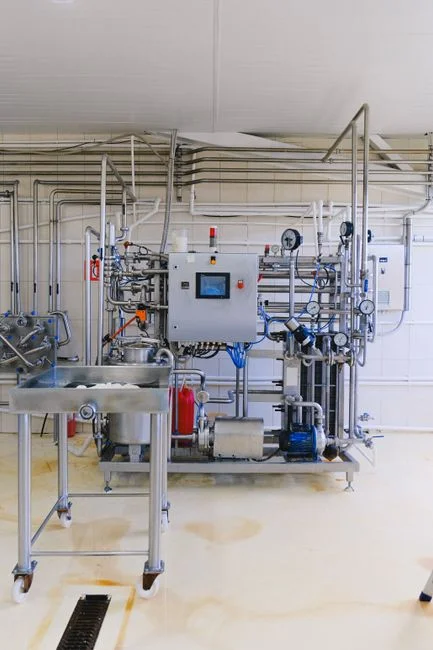
The blowdown fraction is governed by a single identity: blowdown % = 1 / (CoC − 1). At 4 CoC, blowdown is 25% of makeup; at 6 CoC, it drops to 20% — a 5 percentage-point reduction, not the 50% improvement that sustainability targets frequently assume (Genesis Water Technologies, 2025). The mistake propagates into CAPEX modeling when teams use the inflated saving to justify treatment trains that the actual flow never supports.
The practical CoC ceiling in Warsaw cooling towers is 4-5 without advanced treatment, 6-7 with effective side-stream filtration and biological control, and rarely above 7 because silica scaling and Legionella risk both turn non-linear past that point. A worked example for a 10 MW facility on 12,000 m³/month of makeup: at 4 CoC the plant discharges 3,000 m³/month; at 6 CoC that falls to 2,400 m³/month, a real saving of 600 m³/month worth roughly €1,500-2,500 at MPWiK industrial tariffs. Chemical-only CoC escalation is a dead end at Warsaw's calcium-magnesium profile; mechanical pretreatment — a side-stream filter, an antiscalant program, or both — is what unlocks higher sustainable CoC and the cash flow that justifies the membrane train behind it.
Treatment train options: from side-stream filtration to full ZLD
Build the train in this order: side-stream self-cleaning filtration first, then ultrafiltration, then reverse osmosis, with disinfection sized against the EU Reuse Reg 2020/741 microbial log-reduction targets for the reclaimed-water class the permit will require. Self-cleaning spiral side-stream filters operating at 1-5% of circulation flow with a 10-25 µm cut are the most cost-effective first step, with CAPEX of roughly $50,000-200,000 for typical data-center flows and minimal OPEX beyond solids disposal (Genesis Water Technologies, 2025). A rotary bar screen ahead of the equalization tank handles the spring snowmelt debris load that Vistula-derived water carries.
Ultrafiltration with hollow-fiber PVDF membranes (0.01-0.1 µm, 90-95% recovery, 10-30 psi) is the RO pretreatment workhorse; it strips the suspended solids and biofouling precursors that would otherwise destroy RO membrane life. A packaged hollow-fiber ultrafiltration system sized at 100-300 GPM (22-68 m³/h) fits a typical Warsaw colocation hall. Reverse osmosis follows: 95-99% TDS rejection, permeate at 10-50 mg/L, system recovery 50-85% limited by silica and CaSO₄ scaling indices; a 50,000 GPD (~190 m³/day) unit installs for $250,000-500,000 with OPEX of $1.50-3.00 per 1,000 gallons treated. An industrial RO unit sized this way handles the bulk of the reuse load.
Nanofiltration is the lower-energy alternative when hardness rather than total TDS is the binding permit limit: 75-150 psi, 30-40% energy saving vs RO, permeate TDS at 30-50% of feed. MVC evaporation makes sense only for RO concentrate polishing. Full ZLD, with $3-8M CAPEX and $5-15/1,000 gal OPEX at 95-99% recovery, is uneconomic below 30 MW in Poland because the savings cannot amortize the thermal stage; the typical winning configuration in Warsaw is partial reuse plus compliant sewer discharge, with discharge polishing to satisfy any TDS cap below 1,500 mg/L. Disinfection selection — UV, ClO₂, or ozone — should be cross-checked against the EU Reuse Reg validation monitoring requirements for Class C or D reclaimed water.
| Technology block | Removal target | Operating pressure | Recovery | Indicative CAPEX (typical DC install) | Notes |
|---|---|---|---|---|---|
| Self-cleaning side-stream filter | TSS, biofilm precursors | Atmospheric | N/A (1-5% of circ.) | $50,000-200,000 | First step, no backwash downtime |
| Ultrafiltration (PVDF) | TSS, bacteria, viruses | 10-30 psi | 90-95% | $150,000-400,000 | RO pretreatment; handles seasonal spikes |
| Reverse osmosis | TDS, hardness, silica | 150-400 psi | 50-85% | $250,000-500,000 | Permeate 10-50 mg/L TDS |
| Nanofiltration | Hardness, multivalent ions | 75-150 psi | 70-85% | $200,000-450,000 | 30-40% energy saving vs RO |
| MVC evaporation | Concentrate polishing | Thermal | 95-98% of feed | $1-3M | Only above 30 MW in Poland |
| Full ZLD train | All liquid waste | Thermal + membrane | 95-99% | $3-8M | Rarely justified at 5-30 MW |
Right-sizing for 5-30 MW Warsaw facilities: don't copy hyperscale
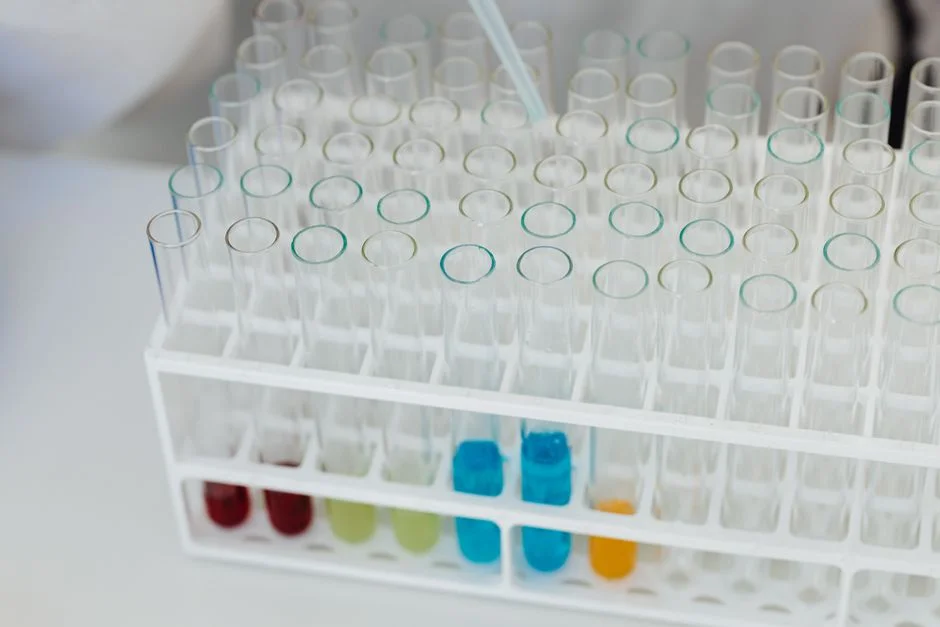
Hyperscale RO plus ion-exchange trains need dedicated operators and chemical rooms that mid-size Polish facilities don't staff, and CAPEX per m³/day at 5-15 MW runs 3-4× higher than at hyperscale flows. The right baseline for a Warsaw colocation hall is a two-stage UF plus single-pass RO skid, modular at 100-300 GPM (22-68 m³/h), with PLC automation and remote monitoring so a single facilities technician can run it. Standard RO and UF membrane elements from the same vendor simplify spares inventory and cleaning chemistry.
Equalization matters more in Warsaw than in many US data-center markets because the Vistula carries a spring snowmelt TSS pulse and a summer algae window. Size the surge buffer for 4-8 hours of nominal blowdown to absorb shock loads without dumping upstream of the membranes, and pair the train with an automatic chemical dosing system for antiscalant and pH correction so that seasonal variability does not translate into RO clean-in-place frequency that wrecks the maintenance budget. Factory-tested skid mounting cuts on-site commissioning from months to weeks, which is what makes the 6-18 month Polish permit window achievable rather than aspirational. For a broader climate contrast, see this 2026 data center blowdown guide for a different climate.
Cost, ROI, and permit timing for a Warsaw retrofit
Indicative CAPEX for a 5 MW Warsaw data center partial-reuse retrofit lands in the €180,000-450,000 band; a 15 MW full-reuse plus sewer-compliance configuration runs €600,000-1,200,000 once discharge polishing and the equalization tank are included. Simple payback on a 60% blowdown recovery retrofit at 15 MW, with combined water-plus-sewer tariffs in the €2.5-4.0/m³ range, sits at 3-5 years on a €350,000 CAPEX baseline (Genesis Water Technologies, 2025). That payback compresses once EU Taxonomy alignment and any carbon-price benefit on avoided freshwater intake are priced in. The 2026 resource-recovery outlook covers the broader industrial technology stack and ROI patterns, while the smart water monitoring market map shows which telemetry vendors the permit reviewers expect to see in the monitoring plan.
Polish water-law and reuse permits run 6-18 months; the pre-application package — wastewater characterization, pilot study, and a monitoring plan that names the validation methods — is what determines whether you land at the short or the long end. OPEX items to keep in the model beyond the utility bill: discharge fees, antiscalant and biocide consumption, membrane replacement (typically 3-5 year life for RO, longer for UF), and RO energy at 1.5-2.5 kWh/m³ permeate.
| Configuration | Indicative CAPEX (5-15 MW) | Water reuse achieved | Discharge path | Simple payback |
|---|---|---|---|---|
| Discharge compliance only (TDS polishing) | €180,000-350,000 | 0% | Sewer, <1,500 mg/L TDS | 4-7 years |
| Partial reuse (irrigation / process) | €300,000-600,000 | 30-50% | Sewer (reduced volume) | 3-5 years |
| Full reuse (cooling-tower makeup) | €600,000-1,200,000 | 60-85% | Minimal sewer discharge | 3-5 years |
Frequently Asked Questions
What treatment train does a 5-30 MW data center in Warsaw actually need in 2026?
A modular train of self-cleaning side-stream filtration, hollow-fiber ultrafiltration, and reverse osmosis on cooling-tower blowdown, sized for 50-85% recovery at 4-6 cycles of concentration, plus discharge polishing to meet site-specific TDS and chloride limits under the Polish Water Law Act. ZLD is rarely justified below 30 MW at current Polish water-plus-sewer tariffs (Genesis Water Technologies, 2025).
Does EU Water Reuse Regulation 2020/741 apply to data center cooling-tower makeup in Poland?
Yes. The regulation has been in force since June 2023 and minimum requirements cover four reclaimed-water risk classes. Cooling-tower makeup for data centers typically requires Class C or D, with mandatory validation monitoring of microbial log-reduction targets, and any reuse permit application in Poland must reference the relevant class.
What is realistic CAPEX and payback for a Warsaw data center blowdown reuse retrofit?
Indicative CAPEX is €180,000-450,000 for a 5 MW partial-reuse retrofit and €600,000-1,200,000 for a 15 MW full-reuse plus sewer-compliance configuration. At combined water-plus-sewer tariffs of roughly €2.5-4.0/m³, a 60% blowdown recovery project at 15 MW yields a 3-5 year simple payback on a €350,000 CAPEX baseline (Genesis Water Technologies, 2025).
How long does a Polish water-law and reuse permit take in 2026?
Typically 6-18 months from pre-application to issuance, with the longer end of the range triggered by incomplete wastewater characterization or missing pilot data. A complete pre-application package with a defined monitoring plan and EU Reuse Reg class mapping lands at the short end of that window.