Why Baghdad Is a Special Case for Data Center Water
A 100 MW hyperscale facility can draw up to ~2 million litres of water per day, a volume comparable to thousands of Baghdad households competing for the same Tigris-fed municipal supply (per IDE-Tech, 2026). The Ecologix 2026 hyperscale operating band of 1.14–1.70 million L/day at a benchmark Water Usage Effectiveness (WUE) of 1.8 L/kWh confirms that any Baghdad proposal must be sized within this envelope rather than lifted from a Phoenix or Northern Virginia specification (per Ecologix, 2026).
Summer ambient temperatures in Baghdad routinely exceed 45 °C, with peak design conditions reaching 48–50 °C in July and August. That ambient ceiling forces cooling-tower approach temperatures up, which in turn pushes cycles of concentration (CoC) toward the 5–6 band once silica, calcium and alkalinity limits are respected. Evaporation typically accounts for ~60% of intake, so cooling-tower blowdown (CTBD) is by far the largest recoverable stream, not sanitary wastewater, which usually sits at 10–20% of total site flow (per Ecologix, 2026).
The practical consequence is that a Baghdad facility is drawing from the same Tigris allocation that serves municipal users, irrigated agriculture, and downstream provinces. Discharge-to-sewer without treatment is a permit risk under Iraqi environmental rules and an ESG liability for any regional hyperscale tenant. The water-stressed, high-temperature boundary conditions here change equipment selection, recovery targets, and the discharge philosophy before a single pipe is sized.
What Baghdad Make-up Water and Cooling Tower Blowdown Actually Look Like
Tigris-derived Baghdad tap water typically falls in the following envelope, which engineers should validate against a current 2025–2026 Iraqi water-quality analysis before final design:
| Parameter | Typical Baghdad tap range | CTBD at CoC 4–6 |
|---|---|---|
| TDS | 350–600 ppm | ~2,000 ppm |
| Hardness (as CaCO₃) | 150–250 ppm | 600–1,500 ppm |
| Alkalinity (as CaCO₃) | 120–200 ppm | 500–1,200 ppm |
| Silica (SiO₂) | 5–15 mg/L | 20–90 mg/L |
| Chloride | 50–120 ppm | 200–700 ppm |
| Temperature | 20–30 °C | 30–40 °C |
Once cycled to CoC 4–6, those values push circulating water into a scaling regime dominated by silica, calcium carbonate and calcium sulfate, with elevated Cu, Zn, molybdate anticorrosive and residual oxidising biocide in the blowdown (per Ecologix, 2026). The blowdown share is governed by the simple rule B/M = 1/(CoC − 1): at CoC 4, blowdown is 25% of make-up; at CoC 6, it is 20%. The gain from CoC 4 to CoC 6 is 5 percentage points, a 20% relative reduction, not the 50% that some sustainability teams assume (per Genesis Water Tech, 2026).
The two indices that gate every chemistry decision are the Langelier Saturation Index (LSI = pH − pHₛ) and the Ryznar Stability Index (RSI = 2pHₛ − pH). The operating band for a Baghdad data center is LSI −0.5 to +0.5 and RSI 6.0–7.0, kept there by precise acid/antiscalant dosing rather than by blowdown volume. Exceeding the LSI band is the most common reason a new plant forces emergency blowdown, voids heat-exchanger warranties, and burns the operating budget on chemistry top-ups within the first quarter.
The 2026 Treatment Train for Baghdad Data Center Wastewater
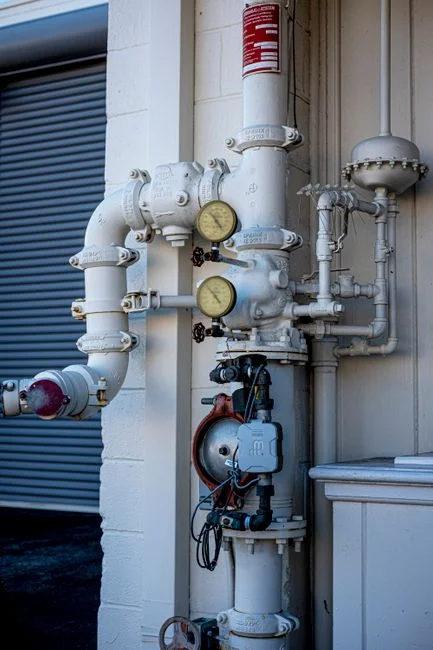
The train below is the ordered equipment list an EPC can drop into a P&ID. Each step is justified by the contaminant it removes or the risk it mitigates.
Cooling-tower make-up and blowdown reuse line: Intake → rotary mechanical bar screen (3–5 mm aperture) → multi-media filter (5–10 µm sand/anthracite/GAC, targeting SDI < 3) → twin-tank industrial water softener OR PLC-controlled antiscalant dosing skid (holding LSI in the −0.5 to +0.5 band) → industrial RO system at 75–80% local recovery → pipeline UV sterilizer or on-site ClO2 generator for polishing → cooling-tower make-up.
Sanitary, cafeteria and wash-down sidestream: Equalisation basin → DAF unit (FOG and colloidal removal) → MBR system (10–2,000 m³/day, <1 µm effluent, 95–99% COD/BOD removal) → UV polishing → reuse for irrigation or toilet flush, or sewer discharge.
| Step | Unit operation | Primary function | Key design target |
|---|---|---|---|
| 1 | Rotary mechanical bar screen | Rags, debris removal | 3–5 mm aperture, continuous duty |
| 2 | Multi-media filter | Turbidity, SDI reduction | SDI < 3 to feed RO |
| 3 | Softener or antiscalant dosing | Hardness, scale control | LSI −0.5 to +0.5 |
| 4 | Brackish RO | TDS, silica reduction | 75–80% recovery, permeate < 50 ppm TDS |
| 5 | UV or ClO₂ polishing | Microbial control on recycle | >40 mJ/cm² UV or 0.2–0.5 ppm ClO₂ |
| 6 | DAF for oily/cafeteria | FOG, colloids | Air-to-solid ratio 0.005–0.015 |
| 7 | MBR for sanitary | Organics, suspended solids | MLSS 8,000–12,000 mg/L, flux 10–20 LMH |
RO permeate polished to <50 ppm TDS is suitable for direct cooling-tower make-up (per IDE-Tech, 2026). For Baghdad's hot summer loops where free chlorine residual decays within hours, on-site ClO₂ generation is the safer biocide because it maintains residual across long return lines and does not form trihalomethanes at the dose rates used (1–2 mg/L).
Three Cooling-Blowdown Strategies Compared for Baghdad
The three philosophies below cover the realistic decision space a Baghdad developer will face: how much to spend on treatment versus how much freshwater to keep drawing.
| Parameter | A. Discharge to municipal WWTP | B. Side-stream RO reuse | C. High-recovery closed loop |
|---|---|---|---|
| Overall water recovery | 0% (once-through) | 50–70% | ~95% |
| Freshwater saving vs. baseline | 0% | 15–25% | 40–60% |
| Discharge volume | 100% of blowdown | 30–50% of blowdown | <10% of blowdown (as brine) |
| Permeate silica | n/a | <10 mg/L typical | ~1 mg/L (per IDE-Tech MAXH₂O) |
| CAPEX class | Low (pre-treatment only) | Medium | High |
| OPEX class | Low (discharge fees, water purchase) | Medium (membrane replacement, energy) | High (energy, seed handling) |
| Simple payback | n/a | 3–5 years | 5–8 years |
| Operational complexity | Low | Medium (RO operations) | High (brine chemistry, seed handling) |
| Best fit for Baghdad | Only if sewer has residual capacity and ESG mandate is weak | Default choice for 10–30 MW colocation | Hyperscale sites with water-stress disclosure to tenants |
Option A (discharge with pre-treatment) is the lowest CAPEX path but is increasingly unacceptable for hyperscale tenants with published water-positive targets, and it consumes the entire Tigris allocation the data center was trying to preserve. Option B pairs a conventional HydropureWater industrial RO system with an ultrafiltration pre-filter to deliver 50–70% loop closure, which is the practical sweet spot for most Baghdad sites. Option C is reserved for sites where the tenant contract demands near-zero liquid discharge or where freshwater cost and discharge fees together push a 3–5 year payback even at higher CAPEX (per Ecologix, 2026; per IDE-Tech, 2026).
Baghdad 10 MW Case Study: Flows, Equipment and Payback in USD
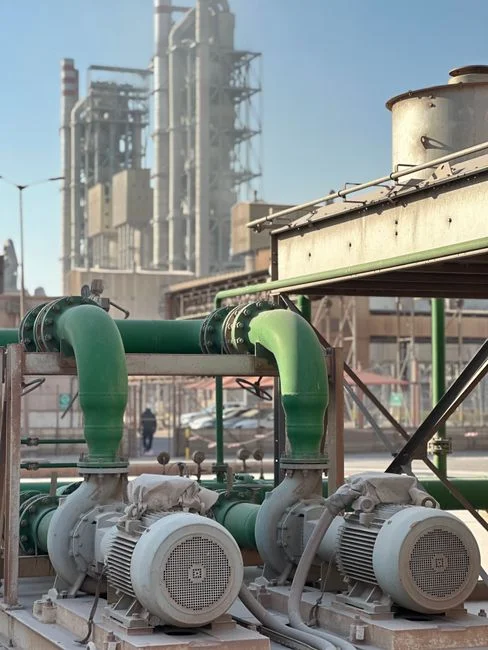
Scenario: 10 MW IT load, PUE 1.3, evaporative cooling, design CoC 5, summer ambient 45 °C. Inputs are derived from the WUE 1.8 L/kWh benchmark and the blowdown rule B = E/(CoC − 1), not from a proprietary site survey.
| Parameter | Value | Derivation |
|---|---|---|
| IT energy | 10 / 1.3 ≈ 7.7 MW | IT load ÷ PUE |
| Daily IT energy | ~185 MWh | 7.7 MW × 24 h |
| Daily water intake | ~0.5–0.7 million L | 185,000 kWh × 1.8 L/kWh (× 1.5–2.0 PUE factor) |
| Evaporation share | ~60% | Per Ecologix, 2026 |
| Blowdown at CoC 5 | ~120–170 m³/day | B/M = 1/(5−1) = 25% of make-up |
| Recoverable water (Option B) | ~60–110 m³/day | ~50–70% recovery of blowdown |
| Sanitary + greywater | ~15–25 m³/day | Typical 50–80 L/person/day × staff |
Indicative equipment list: 1 × rotary mechanical bar screen (3–5 mm aperture), 2 × multi-media filter vessels (5–10 µm, SDI < 3), 1 × twin-tank industrial water softener, 1 × PLC-controlled antiscalant dosing skid, 1 × RO skid at 75–80% recovery, 1 × pipeline UV sterilizer on the recycled loop, 1 × on-site ClO₂ generator, 1 × HydropureWater DAF unit for cafeteria/greywater, 1 × HydropureWater MBR system for sanitary waste.
Indicative CAPEX band: USD 350,000–600,000 for the full package, freight and installation to Baghdad included in the upper end. Simple payback: 3–5 years once freshwater cost, Baghdad discharge fees, sewage connection charges, and pumping energy for heat rejection are totalled (per Genesis Water Tech, 2026). A comparable treatment envelope for an Indonesian site is detailed in the Bandung data center blowdown engineering guide and the Medan hyperscale cooling blowdown guide, both of which anchor the same payback logic in a different source-water context.
Two Iraq-specific risks that expand the design envelope: (1) Summer peak grid outages force diesel-driven chilled-water make-up, which raises blowdown by 10–20% and pushes the MBR/DAF sidestream to its upper sizing band. (2) Ambient 45 °C+ shifts the evaporation share above the 60% design assumption, which means intake and RO capacity should be derated by 5–10% to avoid summer shortfall.
Iraq Compliance and Permitting Touchpoints for 2026
Three Iraqi authorities typically sit on a Baghdad data center wastewater submission: the Ministry of Environment (MoE) for discharge and ambient protection, the Ministry of Health (MoH) for any reuse touching hygiene or food service, and the Ministry of Housing, Utilities and Municipalities (MoHUR) for sewer connection consent. Engineers should verify the exact 2026 effluent thresholds (TDS, BOD, temperature differential, residual oxidant) against a current Iraqi regulation source rather than rely on regional proxies, because the limits differ from Jordanian, Saudi or UAE benchmarks.
Baghdad-specific constraints that frequently surface in 2026 submissions: sewer connection capacity in newer data-center districts (BGD-DCP corridor, Baghdad International Airport corridor) is finite, so a high-flow discharge application can be denied outright. Thermal-plume limits in the Tigris and irrigation canals restrict ΔT to a small range during low-flow months. Regional hyperscale tenants increasingly require ESG disclosure against ISO 14046 for water footprint and against the Science-Based Targets initiative for net-zero water in operations, both of which force a documented reuse plan into the permit file.
A monitoring plan covering intake flow, blowdown flow, TDS, pH, temperature, residual oxidant, and RO/MBR differential pressure, plus a maintenance log aligned to vendor service intervals (typically RO CIP every 1–3 months, MBR backwash daily, DAF sludge draw weekly), is the practical handover package most Iraqi reviewers will accept.
Frequently Asked Questions
How much water does a 10 MW Baghdad data center use per day?
Roughly 0.5–0.7 million L/day at PUE 1.3 and WUE 1.8 L/kWh, with about 60% lost to evaporation and the remainder discharged as blowdown at CoC 5, equivalent to 120–170 m³/day (per Ecologix, 2026).
Can cooling tower blowdown be reused in Iraq?
Yes. A brackish RO at 75–80% recovery returns clean make-up water with <50 ppm TDS, and a high-recovery brine desalter reaches ~95% overall recovery with permeate silica near 1 mg/L (per IDE-Tech, 2026).
What pre-treatment does Tigris make-up water need?
Screening at 3–5 mm, multi-media filtration to SDI < 3, softening or antiscalant dosing, and pH trim to hold the Langelier Saturation Index in the −0.5 to +0.5 band before the RO membranes (per Ecologix, 2026).
How is oily or sanitary wastewater handled on a Baghdad data center campus?
A DAF unit removes fats, oils and grease from cafeteria and wash-down waste, an MBR delivers <1 µm effluent with 95–99% COD/BOD removal, and UV or ClO₂ polishing follows before any reuse or discharge (per Ecologix, 2026).
What is the typical payback for a blowdown reuse package?
3–5 years for a 10–20 MW Middle East site once freshwater cost, discharge fees, and pumping energy for heat rejection are included in the savings (per Genesis Water Tech, 2026).
Related Equipment
- multi-media filter — specifications, capacity range, and technical data
- twin-tank industrial water softener — specifications, capacity range, and technical data
- pipeline UV sterilizer — specifications, capacity range, and technical data
- on-site ClO2 generator — specifications, capacity range, and technical data
- PLC-controlled antiscalant dosing skid — specifications, capacity range, and technical data
- rotary mechanical bar screen — specifications, capacity range, and technical data