
Why Medan Data Centers Need a Dedicated Blowdown Treatment Strategy
A data center in Medan, Indonesia needs a tropical-climate wastewater and cooling-blowdown treatment train that combines lamella clarification, dissolved air flotation, ultrafiltration pretreatment, and brackish-water reverse osmosis to recover 75-80% of cooling tower blowdown for reuse. The design must hit KLHK discharge limits under PP No. 22/2021, manage 20-40% of makeup water lost as blowdown, and stabilize cycles of concentration between 4 and 6 to control silica, calcium carbonate and calcium sulfate scaling in 28-32°C ambient conditions.
Medan presents a paradox that confuses engineers applying generic tropical-water templates. The city receives 2,000-2,500 mm of rainfall per year, yet PDAM Medan (the municipal water utility) faces seasonal demand surges during the June-September dry months, when reservoir levels drop and industrial users absorb the shortfall. For a 5-20 MW colocation site, this translates into 50,000-400,000 L/day of total water demand depending on IT load and PUE, of which 12,500-100,000 L/day leaves the cooling loop as blowdown at 4 cycles of concentration (CoC). A 100 MW hyperscale benchmark, 2 million L/day, is documented in IDE's 2026 industry analysis; right-sizing down to a realistic Medan colocation segment is where most published guidance fails.
The regulatory floor is set by two instruments. PP No. 22/2021 (Government Regulation on Wastewater Management) establishes the discharge-permit framework, while Permen LHK No. 5/2014 specifies industrial effluent quality standards, including pH 6-9 and TSS ≤200 mg/L for cooling-tower blowdown routed to surface water. On top of that, the headline metric the client's sustainability team will report is Water Usage Effectiveness (WUE), which sits at 0.47-0.65 Gal/kWh (1.8-2.5 L/kWh) for efficient facilities (per Genesis Water Technologies, 2025). Meeting that number in Medan requires a treatment train that is genuinely recoverable, not just compliant on paper.
What Goes Into Cooling Tower Blowdown at a Tropical Data Center
Cooling tower blowdown (CTBD) is the concentrated purge stream that protects an evaporative cooling loop from mineral saturation. At 4-6 CoC in a Medan facility, total dissolved solids in the bleed typically reach 1,500-3,000 mg/L, silica climbs to 50-150 mg/L, and calcium hardness, chloride, and sulfate scale proportionally. The stream also carries residual biocides, phosphonates from scale-inhibitor programs, and suspended solids stripped from the tower fill and basin. The composition is essentially already-conditioned water, contaminated mainly by concentration, not by exotic pollutants.
Equatorial ambient conditions accelerate every scaling reaction. Medan's 28-32°C wet-bulb temperature raises evaporative load, which raises mineral concentration rate per unit of makeup water. The math behind blowdown volume is simple and unforgiving: blowdown = 1/(CoC-1) × makeup volume. At 4 CoC, that ratio is 1/3, or 33% of makeup, before counting drift and leaks. At 6 CoC, the theoretical blowdown drops to 20% (per Genesis Water Technologies, 2025). The catch is that silica, calcium sulfate, and calcium carbonate all begin to precipitate above 150-180 mg/L silica and 2,000 mg/L sulfate at typical cooling-tower temperatures, so the operator who pushes CoC to chase volume savings often inherits membrane scaling and biological fouling instead.
Biological fouling deserves special attention in tropical standing water. Legionella and microbiologically influenced corrosion (MIC) both amplify in 28-32°C basin water with intermittent nutrient loading from makeup organics. The implication for a Medan site is that any treatment train must be paired with continuous microbiological control, typically an oxidizing biocide rotation or a non-oxidizing program, and that the permeate side needs a final disinfection barrier before re-entering the cooling loop.
Right-Sizing the Treatment Train for a 5 MW, 10 MW, and 20 MW Medan Site
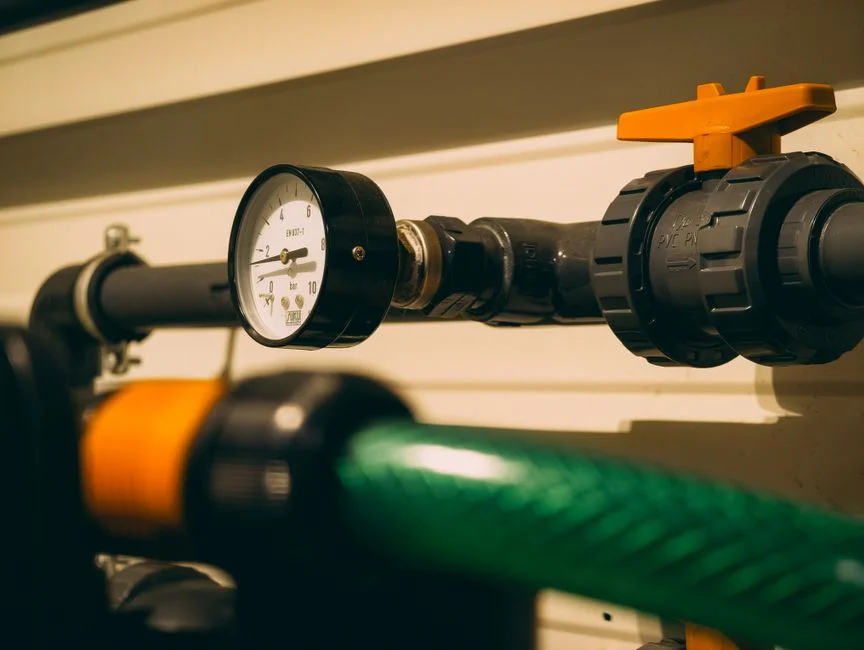
Right-sizing is the single most consequential engineering decision on a non-megawatt project. Hyperscale water-reuse technology, full UF+RO trains with multi-stage boosting, capital costs per gallon treated run 3-4× higher at 5 MW than at 100 MW, and the operational complexity exceeds what a two-shift O&M team can run (per Genesis Water Technologies, 2025). The right answer for a Medan colocation site is a modular 100-300 GPM system, sized so a 5 MW load needs roughly 25-50 GPM of blowdown treatment capacity and a 20 MW load needs 150-250 GPM.
The table below translates IT load into monthly water volumes and equipment sizing, assuming makeup demand of ~1.0 L/kWh and a 4 CoC operating target. A lamella clarifier handles primary TSS reduction at 20-40 m/h surface loading, followed by a dissolved air flotation system for oil, grease, and colloidal stripping. A 0.03 μm PVDF ultrafiltration system drops the silt density index below 3 to protect the downstream membranes, tolerating up to 300 ppm turbidity in the feed. The brackish-water RO stage runs at conservative 70-75% local recovery with a brackish-water reverse osmosis system targeted at <50 mg/L permeate TDS, paired with a PLC-controlled antiscalant and biocide dosing skid sized to 4-8 L/h per chemical feed point.
| Parameter | 5 MW site | 10 MW site | 20 MW site |
|---|---|---|---|
| Monthly makeup water | ~5,000-7,500 m³ | ~15,000 m³ | ~30,000 m³ |
| Monthly blowdown at 4 CoC | ~1,250 m³ | ~3,750 m³ | ~7,500 m³ |
| Average blowdown flow | 25-50 GPM | 75-120 GPM | 150-250 GPM |
| Lamella clarifier surface area | 2-4 m² | 5-8 m² | 10-15 m² |
| UF capacity | 5-10 m³/h | 15-25 m³/h | 30-50 m³/h |
| BWRO permeate output | 4-8 m³/h | 12-20 m³/h | 25-40 m³/h |
| Antiscalant / biocide skid | 4-6 L/h | 5-7 L/h | 6-8 L/h |
| Sludge dewatering | Small plate-and-frame filter press | Mid-capacity filter press | Dual filter press line |
Step-by-Step Process Flow: From Cooling Tower Bleed to Reusable Permeate
- Coarse screening. A rotary mechanical bar screen with 1-3 mm aperture protects the lift pumps from tower fill debris, leaf matter, and basin sediment that accumulates during Medan monsoon events.
- Lamella clarification. Coagulant-dosed bleed enters a lamella clarifier operating at 20-40 m/h surface loading; settled sludge is recirculated or sent to a plate-and-frame filter press for dewatering. Filtrate returns to the head of the plant.
- DAF polishing. A dissolved air flotation system with 15-25 minute hydraulic residence strips residual FOG, colloids, and microfloc that escape the clarifier, especially during monsoon-driven makeup swings.
- Cartridge guard and UF. 5 μm cartridge filters guard a 0.03 μm PVDF ultrafiltration system with automatic backwash and air scour. UF permeate SDI lands below 3, the standard RO feed ceiling.
- Antiscalant dosing and BWRO. A PLC-controlled antiscalant and biocide dosing skid injects a phosphate-free inhibitor; the industrial reverse osmosis system runs single-pass at 70-75% recovery. Permeate flows to the cooling-tower makeup tank; concentrate routes to a brine-recovery step or compliant discharge.
- Permeate disinfection. UV or chlorine-dioxide dosing on the permeate side establishes a Legionella control barrier before water re-enters the cooling loop.
- Sludge handling. A plate-and-frame filter press dewaters clarifier and DAF sludge to a 25-35% dry cake; filtrate returns to the head of the plant, and the cake goes to a permitted off-site hauler.
Achieving the 75-80% Recovery Ceiling Without Triggering Silica Scaling
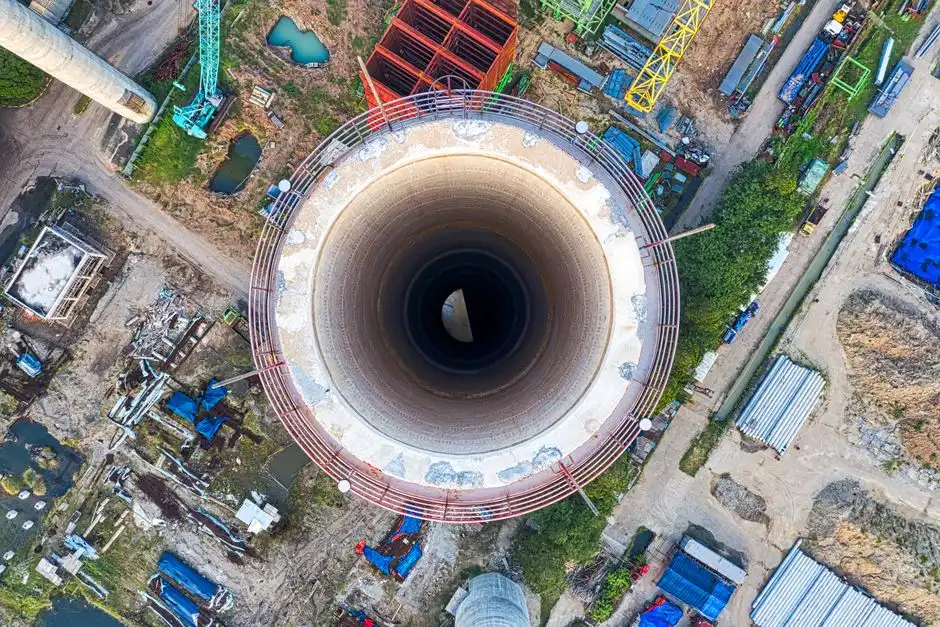
Conventional brackish-water RO plateaus at 75-80% recovery because silica, calcium carbonate, and calcium sulfate all reach saturation as the concentrate stream concentrates (per IDE Water Technology, 2026). Pushing past that ceiling with a traditional design means adding interstage boosting pumps, multi-pass layouts, and aggressive chemical dosing, which inflates both CAPEX and operational fragility on a site that only has two O&M staff per shift.
A controlled-precipitation approach sidesteps the ceiling. The concentrate from a first-pass BWRO operating at conservative local recovery is routed to a fluidized bed reactor where scaling inhibitors are deactivated under controlled chemistry. Sparingly soluble salts — silica, calcium carbonate, and calcium sulfate — precipitate as dense pellets on seed material and are withdrawn as a solid waste stream. The remaining liquor is predominantly sodium chloride, which can be processed at much higher recovery without the same scaling risk. Overall system recovery lands at 90-95%, with permeate silica reduced to ~1 mg/L (per IDE Water Technology, 2026).
For a 20 MW Medan site, the operating-economics translation is concrete. Recovering 90% of blowdown instead of dumping it after a single RO pass cuts freshwater intake by roughly 6,000 m³/month and reduces PDAM Medan draw during the dry-season squeeze. The tropical caveat is non-negotiable: warmer feed water accelerates silica polymerization, so any high-recovery design must include temperature-corrected saturation modeling rather than relying on temperate-climate projection software.
CAPEX, OPEX, and Payback in IDR for a Modular Medan Installation
Published benchmarks put a 15 MW modular blowdown treatment plant at roughly USD 200,000 in CAPEX (per Genesis Water Technologies, 2025). At a 2026 USD/IDR reference of approximately 16,000 IDR/USD, that benchmark translates to IDR 3.2 billion for the 15 MW case, and the table below scales the modular scope across the 5-20 MW Medan range. The cost structure deliberately excludes hyperscale-grade multi-stage RO layouts, which inflate per-gallon CAPEX 3-4× at small scale and rarely earn back their premium in a 5-15 MW colocation segment.
| Cost line | 5 MW site | 10 MW site | 20 MW site |
|---|---|---|---|
| Modular CAPEX (equipment + installation) | IDR 1.5-2.0 billion | IDR 2.5-3.2 billion | IDR 4.0-5.5 billion |
| Annual antiscalant + biocide OPEX | IDR 120-180 million | IDR 250-350 million | IDR 450-650 million |
| RO membrane replacement (3-5 yr cycle) | IDR 90-130 million/yr amortized | IDR 180-260 million/yr | IDR 350-500 million/yr |
| Filter press cloths + consumables | IDR 25-40 million | IDR 40-60 million | IDR 70-100 million |
| Electricity at ~IDR 1,100-1,400/kWh (Sumatra industrial tariff) | IDR 80-120 million | IDR 160-240 million | IDR 300-450 million |
| Operator labor (2 hr/day) | IDR 90-130 million | IDR 90-130 million | IDR 130-180 million |
| Estimated simple payback | 4.0-5.0 years | 3.0-4.0 years | 2.5-3.5 years |
Payback compresses to 3-5 years once total cost of water is included: PDAM Medan bulk potable rate, KLHK discharge fees, and the community-relations risk of a visible discharge plume during dry months. The indirect water penalty from upstream electricity and chemicals is roughly 0.93 L/m³ (per Open Engineering LCA, 2026), which amounts to <0.1% of the direct displacement benefit and does not change the business case.
Medan-Specific Compliance and Operational Considerations
The compliance chain is layered. PP No. 22/2021 sets the permitting and discharge framework; Permen LHK No. 5/2014 sets the effluent quality standards, pH 6-9, TSS ≤200 mg/L, plus BOD/COD limits if the blowdown is blended with sanitary waste before final discharge. KLHK also requires an environmental monitoring plan (RPL) and an environmental management plan (RKL), which are normally bundled into the AMDAL or UKL-UPL process that the EPC contractor submits with the building permit package.
Operational reality in Medan is shaped by PDAM raw-water variability. Wet-season intake can run 80-150 mg/L TDS; dry-season intake climbs to 250-400 mg/L as the treatment plant pushes its recovery higher. That swing shifts makeup chemistry and therefore the practical CoC ceiling, so the operator must be ready to drop CoC from 6 to 4-5 in the July-September window without triggering a KLHK excursion. Continuous online monitoring of conductivity, pH, ORP, and free chlorine on the cooling loop is the minimum instrumentation needed to feed the WUE report the client owes to its sustainability committee.
Two alarms are non-optional on a Medan site. First, a 24/7 cooling-tower basin level and conductivity alarm prevents emergency dumps, which field data shows can inflate actual blowdown 15-30% above theoretical (per Genesis Water Technologies, 2025). Second, a concentrate-flow interlock on the BWRO skid prevents membrane over-recovery events during monsoon-driven feed variability. Both alarms tie back to the SCADA package and to the O&M contractor's monthly compliance report.
For facilities in similar water-stressed tropical or Mediterranean climates, the same modular approach applies. Comparable engineering specs for data center blowdown treatment in Accra and for data center blowdown treatment in Athens follow the lamella → DAF → UF → BWRO logic, with the local discharge and water-cost inputs swapped in. If a site is moving toward closed-loop cooling, the next step is the Zero Liquid Discharge adoption in 2026 trajectory, where the brine-recovery step above becomes the concentrate offtake for a crystallizer rather than a discharge stream.
Frequently Asked Questions
What cycles of concentration should a Medan data center target for its cooling tower?
4-6 CoC is the operating window for a Medan tropical site. Below 4 CoC, freshwater consumption and PDAM draw become uneconomic; above 6 CoC, silica, calcium sulfate, and microbiological fouling risk escalates faster than the modest 5-percentage-point blowdown reduction (per Genesis Water Technologies, 2025). The target narrows to 4-5 CoC in the July-September dry season when PDAM intake TDS rises.
What are the discharge limits for cooling-tower blowdown under Indonesian law?
Permen LHK No. 5/2014 sets the industrial effluent quality standards at pH 6-9, TSS ≤200 mg/L for cooling-tower blowdown routed to surface water, and BOD/COD limits if the stream is blended with sanitary waste. PP No. 22/2021 governs the discharge permit and the AMDAL/UKL-UPL environmental management documentation that the operator must file.
What minimum pretreatment does reverse osmosis need on cooling-tower blowdown?
RO membranes on CTBD feed require SDI below 3, achieved with lamella clarification, DAF, 5 μm cartridge filtration, and a 0.03 μm PVDF ultrafiltration stage. Without UF, the silt density index routinely exceeds 5 and the RO membrane replacement cycle shortens from 5 years to under 2 years.
Do air-cooled chillers eliminate the need for blowdown treatment in Medan?
No. Air-cooled chillers remove the evaporative loop but still carry adiabatic cooling, humidification, and once-through heat-exchanger loads that produce concentrated wastewater. In a Medan 28-32°C ambient, hybrid systems with adiabatic pre-cooling continue to generate a blowdown stream, just smaller than a full evaporative design, and the same KLHK discharge compliance still applies.
What is the typical payback for a 10 MW blowdown treatment plant in Medan?
3.0-4.0 years simple payback for a modular 10 MW scope (IDR 2.5-3.2 billion CAPEX) once total cost of water, including PDAM Medan bulk rate, discharge fees, and community-relations risk, is included (per Genesis Water Technologies, 2025). The payback compresses below 3 years at 20 MW scale and lengthens past 4 years at 5 MW where OPEX dominates.
Related Equipment
- industrial reverse osmosis system — specifications, capacity range, and technical data
- multi-media filter — specifications, capacity range, and technical data