How Victoria Regulates Industrial Effluent in 2026
An effluent treatment plant in Victoria in 2026 must be designed around the EPA Victoria framework under the Environment Protection Act 2017, including the General Environmental Duty, works approvals for scheduled activities, and trade-waste agreements with the relevant Melbourne-area water authority.
The General Environmental Duty (GED) is the centrepiece. It is a duty to minimise the risk of harm to human health and the environment from your activities — not merely to meet a numerical discharge limit. EPA Victoria can take action under the GED even when there is no specific licence breach, so the design basis for any rotary mechanical bar screen for headworks through to disinfection must be defensible against "risk of harm", not just "compliance with consent". A works approval is triggered when a scheduled activity is carried out at a design capacity above the published threshold — common triggers in food & beverage, textiles and metal finishing are the prescribed waste, sewage and industrial wastewater activity descriptions in the Environment Protection Regulations 2021. Once the works approval is granted, the site then holds either a development licence (during construction and commissioning) or an operating licence (once commissioned). On the sewer side, every Victorian site discharges to a water authority with its own acceptance criteria: Melbourne Water (central/metro), Yarra Valley Water, Greater Western Water, South East Water, and South Gippsland Water each maintain a separate trade-waste customer charter with pH, temperature, metals, FOG and hydraulic-load limits. EPA Victoria is moving towards near-real-time compliance reporting. A 2021 wireless sensor network study in the Acta Polytechnica Hungarica, Vol. 18, No. 10 reported that real-time pH, DO and turbidity monitoring cut detection time, cost and compliance review effort by approximately 30%, 24% and 10% respectively — the new compliance norm that your 2026 specification should be written against.
Step 1: Characterise the Influent Before You Choose Equipment
No defensible treatment train can be specified without an influent data set that covers at least one full production week, including a cleaning-in-place or batch-discharge peak.
The Global NEST characterisation of textile industries in Kaduna, Nigeria is a useful benchmarking extreme: across five mills, colour exceeded the local regulatory limit by ~350×, COD by ~24×, TSS by ~13×, NH3 by ~8× and BOD5 by ~7× (Global NEST Journal). When your raw wastewater is anywhere near that profile, equalisation becomes non-negotiable before any biological stage. The minimum data set a Victorian process engineer should collect is a 24-hour composite plus 8 grab samples spread across the production week, analysed for pH, TSS, COD, BOD5, oil & grease, ammonia, total nitrogen, total phosphorus, temperature, conductivity, and any sector-specific metals, dyes, surfactants or PFAS. Design hydraulic capacity must be set against the peak-to-average flow ratio — typically 2–4× for food & beverage sites and 1.5–2× for tanneries — so equalisation tank volume and pump sizing are not under-scoped. Each pollutant then maps to a unit operation, so the train logic is visible before any brand or model is named: FOG and colloids → DAF; soluble COD/BOD → biological (CAS or MBR); ammonia → nitrification/denitrification; residual solids → UF polishing; dissolved salts → RO. The list below shows the minimum 2026 sampling panel and the unit operation that addresses each parameter.
| Parameter | Why it matters | Typical design range (industrial) | Primary unit operation |
|---|---|---|---|
| pH | Biological inhibition, trade-waste limit | 6.0–9.0 (discharge 6.5–9.0) | Equalisation + automatic chemical dosing system |
| TSS | Sludge yield, membrane fouling | 200–2,000 mg/L | DAF / lamella clarifier |
| COD / BOD5 | Organic load, aeration tank sizing | 500–10,000 mg/L COD | MBR or CAS |
| Oil & grease | Coating of biomass, blockages | 50–500 mg/L | DAF with coagulant |
| NH3-N | Toxicity, trade-waste surcharge | 20–200 mg/L | Nitrification (MBR/CAS) |
| Total P | Trade-waste and licence trigger | 5–50 mg/L | Chemical precipitation / EBPR |
| Conductivity / salts | Reuse suitability | 1,000–10,000 µS/cm | RO polishing |
Step 2: Build the Treatment Train — From Bar Screen to Polishing
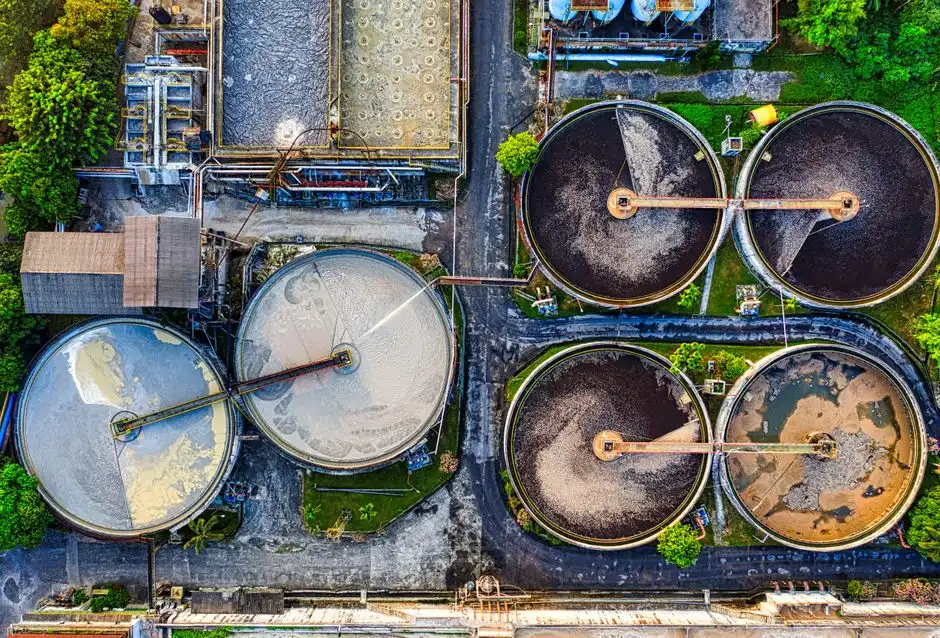
A typical Victorian industrial ETP is a five-stage train: headworks, primary clarification, secondary biological, tertiary/polishing, and disinfection. Each stage has a defensible default, with alternatives driven by influent data and the discharge or reuse endpoint.
Headworks starts with a rotary mechanical bar screen for headworks (2–6 mm aperture) to remove rags, plastics and fibrous debris before they reach pumps and membranes. From there, primary clarification removes the bulk of FOG, colloids and settleable solids. A DAF system for primary clarification (4–300 m³/h) is the right call on high-FOG or colloidal streams such as dairy, edible oils, and meat processing; a lamella clarifier at 20–40 m/h surface loading rate is the better answer for lower-loading streams. Coagulant and flocculant dosing is handled by a PLC-controlled injection skid and typically cuts coagulant use by up to 30% versus manual dosing. Secondary biological treatment is where the biggest CAPEX and OPEX decision sits. An MBR membrane bioreactor system with submerged PVDF membranes at <1 µm nominal pore size delivers a 60% smaller footprint than conventional activated sludge (CAS) and produces a directly reusable effluent. For space-constrained or unmanned sites, the WSZ underground package sewage treatment plant (1–80 m³/h) buries the A/O process below grade and eliminates visible civil work. Tertiary polishing is selected by the reuse endpoint. An ultrafiltration system as RO pretreatment (0.03 µm PVDF, 2,000–40,000 L/h) is the standard RO guard when closed-loop or boiler-feed reuse is targeted, with RO systems sized for up to 95% recovery. Where a low-OPEX polish is acceptable, constructed-wetland or green polishing can address micropollutants, per Wageningen University research (WUR thesis 8189, 2024). Disinfection closes the train. A UV sterilizer for chemical-free disinfection at 30–40 mJ/cm² is effective against Cryptosporidium and Giardia and avoids the trade-waste issues that chlorination can create; chlorine dioxide (50 g/h to 20,000 g/h) is selected where a residual is required by the water authority.
Process Comparison: Which Train Fits Which Site
The right train is a function of influent strength, the discharge or reuse target, footprint, and the OPEX profile your site can carry. The table below is a defensible 2026 selection matrix for Victorian industrial sites.
The MBR row draws on the technical lineage set out in the MBR vs CAS comparison guide — MBR wins on footprint and reuse water quality, CAS wins on simple OPEX where the endpoint is sewer discharge. Hybrid trains are also worth a line item: the Chicago Water Purification Plant combines MBR with advanced chemical treatment and reports an energy reduction of over 30% versus the previous conventional design (waterandwastewater.com, 2024). Looking forward, direct nanofiltration polishing of secondary effluent is technically capable of meeting EU Water Framework Directive standards for agricultural or potable reuse, per the University of Twente thesis on direct nanofiltration (Schrader, 2014) — a forward-looking option for water-scarce regional Victorian sites.
| Train option | Influent strength | Target effluent | Footprint | OPEX character | Reuse suitability | Typical Victorian use case |
|---|---|---|---|---|---|---|
| DAF + CAS + chlorination | Low–medium (COD <1,500 mg/L) | Trade-waste consent | Large | Low (simple aeration) | None | Small food processor discharging to sewer |
| DAF + MBR + UV | Medium (COD 1,500–5,000 mg/L) | Discharge or boiler feed | ~60% smaller than CAS | Medium (membrane cleaning) | High (UF pretreated) | Pharma, dairy, beverage |
| Equalisation + anaerobic + MBR + RO | High (COD >5,000 mg/L) | ZLD / high-grade reuse | Medium (biogas offsets) | High (energy) offset by biogas | Very high | Distillery, large F&B, integrated textile |
| DAF + UF + RO + constructed wetland | Variable | Agricultural or indirect potable reuse | Medium | Medium | Highest | Water-scarce regional VIC sites targeting reuse |
Sludge Handling and the 2026 OPEX Picture
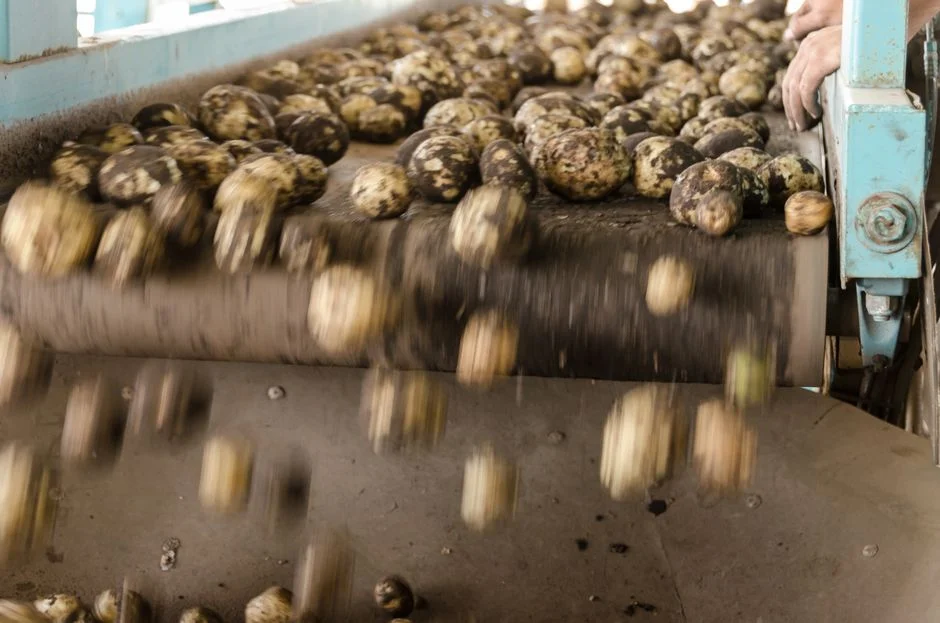
Sludge is the line item that often doubles an ETP's lifecycle cost and the one most preliminary designs under-specify. Two treatment routes dominate in 2026. Aerobic digestion produces a stabilised biosolids cake suitable for off-site disposal or, where EPA Victoria waste classification permits, on-site reuse. Anaerobic digestion produces biogas that can offset aeration energy — typically 0.2–0.4 m³ biogas per kg COD removed — and is the right call on any high-strength stream above ~3,000 mg/L COD. For dewatering, a plate and frame filter press for sludge dewatering (1–500 m² filtration area) reduces sludge volume to a 18–25% dry solids cake, which materially lowers transport cost and landfill levy exposure. For very small plants below 50 m³/day, an electro-dewatering (EDR) option is a defensible alternative.
On the broader OPEX picture, the integrated water resource management literature reports operational cost reductions of up to 30% through improved resource efficiency and stakeholder collaboration (waterandwastewater.com, 2024). The same source notes that approximately 40% of US wastewater plants struggle to meet regulatory requirements — a figure that frames why under-speccing an ETP always costs more across its lifecycle. Real-world 2026 OPEX drivers, in descending order, are energy (typically 25–40% of OPEX), chemical dosing (10–20%), sludge transport and disposal (15–30% on high-strength sites), trade-waste fees (volume- and load-based), and labour. A high-efficiency sedimentation tank ahead of the biological stage reduces solids loading and lifts the dewatering cake solids, cutting both chemical and transport cost lines.
CAPEX and Lead-Time Benchmarks for a 2026 Victorian Build
Budget meetings go better when you walk in with an envelope. For a 2026 Victorian industrial ETP, installed CAPEX typically falls within AUD $8,000–$25,000 per m³/day, with skid-built packaged systems at the low end and full turnkey builds including civil works at the high end. The table below gives indicative working bands.
| Plant size class | Indicative installed CAPEX (AUD/m³/day) | Typical scope | Indicative lead time |
|---|---|---|---|
| <50 m³/day | $15,000–$25,000 | Containerised / skid, minimal civil | 8–14 weeks |
| 50–500 m³/day | $10,000–$18,000 | Skid-built packaged ETP, small civils | 12–20 weeks |
| 500–2,000 m³/day | $8,000–$14,000 | Full turnkey, MBR or CAS + UF/RO option | 16–28 weeks |
| >2,000 m³/day | $8,000–$12,000 | Turnkey with reuse train, SCADA, full civils | 24–40 weeks |
The biggest CAPEX drivers, in order, are equalisation volume (rule of thumb: 12–24 hours of average flow), the choice between MBR and CAS (MBR carries a 15–25% premium for the membrane cassette but saves civil footprint), the inclusion of UF and RO polishing (each step adds 20–35% to equipment CAPEX), brownfield versus greenfield civil scope, and the depth of SCADA and automation. For reuse trains, the RO water purification system is the single largest line item once flow exceeds 200 m³/day. Lead times in 2026 are 8–14 weeks for skid-built packaged systems and 16–28 weeks for full turnkey builds including civil works and commissioning — and that is before you add the 12–24 week EPA Victoria works approval pathway, which is why pre-lodgement meetings are scheduled at the front end of the project, not the back.
Procurement Checklist and Frequently Asked Questions
A defensible 2026 procurement pack for a Victorian industrial ETP upgrade or new build covers: (1) a written influent characterisation report with composite and grab data; (2) records of an EPA Victoria works-approval pre-lodgement meeting; (3) written pre-approval from the relevant water authority trade-waste team; (4) pilot trial data on the proposed biological and membrane unit operations; (5) performance guarantees backed by bonded liquidated damages; (6) a complete O&M manual with alarm setpoints; and (7) a training and commissioning scope with named engineers. For cross-checking the procurement logic on a same-archetype build, the Calgary ETP buyer's guide and the Binh Duong domestic sewage guide apply the same regulatory-first, CAPEX-banded approach to two very different jurisdictions.
Frequently Asked Questions
When does a Victorian industrial site need an EPA Victoria works approval for a new ETP?
A works approval is triggered when a scheduled activity under the Environment Protection Regulations 2021 is carried out above the published design capacity threshold — typically industrial wastewater handling above the activity's stated kL/day or annual waste volume. The application is lodged with EPA Victoria before construction, and a development licence covers the build and commissioning phase.
What is the General Environmental Duty and how does it change ETP design?
The GED under the Environment Protection Act 2017 is a duty to minimise risk of harm to human health and the environment, not just to meet a numerical consent limit. It shifts ETP design from "meet the number" to "defend the risk", which in practice means tighter equalisation, real-time monitoring, and documented risk assessment for each unit operation.
How much does an industrial ETP cost per m³/day in Victoria in 2026?
Installed CAPEX typically falls between AUD $8,000 and $25,000 per m³/day, with skid-built packaged systems at the low end and full turnkey builds including civil works at the high end. Plants above 500 m³/day with MBR and RO polishing usually sit between $8,000 and $14,000 per m³/day.
What is the typical footprint saving of an MBR versus conventional activated sludge?
A membrane bioreactor with submerged PVDF membranes at <1 µm nominal pore size typically delivers around 60% smaller footprint than a conventional activated sludge plant of the same treatment capacity, because the membrane cassette replaces a large secondary clarifier and allows much higher mixed liquor suspended solids.
Which disinfection method is preferred for trade-waste discharge in Victoria?
UV-C at 30–40 mJ/cm² is the preferred chemical-free option and is effective against Cryptosporidium and Giardia. Chlorine dioxide (50 g/h to 20,000 g/h) is selected where the water authority's trade-waste agreement requires a residual at the discharge point.