
Why Binh Duong's Domestic Sewage Problem Is Different in 2026
Domestic sewage treatment in Binh Duong in 2026 typically pairs a biological stage (A/O packaged plant, MBBR, or MBR) with disinfection, targeting QCVN 14:2008 column B for surface-water discharges. The 2024 Thu Dau Mot University study reported an operating domestic STP achieving 98.62% TSS, 99.28% BOD5, 93.24% COD, 99.16% NH4+, and 99.62% coliform removal (Huynh & Nguyen, 2024) — proof that well-designed biological trains consistently clear Vietnam's discharge limits in Binh Duong's residential and mixed-sewage catchments.
Binh Duong hosts 33+ operational industrial zones across Thu Dau Mot, Di An, Thuan An, and Ben Cat, with a provincial population crossing 2.5 million and a worker-housing population that doubles daytime loading in the sewer network. That dual character is what makes domestic sewage treatment in Binh Duong an engineering problem distinct from Ho Chi Minh City or Hanoi: residential blackwater from apartment blocks mixes with food-service and worker-dormitory greywater in the same trunk sewer, and the diurnal curve spikes hard between 06:30–08:00 and 18:00–21:00. Influent BOD5 typically lands in the 200–300 mg/L band and TSS in the 200–400 mg/L band, with oil/grease pulses from canteens that can momentarily push COD above 500 mg/L.
Receiving-water sensitivity pushes most new projects toward QCVN 14:2008 column B rather than column A. The Saigon River, Dong Nai tributaries, and the inner-city canals of Thu Dau Mot and Di An are classified for multiple uses including water supply abstraction downstream; column A is reserved for direct discharge to large, high-assimilation rivers, while column B applies to canals, streams, and discharges within 1 km of a water-supply intake. For a residential block, dormitory, or mixed-use project on any Binh Duong tributary, column B is the safe default. This regulatory frame is the reason a packaged A/O plant that "passes column A" is rarely the right answer here — the question is whether the train can clear column B for ammonia, total nitrogen, and fecal coliform on a consistent basis, not on a single test day.
QCVN 14:2008 and the 2026 Discharge Targets You Must Hit
QCVN 14:2008/BTNMT is the binding national standard for domestic wastewater in Vietnam, and the column you target is set by both receiving-water classification and plant hydraulic capacity. Column A applies to discharges into water bodies used for water supply or with high assimilation capacity; column B is the default for discharges to less-sensitive receiving waters, smaller streams, and irrigation canals — which covers the vast majority of Binh Duong residential STP outfalls.
The Thu Dau Mot 2024 study gives a defensible "achieved" line for a working plant in the province. Mapping each of those results to the relevant QCVN 14:2008 parameter shows the published performance clears column B limits with margin, and even approaches column A for several parameters.
| Parameter | Thu Dau Mot 2024 achieved removal | QCVN 14:2008 column B target (typical) | Compliance margin |
|---|---|---|---|
| TSS | 98.62% | ≤ 50 mg/L (column B) | Comfortably clear |
| BOD5 | 99.28% | ≤ 25 mg/L (column B) | Comfortably clear |
| COD | 93.24% | ≤ 50 mg/L (column B) | Clear with operational margin |
| NH4+ (as N) | 99.16% | ≤ 5 mg/L (column B) | Clear — requires nitrification stage |
| Total nitrogen | 87.80% | ≤ 20 mg/L (column B) | Clear with denitrification stage |
| Total phosphorus | 86.57% | ≤ 4 mg/L (column B) | Clear with biological P removal; chemical polishing for TP < 2 mg/L |
| Coliform | 99.62% | ≤ 3,000 MPN/100 mL (column B) | Clear only with dedicated disinfection step |
Two regulatory points to flag in 2026: the 2024 amendment path is tightening ammonia, total nitrogen, and fecal coliform limits progressively, and provincial DONRE reviewers in Binh Duong are now asking for 12-month composite operating data, not single-day test results, before signing off on discharge permits. That trend should drive your design toward a train with a true nitrification/denitrification stage (A/O or A2O) and a reliable disinfection step — not a bare biological contact oxidation tank with a chlorine dunk.
How a Modern Domestic Sewage Treatment Train Works
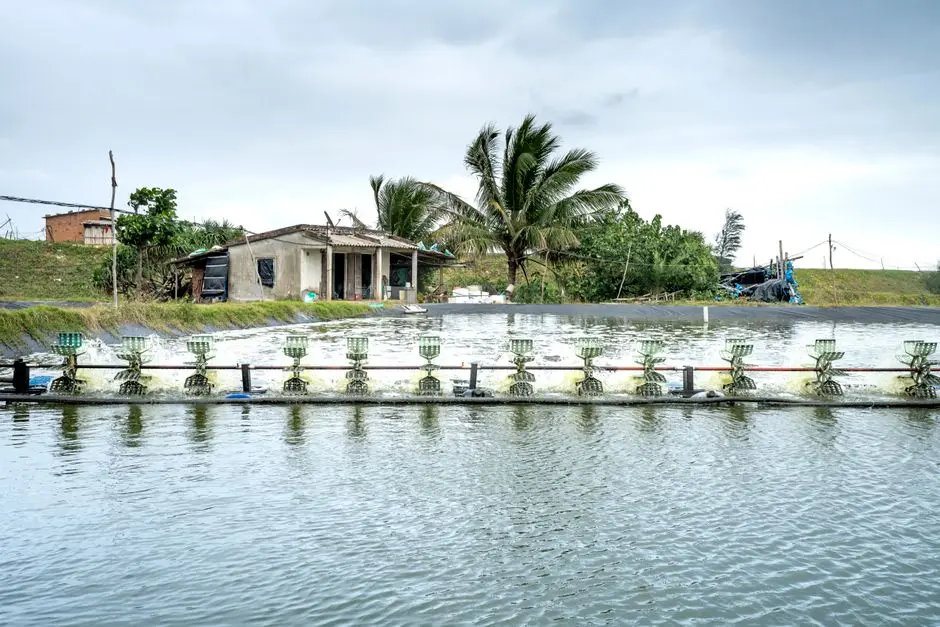
A modern domestic STP in Binh Duong is a four-stage train: preliminary screening → flow equalization → biological reactor → clarification/disinfection. The first line of defense is a rotary mechanical bar screen with 5–10 mm clear openings to strip rags, plastics, and food waste before they reach the biological stage; without it, downstream diffusers clog within weeks and MLSS control becomes impossible.
Equalization follows screening. For a 100–500 m³/day residential or dormitory project, the EQ tank should be sized for 6–8 hours of average flow with continuous mixing and aeration — this is what smooths the morning/evening peaks typical of Binh Duong's residential catchments. A properly sized EQ tank is the single most cost-effective piece of equipment in the whole train; undersizing it is the most common cause of sludge washout events in packaged plants.
The biological reactor is where the work happens. For an A/O packaged plant, the A-stage (anoxic) and O-stage (aerobic) sit in two chambers of one buried tank with mixed-liquor recirculation; for MBBR, biofilm carriers fill the aerobic tank at 30–50% fill ratio and HRT drops to 4–6 hours; for MBR, the membrane cassette replaces the clarifier and HRT stretches to 6–10 hours while SRT runs 20–30 days. The Huynh & Nguyen (2024) study's 99.16% NH4+ removal only happens when dissolved oxygen stays above 1.5 mg/L in the aerobic zone — a DO controller, not a timer, is the lever. Final-stage clarification (settling tank for A/O, membrane cassette for MBR) is followed by a chlorine dioxide disinfection generator at 1.5–2.5 mg/L residual for 30 minutes contact, or a UV dose of 40 mJ/cm², to deliver the 99.62% coliform removal the Thu Dau Mot plant demonstrated. Skipping disinfection to save capex is the most common reason QCVN coliform limits fail in Binh Duong discharge samples.
A/O Packaged Plant vs MBBR vs MBR: A 2026 Process Comparison
For 10–500 m³/day domestic STPs in Binh Duong, the three realistic options are an underground A/O packaged sewage treatment plant, a containerized MBBR, or an MBR membrane bioreactor system. The choice is driven by footprint, reuse intent, and capex, not by effluent quality at the column B threshold — any of the three, properly designed, can clear QCVN 14:2008 column B.
| Parameter | A/O packaged (WSZ) | MBBR (containerized) | MBR (skid/containerized) |
|---|---|---|---|
| Typical footprint (per m³/day) | 0.15–0.25 m² | 0.08–0.15 m² | 0.06–0.10 m² |
| HRT (biological stage) | 8–12 h | 4–6 h | 6–10 h |
| SRT | 10–20 days | Carrier-attached biofilm (no SRT in classical sense) | 20–30 days |
| MLSS | 3,000–5,000 mg/L | 2,000–4,000 mg/L | 8,000–12,000 mg/L |
| Effluent TSS (typical) | ≤ 30 mg/L | ≤ 30 mg/L | ≤ 1 mg/L (membrane barrier) |
| Reuse-ready effluent | No (toilet flush only with tertiary) | No (tertiary needed) | Yes — toilet flush, landscape irrigation |
| Indicative 2026 capex (USD per m³/day, installed) | USD 120–250 | USD 200–400 | USD 350–650 |
| Operator skill required | Low (PLC, no membrane) | Low–medium (carrier management) | Medium (membrane CIP, aeration tuning) |
| Best fit in Binh Duong | Budget-driven residential, no reuse target | Mid-size dormitory, hospital, school | High-end residential, water-reuse mandate |
The Thu Dau Mot 2024 benchmarks (98.62% TSS, 99.28% BOD5, 93.24% COD, 99.16% NH4+, 99.62% coliform) reflect a multi-stage biological train, not a single technology, and should be read as the achievable envelope rather than a guarantee for any one of the three options. For sites where the project owner wants to reuse treated effluent for toilet flushing or landscape irrigation — a common ask under Binh Duong's green-building requirements — an MBR is the right pick because the membrane's sub-1 μm barrier produces a near-potable quality stream that needs only UV polishing before reuse. For a worker dormitory or staff camp where the effluent goes to a receiving canal and reuse is not on the table, an A/O packaged plant delivers the same QCVN column B compliance at roughly one-third the capex. MBBR is the middle path: smaller footprint than A/O packaged, cheaper than MBR, no membranes to clean.
Sizing a Domestic STP for Binh Duong Residential Projects
Per-capita sewage generation for Vietnamese urban residential and staff-camp projects lands in the 150–200 L/person/day band, with 180 L/person/day a defensible mid-point for a 2026 design. School and hospital projects trend higher (200–250 L/person/day) because of canteen and laundry loads; worker dormitories with shared kitchens trend lower (120–150 L/person/day) per occupant because of shift-based occupancy.
Worked example: a 300-household residential block in Thu Dau Mot with 4 residents per household generates 300 × 4 × 180 L/day = 216 m³/day average dry-weather flow. Apply a peak factor of 1.5–2.0 (use 1.8 for a residential catchment without significant inflow/infiltration) to get 389 m³/day peak hydraulic load on the biological stage. The biological reactor should be sized for a 24-hour HRT at average flow — that is 216 m³ of working volume for the aerobic zone alone, with the anoxic zone adding roughly 30–50% of that volume for denitrification. The EQ tank should be oversized relative to the textbook: 8–12 hours of average flow (72–108 m³ for this example) is the right band for a Binh Duong residential catchment with sharp morning and evening peaks, not the 4–6 hours many packaged-plant vendors quote.
| Project type | Population equivalent (PE) | Per-capita flow | Average flow | EQ tank sizing | Recommended train |
|---|---|---|---|---|---|
| 100-household residential block | 400 PE | 180 L/p/d | 72 m³/day | 8 h average = 24 m³ | A/O packaged (WSZ) |
| 300-household residential block | 1,200 PE | 180 L/p/d | 216 m³/day | 10 h average = 90 m³ | MBBR or MBR |
| 500-household mixed-use | 2,200 PE (residents + workers + retail) | 200 L/p/d | 440 m³/day | 10 h average = 183 m³ | MBR (if reuse required) or MBBR |
| Worker dormitory (1,000 staff) | 1,000 PE | 130 L/p/d | 130 m³/day | 8 h average = 43 m³ | A/O packaged or MBBR |
One sizing rule worth flagging: do not size the biological stage on average flow. Size it on the peak flow that the EQ tank can pass through, and size the EQ tank on the diurnal peak-to-average ratio you measured or assumed. A Binh Duong residential catchment with canteen greywater will hit a peak-to-average ratio of 2.5–3.0 in the worst hour; a worker dormitory with three shift changes will hit 3.0–3.5. Under-sizing the EQ is the most common cause of MLSS washout and the resulting effluent quality failure that gets reported back to the developer as a "biological stage problem."
2026 Cost Band and Procurement Checklist for Binh Duong
For a 2026 budget envelope on a domestic STP in Binh Duong, the realistic installed-capex bands are USD 25,000–60,000 for a 50 m³/day A/O packaged plant, USD 60,000–150,000 for a 200 m³/day MBBR, and USD 120,000–300,000 for a 200 m³/day MBR. These are EPC-and-civil-inclusive numbers for Binh Duong's soil and labor market in 2026; they exclude land cost, incoming power supply, and the discharge pipeline to the receiving water body. The range inside each band is driven by effluent target (column A pushes higher), automation level (PLC+HMI vs relay logic), and whether the unit is buried (cheaper civil) or above-grade on a skid (easier maintenance, higher enclosure cost).
Procurement checklist before issuing a PO:
- Civil GA drawings signed by a local licensed designer, including the EQ tank, biological reactor, sludge holding tank, and disinfection contact tank.
- Influent characterization report covering BOD5, COD, TSS, NH4+, TN, TP, oil/grease, and pH — required to defend the hydraulic and biological sizing to a DONRE reviewer.
- Written justification of QCVN 14:2008 column A vs column B for the specific receiving water body, with the receiving-water classification cited.
- 12-month spare-parts list (membranes for MBR, diffusers, dosing pumps, UV lamps or ClO2 precursor) — typical OpEx is 3–5% of capex per year for an A/O packaged plant, 5–8% for an MBR.
- Sludge handling design — biological sludge from these trains is 0.5–1.5% dry solids by weight, and a plate-and-frame sludge dewatering press is the standard solution to bring it to 20–25% DS cake for off-site disposal. Plan the dewatering area and the automatic chemical dosing system for polymer conditioning from day one.
One final procurement note: in Binh Duong specifically, ask the vendor for at least one reference site in the province and the actual 12-month compliance record, not the test-day result. Plants that have run a full monsoon cycle in local conditions behave very differently from commissioning-day samples.
Frequently Asked Questions
What is the typical influent BOD5 for a domestic STP in Binh Duong?
Influent BOD5 for Binh Duong residential and worker-dormitory catchments typically lands in the 200–300 mg/L band, with TSS in the 200–400 mg/L range, reflecting the mixed blackwater/greywater character and canteen food-service load (HydropureWater field data, 2026).
Which QCVN 14:2008 column applies to a residential project in Binh Duong?
Column B is the safe default for residential, dormitory, and mixed-use projects in Binh Duong unless the receiving water body is a major river with documented high assimilation capacity and the discharge point is more than 1 km upstream of any water-supply intake. The Thu Dau Mot 2024 study plant demonstrated 99.16% NH4+ and 99.62% coliform removal, clearing column B with margin (Huynh & Nguyen, 2024).
When is an MBR worth the capex premium over an A/O packaged plant?
MBR is worth the 2–3× capex premium when the project has a water-reuse mandate (toilet flushing, landscape irrigation under Binh Duong green-building rules) or when the available footprint is less than 0.10 m² per m³/day. For a 200 m³/day project, that puts MBR in the USD 70,000–130,000 equipment-cost band versus USD 24,000–50,000 for an A/O packaged plant, before civil works.
How often should sludge be dewatered in a 200 m³/day domestic STP?
For a 200 m³/day plant running at 0.8 kg TSS removed per m³ treated, expect roughly 130–160 kg DS/day of waste activated sludge at 0.8–1.2% concentration. Dewatering with a plate-and-frame press to 22–25% DS cake produces 0.5–0.7 m³ of cake per day, which fits a once-per-day batch dewatering cycle and standard transport logistics for Binh Duong.