
Why Dallas Projects Hit a Sizing Wall with Centralized Sewer
Decentralized containerized MBRs are filling a widening gap in DFW because the centralized system cannot keep up: the EPA's 2022 Clean Watersheds Needs Survey identified USD 630 billion in 20-year capital needs across U.S. wastewater and stormwater, and the ASCE 2025 Report Card kept wastewater at D+ with only about 30% of the USD 99 billion annual need currently funded (per EPA, April 2024 Report to Congress; ASCE 2025). For a developer in Collin, Denton, Ellis, or Kaufman County, that funding gap shows up as a 5–15 year wait for a sewer extension that may never arrive.
Inside Dallas city limits, Dallas Water Utilities covers the core, but most ETJ and peri-urban tracts fall outside the centralized service area and trigger TCEQ Chapter 285 On-Site Sewage Facility (OSDF) permitting, with design flows anchored to 30 TAC §285.32. The second sizing problem is thermal: Dallas summer design ambient temperatures of 95–105°F push above the 68–86°F (20–30°C) MBR design envelope documented in packaged MBR specifications, so any containerized MBR STP delivered to a DFW site needs either insulated container walls, fine-bubble diffuser derating, or shaded siting. The third is regulatory fragmentation — Texas has its own design-flow table, setback rules, and reuse pathway that no generic sizing guide covers.
Step 1 — Establish the Design Flow under TCEQ 30 TAC §285.32
30 TAC §285.32 sets a default of 50 gpcd (≈190 Lpcd) per capita for single-family residential OSDF design, with the table scaling upward for multi-family and multi-bedroom units. Workforce camps do not have a single statutory default, so the defensible move is to publish an engineered basis on the basis-of-design sheet: 35–50 gpcd per bed for permanent workforce housing, 50–75 gpcd per bed for transient construction or oil & gas camps that include showers, laundry, and food service.
Apply a peaking factor on top of the average daily flow to size for shift-change showers, morning peaks, and turnaround days. Use 1.5–2.0× for residential and 2.0–2.5× for transient camps. Convert peak flow from gpd to m³/day by dividing by 264.17.
Worked example: 400 residents × 50 gpcd = 20,000 gpd average = 75.7 m³/day. Apply a 2.0× peaking factor → 151 m³/day peak. That peak sits inside the 50–200 m³/day band served by a single 40-ft HC containerized MBR, so the design fits one skid with no parallel unit required.
| Project type | Per-capita basis | Peaking factor (Q_avg → Q_peak) | Example input | Resulting Q_peak (m³/day) |
|---|---|---|---|---|
| Single-family residential | 50 gpcd (30 TAC §285.32) | 1.5–2.0× | 200 residents | 45–76 |
| Multi-family residential | 50 gpcd (scaled per §285.32 table) | 1.5–2.0× | 400 residents | 91–151 |
| Permanent workforce camp | 35–50 gpcd per bed | 2.0–2.5× | 300 beds | 79–142 |
| Transient O&G / construction camp | 50–75 gpcd per bed | 2.0–2.5× | 200 beds | 76–142 |
Step 2 — Convert Flow to Organic and Nutrient Loading
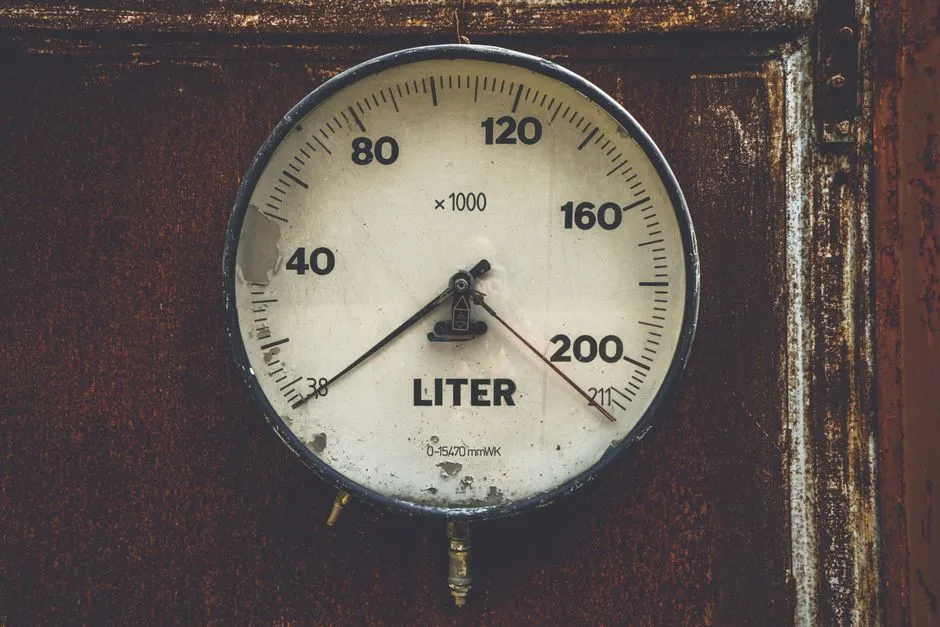
Sizing on flow alone undersizes the membrane and oversizes the blowers. The next step is converting people to pounds of BOD, TSS, TKN, and phosphorus per day so the bioreactor volume, membrane area, and aeration capacity all reconcile. Use these residential per-capita defaults as the floor: BOD 0.18 lb/person/day (≈80 g/person/day), TSS 0.20 lb/person/day, TKN 0.02 lb/person/day, and total phosphorus 0.003 lb/person/day. For camps with food service and laundry, push BOD to 0.25 lb/person/day and TSS to 0.27 lb/person/day as the starting basis.
After a 1.5 mm perforation drum screen, sanitary wastewater typically lands in the BOD 200–400 mg/L and TSS 200–350 mg/L strength range. MBR effluent targets are aggressive: BOD <5 mg/L and TSS effectively zero, with >99% BOD and TSS removal documented across full-scale peer-reviewed MBR plants (per datadeep.tech synthesis of Krzeminski et al. 2012 and subsequent reviews). Total nitrogen can be driven down with an anoxic zone ahead of the aeration tank, which most containerized MBR systems can include without expanding the skid footprint.
| Parameter | Residential default (lb/person/day) | Camp default (lb/person/day) | Raw wastewater after 1.5 mm screen | MBR effluent target |
|---|---|---|---|---|
| BOD | 0.18 (≈80 g/p/d) | 0.25 | 200–400 mg/L | <5 mg/L |
| TSS | 0.20 | 0.27 | 200–350 mg/L | ≈0 mg/L |
| TKN | 0.02 | 0.025 | 40–70 mg/L | <10 mg/L with anoxic zone |
| Total phosphorus | 0.003 | 0.004 | 6–12 mg/L | <2 mg/L with chemical precipitation |
Step 3 — Pick the Container: 20-ft HC vs. 40-ft HC
Once Q_peak is fixed, the next decision is the ISO container envelope. 20-ft HC (≈6 m) containerized MBRs handle up to ~50 m³/day (≈13,200 gpd) and 40-ft HC units handle ~50–200 m³/day (13,200–52,800 gpd) per packaged MBR specifications; anything above 200 m³/day requires parallel skids. The choice also drives what fits inside the box: drum screen, anoxic + aeration tanks, submerged hollow-fiber membrane cassettes, coarse-bubble scour blowers, permeate pumps, control panel, and (optional) UV or chlorine dioxide disinfection for Texas §285.32 reuse compliance.
Submerged hollow-fiber configuration dominates with 77% of MBR installations (Grand View Research 2024) and uses 33–37% less membrane-aeration energy than flat-sheet — a meaningful delta for Dallas summer heat derating. Hollow fiber also holds 55.74% of MBR market share by module type (Mordor Intelligence 2025). Plan redundancy into the bid: a duty + standby permeate pump and an extra membrane cassette slot raise availability above the membrane-fouling-driven 25% downtime benchmark from Market Growth Reports 2024. For a parallel review of prefabricated plant options, the same container matrix applies whether you choose MBR or MBBR.
| Container | Flow band | Typical population served (50 gpcd, 2.0× peak) | Footprint | Best fit |
|---|---|---|---|---|
| 20-ft HC | ≤50 m³/day (≤13,200 gpd) | ~100–250 residents | ~6 m × 2.4 m | Small subdivisions, gate communities |
| 40-ft HC | 50–200 m³/day (13,200–52,800 gpd) | ~250–1,000 residents | ~12 m × 2.4 m | Mid-size residential, permanent camps |
| 40-ft HC × 2 (parallel) | 200–400 m³/day | 1,000–2,000 residents | Two skids + common piping | Large camps, multi-phase subdivisions |
A factory-integrated containerized MBR system with a duty/standby cassette slot is the lowest-risk spec for a DFW buyer who has not previously owned membranes, because the OEM owns the cassette replacement cycle and the CIP recipe.
Step 4 — Confirm Site, Power, and Environmental Envelope
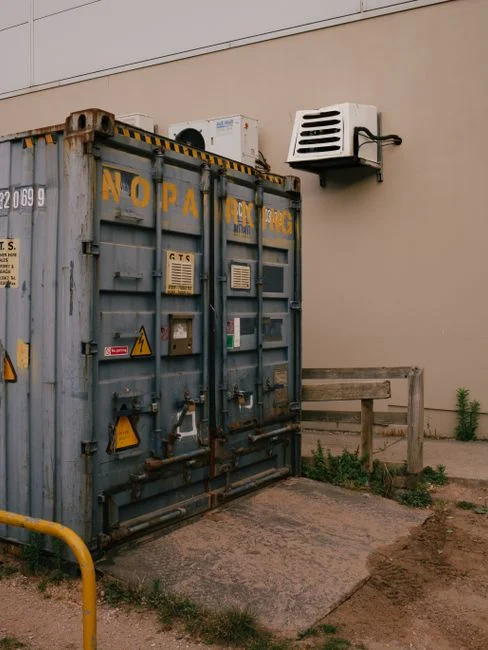
The four field conditions that turn a plug-and-play container into a redesign are electrical service, ambient temperature, setbacks, and sludge handling. The packaged MBR spec lists 460V/3Ph/60Hz as the supply standard; DFW sites that only have 208V three-phase will need a step-up transformer, and that transformer cost belongs in the CAPEX line, not buried in electrical change-order. The operating temperature range is 68–86°F (20–30°C) at a 68°F design point — Dallas sites routinely run above 90°F from June through September, so specify insulated container walls, review fine-bubble diffuser density for oxygen transfer at elevated temperature, and site the skid under a shade structure or partial berming.
TCEQ Chapter 285.32 imposes minimum setbacks from property lines, water wells, surface water, and foundations that the Site Evaluation must verify before delivery. If the design includes surface discharge under §285.32(d), TCEQ review is required and impaired-waterstream sites usually need denitrification to <10 mg/L TN. For sludge, wasted activated sludge from an MBR is typically 0.3–0.5% solids — a parallel storage tank plus a plate-and-frame sludge dewatering press produces a cake that can be hauled, and the membrane lifespan of 7–10 years should be in the lifecycle budget as a planned replacement event.
Step 5 — Budget, Energy, and Compliance Snapshot
The CAPEX band for package plants runs USD 500–2,500 per GPD of capacity (USD 3–15 million per MGD), with MBR carrying a 20–40% premium over conventional activated sludge per the datadeep.tech synthesis. That puts a 75.7 m³/day (20,000 gpd) residential unit roughly in the USD 200K–800K equipment-only band, before civil, electrical, and permitting. OPEX is dominated by energy: 0.4–2.3 kWh/m³ with aeration >50% of total, and cleaning chemicals can consume up to 25% of OPEX (Mordor Intelligence), so budget a clean-in-place system and on-site chemical dosing for membrane preservation.
The compliance basis is layered: NSF/ANSI 350-2022 for onsite reuse performance (turbidity and E. coli), TCEQ Chapter 285 for permitting, and 30 TAC §285.32 for design flow if surface discharge is intended. Reuse upside is real — MBR effluent can be routed to landscape irrigation under §285.34 if chlorine residual ≥0.5 mg/L free chlorine is maintained or UV dose ≥40 mJ/cm² is delivered downstream, and a chlorine dioxide generator sized for the peak hourly flow gives the operator a stable residual without the trichloramine loadings of bulk NaOCl. For broader energy context, the SBR energy-efficiency playbook walks the same kWh/m³ math for a competing process; an MBR will sit 10–20% above SBR on energy but recovers that with smaller tanks and zero clarifiers.
| Line item | Range / value | Source / basis |
|---|---|---|
| CAPEX, package plant (per GPD) | USD 500–2,500 | datadeep.tech synthesis, 2024–2025 |
| MBR premium over CAS | +20–40% | datadeep.tech, 2024–2025 |
| Specific energy | 0.4–2.3 kWh/m³ | Krzeminski et al. 2012; PMC 2023 |
| Aeration share of energy | >50% | datadeep.tech, 2024 |
| Cleaning chemical share of OPEX | Up to 25% | Mordor Intelligence, 2024 |
| Membrane lifespan | 7–10 years (HF) | Market Growth Reports 2024 |
| Reuse compliance | NSF/ANSI 350-2022 + §285.34 | TCEQ / NSF, 2022 |
Frequently Asked Questions
How many people can a 40-ft containerized MBR serve?
A 40-ft HC unit handles 50–200 m³/day, which translates to roughly 250–1,000 residents at 50 gpcd per the 30 TAC §285.32 default, depending on peaking factor and per-capita loading. A workforce camp at 50–75 gpcd per bed with a 2.0–2.5× peaking factor will land on the lower end of that range.
Do I need a TCEQ permit for a containerized MBR in Dallas?
Yes. TCEQ Chapter 285 OSDF authorization is required for any system ≥5,000 gpd serving non-single-family use, plus a Site Evaluation and approved planning material. For systems inside Dallas city limits with centralized sewer nearby, an exclusion may apply, but most ETJ and peri-urban DFW projects fall under Chapter 285.
Can the treated water be reused for irrigation?
Yes, if NSF/ANSI 350-2022 effluent is met and either a free chlorine residual ≥0.5 mg/L is maintained or a UV dose ≥40 mJ/cm² is delivered downstream, per 30 TAC §285.34. The downstream disinfection package is what unlocks the reuse pathway and reduces the developer's off-site disposal load.
How much does a containerized MBR cost in Texas?
Package plants run USD 500–2,500 per GPD capacity (equipment only), and MBR is 20–40% above conventional activated sludge. For a worked 75.7 m³/day (20,000 gpd) residential unit, the equipment-only band is roughly USD 200K–800K, with civil, electrical, and permitting on top.
What maintenance does a containerized MBR need?
Routine tasks include drum screen cleaning, membrane integrity air-scouring, periodic CIP, and cassette replacement at year 7–10. Hollow-fiber modules with PVDF TIPS construction are the workhorse and dominate 55.74% of the MBR market (Mordor Intelligence 2025), so parts availability in DFW is generally strong. For a hospitality-sector parallel, see the packaged MBR STP sizing methodology for hotels — the maintenance envelope is similar but the diurnal curve is sharper.
Related Equipment
- MBR flat-sheet membrane module — specifications, capacity range, and technical data