Why Coatesville Mining and Metals Plants Are Reopening the MBR vs CAS Question in 2026
At 02:00 on a March shift, a clarifier at a Coatesville steel-finishing plant started carrying pin floc over the weir while the operator was still chasing a hexavalent chrome excursion from a spent pickle rinse. By 04:00, the total suspended solids (TSS) reading at the PA DEP compliance sampler was 62 mg/L, against a Chapter 92 monthly average limit that sits well below 30 mg/L for industrial discharges to the Delaware River watershed. That incident, and a dozen like it logged in the Coatesville Area Water Authority (CAWA) pretreatment files, is why the membrane bioreactor (MBR) vs conventional activated sludge (CAS) question is being reopened in 2026 — not as greenfield design theory, but as a retrofit decision under real enforcement pressure (per EPA MBR fact sheet language on metals-duty conventional systems).
Coatesville's influent chemistry is punishing. Pickling lines dump spent HCl and H₂SO₄ at pH 1–2; rinse streams carry hexavalent chromium at 5–80 mg/L during line changeovers; specialty alloy finishing adds fluoride at 20–60 mg/L; coke by-product contact water pushes ammonia-nitrogen (NH₃-N) to 200–400 mg/L with thiocyanate interference. Across a single shift, pH swings from 2 to 11 and instantaneous total metal loads on Cr, Ni, Cu, and Zn routinely exceed 50 mg/L. The 2026 permit stack — PA DEP Chapter 92 NPDES effluent limits (25 Pa. Code §92), the CAWA pretreatment program for any flow routed to the City of Coatesville sanitary system, the Chester Creek and Delaware River metals TMDL, and the residual-waste handling rules under PA Act 101 — converts a single TSS or Cr over-limit into a Notice of Violation rather than a warning letter.
For most plants in the Lukens/ATI corridor, the question is no longer "should we have built MBR?" but "can we retrofit one inside an existing CAS footprint, meet our 2026 effluent and reuse targets, and survive a CAWA pretreatment audit?" That framing drives the rest of this guide.
How a Conventional Activated Sludge Train Actually Behaves on Steel Finishing Influent
A CAS train is a two-stage system: an aeration basin operating at 2,000–4,000 mg/L mixed liquor suspended solids (MLSS) followed by a gravity secondary clarifier that returns activated sludge (RAS) to the front of the basin and wastes activated sludge (WAS) to thickening/dewatering (per S2 commercial comparison). On a municipal feed it is forgiving; on Coatesville steel finishing influent it is structurally fragile.
The clarifier is the weak point. It depends on the sludge settling well, which it rarely does when metal-hydroxide floc dominates the mixed liquor. Sludge volume index (SVI) climbs above 150 mL/g within hours of a chrome or nickel spike; pin floc carries over the weir; the sludge blanket rises and either goes over the lip or collapses entirely. The EPA MBR fact sheet is explicit that conventional systems "depend on growing the right types of microorganisms," a condition that is hard to sustain when filaments bloom on coke-plant organics or when nitrifiers wash out at the short solids residence times (SRT, typically 5–15 days) typical of industrial CAS trains (per S5).
Three failure modes are chronic in Coatesville service. First, filamentous bulking on coke by-product organics drives SVI past 200 mL/g and operators chase it with chlorination, never quite catching up. Second, clarifier crash on chrome hydroxide precipitation — when the bioreactor raises pH past 8.5, Cr(OH)₃ precipitates inside the floc matrix and the sludge stops compacting. Third, ammonia nitrification inhibition at short SRT and high metal load: nitrifiers have maximum specific growth rates of 0.5–0.7 day⁻¹ and wash out of a 5–10 day SRT clarifier train, leaving 2–10 mg/L NH₃-N in the effluent (per S2/S5 ranges). Before committing CAPEX to any retrofit, the engineer has to separate which of these pains are operational (fixable with tuning) and which are structural to the technology.
What an MBR Changes About the Same Plant
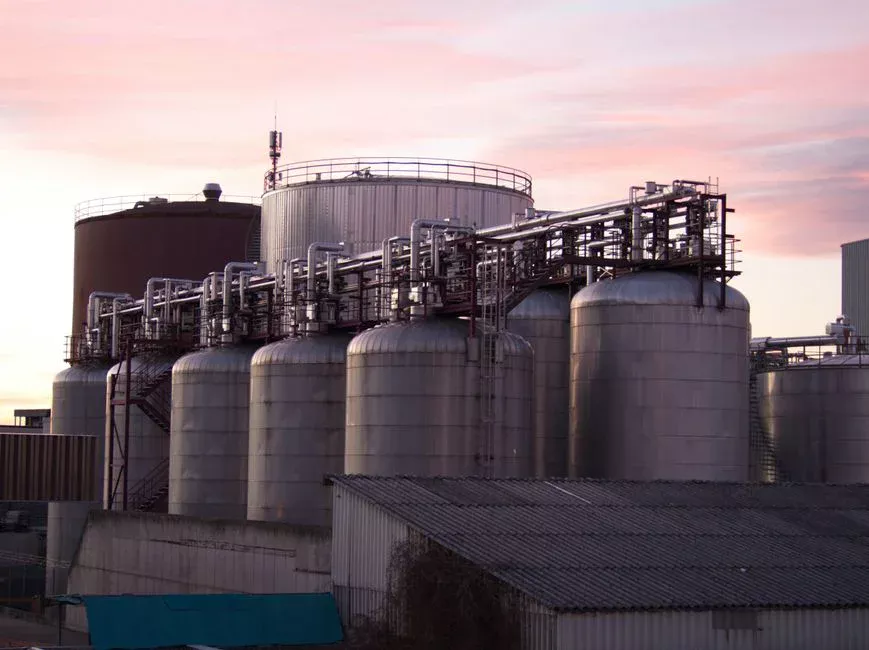
An MBR replaces the secondary clarifier — and usually the downstream sand filter — with submerged microfiltration or ultrafiltration membranes rated at 0.1–0.4 µm pore size, most commonly PVDF hollow fiber or flat-sheet elements immersed directly in the aeration basin or a separate membrane tank (per EPA MBR fact sheet, cited in S5). The separation step no longer depends on floc settleability. Biomass concentration rises to 8,000–12,000 mg/L MLSS on a product-spec basis (up to 15,000 mg/L on the high end per S2), and SRT is decoupled from hydraulic retention time (HRT) — the operator can hold 20–60 days of SRT at 4–8 hours of HRT without losing solids.
That decoupling is the mechanism that makes MBR survive Coatesville's peak events. With the clarifier eliminated, biomass cannot wash out. Even at 2× design metal load, the membranes retain MLSS inside the reactor, and the long SRT gives the mixed culture time to adapt or recover. On a CAS train the same upset drives sludge blanket collapse and a multi-day recovery.
The same long SRT that protects biomass also sustains the slow-growing nitrifiers (μ_max ≈ 0.5–0.7 day⁻¹) that convert NH₃-N to nitrate. At 20–60 day SRT, MBR permeate routinely lands at NH₃-N <1 mg/L — the EPA Calls Creek dataset (cited in S5) shows 0.10–0.72 mg/L — which matters for any plant with coke by-product or pickling rinse streams carrying high ammonia. For a chronic-failure clarifier train currently discharging 5–15 mg/L NH₃-N, that is the single biggest permit-compliance lever an MBR retrofit pulls.
Membrane configuration is not a free choice. Immersed hollow fiber needs 1–2 mm upstream fine screening; immersed flat plate tolerates 2–3 mm (per Wallis-Lage et al. 2006 cited in the EPA fact sheet, S5). For an influent carrying mill scale, coal fines, and grit from a Coatesville finishing line, that 1 mm difference in slot size translates directly into screen cleaning frequency and operating labor — a real OPEX driver, not a spec-sheet footnote.
Head-to-Head Parameter Comparison for Coatesville Duty
The table below condenses the numbers an engineer needs to defend a design basis memo. The MBR column reflects both published municipal/industrial data and product specification; the CAS column reflects typical industrial activated-sludge operation under average conditions. Mining-specific metal-removal percentages depend on influent speciation and the precipitation chemistry upstream, so the table describes the mechanism rather than a single guaranteed removal value (per S5 framing).
| Parameter | CAS (Coatesville duty) | MBR (PVDF, submerged) | Source |
|---|---|---|---|
| MLSS | 2,000–4,000 mg/L | 8,000–12,000 mg/L (up to 15,000) | S2, S5, S6 |
| SRT | 5–15 days | 20–60 days | S2, S5 |
| HRT | 6–12 hours | 4–8 hours | S2, S5 |
| Effluent TSS | 10–30 mg/L; spikes >50 mg/L on upset | <5 mg/L, often at detection limit | EPA Calls Creek (S5) |
| Effluent BOD | 10–30 mg/L | <1–5 mg/L, near detection limit | EPA Calls Creek (S5) |
| Effluent NH₃-N | 2–10 mg/L; nitrification often inhibited | 0.10–0.72 mg/L at long SRT | EPA Calls Creek (S5) |
| Total phosphorus | 1–3 mg/L without tertiary polish | 0.1–0.5 mg/L with chemical precipitation | EPA Calls Creek (S5) |
| Total Cr / Ni / Cu / Zn in effluent | Metal-hydroxide floc rises in clarifier (SVI > 150 mL/g); effluent spikes | Removed by upstream precipitation; MBR retains floc, prevents washout | S5 mechanism |
| Footprint | Aeration basin + clarifier + sand filter | ~40% of equivalent CAS basin (60% reduction per product spec) | S5, S6 |
| Reuse potential | Requires tertiary DAF / sand / UF before reuse | RO-feed quality with low SDI; cooling-tower and rinse reuse | S2, S5 |
The single line that drives most Coatesville retrofit decisions is the footprint row: a 60% reduction is the difference between fitting the membrane stage inside the existing aeration basin footprint and triggering a multi-million-dollar civil works expansion. The TSS and NH₃-N rows are what drive the permit-compliance case to CAWA and PA DEP.
CAPEX, OPEX and Lifecycle Numbers for a Coatesville Retrofit
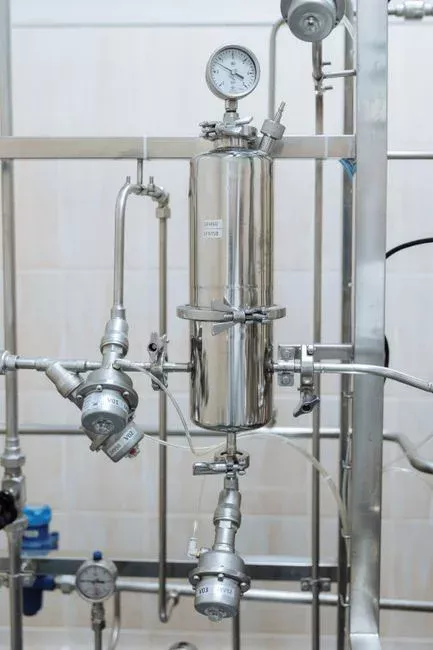
The EPA MBR fact sheet is direct: "The primary disadvantage of MBR systems is the typically higher capital and operating costs than conventional systems for the same throughput" (cited in S5). For engineering-judgement planning at industrial scale, MBR CAPEX lands at roughly 1.3–1.8× a comparable CAS train, and OPEX runs 10–25% higher once air-scour energy and membrane replacement are folded in. Treat these as planning estimates, not vendor quotes — the source research does not publish Coatesville-specific cost figures.
The OPEX drivers are concrete. Air-scour blowers run continuously to keep biofilm off the membranes, typically 0.3–0.6 kWh/m³ for immersed designs (per S5 engineering range), and mining mixed liquor runs at higher total dissolved solids (TDS) than municipal sewage, so blower demand climbs further. Chemical cleaning follows a scheduled regime — sodium hypochlorite (typically 500–1,000 mg/L free chlorine) for organic fouling, citric acid (1–2% w/w) for inorganic scale — and the frequency of clean-in-place (CIP) cycles is the line that swings the OPEX delta from +10% to +25%. Membrane replacement sits at every 3–10 years depending on manufacturer; the EPA fact sheet cites a Zenon 10-year guarantee against 3–5 years for most others (per S5).
| Cost / Lifecycle Line | CAS (industrial) | MBR (immersed PVDF) | Source |
|---|---|---|---|
| CAPEX multiplier (same throughput) | 1.0× baseline | ~1.3–1.8× | S5 engineering judgement |
| OPEX delta vs CAS | Baseline | +10–25% | S2, S5 |
| Air-scour energy | Aeration only | 0.3–0.6 kWh/m³ (immersed) | S5 |
| Membrane replacement | n/a | Every 3–10 years (Zenon 10-yr; most 3–5 yr) | EPA fact sheet (S5) |
| Footprint | 100% baseline | ~40% of CAS (60% reduction) | Product spec (S5, S6) |
| 2026 LCA finding (Membranes, Basel) | Centralized extended-aeration baseline | 8% lower human-health impact; 60% lower resource-depletion impact | S5 |
The lifecycle view is more favorable to MBR than the sticker shock suggests. The 2026 life-cycle assessment in Membranes (Basel) found that a low-cost decentralized MBR shows 8% lower human-health impact and 60% lower resource-depletion impact than a centralized extended-aeration CAS plant (per S5). For a Coatesville brownfield with no spare basin real estate, the 60% footprint reduction can move a project from a multi-million-dollar civil works package to a tank-on-concrete-pad retrofit. That is the line a plant manager will sign off on. For context on how other metals plants are handling the same 2026 pretreatment arithmetic, the mining/metals 2026 pretreatment compliance guide and the fabricated metals 2026 pretreatment compliance guide cover adjacent jurisdictions.
Coatesville-Specific Pretreatment That Makes or Breaks an MBR
Most failed MBR retrofits in metals service trace back to one cause: inadequate upstream conditioning. The EPA fact sheet is explicit that all MBR systems require 1–3 mm fine screens immediately before the membranes, with frequent cleaning, and that high-level debris removal is required to prevent physical damage to the membrane fibers (per S5). A rotary bar screen for MBR headworks is the typical first line; a second stage of finer screening (2 mm for hollow fiber, 3 mm for flat plate) goes immediately before the cassette bank.
Coatesville duty needs more than screening. Flow and pH equalization are non-negotiable: pH swings of 2–11 and peak flow events of 2× average are routine during plant-wide upset conditions in Chester County, and the EPA fact sheet flags 2× peak flow as the design limit for an MBR without equalization. Lime or soda-ash softening upstream of the bioreactor drops calcium hardness and prevents CaCO₃ scaling on the membrane surface — described in the source research as the single most common cause of irreversible flux loss in mining MBRs (per S5). Sulfide or hydroxide precipitation of dissolved Cr, Ni, Cu, and Zn ahead of the aeration basin brings metals into the range the biomass can tolerate; pairing that with a PLC-controlled chemical dosing system keeps reagent stoichiometry on target through shift changes and storm events.
One line that routinely hides in the fine print: air-scour energy rises with mixed-liquor TDS. Mining mixed liquor is dirtier than municipal sewage, so blower sizing belongs in the OPEX model, not the equipment list. Under-sizing the blower by 15% is the difference between a clean membrane and a CIP cycle every 30 days instead of every 90.
Choosing the Right MBR Configuration for Coatesville Service

Module selection drives screening spec, cleaning regime, and 10-year OPEX — not just the day-one CAPEX. Immersed hollow-fiber elements pack the highest membrane area per cassette but need finer upstream screening (1–2 mm) and are more sensitive to fouling from hair, fiber, and stringy material that survive a rotary bar screen. Immersed flat-plate elements tolerate coarser screening (2–3 mm), are easier to clean in place, and recover more predictably from chemical CIP — a meaningful advantage when coal fines, mill scale, and grit are present in the mixed liquor (per Wallis-Lage et al. 2006 cited in S5).
For 10–2,000 m³/day flows with the 60% footprint reduction Coatesville brownfields need, an integrated submerged PVDF MBR system at sub-1 µm filtration is the standard configuration — it combines the bioreactor, membrane cassette, blower, and back-pulse system in a single skid that fits on a concrete pad next to the existing aeration basin. For modular retrofits or higher-flow plants, a PVDF flat-sheet MBR module at 0.1 µm pore size with integrated aeration box and individually replaceable elements runs at 10–20× lower energy than external cross-flow designs (per product catalog) and is the configuration most Coatesville retrofits land on.
An optional DAF pre-treatment step ahead of the MBR is worth specifying for high-FOG or pickling-acid streams where floating oils and grease would otherwise accumulate on the membrane surface. The hydrology and infrastructure of the Coatesville corridor are different from the Lower Burrell / Allegheny-Kiski case, but the MBR module selection logic is similar; a parallel MBR vs CAS mining guide for Springdale covers the same configuration trade-offs in a different watershed.
30/60/90-Day Retrofit Decision Framework and Pilot Checklist
Step 1 (0–30 days) — Influent characterization. Run 24-hour composite sampling for TSS, total and dissolved Cr/Ni/Cu/Zn, NH₃-N, F⁻, total cyanide, pH, and flow across at least one full production cycle. Confirm the peak-to-average flow ratio and the equalization tank sizing this implies. Without this data, every downstream number is a guess.
Step 2 (30–60 days) — On-site MBR pilot. Run a 30–90 day pilot on real plant wastewater, not synthetic. The source research describes this as "cheap insurance" before committing CAPEX (per S5). The pilot should generate MLSS, SVI, transmembrane pressure (TMP), and fouling-rate data under real metal spikes — these four numbers are what determine blower sizing, cleaning frequency, and membrane area in the full-scale design.
Step 3 (60–90 days) — Design lock-in and pre-permit. Lock the full-scale design with TDS-adjusted air-scour blower sizing, the membrane cleaning regime schedule (CIP frequency, chemistry, soak time), and a CAWA / PA DEP pre-permit meeting on the agenda. Permit reviewers in 2026 expect to see pilot data in the design basis memo, not a generic MBR cut-sheet.
Decision triggers. Pick MBR if footprint under 60% of CAS is required, reuse (RO make-up, cooling-tower make-up, rinse reuse) is in scope, or metal spikes above 2× design load are routine. Keep CAS if open land is available for a new clarifier and sand filter, no reuse target exists, and the CAPEX ceiling is fixed. Pick the hybrid path — keep the existing aeration basin and add a downstream MBR cassette fed by clarifier effluent — when greenfield CAPEX is off the table but reuse quality is now in scope (per S5 hybrid paragraph). The hybrid is the most common retrofit route for legacy Coatesville plants because it avoids demolishing civil works that are already on the balance sheet.
Frequently Asked Questions
What effluent TSS and BOD can a Coatesville MBR realistically hold compared to a CAS clarifier?
MBR permeate on a metals feed typically runs BOD and TSS at or below 5 mg/L, with the EPA Calls Creek dataset showing both at the analytical detection limit (per S5). A CAS clarifier on the same feed more commonly lands at 10–30 mg/L TSS and is vulnerable to excursions above 50 mg/L during metal or hydraulic upsets.
Why does an MBR survive a metal spike that crashes a clarifier?
By mechanism, not by chemistry. An MBR runs 8,000–12,000 mg/L MLSS at 20–60 day SRT, and the submerged membranes prevent the sludge blanket collapse and pin-floc carryover that take a clarifier offline after a metal spike. CAS at 2,000–4,000 mg/L MLSS and 5–15 day SRT loses biomass over the weir on the same upset, and SVI bulking above 150 mL/g becomes chronic (per S2, S5).
What CAPEX and OPEX delta should a Coatesville plant plan for?
For the same throughput, an immersed MBR typically lands at 1.3–1.8× the CAS capital cost, with OPEX 10–25% higher once air-scour energy (0.3–0.6 kWh/m³) and membrane replacement (3–10 year life per the EPA fact sheet) are included. Treat these as engineering-judgement planning ranges; mining-specific numbers should be confirmed by a 30–90 day on-site pilot before CAPEX commitment (per S5).
Can an existing CAS plant be retrofitted to MBR without abandoning the aeration basin?
Yes. The hybrid path — keeping the existing aeration basin and adding a downstream membrane stage fed by clarifier effluent — converts a CAS plant to MBR-grade effluent without demolishing the existing civil works. It is a common retrofit route for legacy plants where greenfield CAPEX is not an option but reuse quality is now in scope (per S5).
What screening does the EPA require ahead of an MBR cassette?
The EPA MBR fact sheet requires 1–3 mm fine screening immediately before the membrane cassette, with frequent cleaning, plus high-level debris removal upstream to prevent physical damage to the membrane fibers (per S5). For immersed hollow fiber, target 1–2 mm; for immersed flat plate, 2–3 mm is acceptable.