
What the 2026 regulatory stack looks like for a Brandon-area mining or metals discharger
A mining or metals facility that pipes effluent to the Rankin County or Brandon POTW is regulated under Clean Water Act §307(b) and 40 CFR Part 403, not under a direct-discharge NPDES permit. The local POTW acts as the Control Authority and enforces the federal categorical standard through its sewer-use ordinance (per EPA, 40 CFR 403.3(j) and 403.5(c)). Categorical Industrial User status under 40 CFR Part 437 (Ore Mining and Dressing) or 40 CFR Part 433 (Metal Finishing) is the legal trigger; if a plant runs plating, pickling, or anodizing lines alongside milling, both subparts apply and the lower of the two numerical caps wins. The federal floor under Part 433 sets copper at 0.65 mg/L daily-max, lead at 0.91 mg/L, zinc at 1.27 mg/L, and TSS at 50 mg/L daily-max, with Part 433 also capping copper at 2.07 mg/L monthly-avg and total chromium at 1.71 mg/L monthly-avg. Subpart-specific limits vary, so every design must be re-verified against the 2026 eCFR before a purchase order is signed. The 2026 Rankin County/Brandon POTW sewer-use ordinance typically tightens zinc and copper to 0.3–1.0 mg/L monthly-avg and 0.3–0.5 mg/L monthly-avg respectively, so equipment must be sized to the local number, not the federal floor. Civil penalties under CWA §309 reach $25,000 per day per violation, and a Significant Noncompliance (SNUR) finding stays on the EPA ECHO database for public viewing — a single missed monthly-avg can dwarf a year of OPEX savings from a cheaper chemistry train. A broader mining and metals pretreatment blueprint walks the same regulatory hierarchy in country-generic form.
| Parameter | 40 CFR Part 433 Daily Max (mg/L) | 40 CFR Part 433 Monthly Avg (mg/L) | Typical 2026 Rankin County / Brandon POTW Limit (mg/L) |
|---|---|---|---|
| Copper (Cu) | 0.65 | 0.32 | 0.3–0.5 monthly-avg |
| Lead (Pb) | 0.91 | 0.45 | 0.2–0.4 monthly-avg |
| Zinc (Zn) | 1.27 | 0.63 | 0.3–1.0 monthly-avg |
| Total Chromium (Cr) | 2.77 | 1.71 | 0.5–1.0 monthly-avg |
| TSS | 50 | 30 | 30–45 monthly-avg |
| pH (instantaneous) | — | — | 6.0–9.0 (5.0–10.0 acceptable) |
Three 2024–2026 EPA pressures that will land on the next Brandon permit cycle
Three converging federal rulemakings are reshaping what counts as compliant in Brandon-area sewer-use permits. First, the Lead and Copper Rule Revisions (LCRR) are driving lead action levels toward 10 µg/L, forcing POTWs to re-derive their local lead limits at much lower numbers and pushing categorical lead ceilings down by an order of magnitude in the next renewal cycle. Second, EPA's 2024 Multi-Sector General Permit (finalized 2024-09) added PFAS monitoring for PFOS, PFOA, PFHxS, and PFNA across sectors that include metal mining, and local control authorities in Mississippi are adopting the same analytical suite even for sewer discharges. Third, the 2025 ore-mining BAT revisions (2025-03) tightened the cost-benefit envelope on total recoverable metals, raising the practical bar for categorical compliance. Mississippi DEQ's 2026 audit language is also moving toward stricter dissolved-versus-total-recoverable speciation reporting, mirroring what Utah DEQ is already enforcing. The practical implication: design for 2027-cycle numbers, not 2024-cycle numbers, because the equipment has a 15–20 year service life and retrofitting later runs 2–3× the upfront cost.
| Rule / Driver | Effective Date | Brandon Permit-Cycle Impact | Design Response |
|---|---|---|---|
| LCRR lead action level (10 µg/L) | Phased 2024–2027 | Local Pb limit drops toward 0.05–0.1 mg/L | Tighter sulfide polishing, ion exchange contingency |
| 2024 MSGP PFAS monitoring (PFOS/PFOA/PFHxS/PFNA) | 2024-09 | Analytical suite adopted by Control Authority | Plan for quarterly PFAS sampling; activated carbon contingency |
| 2025 Ore-Mining BAT revisions | 2025-03 | Tighter cost-benefit on total recoverable metals | Re-verify against 2026 eCFR; size clarifier for lowest subpart limit |
| MS DEQ speciation audit language | 2026 | Dissolved-vs-total reporting required | Add in-line 0.45 µm filtration for dissolved sampling |
Influent profile a Brandon mining or metals plant should plan for
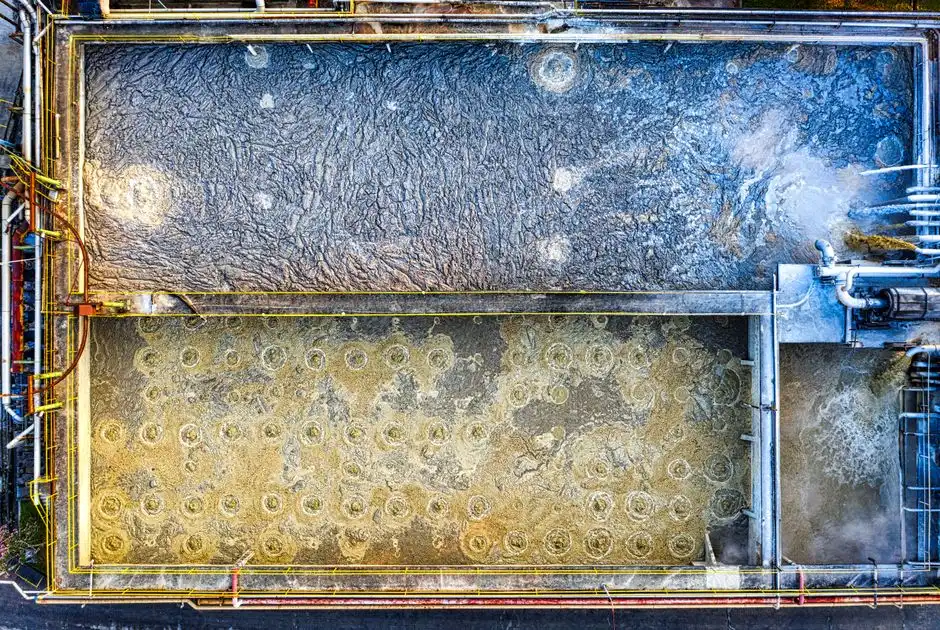
Raw acid mine drainage and spent process solutions typically arrive at the head of the plant at pH 2–4 with TSS in the hundreds to several thousand mg/L and elevated dissolved Pb, Cu, Zn, Cd, Ni, and As. Sulfate routinely lands between 1,000 and 5,000 mg/L in leach-pad runoff, and TDS swings of 2,000–15,000 mg/L are common seasonally — Mississippi's high summer evaporation concentrates brines while winter dilution lowers influent metals but raises flow volume by 20–40%. Storm events drive TSS spikes into the 800–2,000 mg/L range and dump suspended fines into the equalization basin faster than downstream equipment can absorb without a flow buffer. Oil and grease from haul-truck wash pads, concentrate-handling areas, and mill lubricants is intermittent but routinely pushes spikes above 100 mg/L, and this is the parameter that decides whether a DAF or a lamella clarifier takes the primary slot. Plan the equalization basin for both directions: damp the chemistry slugs and the hydraulic surges, because the clarifier and filter press downstream cannot absorb either without carryover or cake-quality failure.
The pretreatment train, stage by stage, sized for Brandon worst cases
- Equalization basin. Spec the basin at 8–24 hours of average daily flow, covered or sealed with controlled venting, mixed and aerated. A 4-hour basin passes every upstream spike straight into the clarifier and shows up as a SNUR-triggering excursion in the next 24-hour composite.
- pH correction. Lime (Ca(OH)₂) is cheaper per ton but generates 3–5× more sludge; NaOH is preferred on high-TDS mining streams despite the reagent premium. Target pH 6.5–9.0 instantaneous, staged in two reactors if influent swings more than 2 pH units. A PLC-controlled automatic chemical dosing skid with redundant pH probes keeps the band inside ±0.2 — the difference between meeting and missing a 0.3 mg/L zinc monthly-avg.
- Hydroxide precipitation. The default for most plants, targeting 85–95% total metals removal with jar-test-locked pH windows per metal. Watch the redissolution risk for amphoteric Zn and Pb above pH 9.5.
- Sulfide precipitation (polishing). NaHS, FeS, or Na₂S on a slipstream when residual metal must drop below 0.1 mg/L. Residuals of 0.01–0.05 mg/L for Cu/Zn/Cd/Ni versus 0.5–2.0 mg/L for hydroxide, at 2–4× the reagent cost, requiring sealed reactors with H₂S scrubbing.
- Polymer coagulant aid. 0.5–3 mg/L anionic polyacrylamide flocs metal-hydroxide particles for the clarifier to operate at 20–40 m/h hydraulic loading without carryover and reduces TDS bleed by collapsing the colloidal fraction.
- Primary clarification. A DAF system when oil, grease, or colloidal fines dominate, or a high-efficiency lamella clarifier when the stream is primarily metal-hydroxide sludge at high flow with a constrained footprint.
- Multimedia polishing. A multi-media filter (anthracite over sand over garnet) at 1–2 m/h filtration rate strips residual TSS to <10 mg/L as the safety net between clarifier and sewer manhole. Size for the backwash cycle, not average flow.
- Optional disinfection. UV or chlorine dioxide at 1–5 mg/L only when the local ordinance requires it — typically when the POTW's collection system has long force mains, siphons, or hospital/food co-tenants.
- Sludge dewatering. A plate and frame filter press dewateres clarifier/DAF sludge to 25–35% dry solids for Subtitle-D landfill or smelter recovery; filtrate returns to the head of the plant.
DAF or lamella: the Brandon decision rule
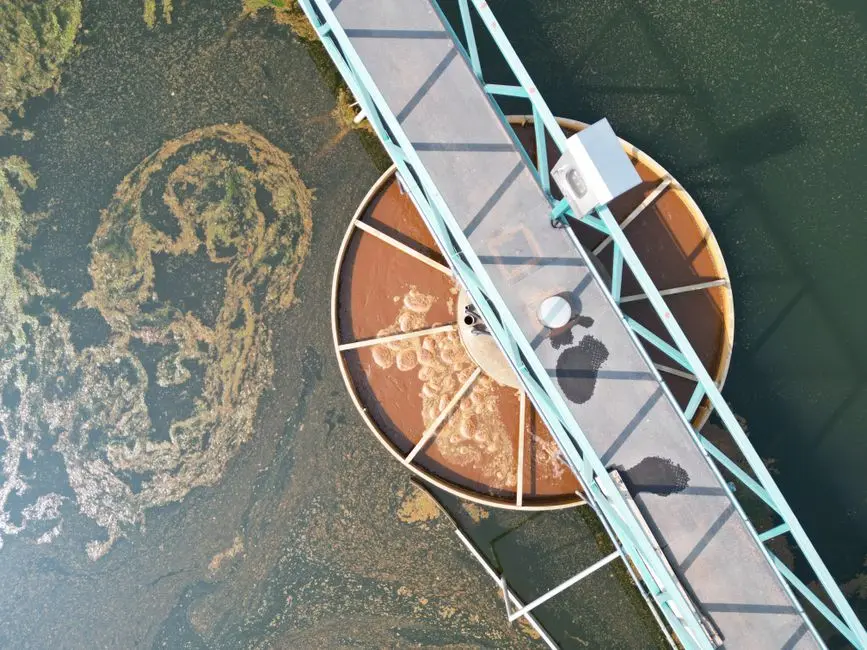
The clarifier choice is the most consequential equipment decision in the train, and it is the one a vendor will most often try to push toward whichever unit they happen to stock. A DAF system operates at 5–25 m/h hydraulic loading, delivers 90–98% TSS removal and 85–95% oil/grease removal in mining/metal-finishing service, and covers 4–300 m³/h across 13 standard models that fit most plant scales without civil redesign. A high-efficiency lamella clarifier runs at 20–40 m/h surface loading in roughly one-third the footprint of a conventional clarifier, has lower chemical consumption because the sludge blanket is denser, and handles heavy metal-hydroxide flocs very well — but it does not remove free oil or colloidal fines as effectively as DAF. The decision rule: DAF when the stream carries oil, grease, or fine colloidal metals (typical for haul-truck wash pads and concentrate handling in mining/metal-finishing service); lamella when the stream is primarily a metal-hydroxide sludge at high flow and the footprint is constrained. DAF typically adds 15–25% to clarifier CAPEX at this scale, but it eliminates the need for a separate oil-removal stage and protects downstream multimedia filtration from fouling — a trade-off detailed in a parallel DAF vs clarifier for mining wastewater in Amarillo, TX buyer's guide.
| Selection Factor | DAF | Lamella Clarifier |
|---|---|---|
| Hydraulic / surface loading | 5–25 m/h | 20–40 m/h |
| TSS removal | 90–98% | 80–95% |
| Oil & grease removal | 85–95% | Limited; requires upstream removal |
| Footprint | Larger; small basin depth | ~1/3 of conventional clarifier |
| Flow range covered | 4–300 m³/h (13 models) | Engineered per project; common >100 m³/h |
| Chemical OPEX | Standard polymer dose | Lower — sludge recirculation cuts coagulant up to 30% |
| Best fit in Brandon service | Oil-bearing, colloidal, batchy flows | Steady, high-flow hydroxide sludge |
Rough 2026 CAPEX bands and Brandon permit-cycle risk
A directional CAPEX envelope for a 20–100 m³/h hydroxide-precipitation + DAF or lamella + multimedia filter + filter press train for a mid-sized Brandon-area mining/metals plant runs $1.2M–$3.5M for equipment alone, with civil works typically adding 30–60%. The range reflects flow band, target local limits, sludge handling requirements, and the difference between a packaged skid and a fully engineered installation — vendor quotes vary widely, so treat the band as a negotiation anchor, not a fixed number. OPEX is dominated by NaOH or lime reagent (lime carries a 3–5× sludge ratio penalty), polymer at 0.5–3 mg/L, sludge hauling at 25–35% dry solids cake, and the PLC-controlled chemical dosing skid's electricity draw. The permit-cycle risk: CWA §309 civil penalties reach $25,000 per day per violation, so a single missed zinc monthly-avg can eclipse a year of OPEX savings from a cheaper chemistry train. Confirm 2026 numbers against the Rankin County/Brandon POTW sewer-use ordinance and the 2026 eCFR before any equipment order is signed. A parallel Hopewell chemical-plant pretreatment compliance guide walks the same CAPEX-band logic for an adjacent sector.
| Cost Line | Directional 2026 Band (20–100 m³/h) | Driver |
|---|---|---|
| Equipment CAPEX (train, ex-civil) | $1.2M–$3.5M | Flow band, target limits, sludge handling |
| Civil works | +30–60% of equipment | Equalization basin, building, piping |
| Reagent OPEX (NaOH or lime) | Largest variable line | 3–5× sludge penalty for lime vs NaOH |
| Polymer OPEX | 0.5–3 mg/L dose | Driven by clarifier/DAF choice |
| Sludge hauling | Function of cake %DS | 25–35% DS from filter press |
| Penalty exposure | Up to $25,000/day/violation (CWA §309) | One missed monthly-avg > one year of OPEX savings |
Frequently Asked Questions
Does a mining or metals plant near Brandon need an NPDES permit if it discharges to the sewer?
No. Sewer discharge to a POTW is regulated under Clean Water Act §307(b) and 40 CFR Part 403, with categorical standards in 40 CFR Part 437 (Ore Mining and Dressing) and 40 CFR Part 433 (Metal Finishing) where applicable. NPDES permits under CWA §402 govern direct discharge to surface water, and most plants carry both authorizations in parallel because they have separate stormwater outfalls.
How tight are the 2026 local POTW limits compared to the federal categorical standard?
Typical 2026 Rankin County/Brandon POTW limits run zinc at 0.3–1.0 mg/L monthly-avg and copper at 0.3–0.5 mg/L monthly-avg, compared with the 40 CFR Part 433 daily-max of 0.65 mg/L Cu and 1.27 mg/L Zn and monthly-avgs of 0.32 mg/L Cu and 0.63 mg/L Zn. The local ceiling is almost always tighter than the federal floor for the metals on the Part 433 list, so equipment must be sized to the ordinance number, not the categorical standard.
When is sulfide precipitation worth the 2–4× reagent premium over hydroxide?
Sulfide precipitation (NaHS, FeS) is worth the premium when the local limit forces residual metals below 0.3 mg/L, because sulfide delivers 0.01–0.05 mg/L versus 0.5–2.0 mg/L for hydroxide. The trade-off is sealed reactors with H₂S scrubbing and 2–4× higher reagent cost. For most mining flows, hydroxide precipitation with a sulfide polishing slipstream is the cost-effective compromise.
What DAF or clarifier flow range is realistic for a mid-sized Brandon plant?
The DAF system covers 4–300 m³/h across 13 standard models at 5–25 m/h hydraulic loading. Below 10 m³/h, packaged skid systems are common; above 100 m³/h, parallel DAF trains or a lamella clarifier typically becomes more economical on a CAPEX-per-m³ basis. For steady, low-FOG hydroxide-sludge flows above 200 m³/h, a lamella clarifier at 20–40 m/h surface loading is the usual 2026 default.
How big should the equalization basin be for a Brandon mining/metals discharger?
Spec the basin at 8–24 hours of average daily flow, sized against the largest batch slug from a leach cycle and against the 25-year storm surge on the mill yard. A 4-hour basin passes every spike straight into the clarifier and shows up as a SNUR-triggering excursion in the very next 24-hour composite, so under-sizing equalization is the most common retrofit driver in this sector.