Why the Springdale Site Constraint Decides the Choice
On a Springdale brownfield concentrator, the binding constraint is the rectangle of existing civil works, not the cubic metres per day of treatable flow. A typical retrofit inherits a fixed aeration basin and one or two secondary clarifiers from the 1990s or early-2000s buildout, and the surrounding bund walls, cable trenches, and chemical dosing skids leave no room to add a second clarifier or a larger aeration tank. Engineers who arrive at this constraint with a 1,000 m³/day flotation tail water or thickener overflow reuse target quickly learn that the real engineering question is not "can the biology cope?" but "can a new technology fit inside the existing footprint" — a question explored in detail in the DAF vs clarifier for mining wastewater guide.
The Springdale feed chemistry is unforgiving. Mining influent TDS routinely sits between 5,000 and 50,000 mg/L on sites that already recycle process water and draw brackish makeup, and the same feed carries residual flotation reagents — potassium ethyl xanthate, dithiophosphate (DTP) collectors, frothers — plus dissolved Pb, Zn, Cu, and Cd at concentrations that vary with ore body and reagent scheme. The rest of this article uses a 1,000 m³/day tail water train as the running example; every number in the head-to-head table re-anchors to that envelope.
How MBR and CAS Actually Differ Mechanically
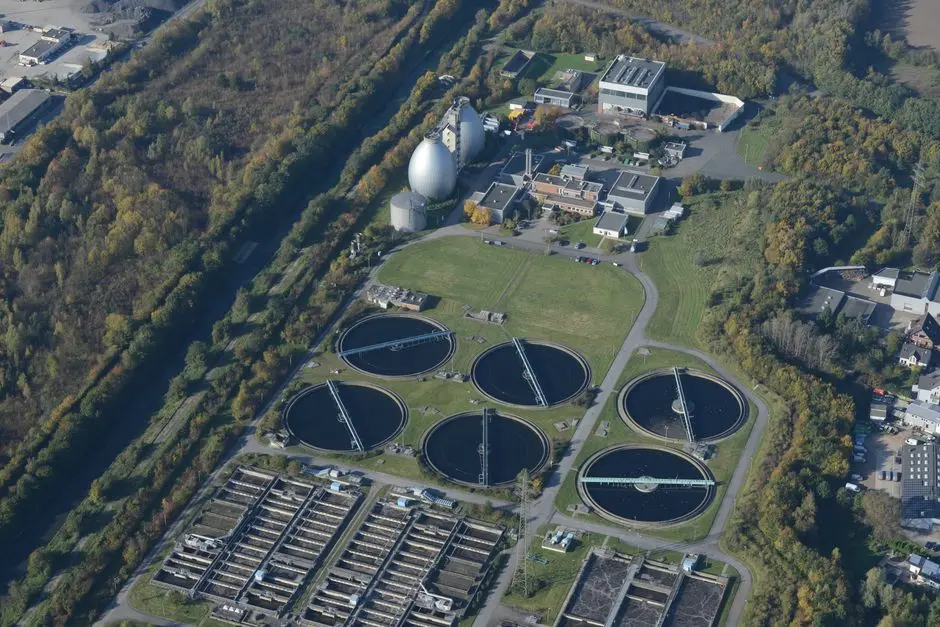
Conventional Activated Sludge (CAS) is an aeration tank plus a secondary clarifier: microorganisms break down dissolved organics in the basin, and the mixed liquor then flows into the clarifier where biomass settles by gravity at 2,000–4,000 mg/L MLSS (HydropureWater mining MBR field reference, 2026). Even with polymer aid, the clarifier overflow carries 5–15 mg/L TSS because gravity settling is not an absolute barrier — it is a probabilistic one that drifts with sludge volume index, temperature, and shock load (HydropureWater mining MBR field reference, 2026).
A Membrane Bioreactor (MBR) replaces the clarifier with a submerged ultrafiltration membrane, typically 0.1 μm flat-sheet PVDF in the DF series. The membrane is an absolute physical barrier that retains all biomass inside the reactor at 8,000–12,000 mg/L MLSS, so the permeate drops below 1 mg/L TSS regardless of how the sludge is settling that day (HydropureWater integrated MBR field data, 2026). That 3–4× MLSS ratio drives the basin volume down and eliminates the secondary clarifier, which is the reason an integrated MBR wastewater treatment system occupies roughly 60% of the equivalent CAS footprint at the same throughput (HydropureWater integrated MBR field data, 2026).
Sludge retention time is the second decisive gap. MBR sustains 30+ day SRT, which retains the slower-growing degraders that break down residual xanthate and DTP — potassium ethyl xanthate drops from 5–20 mg/L in the feed to under 1 mg/L in the permeate at 85–95% removal. CAS, held at 5–10 day SRT to keep settleability workable, washes those degraders out and leaves 2–4 day half-life residuals in the effluent (HydropureWater mining MBR field reference, 2026). The cost is real: aeration typically accounts for 36–68% of MBR operating expense, dominated by coarse-bubble scour across flat-sheet modules.
Head-to-Head Parameter Comparison: MBR vs CAS for Mining Duty
| Parameter | Integrated MBR | Conventional Activated Sludge (CAS) |
|---|---|---|
| MLSS (mg/L) | 8,000–12,000 | 2,000–4,000 |
| SRT (days) | 30+ | 5–10 |
| Secondary clarifier required | No (membrane replaces it) | Yes (gravity settler) |
| Effluent TSS (mg/L) | <1 (absolute membrane barrier) | 5–15 (well-tuned); 10–30 normal operating range |
| Xanthate/DTP removal (%) | 85–95 (to <1 mg/L permeate) | Limited; 2–4 day half-life residuals pass through |
| Heavy-metal removal (Pb, Zn, Cu, Cd) % | 70–95 (biosorption + bioaccumulation) | 30–60 (wasted sludge only) |
| Total N removal (with supplemental C) | >75% at pH 6.5–7.5 with methanol/glycerol | 40–60% on a comparable C:N feed |
| Footprint vs CAS | ~60% (clarifier eliminated, basin volume reduced) | 100% baseline |
| Aeration share of OPEX | 36–68% | 30–50% |
| Membrane area per 1,000 m³/day | 1,800–3,200 m² (DF series cassettes) | N/A (gravity clarifier instead) |
| Installed CAPEX per m³/day (2026 USD) | USD 800–2,500 | USD 550–1,700 (with tertiary filter) |
| Membrane replacement interval | Every 7–12 years | N/A |
| CIP chemical use | 50–70% reduction when DAF upstream | No CIP; polymer dosing instead |
CAPEX and OPEX values: MBR row from HydropureWater mining MBR field reference, 2026; CAS row and the 30–50% CAPEX gap from the lamella-clarifier 2026 side-by-side comparison; the wider 10–30 mg/L CAS TSS band is the lamella-clarifier normal-operating range, which brackets the HydropureWater 5–15 mg/L value for a well-tuned clarifier.
The CAPEX row already carries the trade the engineer is about to defend. CAS membrane-free CAPEX is 30–50% lower, but the figure assumes the site reuses existing clarifier volume and does not need a tertiary media filter ahead of any downstream reverse osmosis. Once those civil and polishing items are priced in, the gap narrows quickly. A DF series flat-sheet MBR cassette rated at 32–135 m³/day per cassette in 80–225 m² configurations is the building block that delivers the MBR column above for a 500–10,000 m³/day mining train (HydropureWater mining MBR field reference, 2026).
Springdale Influent and Permit Targets That Move the Decision
| Parameter | Springdale envelope | Permit/reuse target |
|---|---|---|
| Influent TDS (mg/L) | 5,000–50,000 (closed-loop sites) | <500 mg/L for grinding dilution reuse; controlled discharge under Arkansas DEQ/NPDES |
| Influent TSS (mg/L) | 500–5,000 (flotation tail water) | <1 mg/L if MBR → RO polishing; <30 mg/L controlled discharge |
| pH | 6.5–7.5 target for biosorption | 6.0–9.0 NPDES mining stormwater range |
| Residual xanthate (mg/L feed) | 5–20 | <1 mg/L permeate for reuse |
| End-of-pipe fate | Either controlled discharge OR reuse for grinding dilution / heap-leach makeup | Drives biology and downstream RO choice |
Two end-of-pipe fates force two different technology answers. Where the site discharges under Arkansas DEQ/NPDES mining stormwater controls with no reuse loop and TDS stays under 5,000 mg/L, CAS still wins — the existing clarifier volume, absence of downstream RO, and an operator pool without membrane CIP training all favor the upgrade path over greenfield MBR (HydropureWater mining MBR field reference, 2026). Where the site reuses permeate for grinding dilution or heap-leach makeup, MBR + BWRO becomes the default: MBR permeate at 5,000–20,000 mg/L TDS feeds an industrial RO system at 70–85% recovery, and RO concentrate at 30,000–60,000 mg/L TDS feeds an evaporator or crystallizer for ZLD finishing (HydropureWater mining MBR field reference, 2026).
The influent envelope above is also the band where a dissolved air flotation unit in the 4–300 m³/h range earns its slot upstream of either technology — 60–80% oil removal and 30–50% TSS removal extend MBR CIP intervals from weekly to monthly and cut chemical CIP use 50–70% (HydropureWater mining MBR field reference, 2026).
Where the CAPEX Gap Actually Closes in 2026
The procurement objection that "MBR is too expensive" usually rests on the 30–50% membrane-free CAPEX advantage of CAS, but that headline number erodes the moment the hidden line items are priced. CAS upgrades on a brownfield typically add clarifier civil works (concrete repair, scum troughs, launders), a polymer dosing skid, and a tertiary sand or multimedia filter ahead of any downstream RO; once those items are in the bill, roughly half of the CAS advantage disappears (HydropureWater mining MBR field reference, 2026).
On the MBR side, the upper end of the USD 2,500/m³/day band is driven by influent variability, seismic class, automation scope, and containerized versus skid build — items a buyer can price independently rather than absorbing into a single ratio (HydropureWater mining MBR field reference, 2026). Flat-sheet PVDF wins on Springdale mining feed because the 500–5,000 mg/L TSS range is abrasive; hollow-fiber UF/MBR only enters the conversation when the feed is pre-filtered to under 100 mg/L TSS, which a DAF can deliver but a primary clarifier cannot (HydropureWater mining MBR field reference, 2026).
The defensible 2026 line items a Springdale procurement manager can split out are: civil works and bund modifications; membrane cassette count from the DF series 32–135 m³/day per cassette band; CIP dosing skid sizing; upstream DAF; downstream BWRO containerized skid; and automation/controls scope. Pricing those independently is the only way to avoid the "USD 800–2,500/m³/day" bracket being read as a single number.
Five-Step Selection Checklist for the Monday-Morning Memo
Step 1 — Confirm the influent envelope. Pull the last 12 months of TDS, TSS, and reagent profile data. If TDS exceeds 5,000 mg/L or the site is targeting any reuse loop, MBR moves up the ranking immediately (HydropureWater mining MBR field reference, 2026).
Step 2 — Measure existing clarifier service life. If the existing secondary clarifier has 20+ years of remaining service and flow is not increasing, a CAS upgrade (selector zone, fine-bubble diffusers, polymer skid) is the higher-ROI move than a greenfield MBR (HydropureWater mining MBR field reference, 2026).
Step 3 — Check the operator pool for membrane CIP training. Where CIP discipline is poor, the 36–68% aeration share of MBR OPEX is dwarfed by unplanned membrane-replacement cost and CAS wins on total cost of ownership (HydropureWater mining MBR field reference, 2026).
Step 4 — Confirm whether RO polishing is downstream. If no RO follows, the <1 mg/L TSS MBR advantage is wasted on a polishing pond or controlled discharge. Conversely, if BWRO is in the train, MBR permeate feeds it directly while CAS effluent needs a sand filter first (HydropureWater mining MBR field reference, 2026).
Step 5 — Size the cassette count and price the upstream DAF. Use the DF series 32–135 m³/day per cassette band to set membrane area, then price a DAF upstream to extend CIP from weekly to monthly and cut chemical CIP use 50–70%. The same five-step logic applies on similar brownfield sites — see the Knottsville mining DAF vs clarifier comparison for the DAF sizing detail.
Engineers weighing a similar technology decision on a different waste stream can also read the MBR vs CAS for plastics and rubber wastewater guide to cross-check the footprint and CAPEX logic against a non-mining feed envelope.
Frequently Asked Questions
What footprint saving does an integrated MBR deliver versus CAS on a 1,000 m³/day mining train?
An integrated MBR occupies roughly 60% of the equivalent CAS footprint at the same throughput, primarily because the 8,000–12,000 mg/L MLSS operating range eliminates the large secondary clarifiers CAS requires (HydropureWater integrated MBR field data, 2026).
Can MBR permeate be discharged directly, or does a Springdale site still need RO polishing?
For TDS below 500 mg/L — required for grinding reuse or for surface discharge under most 2026 mining-jurisdiction limits — a brackish-water RO must follow the MBR to bring permeate under the reuse threshold (HydropureWater mining MBR field reference, 2026).
How well does MBR remove residual xanthate and DTP from flotation tail water?
A properly sized MBR running at 10,000 mg/L MLSS and 30+ day SRT removes 85–95% of residual xanthate and DTP, reducing potassium ethyl xanthate from 5–20 mg/L in the feed to below 1 mg/L in the permeate (HydropureWater mining MBR field reference, 2026).
What influent TSS can a flat-sheet PVDF MBR handle on Springdale mining feed?
Flat-sheet PVDF MBRs handle 500–5,000 mg/L TSS at flux 15–25 L/m²·h with monthly CIP cycles, provided a DAF upstream holds oil below the membrane-fouling threshold (HydropureWater mining MBR field reference, 2026).
When does CAS still beat MBR on a Springdale brownfield site?
CAS still wins when the site has existing clarifier volume with service life remaining, influent TDS stays under 5,000 mg/L, there is no downstream RO polishing, and the operator pool has no membrane-CIP training (HydropureWater mining MBR field reference, 2026).