What a Lynchburg-area fabricated metals plant is actually discharging
A mid-size fabricated metals operation in the Lynchburg regional service area typically runs stamping, machining, welding, chromate conversion coating, electroless nickel, anodizing, and intermittent job-shop electroplating on the same site. Each operation prints a distinct wastewater fingerprint: stamping and machining generate oils and lubricants that show up as hexane-extractable material (HEM) and total suspended solids (TSS); welding rinses carry dissolved iron, nickel, and chromium; chromate conversion coating and chromic acid anodizing dump hexavalent chromium into the acid rinse stream; electroless nickel carries complexed nickel and reducing agents; and any bright nickel, copper, or zinc electroplating line generates the full suite of regulated metals plus free and complexed cyanides (S3).
That mixture is why the regulatory fork matters. A fabricated metals plant with an electroplating line commissioned before July 15, 1983 is regulated under 40 CFR Part 413 (Electroplating); the same plant with any new line started on or after that date has the new line bumped to 40 CFR Part 433 (Metal Finishing), while the older line stays on Part 413 (S3). Once any categorical standard applies, the Lynchburg POTW treats the facility as a Significant Industrial User (SIU) under its Industrial Users Regulations, which mirror 40 CFR Part 403. SIU status triggers the Baseline Monitoring Report (BMR) requirement under 40 CFR 403.12(b), with the §V(c)(1) through (16) 16-item reporting set submitted before discharge authorization lands (S1).
For 2026, the EPA is layering PFAS monitoring onto any chrome finishing operation — chromium plating, chromium anodizing, chromic acid etching, and chromate conversion coating — under docket EPA-HQ-OW-2022-0869, because PFAS chemistries are used in some facilities to suppress hexavalent chromium air emissions (S3). Lynchburg-area plants running any of those four unit operations should expect 2026 PFAS sampling and possible effluent limits as the rulemaking finalizes. The detailed equipment trade-off between DAF and lamella clarification for the metal-bearing stream is laid out in the DAF vs clarifier decision guide for fabricated metals wastewater.
The regulatory citation chain an engineer walks in with
Clean Water Act §307(b) authorizes the EPA to set categorical pretreatment standards; §307(c) requires that those standards prevent pass-through and interference at the receiving POTW. The chain an engineer recites cold runs CWA §§307(b)/(c) → 40 CFR Part 403 general prohibitions at §403.5(a) and specific prohibitions at §403.5(b) → 40 CFR Part 413 (electroplating, pre-July 15, 1983) or 40 CFR Part 433 (metal finishing, post-July 15, 1983) → City of Lynchburg Industrial Users Regulations, with the Lynchburg POTW's VPDES permit (issued under 9 VAC 25-31) protecting the James River basin and 40 CFR Part 503 governing biosolids (S1, S4).
Two federal definitions carry the legal weight when a Lynchburg NOV arrives. Pass-through under 40 CFR 403.3(p) is a discharge that exits the POTW into waters of the United States in quantities or concentrations that, alone or with other sources, causes a violation of the POTW's NPDES permit. Interference under 40 CFR 403.3(k) is a discharge that, alone or with other sources, inhibits or disrupts the POTW, its treatment processes, or its sludge use or disposal and therefore causes an NPDES or sewage-sludge violation. A metals exceedance routinely triggers both: dissolved metals inhibit biological treatment at the POTW (interference) and slip through to violate the POTW's own NPDES permit (pass-through) (S1, S4).
Four operational clauses apply to every Lynchburg IU discharge regardless of the metal numbers: the pH window 5.0–12.0 at the headworks under 40 CFR 403.5(b)(2), a temperature cap of 150 °F at the source and 104 °F at the headworks per 40 CFR 403.5(b)(5), a closed-cup flashpoint floor of 140 °F per 40 CFR 261.21, and no discharge of any pollutant that creates a fire or explosion hazard (S1). Significant Noncompliance is a defined regulatory event under EPA's National Pretreatment Program, not a vibe, and it triggers when any of three conditions lands: a numerical exceedance ≥1.5× for a single day, a numerical exceedance on more than 5% of measurement days in a six-month period, or a required report filed more than 30 days after the due date (S1).
The 2026 effluent envelope a Lynchburg POTW is likely to print
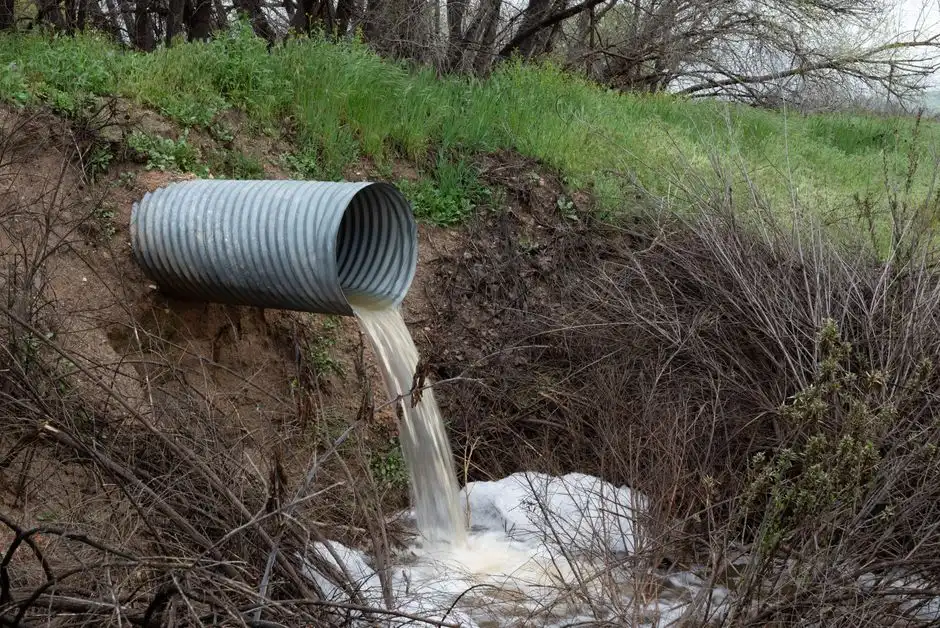
The Maximum Allowable Headworks Loading (MAHL) is the engineering workhorse behind every local limit Lynchburg prints. The MAHL is the maximum mass of each pollutant that can pass the headworks without violating any of four downstream constraints: the receiving POTW's own NPDES permit limits, Virginia water quality standards applicable to the James River basin, 40 CFR Part 503 numerical limits on metals and organics in biosolids, and worker or ecosystem protection factors including NIOSH thresholds (S1). The POTW converts each MAHL into a Maximum Allowable Industrial Loading (MAIL), allocates the mass across all SIUs by flow and process type, and the result is the daily-maximum and monthly-average numbers the engineer sees on the discharge permit.
For fabricated metals and electroplating operations, 40 CFR Part 413 lists eight regulated parameters for plants discharging ≥38,000 L/day (10,000 gal/day): lead, cadmium, copper, nickel, chromium, zinc, silver, and total cyanide. For plants below 10,000 gal/day, only lead, cadmium, and cyanide apply (S3). The "total metal" parameter is the sum of copper + nickel + chromium + zinc, and the daily-max and monthly-average limits are printed separately on the permit (S3). Part 433 carries a comparable but broader metals list including lead, cadmium, copper, nickel, chromium, zinc, silver, and total metals, with a daily-maximum total metals limit of 2.13 mg/L and a monthly-average of 1.19 mg/L for the core subcategory.
| Parameter | 40 CFR Part 413 daily-max (mg/L) | 40 CFR Part 413 monthly-avg (mg/L) | 40 CFR Part 433 daily-max (mg/L) | 40 CFR Part 433 monthly-avg (mg/L) | Applies to |
|---|---|---|---|---|---|
| Cadmium | 0.69 | 0.26 | 0.11 | 0.07 | 413 all flows; 433 all flows |
| Chromium (total) | 2.77 | 1.71 | 2.77 | 1.71 | 413 ≥10,000 gpd; 433 all flows |
| Copper | 3.38 | 2.07 | 3.38 | 2.07 | 413 ≥10,000 gpd; 433 all flows |
| Lead | 0.69 | 0.43 | 0.69 | 0.43 | All flows both rules |
| Nickel | 3.98 | 2.38 | 3.98 | 2.38 | 413 ≥10,000 gpd; 433 all flows |
| Silver | 0.43 | 0.24 | 0.43 | 0.24 | 413 ≥10,000 gpd; 433 all flows |
| Zinc | 2.61 | 1.48 | 2.61 | 1.48 | 413 ≥10,000 gpd; 433 all flows |
| Total cyanide | 1.20 | 0.65 | 1.20 | 0.65 | All flows both rules |
| Total metals (Cu+Ni+Cr+Zn) | 10.78 | 6.78 | 2.13 | 1.19 | 413 ≥10,000 gpd; 433 all flows |
| pH (headworks) | 5.0–12.0 | 5.0–12.0 | 5.0–12.0 | 5.0–12.0 | 40 CFR 403.5(b)(2) |
The tightening direction for 2026 mirrors the petroleum trajectory. Lynchburg-area POTWs in water-reuse basins have pushed daily-max HEM down to 50 mg/L; analogous tightening for metals is plausible as biosolids Part 503 limits and downstream James River criteria evolve (S1). Chrome finishing operations should expect 2026 PFAS monitoring and possible effluent limits under EPA-HQ-OW-2022-0869, on top of the existing metal ceilings (S3).
The four-stage pretreatment train for metal-bearing rinsewater
The unit operations chain for a Lynchburg-area fabricated metals plant runs in a fixed order, and skipping or combining stages is the most common path to a Notice of Violation.
- Stage 1 — Source segregation. Split cyanide-bearing rinse lines from acid/chromium lines from oily machine coolant lines. Combined flow treatment is the most common reason metal plants fail, because hexavalent chromium poisons the biological stage and cyanide complexes with nickel and copper to defeat hydroxide precipitation.
- Stage 2 — Chemistry. Alkaline chlorination at pH ≥10 destroys free cyanide before metals precipitation. For hexavalent chromium, reduce Cr(VI) to Cr(III) at pH 2–3 with sodium metabisulfite or ferrous sulfate, then raise pH to 8.5–9.5 to precipitate Cr(OH)₃ — chromium will not precipitate above pH 10. Dosing accuracy at this stage is the single biggest lever an automatic chemical dosing system provides, since manual sodium metabisulfite and caustic addition drift and over-dose frequently on first-generation installations.
- Stage 3 — Solids separation. A dissolved air flotation (DAF) system after flocculation with a polymeric coagulant removes the metal hydroxide floc; DAF is preferred over a lamella clarifier at the <1,000 mg/L TSS range typical of rinsewater because the micro-bubbles lift the light floc faster than gravity settling, and air-flotation hydraulic retention times of 15–25 minutes beat the 60–90 minutes a lamella needs on the same floc.
- Stage 4 — Polish and pH trim. An MBR membrane bioreactor or multimedia filter drops residual TSS below 10 mg/L to protect the receiving POTW's biological stage, and a final pH trim in the 5.0–12.0 window with continuous probe logging is a permit-condition instrument, not a process nice-to-have. A high-rate high-efficiency sedimentation tank as a back-up clarifier on the chromium precipitation loop is common in retrofits where footprint forces a tighter flux than a single DAF can deliver.
The BMP layer above the train is the cheapest compliance insurance a Lynchburg-area plant can buy, and the pretreatment coordinator looks for BMPs before the lab data even gets reviewed: spill containment around plating baths, drip pans under transfer pumps, segregated sewer laterals that keep production pads out of clean stormwater, visible tagging of all sample points, and a written SPCC under 40 CFR Part 112 tied to the sewer map (S1, S2). Field experience shows a complete BMP package eliminates roughly half of common audit findings (HydropureWater field data, 2025). For facilities that also carry FOG load from centralized parts washers, the relative merits of DAF versus a coalescing oil-water separator are covered separately in a DAF vs oil-water separator comparison.
Local limits vs categorical standards — where the engineer pushes back
Daily-maximum and monthly-average limits on a Lynchburg permit cannot be met by stream dilution, and any local limit tighter than the federal categorical standard must be supported by a current Technically Based Local Limits (TBLL) document or the most recent MAHL worksheets (S1). When the POTW's draft local limit is tighter than the federal floor without a defensible MAHL basis, the first engineering move is to request the receiving POTW's current TBLL or MAHL worksheets before any equipment is specified. If the tightening rests on a TBLL more than five years old, or on biosolids Part 503 limits that EPA has since revised, the engineer has a defensible position to ask for a MAHL re-run (S1).
The 90-day clock matters. Under Lynchburg code §VII and 40 CFR 403.12(b), the POTW must revise the user's permit within 90 days of any new or revised EPA categorical standard, and the user must submit a BMR containing the 16 information items in §V(c)(1) through (16) within 180 days of the standard's promulgation or the final administrative category determination, whichever is later (S1). A new source must report the method of pretreatment it intends to use to meet applicable categorical standards instead of historical monitoring data. The 2026 PFAS rulemaking under EPA-HQ-OW-2022-0869 is the next clock to track for any Lynchburg plant running chromium plating, anodizing, chromic acid etching, or chromate conversion coating (S3).
Frequently Asked Questions
Is a Lynchburg-area fabricated metals plant regulated under 40 CFR Part 413 or Part 433?
It depends on the line start date. Electroplating lines commissioned before July 15, 1983 stay on 40 CFR Part 413 (Electroplating); any new line started on or after that date is covered by 40 CFR Part 433 (Metal Finishing) (S3). Confirm the date on each line's commissioning record before sizing the train, because the metals lists, total metals definition, and reporting cadence differ between the two rules.
What triggers Significant Noncompliance for a metal finisher in the Lynchburg service area?
Three triggers, per EPA's National Pretreatment Program under 40 CFR Part 403: a numerical exceedance of 1.5× or more on a single day, a numerical exceedance on more than 5% of measurement days in a six-month period, or a required report filed more than 30 days after the due date (S1). One late monthly report triggers a Notice of Violation; a second event in 12 months escalates to SNC and a Show Cause hearing.
Does the 2026 PFAS rulemaking under EPA-HQ-OW-2022-0869 apply to my chrome finishing line?
Yes if you run chromium plating, chromium anodizing, chromic acid etching, or chromate conversion coating — the EPA has identified those four operations as the predominant PFAS sources within the Metal Finishing and Electroplating categories (S3). Expect 2026 PFAS sampling and possible effluent limits as the rulemaking finalizes; begin baseline monitoring now and track the docket for the final rule.
Why is the pH window 5.0–12.0 enforced at the headworks rather than at the bath?
40 CFR 403.5(b)(2) and Lynchburg code §II both enforce the pH window at the headworks because out-of-range pH at the headworks indicates pretreatment failure and can damage the POTW's biological stage and collection system (S1). An out-of-window pH is a self-reported violation regardless of the metals number on the same composite, which is why the final pH probe logs to a retention recorder rather than to a local gauge.
Which equipment step fails first when a metal finisher misses a permit limit?
Source segregation is the most common single failure point: combined cyanide and hexavalent chromium streams defeat downstream precipitation and trigger SNC on the next monthly composite. After segregation, the second most common miss is pH control on the chromium reduction stage — Cr(VI) reduction requires pH 2–3, but a drift above pH 3 leaves soluble Cr(VI) that hydroxide precipitation cannot remove at any pH (S1). Spec the chemical dosing with redundant pH probes and an automatic shutoff on out-of-band readings.