Why St. Louis Fabricated Metals Plants Are Hitting FOG Limits in 2026
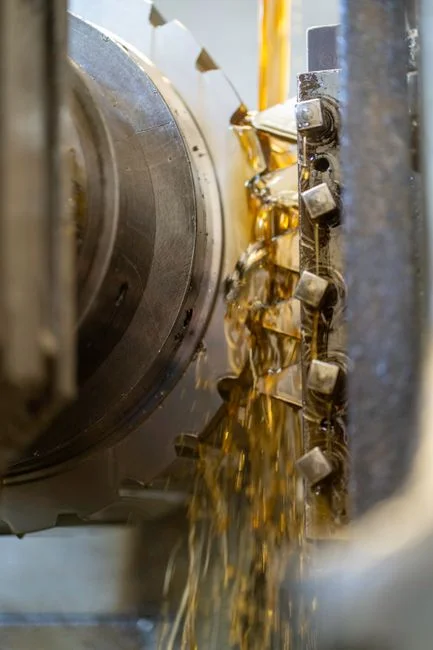
St. Louis fabricated metals plants discharging to the Mississippi River, the Meramec, or the Missouri are running into a specific pattern in 2026: 40 CFR Part 437 daily-maximum oil and grease of 26 mg/L and TSS of 60 mg/L are getting tighter against streams that fluctuate harder than the permit assumes. The North County job-shop belt (Goodfellow, Riverview, the I-270 corridor) and the heavier end of the cluster — tier-1 automotive stampings, electrical enclosures, railcar fabrication, aerospace tier-2/3 — all push the same contaminants: drawing compounds, stamping lubricants, water-soluble and straight cutting fluids, rust preventatives, quench oils, parts-washer rinses, and tramp oil leaking from hydraulic sumps and way-lubricators (per EPA 40 CFR Part 437).
Missouri DNR enforces 40 CFR Part 437 through individual NPDES permits on the Mississippi and Meramec corridors, and any DMR excursion against the 26 mg/L O&G or 60 mg/L TSS daily-max is a public record. The dominant failure mode is a Monday-morning coolant surge: a fabrication line that idles over the weekend lets tramp oil and broken emulsion pool in the equalization basin, then pushes a slug of emulsified oil straight through a clarifier that has no business trying to float it. The clarifier is sized for settleable fines, not for 5–20 µm emulsified droplets stabilized by surfactant in synthetic coolants — so the O&G number spikes, the DMR shows it, and the operations manager is the one explaining the excursion to Missouri DNR (HydropureWater field data, 2026).
How a DAF and a Clarifier Actually Separate Oil, FOG and Solids
The two technologies solve different problems, and the difference starts at the bubble. A dissolved air flotation system saturates a pressurized side-stream recycle at 60–80 psig, then depressurizes through a micro-bubble generator. The dissolved air flashes out as a cloud of 20–40 µm bubbles on a DAF Corp FC Maximizer or 30–50 µm on a SigmaDAF USA standard unit (sources: dafcorp.com, 2026; clearwaterind.com, 2026). Those bubbles attach to oil droplets and to chemically conditioned floc, lift the combined particle to the surface in roughly 3 minutes of hydraulic retention, and a paddle skimmer sweeps the float into a sludge hopper. The float exits at 2–4% solids — no thickener needed downstream.
A lamella clarifier does the opposite job. It is a quiescent settling basin with inclined plates at 55–60° that multiply the effective settling area, reaching 20–40 m/h surface loading (roughly 0.3–0.6 GPM/ft²) in a footprint one-quarter to one-fifth of an equivalent conventional circular clarifier (HydropureWater lamella product data, 2026). Solids heavier than water drop under Stokes' law; the clarified supernatant overflows a peripheral weir. Retention time is 1–3 hours, sludge exits at 1–2% solids, and a thickener or filter press is usually required. The clarifier's blind spot is the 1–50 µm particle range — the size band where emulsified coolant, colloidal metal hydroxides, and low-density tramp oil live. Those contaminants will not settle by gravity, and they pass straight over the weir to the NPDES outfall.
For St. Louis chloride exposure — yard runoff tracking de-icing salt in from the North County winter, plus Mississippi River humidity through the summer — material selection is 304L stainless as standard, with 316SS upgrade where chloride-bearing rinsewater is present and polypropylene or FRP for acidic plating lines (per clearwaterind.com, 2026). The DAF Corp FC Maximizer ships in 304L as standard, with all-stainless upgrades on request (per dafcorp.com, 2026).
Side-by-Side Engineering Parameters for St. Louis Sizing
The table below consolidates the engineering parameters a St. Louis plant engineer needs to defend the choice in front of operations and finance. Cost figures are illustrative 2026 USD bands for a 50–200 GPM mid-size job shop; exact pricing depends on chemistry integration, tank material, and site conditions.
| Parameter | DAF (skid, FC Maximizer / SigmaDAF) | Lamella Clarifier |
|---|---|---|
| TSS removal | 85–98% (FC Maximizer 92–98%; RC UniMax 85–90%) | 50–80% on metal-bearing wastewater |
| FOG / O&G removal | 85–95%; effluent FOG typically 15–30 mg/L | Under 50% when oil is emulsified; free-oil skim only |
| Particle size window | ~1–50 µm via microbubble attachment | Above 50–100 µm only; sub-50 µm passes through |
| Hydraulic retention | ~3 minutes | 1–3 hours |
| Surface loading / flux | 4–5 GPM/ft² | 20–40 m/h (~0.3–0.6 GPM/ft²) |
| Sludge output | 2–4% cake, no thickener needed | 1–2% slurry; thickener typically required |
| CAPEX 2026 (50–200 GPM) | Skid $80K–$350K (4–50 m³/h); installed $120K–$280K | 10–200 m³/h lamella $40K–$180K |
| OPEX | Polymer/coagulant $0.30–$1.20 per 1,000 gal; air and pump power $0.05–$0.15 per 1,000 gal | Polymer $0.20–$0.80 per 1,000 gal; sludge pumping and hauling dominate |
| Effluent vs 40 CFR Part 437 | Comfortably meets 60 mg/L TSS and 26 mg/L O&G daily-max | Marginal; usually needs a polish step for FOG and metals |
| Best-fit stream | Emulsified coolants, free oil, FOG, low-density fines, plating rinse interference | Settleable metal fines, grinding swarf, grit, sand |
Sources for the technical rows: DAF Corp product literature (2026); SigmaDAF USA via Clearwater Industries (2026); Wang & Wang, Lenox Institute, STEAM Vol. 4 No. 7C, July 2022. Cost rows are 2026 USD illustrative bands based on current industrial vendor pricing for mid-size job-shop duties.
The Four-Branch Decision Rule for St. Louis Plants
The mechanism story and the parameter table collapse into four operational branches. Use these thresholds to make the call in a capital review or P&ID markup.
Branch 1 — DAF alone. Free oil above 50 mg/L, or emulsified coolant above 30 mg/L, or total TSS above 500 mg/L with significant FOG. That covers most stamping, machining, parts-washer, and coolant-sump streams in the St. Louis tier-supplier and job-shop base. A skid-mounted DAF in the 48–450 GPM range (DAF Corp skid FC Maximizer, 6–15 ft diameter) can be installed in days rather than the months a civil clarifier build requires — a real advantage when a Missouri DNR sampling event is already on the calendar.
Branch 2 — Clarifier alone. Stream dominated by settleable metal fines from grinding, lapping, or polishing, with FOG under 30 mg/L, and the site has the footprint for a 1–3 hour retention basin. Lamella geometry makes this viable even on a constrained urban lot, and the CAPEX band is the lower of the two technologies.
Branch 3 — DAF then lamella polisher. TSS above 2,000 mg/L and FOG above 200 mg/L — the high-load case. DAF Corp's FC-150 is documented at 500 GPM and 2,000 PPM loading clarified to 50 PPM in a single cell (per dafcorp.com, 2026), which is the operating envelope where a polish step becomes optional rather than mandatory for many St. Louis streams.
Branch 4 — DAF retrofit on existing clarifier. Legacy basin breaching FOG or O&G. DAF Corp explicitly offers new and retro-fit installations (per dafcorp.com, 2026), and skid delivery (48–450 GPM, 6–15 ft diameter) drops into an existing hydraulic envelope without shutting the plant down for months.
Flow-chart prompt: measure free oil and emulsified oil separately → whichever exceeds the thresholds drives DAF → settleable-fines dominance drives clarifier → both high means DAF first, then lamella → existing clarifier failing FOG means retrofit a DAF ahead of it. For comparison across similar manufacturing clusters, the framework applies identically to DAF vs clarifier for mining and metals wastewater in Headland, AL and to DAF vs clarifier for Birmingham mining and metals factories, where the same four-branch logic frames the capital decision.
2026 Cost Bands and Payback for St. Louis Mid-Size Job Shops
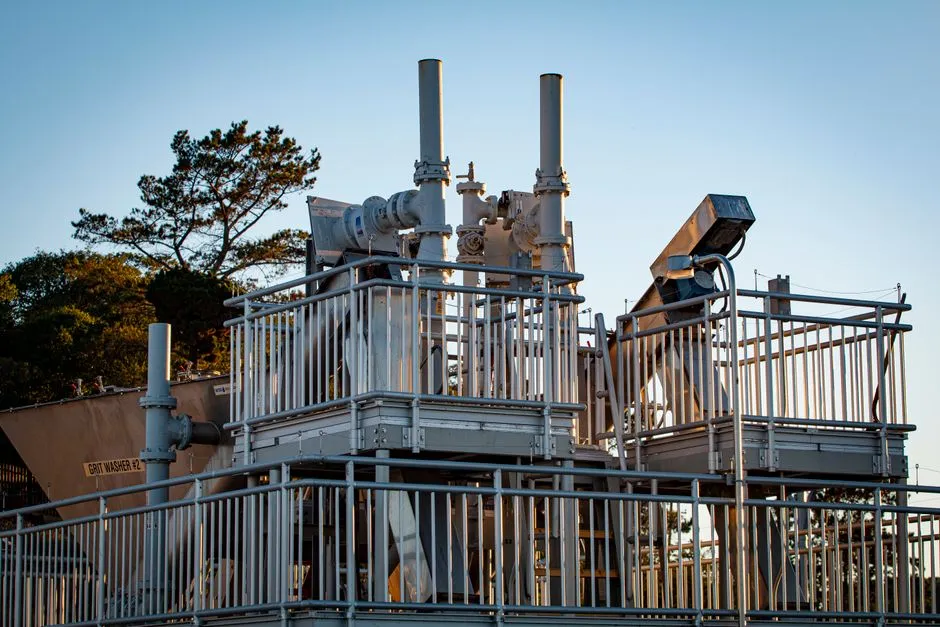
For a mid-size St. Louis job shop discharging 50–200 GPM, a 2026 turnkey DAF installation typically lands at $120K–$280K, including tank, saturator recycle loop, micro-bubble generator, skimmer, controls, and commissioning (HydropureWater 2026 pricing reference). The wide band reflects tank material — 304L standard, 316SS upgrade at roughly 15–25% premium — and whether the unit is skid-mounted or field-erected. Add $15K–$40K for the chemistry package: coagulant and polymer dosing skids, makeup tanks, and a HydropureWater automatic polymer and coagulant dosing skid integrated with the DAF PLC. A DAF with the wrong coagulant is an expensive tank — chemistry integration is the most under-scoped line item on most St. Louis RFQs.
Operating cost breaks into two lines. Chemistry: polymer and coagulant combined run $0.30–$1.20 per 1,000 gallons treated at typical St. Louis dosing rates (5–15 mg/L polymer, 50–150 mg/L coagulant). Energy: compressed air for the saturator and recycle pump power add $0.05–$0.15 per 1,000 gallons. Sludge hauling is where the DAF premium is often recovered — a 2–4% DAF cake (versus 1–2% from a clarifier alone) cuts hauled volume by 30–50%, paying back the DAF premium in 18–36 months for any plant hauling more than 5 yd³/week (HydropureWater field data, 2026). A HydropureWater lamella clarifier alternative in the same flow band lands at $40K–$180K turnkey, but budget for the additional thickener or filter press step if FOG and sub-50 µm fines are in the stream. The HydropureWater dissolved air flotation system covers 4–300 m³/h (roughly 18–1,320 GPM) across 13 standard models, so most St. Louis duties fall on a single skid without paralleling.
Sizing a 150 GPM DAF for a Typical St. Louis Stamping Shop
For 150 GPM at typical 500–2,000 mg/L TSS and 50–200 mg/L FOG — the envelope a St. Louis automotive tier-1 stamper or a heavy electrical-enclosure line discharges after equalization — a skid-mounted 10–12 ft diameter unit is the right fit. That places the selection between the DAF Corp FC-60 pilot (48 GPM, 6 ft) and the FC-150 production skid (500 GPM, 15 ft) referenced in vendor literature (per dafcorp.com, 2026). Verify the unit is rated for 2,000 PPM loading and confirm the saturator recycle ratio is sized for 20–30% of forward flow. In DAF terms, 150 GPM (≈34 m³/h) sits comfortably in the mid-range of the 4–300 m³/h envelope.
Material spec: 304L standard, 316SS upgrade if chloride-bearing rinsewater is present (de-icing salt tracked in from North County yard runoff is the common case), polypropylene or FRP if an acidic plating line ties into the same header. Add a HydropureWater plate and frame filter press downstream — DAF cake at 25–35% DS goes directly to a roll-off, eliminating the gravity thickener a clarifier-based train would need. The 1–500 m² press range covers everything from a 50 GPM job shop to a 500 GPM tier-one stamping plant. The full chain reads: collection sump → equalization → DAF → sludge to filter press → clarified water to pH adjustment and metals precipitation ahead of the Mississippi or Meramec outfall. For biological polishing decisions downstream of this train, the parallel analysis in MBR vs conventional activated sludge for fabricated metals wastewater in Great Bend applies the same capital-review framing to a different unit operation.
Frequently Asked Questions
Can a DAF alone meet 40 CFR Part 437 limits for a St. Louis metal finisher?
Yes, for the oil and grease and TSS parameters. A properly sized and chemically conditioned DAF delivers 85–98% TSS removal and effluent FOG in the 15–30 mg/L band, well below the 40 CFR Part 437 Metal Finishing daily-maximum TSS and O&G limits of 60 mg/L and 26 mg/L respectively (per EPA 40 CFR Part 437). Dissolved metals (hexavalent chromium, nickel, cadmium, lead) typically require a separate precipitation step after the DAF.
When is a lamella clarifier the right primary separator instead of a DAF?
When the stream is dominated by grinding, lapping, or polishing fines with negligible FOG (under 30 mg/L), and the site has the footprint for a 1–3 hour retention basin. A lamella at 20–40 m/h surface loading is hard to beat on settleable solids alone — and the wrong choice the moment emulsified coolant or tramp oil enters the stream.
Can a DAF be retrofitted onto an existing clarifier without shutting the plant down?
Yes. DAF Corp explicitly offers new and retro-fit installations, and the skid delivery format (48–450 GPM, 6–15 ft diameter) is designed to drop into an existing hydraulic envelope (per dafcorp.com, 2026). The typical retrofit installs the DAF upstream of the existing clarifier, with the clarifier demoted to a polish basin for settleable fines. Budget the chemistry dosing skid explicitly — it is the most commonly missed line item.
What does routine DAF maintenance look like for a St. Louis 50–200 GPM operation?
Daily: skimmer blade and weir inspection, saturator pressure gauge check, effluent TSS/visual verification. Weekly: micro-bubble generator nozzle inspection, polymer pump tubing, sludge hopper drawoff. Annually: recycle pump seal and bearing service, control valve rebuild, tank washdown. Most plants budget 2–4% of CAPEX per year for ongoing maintenance.
Does a DAF remove hexavalent chromium, nickel, cadmium and lead?
No, not as dissolved metals. DAF removes the oils and suspended solids that interfere with downstream metals precipitation, but the dissolved metal ions require a dedicated pH-adjustment and precipitation step (typically hydroxide or sulfide precipitation followed by a clarifier or sand filter) before the effluent reaches the NPDES outfall. A DAF is one unit operation in the train, not the whole train.