Why Medellín's Aburrá Valley Rewrites the Data Center Water Equation in 2026
Medellín sits at roughly 1,495 m elevation on the floor of the Aburrá Valley, with a mean annual temperature band of 18–22 °C — about 3–4 °C cooler than Brasília and well below the 24–27 °C baseline assumed in most US-centric data center water primers. That altitude/temperature combination directly cuts evaporative losses from cooling towers and lets a well-designed adiabatic/economizer hybrid loop push cycles of concentration (COC) above 6 without exotic chemistry, the design envelope already validated in the Brasília data center treatment guide and reapplied in the La Paz data center treatment guide for higher altitudes.
Two wet seasons (March–May and September–November) and a chronic dry-season stress event between December and February concentrate peak cooling demand in the same months the Medellín and Porce river basins are most stressed. The design operating point is the dry-season blowdown, not the annual average. Cornare has placed the Aburrá watershed under repeated critical-state classifications in recent dry seasons, and EPM Aguas has responded with industrial allocation caps that flip the reuse economics — the same pattern the Brasília template documents for ADASA and CAESB.
For a 20–80 MW campus running an adiabatic/economizer hybrid loop at PUE 1.3–1.5, plan makeup of 200–800 m³/day; the Open Engineering 2026 reference of ~2 million L/day for a 100 MW facility sets the upper benchmark (per S5). The Aburrá Valley's lower wet-bulb temperatures relative to coastal Colombia let a properly sized hybrid loop push COC to 7–10 once side-stream RO is added — and that range is the 2026 design baseline, not a stretch target. Discharge-only is no longer a defensible posture under Cornare scarcity declarations; on-site reuse is the design baseline, and the rest of this article builds around that premise.
The Two Effluent Streams a Medellín Data Center Has to Treat
A Medellín data center campus produces two distinct effluent streams that converge at the discharge point but require separate treatment trains sized independently before integration.
Stream 1 — Cooling tower blowdown at 4–6 COC. The bleed cycle that holds COC at 4–6 to prevent scale delivers TDS 1,500–2,500 mg/L, total hardness as CaCO₃ 400–800 mg/L, free chlorine or bromine residual 5–50 mg/L, isothiazolinone biocides 5–30 mg/L, and TSS 5–30 mg/L (HydropureWater field data, 2026). Ranges shift on scale-inhibitor chemistry and ambient particulate load from the dry-season Andean dust cycle.
Stream 2 — Sanitary wastewater from staff, cafeteria, and restrooms: 50–100 L/person/day at a hyperscale campus, BOD 150–300 mg/L, TSS 150–250 mg/L, NH₃-N 20–40 mg/L (HydropureWater field data, 2026). For a 40 MW campus with PUE 1.4 the combined flow runs 110–320 m³/day before reuse — split between 60–240 m³/day of blowdown and 50–80 m³/day of sanitary flow.
Blowdown volume follows B = Makeup / (COC − 1); at 4–6 COC the bleed runs 0.3–0.8% of makeup volume. Both streams normally discharge to the EPM sanitary sewer under Resolución 631/2015 unless on-site reuse is designed in, and the permit path differs because biocide and scale-inhibitor residuals trigger toxicity caps that sanitary BOD and TSS do not. Where the two streams are combined, total nitrogen loading is the binding constraint; where they are segregated, the cooling train is sized on hardness/TDS and the sanitary train is sized on BOD/TSS.
| Parameter | Cooling blowdown (4–6 COC) | Sanitary wastewater |
|---|---|---|
| Flow reference (40 MW campus) | 60–240 m³/day | 50–80 m³/day |
| TDS (mg/L) | 1,500–2,500 | 300–600 |
| Total hardness as CaCO₃ (mg/L) | 400–800 | 150–250 |
| BOD (mg/L) | Not applicable | 150–300 |
| TSS (mg/L) | 5–30 | 150–250 |
| Free chlorine / bromine (mg/L) | 5–50 | Negligible |
| NH₃-N (mg/L) | <5 | 20–40 |
| Regulatory floor | Resolución 631/2015 + Cornare basin decrees | Resolución 631/2015 |
Colombian Permit Stack: Resolución 631/2015, Cornare Basin Decrees and the EPM Discharge Contract
Resolución 631/2015 (MADS) sets the national effluent floor for industrial discharges to the sanitary sewer: pH 5–9, BOD ≤ 120 mg/L for sewer discharge unless EPM Aguas imposes tighter values, oils and greases ≤ 50 mg/L, and explicit toxicity caps for biocides — a binding constraint for cooling blowdown. Cornare layered basin decrees add load-based limits for TDS, chlorides, and sulfates in drought-sensitive sub-basins of the Aburrá–Porce system, with periodic updates that tighten the per-volume pollutant load a data center can send downstream in declared scarcity months.
The standard permit path for cooling blowdown is a hold-and-decay tank sized at 24–48 hours of blowdown volume paired with sodium bisulfite dosing to drop free chlorine residual to ≤ 0.5 mg/L before discharge. Isothiazolinone destruct requires longer holding or activated carbon polishing, and the Cornare permit reviewer will ask for both. The EPM Aguas discharge contract layers an additional tariff and quality overlay on top of the national floor; the contract is negotiated, not formulaic, and the tariff crossover that flips reuse CAPEX payback is denominated in COP/m³ rather than USD.
The cleanest path around Resolución 631 caps is on-site reuse: when blowdown is polished to cooling-makeup quality, the regulatory target becomes the reuse specification (typically MBR/RO grade), not the discharge limit, and the discharge conversation collapses to a wet-weather overflow conversation. The same logic is documented in the Brasília data center treatment guide for CONAMA 430 and the ADASA/CAESB overlay.
The 2026 Treatment Train: Five Unit Operations From Blowdown to Reuse
The 2026 treatment train for a Medellín cooling-blowdown stream is five unit operations, designed to hit either Resolución 631/2015 discharge or cooling-makeup reuse without changing the upstream sequence.
- Equalization with a bar screen and rotary drum on the feed. A GX series rotary mechanical bar screen at headworks protects downstream pumps and RO membranes from rags, plastics, and fibrous debris; equalization buffers the 0.3–0.8% makeup variable before chemistry control.
- Physical separation. Specify a DAF unit when influent TSS exceeds 20 mg/L; otherwise deploy a JY integrated water purification system with lamella clarification. The high-efficiency sedimentation tank cuts chemical consumption up to 30% versus conventional trains and shrinks the mechanical-room footprint.
- Softening. Lime-soda or an industrial twin-tank water softener drops CaCO₃ hardness from 400–800 mg/L to < 50 mg/L and protects downstream RO from calcium carbonate scaling. A KJ-WT series softener fits the 1–45 T/h envelope and alternates vessels for uninterrupted supply.
- Side-stream reverse osmosis. An industrial RO unit runs at conservative local recovery below scaling limits. Conventional BWRO plateaus at 75–80% recovery, but pushing COC to 7–10 with side-stream RO delivers nonlinear blowdown reduction via B = E / (COC − 1) — every additional cycle cuts the bleed materially.
- Disinfection and polishing. A chlorine dioxide generator on the reuse loop provides residual control without the THM formation risk of free chlorine and matches the Colombian drinking-water framework for non-potable reuse.
Where basin TDS is acute and discharge is constrained, the same train upgrades to ZLD by adding a brine concentrator (MVC at 15–25 kWh/kgal distillate) plus a forced-circulation crystallizer. In Antioquia this is the exception, not the default, and applies only when Cornare TDS caps are exceeded or scarcity declarations force closed-loop operation. The treatment logic for the cooling blowdown is documented alongside the ammonia-nitrogen discharge limits in the ammonia nitrogen discharge limit guide for the Brazilian analog.
Sanitary Stream: Packaged MBR or WSZ Underground Plant Sized to Reuse
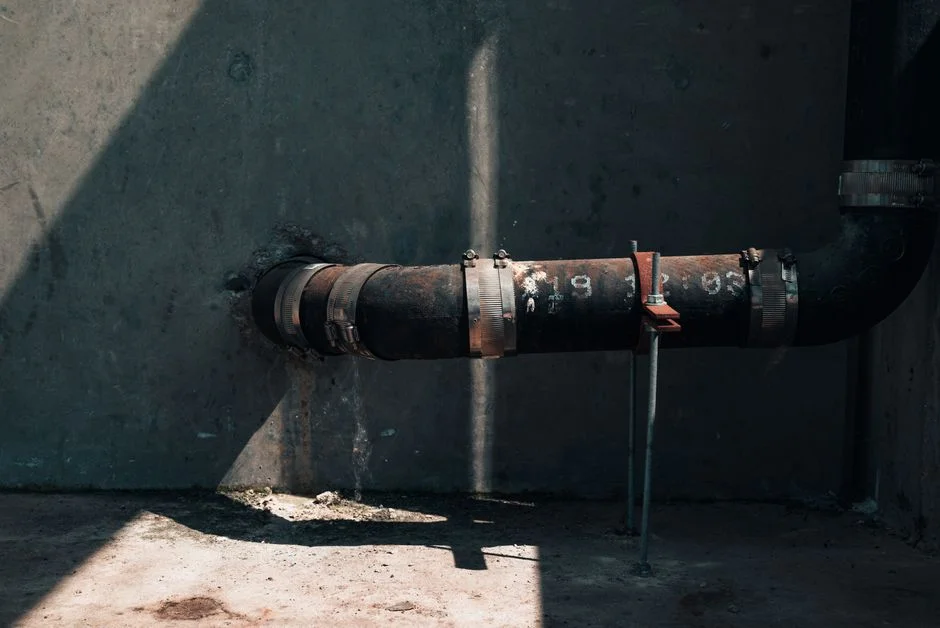
Below roughly 80 m³/day of sanitary flow with no reuse intent, a WSZ underground packaged STP in the 1–80 m³/h envelope handles the load fully buried, with no on-site operator and a single annual sludge pump-out — a fit for a 20 MW enterprise or edge site with limited site footprint.
For a 40–80 MW hyperscale campus that wants to reuse treated sewage for cooling-tower makeup, irrigation, or toilet flush, specify an MBR membrane bioreactor with submerged PVDF at < 1 µm pore size — roughly 60% smaller footprint than conventional activated sludge, with effluent BOD < 5 mg/L and TSS < 1 mg/L that meets reuse targets without tertiary polishing. DF series flat-sheet membrane modules cover 10–2,000 m³/day campus WWTPs, with individually replaceable elements and clean-in-place capability using standard CIP chemistry.
Sludge from the sanitary train goes to a plate-and-frame filter press for dewatering before off-site disposal; for a 40 MW campus the press footprint fits in the same mechanical room as the MBR. Cake solids of 22–28% DS are typical, and the press runs intermittently on a duty/standby basis with hydraulic closure and polypropylene plates rated for the sanitary sludge chemistry.
Reclaimed EPM Aguas Effluent: The Third Stream Most Sites Overlook
Polishing treated effluent from the EPM Aguas Aguas Residuales system (the San Fernando and Bello WWTPs that serve the Aburrá Valley) through MBR + RO + ClO₂ cuts potable draw by 60–80% — material when Cornare declares scarcity and EPM Aguas imposes industrial allocation caps. The polishing chain mirrors the cooling-blowdown train: rotary bar screening through a GX series mechanical bar screen, a multi-media filter for turbidity and iron, the MBR for organics, an industrial RO pass for TDS cut, and a chemical dosing system feeding ClO₂ for residual control. Sequencing is identical to the cooling-blowdown train, but with the MBR taking the feed instead of equalization.
The gating item is the concession/permit path with EPM Aguas for third-party reuse of treated sewage; raise it in the front-end engineering phase so the timeline matches the water-rights calendar, not the equipment delivery calendar. For hyperscale operators, this pathway converts a discharge permit conversation into a reuse partnership and is the single biggest lever for Cornare-declared scarcity periods. The same design pattern is documented in the Brasília template for ADASA scarcity and the CAESB Sul and Norte WWTPs.
Three Procurement Tiers, Three CAPEX Bands
Three tiers, each tied to COC and reuse targets rather than a fixed process flow, let a procurement manager pick a scope by campus size and water-stewardship ambition instead of forcing a one-size-fits-all tender. The same tiering logic is published in the Brasília data center treatment guide for the Brazilian tariff structure.
- Tier 1 — Discharge compliance only. DAF when TSS > 20 mg/L; no RO, no softening; target 4–6 COC; CAPEX roughly $150,000–300,000 for a 40 MW campus, with OPEX dominated by chemical consumption and EPM sewer fees.
- Tier 2 — On-site reuse for non-critical applications. DAF + softener + side-stream RO, ClO₂ on the reuse loop; push COC to 7–10. A 50,000 GPD RO skid installs for $250,000–500,000 with OPEX $1.50–3.00/kgal including energy, chemicals, membrane replacement, and maintenance (HydropureWater field data, 2026).
- Tier 3 — Closed-loop cooling. Full pretreatment-RO train, optional ZLD above 1,500 mg/L basin TDS; ZLD CAPEX $3–8 M, OPEX $5–15/kgal at 95–99% overall recovery (HydropureWater field data, 2026).
CAPEX payback on RO reuse falls below 3 years when EPM industrial tariffs exceed roughly COP 12,000/m³ — a threshold the industrial tariff band has crossed in 2026. Discharge fees in water-stressed regions of $5–15 per thousand gallons add a second economic line (HydropureWater field data, 2026). The JY integrated water purification system and the high-efficiency sedimentation tank fit Tier 2 and Tier 3 polishing loops; both cut chemical consumption up to 30% versus conventional trains and shrink mechanical-room footprint.
| Tier | Scope | Target COC | CAPEX (40 MW reference) | OPEX | Reuse % |
|---|---|---|---|---|---|
| Tier 1 | DAF + EPM sewer discharge | 4–6 | $150,000–300,000 | Chemicals + sewer fees | 0% |
| Tier 2 | DAF + softener + side-stream RO + ClO₂ | 7–10 | $250,000–500,000 (50,000 GPD RO skid) | $1.50–3.00/kgal | 50–70% |
| Tier 3 | Full pretreatment-RO + optional ZLD | 7–10 + ZLD branch | $3–8 M (ZLD only) | $5–15/kgal at 95–99% recovery | ≥ 95% |
| Reclaimed EPM effluent (add-on) | MBR + RO + ClO₂ on Aguas Residuales | — | Add $200,000–400,000 | Add $0.80–1.50/kgal | 60–80% potable draw offset |
Decision Framework: Picking the Right Tier for a Medellín Campus
Pick Tier 1 if the campus is < 20 MW, the EPM Aguas allocation is non-binding, and the sewer contract accepts 4–6 COC blowdown at Resolución 631/2015 discharge caps — typically an enterprise or edge site with no corporate water-stewardship target.
Pick Tier 2 if the campus is 20–80 MW, Cornare or EPM has signaled scarcity-period allocation caps, and a 3-year payback is the internal hurdle. This is the default 2026 Medellín scope for hyperscale and colocation operators with an EPM industrial tariff above the COP 12,000/m³ crossover.
Pick Tier 3 if the site is in a Cornare-designated drought-sensitive sub-basin, basin TDS exceeds 1,500 mg/L, or corporate water-stewardship targets require net-positive or closed-loop operation. Add the reclaimed EPM Aguas effluent pathway to any tier when Cornare declares scarcity and the industrial allocation cap binds; it is the single fastest lever to lift potable draw off the table.
Frequently Asked Questions
What is the regulatory floor for data center cooling blowdown in Medellín?
Resolución 631/2015 (MADS) sets the national effluent floor: pH 5–9, BOD ≤ 120 mg/L for sewer discharge, O&G ≤ 50 mg/L, and explicit biocide toxicity caps. Cornare basin decrees layer load-based limits for TDS, chlorides, and sulfates in drought-sensitive Aburrá–Porce sub-basins, and the EPM Aguas discharge contract adds a tariff and quality overlay on top.
What cycles of concentration can a Medellín data center reach with side-stream RO?
Without side-stream RO, target 4–6 COC to keep blowdown TDS manageable for discharge. With side-stream RO and lime-soda softening, push to 7–10 COC and recover more than 75% of blowdown as reuse water (HydropureWater field data, 2026) — the savings are nonlinear because B = E / (COC − 1).
What is the CAPEX/OPEX band for on-site reuse at a 40 MW Medellín campus?
Tier 2 installs for $250,000–500,000 with OPEX $1.50–3.00/kgal, and payback falls below 3 years when EPM industrial tariffs exceed roughly COP 12,000/m³ (HydropureWater field data, 2026). Tier 3 closed-loop runs $3–8 M CAPEX and $5–15/kgal OPEX at 95–99% recovery.
When does ZLD become defensible in the Aburrá Valley?
ZLD is defensible only when basin TDS exceeds 1,500 mg/L or Cornare declares scarcity with an EPM allocation cap severe enough to make reuse the only operating mode; add MVC and a forced-circulation crystallizer to the standard five-step train and budget $3–8 M CAPEX with $5–15/kgal OPEX (HydropureWater field data, 2026).
Can a Medellín data center use treated municipal wastewater from EPM Aguas as cooling makeup?
Yes — a concession with EPM Aguas allows treated effluent from the San Fernando or Bello WWTPs to be polished through MBR + RO + ClO₂ and reused as cooling makeup, cutting potable draw by 60–80% during Cornare-declared scarcity periods. Raise the concession path in front-end engineering to align with the water-rights calendar.