Why Sludge Is the Underestimated 2026 Sugar-Mill ETP Cost
Sludge handling represents 8–12% of total ETP OPEX and a roughly equivalent share of CAPEX in 2026 sugar-mill designs, once polymer dosing, dewatering equipment, cake transport, and disposal contracts are summed (HydropureWater field data, 2026). A 1,000 m³/d plant handling combined mill and distillery influent will produce on the order of 1.0–1.6 tonnes of dry solids per day after dewatering, derived from a working mass balance of 0.8–1.6 kg DS per m³ treated. Four distinct streams enter the sludge line: coarse grit and screenings from the bar screen, DAF float from the primary clarifier, UASB/IC waste granular sludge bled from the anaerobic blanket, and chemical-biological excess sludge from the aerobic stage. The 2026 driver is regulation. CPCB, CONAMA 430, and EU BAT-AEL disposal rules have tightened leachate thresholds and reuse quality, and cake solids targets are climbing as landfill costs rise. Treating sludge as a Stage 7 footnote is the single most common cause of budget overrun on Indian, Brazilian, and Southeast Asian mill ETP builds.
Sludge Mass Balance by Treatment Stage
The fastest way to oversize — or undersize — a sugar-mill sludge line is to skip the per-stage mass balance. Each upstream unit contributes a characteristic dry-solids loading per cubic metre of treated flow, and the design figure is the sum, not the worst stream. The table below summarises 2026 operating values across the four streams that reach the sludge line; screenings are dewatered on a screw screen and excluded from the downstream press feed.
| Source stream | kg DS per m³ treated | Typical feed consistency | Notes |
|---|---|---|---|
| Screening grit (excluded from sludge line) | 0.05–0.10 | 20–25% DS after screw screen | Dewatered and stockpiled separately |
| DAF float | 0.10–0.25 | 1.5–3.0% DS as float | Low-density, often oily; needs DAF thickening |
| UASB/IC waste sludge | 0.05–0.10 | 2.0–4.0% DS granular | Periodic bleed, high settleability |
| Aerobic excess sludge (ASP/MBBR/MBR) | 0.30–0.60 | 0.5–1.0% DS at MLSS 3,000–12,000 mg/L | Largest single contributor |
| Chemical sludge from PAC coagulation | 0.15–0.35 | 0.3–0.8% DS as Al(OH)₃ + melanoidin floc | PAC dose 200–1,000 mg/L on anaerobic effluent |
| Total to sludge line | 0.80–1.60 | — | Working range for mixed-influent 2026 design |
Aerobic waste activated sludge dominates the mass balance at 0.30–0.60 kg DS/m³, and combined with chemical sludge it accounts for roughly 60–70% of total DS reaching the dewatering step. The PAC dose of 200–1,000 mg/L on anaerobically treated effluent generates the Al(OH)₃ plus melanoidin floc quantified above, and explains why the chemical stream alone can match the entire DAF float load on a high-colour influent.
Thickening Before Dewatering: When Gravity, DAF, or a Decanter Pays Off
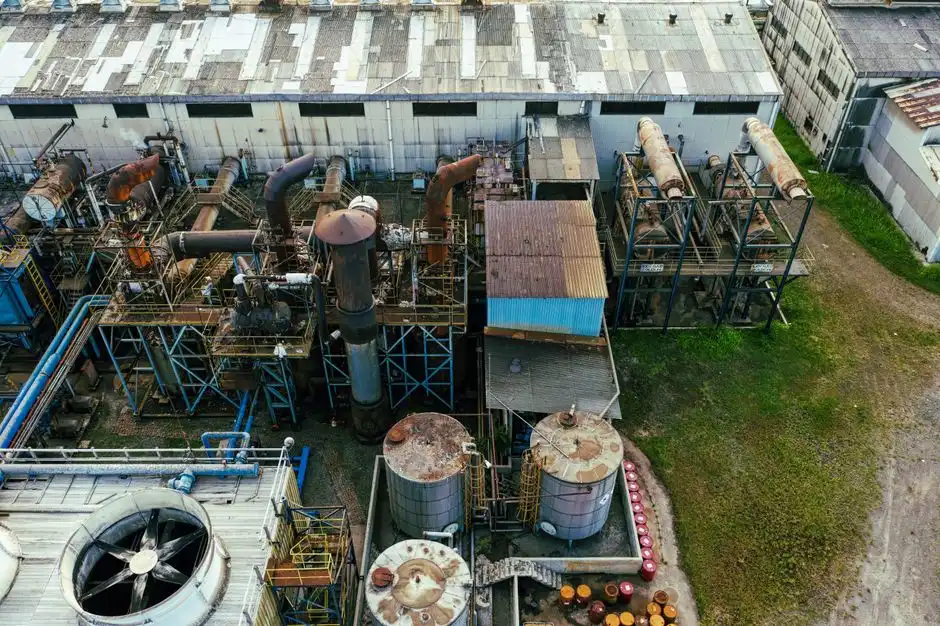
Thickening is justified only when the feed to the press is below 2.0–2.5% DS — below that, press cycle times lengthen and polymer consumption per tonne of cake climbs. A circular or lamella gravity thickener suits aerobic waste at 0.5–1.0% feed DS and reaches 2.0–3.5% underflow with a low dose of the same DAF thickener for float sludge already in the train. A DAF thickener is the right call for low-density float sludge and any stream carrying oil or grease, since the same air-flotation mechanism that removes TSS in primary clarification also concentrates float sludge to 3–5% DS without an extra footprint. Decanter centrifuges used as pre-thickeners are over-specified for most sugar-mill flows and are reserved for plants above 20 m³/h or where land is constrained. If aerobic sludge is already settling at 2.5–3.5% DS in the secondary clarifier, skip the thickener entirely and feed the press directly — the CAPEX saved is usually 8–15% of the sludge line, and the polymer dose per tonne of DS stays inside the 3–6 kg/t range.
Polymer Selection: Why Cationic CPAM Wins on Sugar-Mill Sludge
The conditioning chemistry follows directly from the surface chemistry of the solids. Sugar-mill sludge is a blend of anionic biological floc, anionic melanoidin complexes, and cationic Al(OH)₃ — three streams with different charge signatures but a common need for a cationic flocculant. Cationic polyacrylamide (CPAM) is the 2026 standard, specified at medium-to-high charge density (40–60% cationicity) and dosed at 3–6 kg per tonne of dry solids for combined biological plus chemical sludge. Anionic PAM fails as a primary conditioner here because biological floc and melanoidin surfaces are both anionic, so charge neutralisation — the dominant mechanism — never happens. Cationic PAM is prepared as a 0.05–0.10% diluted solution and metered through an automatic CPAM polymer dosing skid to ensure even distribution across the press feed; manual dosing on a sugar-mill campaign is the fastest route to a 17% DS cake and an upset disposal contract.
Dewatering Equipment Compared: Belt Press vs Screw Press vs Plate-and-Frame vs Centrifuge
Specifying a dewatering machine on a sales sheet rather than a benchmarked table is how mills end up with 18% DS cake and a landfill bill that dwarfs the polymer saving. The table below benchmarks the four machines a 2026 sugar-mill ETP will be offered, on the five axes a procurement engineer has to defend.
| Machine | Cake DS (%) | Polymer demand | Capacity envelope | Indicative CAPEX (per m³/h feed) | Energy use (kWh/t DS) |
|---|---|---|---|---|---|
| Plate-and-frame filter press | 22–28 | 3–6 kg CPAM/t DS | 5–30 m³/h per unit | USD 35,000–60,000 | 8–15 |
| Screw press | 20–22 | 2–4 kg CPAM/t DS | 1–20 m³/h per unit | USD 18,000–35,000 | 5–10 |
| Belt filter press | 18–24 | 3–5 kg CPAM/t DS | 5–25 m³/h per unit | USD 15,000–30,000 | 4–8 |
| Decanter centrifuge | 22–27 | 4–8 kg CPAM/t DS | 10–60 m³/h per unit | USD 60,000–120,000 | 30–60 |
Plate-and-frame filter presses target 22–28% DS on sugar-mill sludge and remain the 2026 default in Indian, Brazilian, and Southeast Asian mills because cake dryness dictates the disposal cost. Screw presses deliver only 20–22% DS and struggle with oily or fibrous sludge, but they win on CAPEX at small flow rates under 20 m³/h. Belt filter presses have the lowest entry cost and the highest wash-water demand (often 20–30% of feed), and they are declining in new builds outside India. Decanter centrifuges produce 22–27% DS at high throughput but draw 30–60 kWh per tonne of DS and run loud — they are specified when the cake is destined for bagasse-boiler co-firing or when footprint is critical above 30 m³/h. Belt presses and screw presses require a flocculation tank upstream; plate presses and centrifuges accept conditioned sludge directly. The decision rule: specify plate-and-frame filter press for sugar mill sludge dewatering for combined biological plus chemical sludge, and reach for a centrifuge only when flow exceeds 30 m³/h or the cake feeds a boiler.
Operating the Filter Press: Cycle, Cake, and Wash Water
A recessed-plate press running a 2026 sugar-mill campaign cycles in 40–80 minutes end-to-end: 30–60 minutes of fill at 6–8 bar to build cake, followed by 10–20 minutes of squeeze at 12–15 bar to push the cake above 22% DS. Cake solids below 20% on a steady-state run signal one of three things — under-conditioned sludge, a worn filter cloth, or a feed that has slipped below 1.5% DS at the press inlet. Cloth rinse water (typically 5–10 m³/d on a 1,000 m³/d plant) is recycled to head-of-works rather than sent to the sludge line, which would defeat the polymer conditioning. Plan a CIP every 3–6 months with 1,000–2,000 mg/L NaOCl to keep biological fouling off the cloth; sugar-mill temperatures in the 35–40°C range accelerate fouling compared to municipal duty, so a quarterly CIP is closer to the 2026 operating norm. Upstream biological upsets often drive press performance off-target, as detailed in this troubleshooting guide for foaming, bulking sludge and turbid effluent.
Cake Disposal and Reuse in 2026: Compost, Co-fire, or Landfill
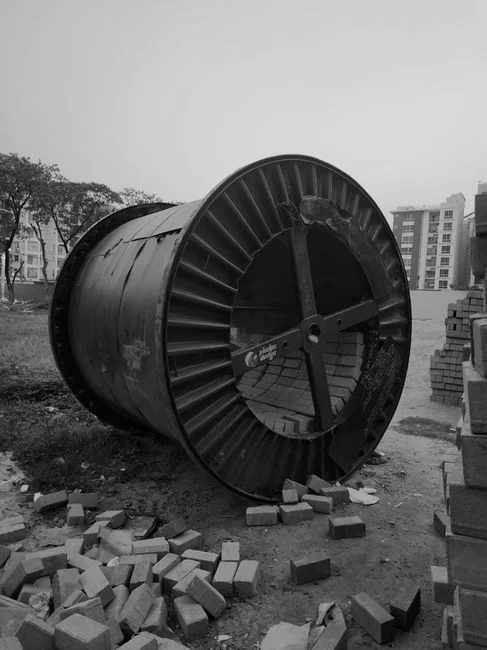
The disposal route is decided at design stage, not at commissioning. Co-composting with press mud — the filter cake from juice clarification — is the leading 2026 reuse route in India and Brazil, and produces a soil amendment sold to local cane farms at a price that often offsets hauling cost. PAC-rich chemical sludge carries aluminium that constrains direct land application; characterise the cake against local heavy-metal and aluminium limits before blending it with press mud, because aluminium loading above 2–3% DS can defeat soil-amendment sale. Co-firing in the mill's bagasse boiler is feasible for low-aluminium biological cake at 22–28% DS and offers a real calorific value of 8–12 MJ/kg DS, but it is not recommended for chemical sludge, which forms deposits in the boiler passes. Landfill is the fallback and the most expensive option at 2026 rates; secure disposal contracts before commissioning because CPCB, CONAMA 430, and the EU Waste Framework Directive have all tightened leachate thresholds in the last 18 months. For broader reuse design context, the sugar mill wastewater recycling and reuse design guide covers how cake disposal feeds the wider water-reuse mass balance. If the upstream DAF is being upgraded alongside the sludge line, the DAF retrofit and upgrade guide covers polymer skid integration.
Frequently Asked Questions
What cake solids target should a 2026 sugar-mill filter press be specified to hit?
Specify 22–28% DS on the data sheet. Anything below 20% on a steady-state run signals under-conditioning, worn cloth, or a feed below 1.5% DS.
How much cationic polyacrylamide does sugar-mill sludge consume per tonne of dry solids?
3–6 kg of medium-to-high charge density CPAM (40–60% cationicity) per tonne of DS for combined biological plus chemical sludge. Anionic PAM is unsuitable as the primary conditioner.
Plate-and-frame press or decanter centrifuge — which is the right default for a 2026 sugar mill?
Specify plate-and