What a DAF Retrofit and Upgrade Actually Changes
A dissolved air flotation retrofit and upgrade replaces or augments internal components — mixing heads, recycle pumps, saturation vessels, skimmers, and controls — inside an existing flotation tank to restore or expand capacity. Patented mixing-head retrofits have demonstrated 2x–3x capacity gains versus the original tank, and full-component retrofits typically cost 30–50% of a new DAF of equivalent capacity while reusing the civil structure (Clean Water Technology, GEM/LSGM retrofit data). The baseline mechanism stays the same: air is dissolved under 4–6 bar pressure, released at atmospheric pressure inside the tank, and the resulting micro-bubbles attach to suspended solids, oil, and FOG so the floatable fraction rises to a skimmed surface.
Three terms need to stay separate on a project worksheet. Retrofit means component-level replacement inside an existing tank — same concrete, new internals. Upgrade means a capacity or compliance expansion, which can be either a retrofit (more capacity from the same footprint) or an upgrade by adding tanks in parallel. Full replacement means a new tank and all new internals, typically with new civil works and pipework. The same vendor proposal can land anywhere on this spectrum, and the engineering and cost implications differ by a factor of three or more. Before you sign a scope, place your project on this spectrum and pin down which internal components are being touched — that single decision drives 80% of the cost and downtime conversation. For a refresher on the underlying process physics, the DAF process deep dive covers the calculations behind the numbers used throughout this article.
Engineering Triggers: When Retrofit Beats Replacement
Belt mistracking is a DAF problem only by analogy — the analogous failure here is loss of hydraulic margin: the DAF that "used to work" no longer meets its effluent envelope even though nothing obvious has changed. The five measurable triggers below are the ones that justify a retrofit scope over a "run it harder" patch. Run the checklist before you spend money on new internals.
| Trigger | Measurable Symptom | Typical Threshold | Likely Root Cause |
|---|---|---|---|
| Effluent TSS excursion | Online TSS probe or composite sample | Above permit limit, rising 3-month trend | Underperforming mixing head or wrong air-to-solids ratio |
| FOG carryover | Grab-sample FOG in clarified water | > 15–25 mg/L where permit is < 10 mg/L | Poor bubble–oil contact in the contact zone |
| Hydraulic short-circuiting | Visible lopsided bubble blanket, dye-trace test | Residence time < 60% of design RT | Inlet baffle degraded or inlet/outlet geometry mismatched |
| Recycle-pump cavitation | NPSH margin loss, audible cavitation, vibration | Recycle flow > 10% below design at rated pressure | Undersized or worn pump; suction piping throttled |
| Polymer dose creep | Active dose vs. baseline at commissioning | > 30–50% increase per m³ treated | Chemistry–hydraulic mismatch; mixing energy wrong |
Age-based triggers are equally concrete. DAFs over 8–10 years typically show corroded saturation vessels (carbon steel pitting, leaking flanges), recycle pumps undersized by current design standards (modern high-efficiency pumps can deliver the same head at 60–70% of the old motor kW), and obsolete PLC controls with no replacement parts. All three are retrofit-friendly problems. The decision rule is short: if the tank shell is structurally sound, the influent chemistry has not fundamentally changed, and the failure mode is internal, retrofit is almost always viable. If the plant has added a new upstream process that changed the waste stream character — for example, a new coating line or a switch in surfactant feedstock — the unit chemistry may now be wrong for the old tank, and replacement becomes the cleaner answer. Use the 2026 DAF selection and cost framework to pressure-test that boundary.
The Retrofit Menu: Which Components Get Upgraded
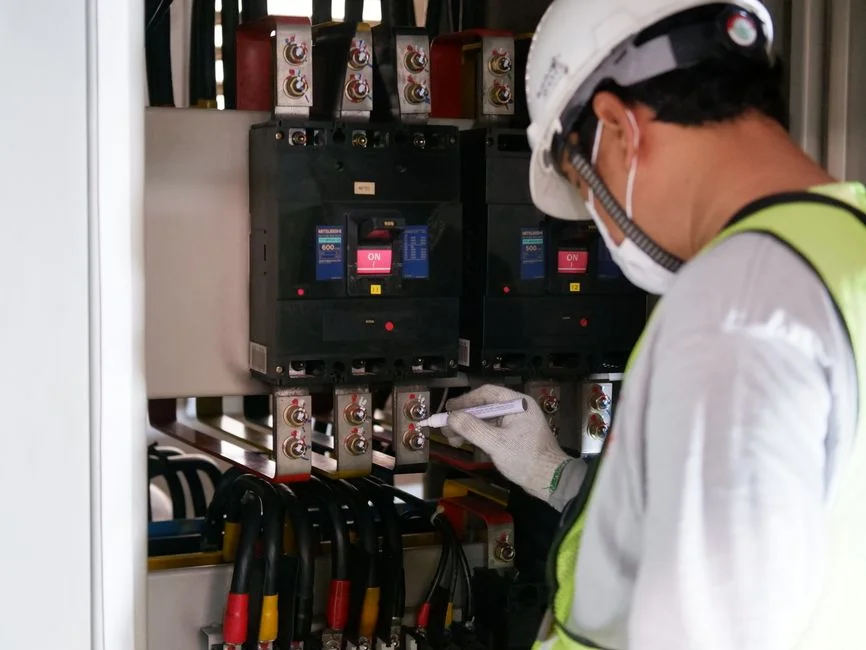
The retrofit menu is a five-component set, and most projects touch three to four of them. The table below shows what each upgrade actually does, the typical performance gain, and the engineering risk if you skip it. Mixing heads are the highest-impact item — the LSGM (liquid–solid–gas mixing) head retrofit published by Clean Water Technology is the benchmark reference, claiming a 2x–3x capacity uplift on the same tank footprint, and is the single retrofit component most likely to justify the whole project on its own.
| Component | What Gets Replaced | Typical Performance Gain | Engineering Risk if Skipped |
|---|---|---|---|
| Mixing head / LSGM head bank | Original eductor or static mixer | 2x–3x capacity (Clean Water Technology, GEM/LSGM) | Bubble–particle contact stays the limiting step |
| Recycle pump | Fixed-speed centrifugal pump | Air-to-solids ratio stable across 30–100% flow with VFD | Recycle pressure drops off the design curve at low flow |
| Saturation vessel | Carbon steel tank, original packing | Dissolved-air concentration up 15–25% with stainless + reticulated packing | White-water quality decays, micro-bubbles get coarser |
| Skimmer and sludge handling | Single-blade skimmer, fixed flight | Float solids capture up by 5–10 percentage points | Floated sludge re-entrains and refloats load on downstream press |
| Controls and chemical dosing | Relay logic, manual polymer make-down | Polymer consumption drops 15–30% on flow-paced dosing | Chemistry drifts on flow transients, performance varies shift-to-shift |
On recycle pumps specifically, the upgrade pattern is fixed-speed to VFD-driven, sized to the modern air-to-solids ratio of 0.02–0.06 kg air per kg influent solids for typical industrial streams. Saturation vessel upgrades pair stainless construction with reticulated packing and a redesigned air-over-water interface; carbon steel vessels over 8 years in service are usually a write-off. Skimmer upgrades mean replaceable polyurethane blades and flight geometry matched to the higher solids load the new mixing head will deliver — that floated material has to go somewhere, and a plate and frame filter press downstream must be sized to handle the new float yield. Controls retrofits close the loop with a PLC that paces polymer to influent flow and TSS, often paired with a dedicated automatic chemical dosing system rather than the original manual make-down. For a fully packaged retrofit unit, the DAF system illustrates the component layout most retrofits are trying to match.
Retrofit vs. Replacement: Cost, Downtime, and Lifetime Framework
The retrofit-vs-replace decision is not a sticker-price comparison — it is a four-axis framework: capex, downtime, remaining useful life, and permitting/civil scope. The numbers below are typical for industrial wastewater DAFs in the 20–150 m³/h range, drawn from vendor and engineering-reference data rather than a single project.
| Axis | Component Retrofit | Full Replacement (Like-for-Like) |
|---|---|---|
| Capex vs. new unit | 30–50% of new DAF capex (Clean Water Technology retrofit data) | 100% baseline, anchored to the DAF line 4–300 m³/h standard range |
| Reuses civil structure | Yes — tank, embedded piping, most skimmer frame | No — new tank, new foundations, new pipe racks |
| Typical downtime | 1–3 weeks including tie-ins and recommissioning | 6–10 weeks including demolition and new civil works |
| Added service life | 8–12 years on the existing unit | 15–20 years on a new unit (resets the clock) |
| Permitting impact | Usually minor — same footprint, same discharge | Often triggers a permit review if footprint or capacity changes |
The 30–50% capex figure for retrofit is the right anchor for a board paper, but the variance driver is corrosion: a carbon steel saturation vessel that has to be replaced anyway, plus new electrical scope for VFDs and a PLC panel, can push a retrofit toward the upper end. Conversely, a mixing-head-only retrofit on a sound tank can land at 15–20% of new-unit capex. The lifetime rule is the one procurement usually gets wrong: a retrofit adds 8–12 years to an existing DAF, while a replacement resets the clock to 15–20 years. Choose by remaining plant life and capital plan, not by sticker price — a unit with 4 years of plant life left should almost never be replaced.
Step-by-Step DAF Retrofit Sequence
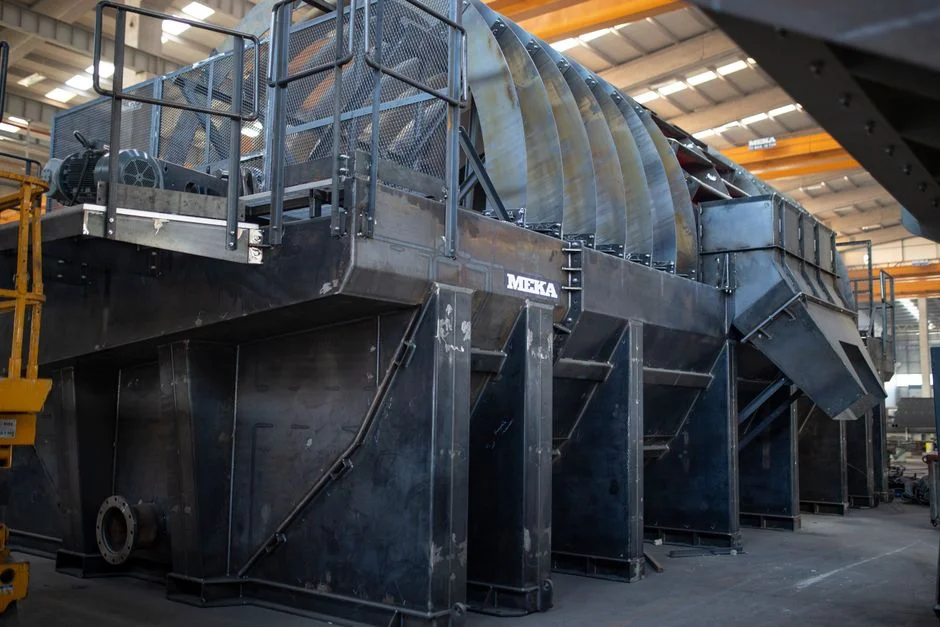
Every retrofit on a 20–150 m³/h industrial DAF follows the same five-step sequence. The sequence matters because step 1 is what prevents the post-retrofit callout where the new internals don't outperform the old ones.
- Baseline audit (5–7 days on-site). Seven-day composite TSS and FOG sampling at the DAF inlet and outlet; hydraulic residence time check via tracer pulse; recycle-pump performance curve at three throttling points; visual and UT inspection of the saturation vessel for wall loss; PLC I/O survey to confirm what can be reused versus what must be replaced.
- Pilot or jar testing. Confirm the proposed mixing-head or chemistry change hits the target TSS and FOG on a bench or pilot rig before any fabrication is released. This step is the cheapest insurance on the project and the most commonly skipped.
- Engineering and fabrication. Head bank, skimmer, and controls package lead time is typically 6–10 weeks for a 50–150 m³/h unit. Drawings, P&IDs, and a controls narrative should be reviewed and signed before fabrication starts — change orders during fab are the single largest source of retrofit cost overruns.
- Outage execution. Drain the tank, internal clean and inspection, install the new head bank, swap the recycle pump, re-pipe the saturation vessel, install the new PLC panel, and recommission. Plan a 1–3 week window and stage the spares on-site before the drain-down — every day of unplanned outage past the window costs more than the engineering ever did.
- Performance verification (72-hour shakedown). Log TSS, FOG, hydraulic loading, air-to-solids ratio, and polymer dose for 72 continuous hours before the old system is fully decommissioned and the project signed off. Pass/fail criteria are set in step 1, not after the fact.
Verifying Retrofit Performance and Avoiding Common Pitfalls
The verification table is the contract between the engineer and the vendor. Define the pass/fail criteria before the outage, not after, and write them into the purchase order. The five parameters below cover the DAF performance envelope; if all five pass, the retrofit has delivered what the proposal promised.
| Parameter | Baseline (Pre-Retrofit) | Post-Retrofit Target | Pass/Fail Criterion |
|---|---|---|---|
| TSS removal | Site-specific, typically 70–85% | ≥ 90% on the same influent | 7-day rolling average ≥ target |
| FOG removal | Site-specific, typically 80–90% | ≥ 95% | 7-day rolling average ≥ target |
| Hydraulic loading | m/h based on design flow / surface area | Up to 2x baseline at same removal | Flow recorded at peak hour with all criteria met |
| Air-to-solids ratio | kg air / kg influent TSS | 0.02–0.06 kg/kg across operating range | Measured at low, mid, and high flow |
| Polymer dose | kg active polymer / t DS removed | ≤ baseline, ideally 15–30% lower | 7-day average ≤ baseline |
The four pitfalls that sink otherwise sound retrofits are: skipping the pilot or jar test in step 2 and trusting a brochure number; undersizing the new recycle pump to reuse old suction piping, which starves the saturation vessel at peak flow; ignoring downstream sludge-handling capacity — a 2x capacity retrofit that doubles floated solids can quietly overload a downstream plate and frame filter press; and failing to retune chemistry controls to the new hydraulic profile, which leaves a 2x-capacity unit running on 1x chemistry. If post-retrofit performance drifts after sign-off, the DAF troubleshooting playbook walks through the seven most common data-backed fixes.
Frequently Asked Questions
How much does a DAF retrofit cost compared to a new unit?
A component-level DAF retrofit typically costs 30–50% of a new DAF of equivalent capacity, because the concrete tank, embedded piping, and most structural skimmer parts are reused (Clean Water Technology retrofit data). A mixing-head-only retrofit on a sound tank can land at 15–20% of new-unit capex, while a full-component retrofit with new electrical and controls scope trends toward the upper end of the 30–50% range.
How much downtime does a DAF retrofit require?
A component-level retrofit on an existing tank takes 1–3 weeks including tie-ins and recommissioning. A full DAF replacement with new civil works takes 6–10 weeks. Plan the 1–3 week retrofit window around a known low-load period and stage all long-lead spares on-site before drain-down.
What capacity gain can a DAF retrofit actually deliver?
Patented mixing-head retrofits such as the LSGM head bank have demonstrated 2x–3x capacity gains on the same tank footprint (Clean Water Technology, GEM/LSGM retrofit data). The realised gain depends on influent characteristics and on whether the recycle pump and saturation vessel are also upgraded to feed the new head bank at the right air-to-solids ratio.
When does replacement beat retrofit for an aging DAF?
Replacement is the cleaner answer when the tank shell is structurally compromised, when the influent stream chemistry has fundamentally changed (new upstream process, new surfactant feedstock, or a new contaminant class), or when the plant has less than 4 years of remaining operating life. In all other cases where the failure is internal — corroded saturation vessel, undersized recycle pump, obsolete controls, weak mixing — retrofit is usually the lower-capex, lower-downtime choice.