

Why Municipal Sewage Treatment in Assam Needs a Different Design Approach
The Kolong River in Nagaon district is on the Central Pollution Control Board's list of 275 most polluted river stretches in India, and peer-reviewed Water Quality Index work attributes the impairment to untreated domestic sewage and commercial effluent discharges [S3]. That is the operating context for any municipal sewage treatment plant in Assam India — a region where a generic Indian STP design, copied from a dry inland state, will under-perform. Three regional drivers force a re-think.
First, the 1950 Assam earthquake (8.7 Richter) caused massive Brahmaputra bed aggradation; tributary rivers like the Kolong lost velocity, fragmented into alternating dry stretches and stagnant pools, and their self-purification capacity fell. Treated discharge entering these systems must therefore meet a tighter oxygen demand than the consent numbers alone imply [S3].
Second, Assam's monsoon hydrology produces wet-weather flows of 3–4× dry-weather flow. Equalisation, flow balancing, and storm-separation structures are mandatory upstream of any biological stage — without them, hydraulic wash-out of MBBR carriers and SBR settlers is a near-certainty during the June–September monsoon.
Third, tea, food-processing and oil effluent inflows into municipal sewers push influent BOD well above the CPCB default of 200 mg/L for Indian municipal sewage. ULBs designing new plants in 2026 are expected to follow the consolidated Assam PCB schedule aligned with CPCB municipal wastewater norms: BOD ≤30 mg/L, COD ≤250 mg/L, TSS ≤100 mg/L, faecal coliform ≤1,000 MPN/100 mL for irrigation and ≤100 MPN/100 mL for bathing-contact discharges to inland surface water.
Typical Influent and Effluent Characteristics for an Assam Municipal STP
Design engineers should anchor the basis of design on an influent profile that reflects both domestic sewage and the food/tea-processing inflows common across Nagaon, Dibrugarh, Jorhat and the Brahmaputra floodplain. A defensible design envelope is shown below.
| Parameter | Typical Assam domestic influent | With tea/food-processing mixing | Assam PCB / CPCB effluent target (inland surface water discharge) |
|---|---|---|---|
| pH | 6.5–8.0 | 5.5–8.5 | 6.5–9.0 |
| BOD (mg/L) | 200–350 | 600–1,000 | ≤30 |
| COD (mg/L) | 400–700 | 1,200–2,000 | ≤250 |
| TSS (mg/L) | 300–600 | 500–1,000 | ≤100 |
| Oil & grease (mg/L) | 20–50 | 80–150 | ≤10 |
| Total nitrogen (mg/L) | 40–70 | 60–120 | ≤50 (preferred for reuse) |
| Total phosphorus (mg/L) | 5–15 | 10–25 | ≤5 (preferred for reuse) |
| Faecal coliform (MPN/100 mL) | 10⁶–10⁷ | — | ≤1,000 (irrigation); ≤100 (bathing) |
The Kolong River WQI study confirms that domestic sewage and commercial effluent are the principal pollution sources; design engineers should not assume CPCB's "default 200 mg/L BOD" envelope is sufficient for any Assam ULB that hosts a tea estate or a food-processing cluster [S3]. When BOD infalls above 500 mg/L, the DPR should mandate pre-treatment at the source (oil–grease traps, equalisation tanks at the industry gate) before the municipal STP, and a flow-paced aeration control loop inside the biological stage. Effluent targets must be evaluated against receiving-water assimilative capacity, not just consent numbers, because the truncated post-1950 river flow offers little dilution [S3].
Process Train: 5 Stages Used in Most Assam Municipal Sewage Treatment Plants
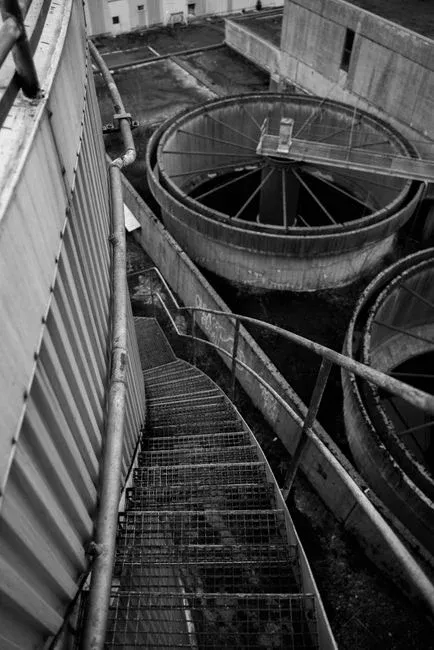
A standard municipal sewage treatment plant in Assam India follows a five-stage train sized for Brahmaputra-floodplain hydraulics and the high monsoon peaks noted in Section 1.
Stage 1 — Preliminary treatment. A rotary mechanical bar screen with 6 mm aperture handles rag and plastic load, followed by a grit chamber sized for peak wet-weather flow. This is the most failure-prone stage in Assam ULBs because monsoon inflows carry silt from unpaved drains; specify a 6 mm screen with a brush-and-spray wash cycle, not a 10 mm coarse screen.
Stage 2 — Primary treatment. A high-efficiency sedimentation tank (lamella clarifier) removes 50–60% of TSS and 25–35% of BOD before biological load. For compact sites, a lamella design cuts footprint roughly 70% versus a conventional clarifier at the same overflow rate (≈2.5 m/h versus 1.0 m/h).
Stage 3 — Biological treatment. The central decision point — MBBR, SBR or MBR — with selection criteria developed in the next section.
Stage 4 — Tertiary polishing and disinfection. Optional sand or multi-media filtration followed by chlorine dioxide (EPA, EU Drinking Water Directive 98/83/EC, and WHO drinking-water guidelines compliant) or UV (effective against chlorine-resistant Cryptosporidium and Giardia). Chlorine dioxide carries a residual across long distribution lines, which matters for Assam ULBs that pump reuse water to golf courses, tea-garden colonies, or industrial cooling towers.
Stage 5 — Sludge handling. A plate and frame filter press with 1–500 m² filtration area (covering 1–50 MLD plants) dewasters thickened waste activated sludge to a 20–25% dry-solids cake suitable for soil conditioner on tea estates or landfill cover. For towns up to ≈2 MLD, a packaged underground A/O sewage treatment plant from the WSZ series collapses stages 2–4 into a single buried skid with no dedicated operator, which is the right default for small ULBs and tea-estate colonies.
MBBR vs SBR vs MBR vs Packaged A/O: Technology Comparison for Assam Towns
The biological stage dominates both CAPEX and OPEX. The table below is the engineer-ready shortlist for a 2026 Assam DPR.
| Criterion | MBBR (Moving Bed Biofilm Reactor) | SBR (Sequencing Batch Reactor) | MBR (Membrane Bioreactor) | Packaged A/O (WSZ underground) |
|---|---|---|---|---|
| Typical capacity range | 0.5–50 MLD | 0.5–100 MLD | 0.01–2 MLD per line; modular to 50+ MLD | 0.025–2 MLD per unit (1–80 m³/h) |
| Footprint (m² per MLD) | 25–40 | 20–30 | ~60% smaller than CAS | Buried; zero surface footprint |
| CAPEX band | Lowest of the four | Low–moderate | Highest (membranes + aeration) | Low–moderate (factory-built) |
| OPEX band | 0.4–0.5 kWh/m³ | 0.5–0.6 kWh/m³ | 0.6–0.8 kWh/m³ + membrane replacement (≈10–15% of CAPEX over 8 years) | 0.5–0.7 kWh/m³ |
| Operator skill | Moderate (carrier inventory, DO control) | Moderate (cycle tuning) | High (membrane CIP, integrity testing) | Minimal — fully automated, no dedicated operator |
| Effluent BOD achievable | ≤20 mg/L | ≤20 mg/L | ≤10 mg/L; COD ≤50 mg/L | ≤30 mg/L |
| Best-fit Assam scenario | 20–80 MLD ULBs with land available; lowest CAPEX | Variable influent from tea/food processing; flexible batch operation | Land-constrained Brahmaputra floodplain sites; reuse-quality effluent for cooling or toilet flush | Sub-2 MLD ULBs, tea-estate colonies, cantonments, hospital townships; flood-prone sites needing buried installation |
Decision rule. Choose MBR membrane bioreactor systems when land is scarce, the receiving water is the Kolong/Brahmaputra with low assimilative capacity, or reuse quality is a tender requirement. Choose MBBR or SBR for larger ULBs where land is available and CAPEX must be minimised — SBR wins when the influent carries shock loads from a tea cluster. Choose packaged A/O for sub-2 MLD communities where operator presence is not feasible and flood-protection demands a buried envelope. The same decision framework appears in supplier-evaluation guides for sewage treatment equipment supplier evaluation in India and the broader package wastewater treatment plant specifications for Indian states.
Disinfection, Sludge Management and Reuse Options Relevant to Assam
Disinfection selection in Assam is driven by the length of the reuse line and the pathogen profile of the receiving water. A chlorine dioxide generator in the 50–20,000 g/h output band is the workhorse for ULBs because ClO₂ maintains a measurable residual across long pipe runs to industrial cooling towers, parks, and toilet-flush networks. A UV steriliser is the right pick where the receiving water carries chlorine-resistant Cryptosporidium or Giardia, or where the ULB wants to avoid trihalomethane formation in the reuse network.
Treated-effluent reuse is now a standard line item in new Assam DPRs under the 2025–2030 Jal Jeevan Mission–AMRUT convergence framework. Industrial cooling, gardening, and toilet flushing are the three target end-uses; reuse-quality effluent (BOD ≤10 mg/L, TSS ≤5 mg/L, faecal coliform <100 MPN/100 mL) requires MBR or MBR + RO polishing, which is why the MBR option above ties into a wider Indian policy push for treated-wastewater reuse.
Sludge handling closes the loop. Thickened waste activated sludge dewatered by a plate and frame filter press to a 20–25% DS cake is suitable as soil conditioner on tea estates — a genuine circular-economy outcome for Assam because tea estates are co-located with most ULBs. Given the Kolong-River-class receiving-water context, all new Assam municipal STPs should include a tertiary polishing stage so the discharge does not further erode Brahmaputra tributary assimilative capacity [S3].
Procurement Checklist for Municipal STP Projects in Assam (2026)
Before issuing or evaluating a tender, the consulting engineer or ULB project engineer should validate the following six items.
- Design horizon and population. Confirm a 30-year horizon with separate projections for resident and floating population in Guwahati, Dibrugarh and Silchar. Floating population materially shifts peak hydraulics.
- Assam PCB consent conditions. Confirm the discharge destination: inland surface water (BOD ≤30, COD ≤250, TSS ≤100 mg/L) versus land irrigation (BOD ≤100, faecal coliform ≤1,000 MPN/100 mL). The consent envelope drives whether MBR is required or MBBR is sufficient.
- Technology shortlist. Validate that the bidder offers a packaged underground A/O option for sub-2 MLD cases or full MBR/SBR trains for larger ULBs — single-platform bidders should be eliminated.
- OPEX items. Check sludge dewatering, chemical dosing, power consumption (MBR ≈0.6–0.8 kWh/m³; MBBR ≈0.4–0.5 kWh/m³) and membrane replacement (MBR ≈10–15% of CAPEX over 8 years). Insist on an automatic chemical dosing system sized for monsoon peak flows.
- Flood protection. Specify a raised plinth or fully buried installation — the Brahmaputra floodplain context in Section 1 is not theoretical, and a 2018–2024 field review of Assam ULBs shows that above-ground civil structures without raised plinths fail within the first three monsoons.
- Sludge end-use. Confirm the filter-press cake outlet — soil conditioner on tea estates is the default for Assam and should be priced into the bid.
Frequently Asked Questions
Which biological technology should we choose for an Assam municipal STP — MBR, MBBR or SBR?
Use the decision rule in Section 4: choose MBR for land-constrained Brahmaputra floodplain sites and where reuse-quality effluent is required (cooling, toilet flush, gardening); choose MBBR for 20–80 MLD ULBs with available land and the lowest CAPEX target; choose SBR when the influent carries shock loads from tea or food-processing clusters, since batch operation absorbs variability better than continuous-flow MBBR. For sub-2 MLD sites, specify packaged underground A/O units.
What are the current Assam PCB discharge limits for a municipal STP?
For inland surface water discharge, the consolidated Assam PCB schedule aligned with CPCB municipal wastewater norms sets BOD ≤30 mg/L, COD ≤250 mg/L, TSS ≤100 mg/L, and pH 6.5–9.0. Faecal coliform targets depend on end-use: ≤1,000 MPN/100 mL for irrigation and ≤100 MPN/100 mL for bathing-contact waters. The receiving-water assimilative capacity may force a tighter envelope than the consent numbers alone.
What are the 2026 CAPEX and OPEX drivers for an Assam municipal STP?
CAPEX is dominated by the biological stage (MBR highest because of membrane modules and high-intensity aeration; MBBR lowest), civil works (concrete vs buried-package), and flood-protection (raised plinth or underground installation adds ≈8–12% to civil cost in Brahmaputra-floodplain sites). OPEX is dominated by energy (MBR ≈0.6–0.8 kWh/m³; MBBR ≈0.4–0.5 kWh/m³), membrane replacement (MBR ≈10–15% of CAPEX over 8 years), chemical dosing, and sludge dewatering consumables. For a 10 MLD plant, expect 2026 turnkey CAPEX in the order of ₹6–10 crore for MBBR and ₹10–14 crore for MBR, with OPEX dominated by power at ₹0.6–1.2 crore per year depending on tariff.
How do we flood-proof a municipal STP on the Brahmaputra floodplain?
Two options: a raised plinth that places all electrical equipment, blowers and control panels above the recorded HFL (highest flood level) for a 100-year return period, or fully buried installation using a packaged underground A/O unit such as the WSZ series. The buried option is preferred for sub-2 MLD plants, tea-estate colonies, and any site where the ULB cannot guarantee plinth maintenance.
Can dewatered sludge from an Assam municipal STP be reused on tea estates?
Yes, and it is the most economically sensible end-use in the region. A plate and frame filter press producing a 20–25% DS cake meets the pathogen and heavy-metal criteria for soil conditioner on tea estates when the upstream STP includes tertiary polishing and the industrial inputs are controlled at source. Specify a 1–500 m² filtration area on the press to cover the 1–50 MLD plant range typical of Assam ULBs, and confirm the cake outlet as a priced line item in the bid.
Related Equipment
- MBR flat-sheet membrane module — specifications, capacity range, and technical data