Why Tamil Nadu STP Projects Need Spec-Based Supplier Selection
Sewage treatment equipment for Tamil Nadu industrial and institutional plants is selected by matching MBR, MBBR, or SBR performance to measured influent loads and TNPCB consented outlet limits. For 10–2000 KLD packages, CAPEX typically spans ₹12 lakh to ₹4.5 crore, while OPEX is driven by energy in kWh/m³ and, for MBR, membrane replacement every 5–7 years.
In 2025, a Tirupur textile factory faced an ₹8 lakh TNPCB penalty after an aging SBR train ran near 60% BOD removal against a BOD limit of 30 mg/L. Enforcement pressure has stayed high in recent inspection cycles, with earlier regional reporting citing a 40% rise in industrial STP checks and about 15% of audited plants failing compliance. Industry feedback still attributes roughly 60% of regional STP failures to mismatched technology—for example MBBR without FOG pretreatment—or weak after-sales response that can range from about 56% to 93% among local vendors.
Tamil Nadu equipment suppliers and international manufacturers both bid into this market. Buyers should score proposals on verified removal rates, energy in kWh/m³, spare-parts lead time, and documented Consent to Establish / Consent to Operate support—not on lead time alone.
STP Technology Specs for Tamil Nadu Industrial Wastewater
MBR, MBBR, and SBR packages meet different Tamil Nadu wastewater profiles and TNPCB discharge targets when sized on measured COD, BOD, TSS, FOG, and peak flow. Most plants we size for textile finishing, food processing, and pharma utilities in the state run at the lower end of published energy ranges once equalisation and pretreatment are correct.
MBR Systems: Membrane Bioreactor (MBR systems for Tamil Nadu’s high-COD industrial wastewater) technology integrates biological treatment with membrane filtration, typically employing submerged PVDF membranes with a 0.1 μm pore size. These systems deliver COD to ≤ 50 mg/L and TSS to ≤ 10 mg/L under design MLSS and flux, making effluent suitable for many non-potable reuse duties. Energy consumption for MBR systems generally ranges from 0.8 to 1.2 kWh/m³ at design flow. Membrane lifespan is typically 5–7 years, with replacement costs for 10–100 KLD systems ranging from ₹3 lakh to ₹15 lakh.
MBBR Systems: Moving Bed Biofilm Reactor (MBBR) systems use plastic carriers in an aeration tank at a typical fill ratio of 30–50%. MBBRs demonstrate 85–95% COD removal and 90–95% TSS removal when organic loading and dissolved oxygen stay within design limits. Energy consumption is generally 0.5 to 0.9 kWh/m³. MBBR trains handle high-FOG food-processing wastewater better after DAF pretreatment because the biofilm tolerates shock loads.
SBR Systems: Sequencing Batch Reactor (SBR) systems complete fill, react, settle, decant, and idle in one tank over 4–6 hour cycles. SBRs fit intermittent flows at hospitals and schools. They achieve COD removal of 80–90% and TSS removal of 85–90%, with energy typically between 0.6 and 1.0 kWh/m³.
Energy figures above assume continuous duty at design flow and mixed-liquor temperatures typical of Tamil Nadu coastal and inland sites. If night flows drop below about 30% of design, add turndown notes for aeration and recycle before comparing paper kWh/m³ values across bids.
The following table lists typical influent ranges and target effluent for Tamil Nadu industrial sectors against the article’s TNPCB 2024 discharge columns. Earlier buyer guidance often used BOD < 30 mg/L, COD < 250 mg/L, and TSS < 100 mg/L for inland-style discharge. Those values match Environment (Protection) Rules, 1986 Schedule VI general inland limits summarized in 2026 industry references. Current Tamil Nadu STP compliance guides commonly cite tighter reuse-oriented bands near BOD < 10 mg/L, COD < 50 mg/L, and TSS < 20 mg/L. Confirm the exact CTO numbers for your site before freezing design.
| Parameter | Textile Industry (Influent Range) | Food Processing (Influent Range) | Pharmaceuticals (Influent Range) | TNPCB 2024 Discharge Limit | MBR Effluent (Typical) | MBBR Effluent (Typical) | SBR Effluent (Typical) |
|---|---|---|---|---|---|---|---|
| COD (mg/L) | 500 – 2000 | 800 – 3000 | 400 – 1500 | < 250 | ≤ 50 | 85-95% removal | 80-90% removal |
| BOD (mg/L) | 200 – 800 | 300 – 1200 | 150 – 500 | < 30 | ≤ 10 | ≤ 20-30 | ≤ 25-40 |
| TSS (mg/L) | 100 – 400 | 150 – 500 | 80 – 300 | < 100 | ≤ 10 | ≤ 20-30 | ≤ 25-40 |
| Total Nitrogen (mg/L) | 20 – 80 | 30 – 100 | 15 – 60 | < 100 | ≤ 20-40 | ≤ 40-60 | ≤ 40-70 |
Textile dyeing and finishing units in Tirupur and Erode face Zero Liquid Discharge conditions under TNPCB practice, so STP selection alone is not enough when colour, TDS, and dye loads require RO plus evaporation. For those sites, specify the full water-recovery train before comparing vendor quotes. Food processors with FOG spikes should keep DAF or grease traps upstream of any MBBR or SBR biological stage.
CAPEX and OPEX Breakdown: 2026 Cost Models for Tamil Nadu STP Projects
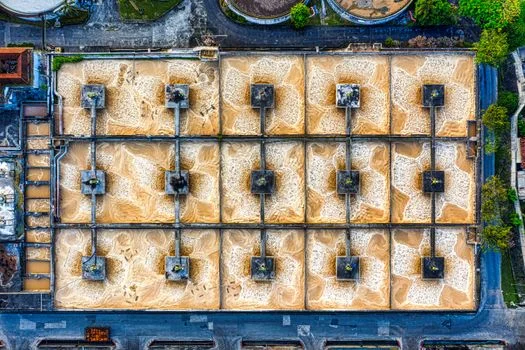
Industrial sewage treatment plant projects in Tamil Nadu need a full CAPEX and OPEX model. 2026 cost bands show MBR systems from ₹25 lakh to ₹4.5 crore for 10–2000 KLD, while MBBR and SBR sit lower on first cost but may need tertiary polishing for tight reuse limits.
CAPEX by Technology: For systems from 10 to 2000 KLD, typical CAPEX ranges are:
- MBR Systems: ₹25 lakh – ₹4.5 crore
- MBBR Systems: ₹12 lakh – ₹2.8 crore
- SBR Systems: ₹15 lakh – ₹3.2 crore
These costs typically break down as equipment about 60%, civil work 25%, and installation 15% of total CAPEX. For more detailed cost benchmarks for industrial STPs in India, refer to the related CAPEX and OPEX breakdown.
OPEX by Technology: Annual OPEX for a 100 KLD system in Tamil Nadu can range as follows:
- Energy: ₹1.2 lakh – ₹45 lakh (depending on capacity and technology, with MBR higher due to aeration and membrane scouring)
- Chemicals: ₹80,000 – ₹25 lakh (coagulation, flocculation, disinfection, and pH correction)
- MBR Membrane Replacement: every 5–7 years, ₹3 lakh to ₹15 lakh for 10–100 KLD units—central to any MBR vs MBBR cost comparison in Tamil Nadu
Civil Work Costs: Civil work for the Underground Package Sewage Treatment Plant (WSZ Series) typically ranges from ₹5,000 to ₹15,000 per cubic meter. Above-ground systems are generally ₹3,000 to ₹10,000 per cubic meter. High water tables in coastal Chennai can raise excavation and dewatering costs by up to 20% for underground installs.
ROI Calculator: Payback Period (Years) = CAPEX / (Annual Savings from Water Reuse + Annual Penalty Avoidance). An MBR system with CAPEX of ₹1.2 crore can reach a 3-year payback if it generates ₹40 lakh in annual reuse savings and avoids TNPCB penalties at the same scale. Procurement teams should re-run the payback if water tariffs or tanker costs change by more than about 15% year on year.
| Technology | Capacity (KLD) | Typical CAPEX (₹ Lakh) | Annual Energy OPEX (₹ Lakh) | Annual Chemical OPEX (₹ Lakh) | MBR Membrane Replacement (₹ Lakh, every 5-7 yrs) |
|---|---|---|---|---|---|
| MBR | 10-50 | 25-80 | 1.2-6 | 0.8-3 | 3-7 |
| MBR | 100-500 | 80-250 | 6-25 | 3-12 | 7-15 |
| MBR | 1000-2000 | 250-450 | 25-45 | 12-25 | N/A (larger scale, custom) |
| MBBR | 10-50 | 12-40 | 0.8-4 | 0.5-2 | N/A |
| MBBR | 100-500 | 40-180 | 4-18 | 2-10 | N/A |
| MBBR | 1000-2000 | 180-280 | 18-35 | 10-20 | N/A |
| SBR | 10-50 | 15-50 | 1-5 | 0.6-2.5 | N/A |
| SBR | 100-500 | 50-220 | 5-20 | 2.5-12 | N/A |
| SBR | 1000-2000 | 220-320 | 20-40 | 12-25 | N/A |
How Do Wastewater Treatment Plant Equipment Suppliers Compare?
Wastewater treatment plant equipment suppliers serving Tamil Nadu split into faster local fabricators and slower international OEMs with longer membrane warranties. Local lead times of 4–8 weeks and 10–20% lower CAPEX trade against 12–16 week import schedules and 15–30% higher first cost for international packages.
Local Suppliers: A local sewage treatment plant supplier such as GTS Enviro typically quotes 4–8 weeks for standard STP equipment. Costs are generally 10–20% lower than international counterparts due to local fabrication and lower logistics. Local firms are usually familiar with TNPCB consent paperwork, yet ISO 9001 or CE coverage is inconsistent. Warranties typically run 1–2 years.
International Suppliers: International manufacturers, including HydropureWater, generally need 12–16 weeks including shipping and customs. Initial costs can be 15–30% higher, often with higher-grade materials and ISO 9001 / CE documentation. Extended membrane warranties of 5–10 years are common on critical MBR modules.
Risk Factors: Local suppliers may subcontract civil work, so quality control depends on the buyer’s site supervision. International suppliers can face 6-week lead times for MBR membranes into Tamil Nadu, which stretches downtime if no local buffer stock exists. Time-zone gaps can slow after-sales tickets unless a regional partner is named in the contract.
Case Study: For a 500 KLD MBR system, a local supplier like GTS Enviro might quote ₹1.1 crore with a 6-week lead time and a 2-year warranty. HydropureWater might quote about ₹1.4 crore with a 14-week lead time, a 10-year membrane warranty, and factory test data aligned to international QA practice—a different risk and lifecycle profile for the same capacity.
| Attribute | Local Suppliers (e.g., GTS Enviro) | International Suppliers (e.g., HydropureWater) |
|---|---|---|
| Lead Time | 4–8 weeks | 12–16 weeks |
| Cost (Relative) | 10–20% lower | 15–30% higher |
| TNPCB Compliance | Generally approved | Guaranteed, often with higher safety margins |
| International Certifications | May lack ISO 9001, CE | ISO 9001, CE, EPA often standard |
| Warranty | 1–2 years | 5–10 years (especially for membranes) |
| After-Sales Support | Faster onsite response, but parts availability may vary | Potentially slower onsite response, but robust global parts network |
| Quality Control | Varies, potential for subcontracting issues | Generally stringent, factory-controlled processes |
How Tamil Nadu equipment suppliers should be evaluated
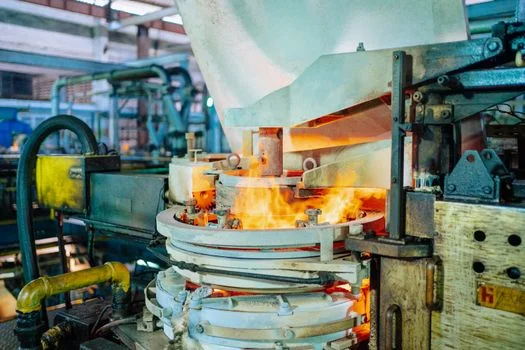
A five-step framework lets Tamil Nadu equipment suppliers be scored on the same sheet—requirements, shortlist, technical proposal, site proof, and contract guarantees—so procurement can separate price from compliance risk.
What makes a reliable wastewater treatment equipment supplier?
A reliable wastewater treatment equipment supplier proves removal performance with recent lab reports, holds or supports TNPCB CTE/CTO paperwork, and stocks wear parts inside India. Response time under 48 hours for critical faults and named O&M training in the bid usually separate durable vendors from one-time fabricators.
- Step 1: Define Requirements. Record influent COD, BOD, TSS, pH, FOG, and flow (average and peak). Set effluent targets from your TNPCB consent (for example BOD < 30 mg/L and COD < 250 mg/L on inland discharge columns used in many older CTO texts, or the tighter reuse-oriented values above). State reuse goals for cooling-tower makeup or process washing; those duties may need tertiary treatment for TNPCB-compliant reuse.
- Step 2: Shortlist Suppliers. Use the Tamil Nadu Pollution Control Board approved-vendor references where available and filter by MBR, MBBR, or SBR experience in your capacity band (10–2000 KLD). Prefer firms with commissioned references in textile, food, or pharma—not only municipal sewage.
- Step 3: Request Technical Proposals. Require stated removal rates, energy in kWh/m³, a full bill of materials, TNPCB consent support letters, ISO 9001 / CE where claimed, and O&M manuals. Ask for membrane integrity test methods on MBR bids.
- Step 4: Conduct Site Visits and Reference Checks. Visit running plants in Tamil Nadu when possible. Review recent COD, BOD, and TSS reports. Measure technician response time and whether critical spares sit in Chennai, Coimbatore, or only overseas.
- Step 5: Negotiate Contracts and Guarantees. Lock performance guarantees (for example 90% COD removal for 12 months after commissioning), delay liquidated damages, and spare-parts SLAs. Penalty clauses such as ₹50,000 per day for sustained exceedance of consented limits keep both parties aligned.
Selection checklist (use on every bid):
- Influent characterisation dated within 12 months
- Effluent limits copied from the draft or active CTO
- Technology fit (MBR / MBBR / SBR) with pretreatment for FOG or colour
- CAPEX split: equipment / civil / installation
- Energy and chemical OPEX at design flow
- Membrane or media replacement schedule and landed cost
- Local spare stock and named service lead time
Where plot area is tight, compare skid and buried package options such as the Underground Package Sewage Treatment Plant (WSZ Series) against above-ground concrete trains before freezing civil drawings. Ask each bidder to mark which items are factory-assembled versus site-cast so civil contingencies stay visible in the CAPEX sheet.
Who This Is For / Next Step
Who this is for: Plant engineers, EPC contractors, and procurement managers buying 10–2000 KLD sewage or industrial wastewater packages in Tamil Nadu who must meet TNPCB consent limits and control lifecycle cost.
Who should look elsewhere: Projects that only need a septic tank or a municipal sewer connection with no on-site treatment duty, and pure ZLD dye-house schemes that need evaporators before any STP vendor comparison.
Next step: Share influent data, consented limits, and plot constraints so a process engineer can size MBR, MBBR, or SBR options and return a CAPEX–OPEX sheet. You can request a technical quote with your Tamil Nadu STP duty sheet when those inputs are ready.
Frequently Asked Questions
What are TNPCB discharge limits for industrial STPs in 2026?
Many Tamil Nadu CTO texts still list BOD < 30 mg/L, COD < 250 mg/L, TSS < 100 mg/L, and fecal coliform < 1000 MPN/100 mL for inland-style discharge. Reuse-oriented Tamil Nadu STP guides commonly cite tighter bands near BOD < 10 mg/L, COD < 50 mg/L, and TSS < 20 mg/L. MBR effluent often clears these with margin; MBBR or SBR may need tertiary filtration.
How much does a 500 KLD MBR system cost in Tamil Nadu?
A 500 KLD MBR system in Tamil Nadu typically costs ₹1.2 crore – ₹1.5 crore CAPEX including equipment, civil work, and installation. Annual OPEX is about ₹18 lakh – ₹22 lakh for energy, chemicals, and a provision for membrane replacement every 5–7 years. Exact quotes move with membrane brand, civil scope, and coastal dewatering needs.
Can treated sewage be reused for industrial processes in Tamil Nadu?
Yes, treated sewage can be reused in Tamil Nadu for non-potable duties when it meets the consent and end-use spec. Cooling-tower makeup or boiler feed usually needs RO plus UV or equivalent after the STP. MBR effluent at COD ≤ 50 mg/L and TSS ≤ 10 mg/L often suits gardening, toilet flushing, or process washing without heavy polishing if industry limits allow.
What is the lead time for STP equipment in Tamil Nadu?
Local fabricators typically deliver in 4–8 weeks for standard packages. International suppliers usually need 12–16 weeks including shipping and customs. Civil works commonly add another 6–12 weeks, so overall schedules of 3–6 months are normal for a greenfield 100–500 KLD plant.
How do I verify a supplier’s compliance with TNPCB standards?
Request the current Consent to Establish and Consent to Operate paperwork for reference sites, plus NABL lab reports for COD, BOD, and TSS at the outlet. For MBR vendors, ask for membrane integrity tests such as pressure decay or bubble-point data. Cross-check that the process they propose matches your consented limits, not a generic brochure sheet.
Related Equipment
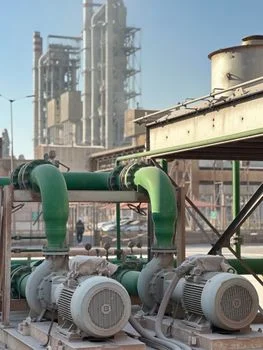
The following HydropureWater products are engineered for the wastewater challenges discussed above:
- DAF systems for pre-treatment of high-FOG wastewater in Tamil Nadu — view specifications, capacity range, and technical data
Need a customized solution? Request a free quote with your specific flow rate and pollutant parameters.