Why Gaborone Is a 2026 Water-Stress Site for Data Centers
A 2026 Gaborone data center typically generates 5–50 m³/day of cooling-tower blowdown with TDS concentrated 3–6× over municipal supply and 50–150 mg/L silica, plus light sanitary and one-time fill-and-flush surges. The defensible baseline train is segregated streams → DAF or lamella pre-treatment → MBR (6–10 h HRT, MLSS 8,000–12,000 mg/L) → RO at 70–90% recovery, giving permeate below 50 µS/cm for cooling-tower make-up. Compliance runs through a Water Utilities Corporation Trade Effluent Consent, with three realistic paths: discharge to WUC sewer (Path A), on-site reuse (Path B, 3–5 year payback), or ZLD for combined flows above 500 m³/day (Path C).
Gaborone's municipal supply depends on Gaborone Dam and the North-South Water Carrier, both of which are exposed to seasonal drawdown and inter-basin transfer curtailment during dry years. Against that backdrop, hyperscale AI data centers consume 1.14–1.70 million L/day — equivalent to the domestic needs of roughly 1,100–1,500 households (per Ecologix 2026). Even a mid-size Gaborone data hall at the Botswana Innovation Hub is meaningful against a fixed municipal allocation, which is why reuse is now a permit-and-payback decision rather than a CSR add-on.
Cycles of concentration (COC) of 4–6 are typical in this climate, and blowdown volume follows the rule B = E/(COC−1) where E is evaporative loss. Pushing COC from 4 to 6 with chemical additives is the cheapest first lever, because every unit of COC gained reduces the required capacity of any downstream treatment infrastructure (per Ecologix 2026). Direct discharge fees in water-stressed regions can exceed US$5–15 per 1,000 gallons, and some jurisdictions set TDS limits <1,500 mg/L, which raises the operating cost of Path A. For a deeper read on how other semi-arid hubs have priced and specified similar trains, the comparable hyperscale data-center water reuse guide for Seattle and the 2026 industrial RO cost breakdown by system size give useful cross-references.
The Four Wastewater Streams a Gaborone Data Center Must Segregate
Stream segregation is the single most cost-determining decision in a Gaborone treatment train, and co-mingling is the fastest way to lose a WUC consent. The four process streams below cover both a semiconductor back-end line and a hyperscale data hall, with a clean separation between batch chemistry wastes and continuous cooling wastes. Sanitary wastewater and the occasional fire-water-test discharge are kept on a separate, much simpler train — a compact package sewage treatment plant sized for 50–200 population equivalent, so organic load and trace metals never sit on the process consent.
| Stream | Source | Key parameters | Handling |
|---|---|---|---|
| 1. Acid/alkali & SC1/SC2 rinses | Semiconductor wafer cleaning (NH₄OH/H₂O₂/H₂O "SC1", HCl/H₂O₂/H₂O "SC2") | pH 1–13 swings, fluoride 10–100 mg/L, sulfate up to 1,500 mg/L, IPA residues | Batch, into dedicated equalisation |
| 2. CMP slurry | Chemical-mechanical planarisation | TSS 200–1,000 mg/L, silica or ceria nanoparticles, residual H₂O₂ | Never co-mingled with low-pH streams; peroxide + acid releases H₂ |
| 3. Closed-loop fill-and-flush | Data hall commissioning (one-time per hall) | 50–500 m³ surge, corrosion inhibitors, biocides, low TDS, possible unusual microbes | Pre-discharge characterisation, then neutralisation + carbon adsorption |
| 4. Cooling-tower blowdown | Both data hall and fab support cooling | TDS 3–6× over Gaborone supply, silica 50–150 mg/L, scale-inhibitor and biocide residues | Continuous 5–50 m³/day, RO candidate |
The peroxide residual carried over from slurry polishing reacts violently with low-pH streams and releases H₂, which has caused documented explosions at Asian fabs during batch transfers (HydropureWater field data, 2026). Equally important at Gaborone scale: a 10 m³/h acid dump will overwhelm any equalisation volume that fits inside a typical 40-foot containerised skid, so each stream must reach its own lined, vented holding tank before chemistry is attempted downstream.
Equalisation, Neutralisation and Pre-Treatment Sizing
The first physical decision on a Gaborone site plan is the layout of lined, vented holding tanks. Every stream in the table above needs its own tank — never co-mingled, never shared. Equalisation tanks are sized for 8–24 h residence to dampen the pH and flow swings that arrive whenever a fab dumps a batch. pH correction on Stream 1 is handled with NaOH or H₂SO₄ — both available through Gaborone chemical distributors — and dosed through an automatic chemical dosing system on PLC control.
Stream 2 (CMP slurry) is the most demanding pre-treatment step. A DAF system sized in the 4–300 m³/h range, depending on fab throughput, lifts TSS to below 30 mg/L and captures the residual FOG from polishing compounds. Cationic polyacrylamide flocculant dosing of 2–10 mg/L is typical (HydropureWater field data, 2026). Stream 4 (cooling-tower blowdown) typically needs a scale-inhibitor break step and chlorine dioxide shock dosing to neutralise residual biocide before the stream enters the biological stage.
Side-stream filtration is sized at 1–5% of circulation flow, with 10–25 µm removal, and CAPEX in the US$50,000–200,000 range for typical data-center installations (per Genesis Water Technologies 2026). The classic 2026 failure mode in this region is dumping all four streams into a single neutralisation tank and then trying to tune the chemistry downstream. It almost never works, because the residence time required to stabilise a 10 m³/h acid pulse overwhelms any equalisation volume that fits inside a containerised skid. For a parallel view on how tightening discharge rules are reshaping pre-treatment design elsewhere, the September 2026 reporting on tightening discharge rules for data-center water reuse is a useful cross-check.
MBR + RO Reuse Train: The 2026 Default for Cooling-Tower Make-Up
Once streams are equalised and pre-treated, they are combined in a single biological-membrane stage. The parameters below are the realistic sizing envelope an engineer can lift into a PFD for a Gaborone 2026 plant (HydropureWater field data, 2026).
| Stage | Function | Operating envelope |
|---|---|---|
| Lamella clarifier | Buffer high-TSS surges ahead of MBR; footprint ~⅕ of conventional clarifier | Surface loading 20–40 m/h |
| MBR (submerged PVDF, 0.1–0.4 µm) | Combined equalised feed; tolerates batch swings from fab dumps | 6–10 h HRT, MLSS 8,000–12,000 mg/L |
| Multi-media filter | SDI stabilisation before RO; automatic backwash | Effluent SDI <3 |
| RO (brackish-water elements) | Permeate for cooling-tower make-up and scrubber feed | 70–90% recovery, permeate <50 µS/cm |
| Disinfection | UV or ClO₂ polishing before reuse | UV handles chlorine-resistant protozoa with no DBPs |
A lamella clarifier ahead of the MBR provides cheap insurance for the high-TSS surges that arrive whenever a CMP batch is dumped, and it can cut coagulant consumption by up to 30%. The core biological step is the MBR membrane bioreactor system; the submerged PVDF module format (0.1–0.4 µm) is preferred over side-stream configurations because it tolerates the higher MLSS and produces a near-particle-free effluent, which is exactly what the downstream RO needs. MBR permeate then passes through a multi-media filter for SDI stabilisation before the industrial RO system, which typically runs at 70–90% recovery with permeate conductivity below 50 µS/cm.
RO removes 95–99% of dissolved solids, hardness, silica, and most treatment chemicals, with operating pressures of 150–400 psi needed to overcome osmotic pressure of the concentrate (per Genesis Water Technologies 2026). An antiscalant program is essential because high-silica Gaborone supply water is already at risk of membrane scaling once blowdown is concentrated further. Disinfection with a chlorine dioxide generator or a UV sterilizer is fitted before reuse; UV handles chlorine-resistant protozoa with no disinfection by-products. The MBR module itself is often delivered as a pre-engineered MBR module skid, which reduces site installation time in Gaborone where specialised construction labour is thin. For regional context, the data on India's parallel push for treated-wastewater reuse in data centres shows the same MBR+RO envelope being adopted for 70%+ reuse targets.
Three 2026 Compliance Paths: WUC Sewer, Reuse, or ZLD
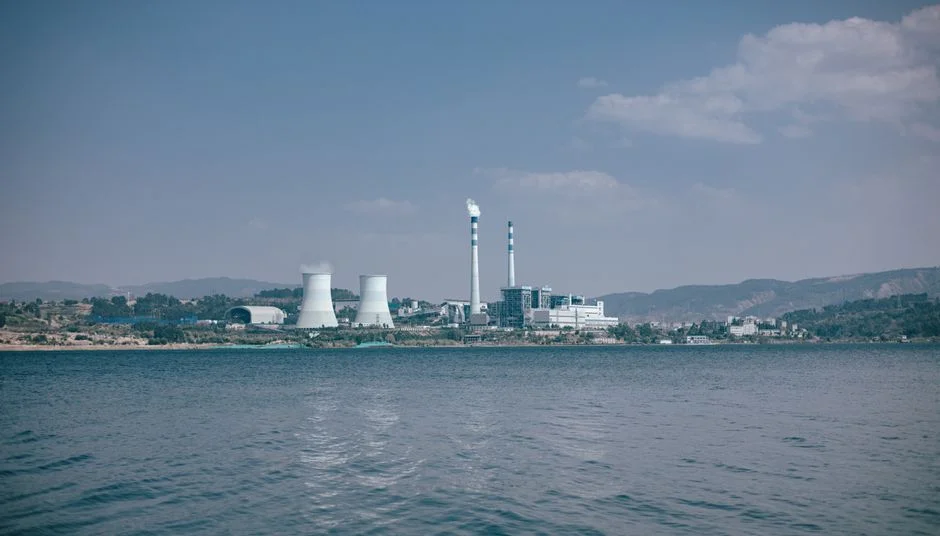
Three compliance pathways are realistic in 2026. The choice depends on site size, ESG commitments, and the speed of the WUC consent process.
| Path | Mechanism | CAPEX band | When it wins |
|---|---|---|---|
| A — WUC sewer discharge | Trade Effluent Consent; pre-treatment to consent limits; ongoing self-monitoring | Lowest (segregation + neutralisation + DAF only) | Sanitary always; small blowdown where reuse is uneconomic |
| B — On-site reuse | MBR+RO permeate returned to cooling-tower make-up, scrubbers, irrigation | US$450,000–900,000 for 20 m³/h train | Mid-size data halls; 3–5 year payback via reduced water purchase |
| C — Zero liquid discharge | Brine concentrator + crystalliser; solid salt cake to disposal | Typically 2–3× Path B | Fab sites >500 m³/day combined flow; closed consent pathways |
Path A requires full characterisation, pre-treatment to consent limits, and ongoing self-monitoring through a local laboratory such as Wellfield Group Laboratory Services in Gaborone, which has handled hydrochemistry, microbiology and industrial effluent analysis in Botswana since 1985. Path B cuts raw-water draw from Gaborone Dam by 60–80% and offsets 3–5 years of MBR+RO CAPEX through reduced water purchase. Path C is justified only at fab sites above 500 m³/day combined flow or where the consent pathway is closed; CAPEX is typically 2–3× that of Path B (HydropureWater field data, 2026).
The recommended 2026 default for a Gaborone data hall with light process waste is Path A for sanitary and Path B for cooling-tower blowdown. A semiconductor back-end line should add Path C as a phased option once actual brine volumes are measured over the first 12 months of operation, rather than committing to ZLD on day one. RO and UF membrane elements are sized separately to the reuse target, which keeps the initial CAPEX defensible while preserving the option to scale up.
2026 CAPEX and OPEX Bands for a Gaborone Data Center
Procurement will want a directional envelope, not a fabricated line item. The bands below are anchored in packaged-skid pricing for export to SADC in 2026 (HydropureWater field data, 2026).
| Train | Scope | CAPEX band (US$) | OPEX drivers |
|---|---|---|---|
| 20 m³/h data-hall train | Segregation + DAF + MBR + RO | 450,000–900,000 | Chemicals US$0.10–0.30/m³; power US$0.08–0.15/m³ for MBR+RO |
| 5 m³/h semiconductor front-end skid | Segregation + neutralisation + DAF only | 180,000–400,000 | MBR and RO sized separately to the reuse target |
| Sanitary package | 50–200 PE compact plant | Kept off process consent entirely | Membrane replacement every 5–7 years |
The 20 m³/h spread is driven by automation level and target reuse ratio — a higher recovery target pulls in extra RO stages and a more sophisticated antiscalant program. The most common OPEX drivers are chemical dosing at US$0.10–0.30 per cubic metre treated, power at US$0.08–US$0.15 per cubic metre for the MBR+RO combination, and membrane replacement every 5–7 years. RO operating costs alone run US$1.50–3.00 per thousand gallons treated, including energy, chemicals, membrane replacement and maintenance (per Genesis Water Technologies 2026). Containerised or skid-mounted designs reduce on-site installation cost in Gaborone, where specialised construction labour is thin — a pre-engineered MBR module skid and a plate-frame filter press for sludge handling are the two largest line items on most bills of materials.
Frequently Asked Questions
What wastewater and cooling blowdown treatment does a data center in Gaborone, Botswana need?
A 2026 Gaborone data center needs segregated four-stream pre-treatment, an MBR (6–10 h HRT, 8,000–12,000 mg/L MLSS) and RO at 70–90% recovery, producing permeate below 50 µS/cm for cooling-tower make-up. Compliance runs through a Water Utilities Corporation Trade Effluent Consent under three realistic paths: WUC sewer discharge, on-site reuse, or ZLD above 500 m³/day.
How should fill-and-flush water from a new data hall be handled?
Treat it as a one-time 50–500 m³ commissioning surge, never as continuous wastewater. Characterise for corrosion inhibitors, biocides and unusual microbes before any discharge decision, route through neutralisation plus carbon adsorption, and reuse on site wherever possible to avoid the WUC consent path entirely.
Is on-site reuse really worth it versus paying for WUC sewer discharge?
At 5–50 m³/day of blowdown, on-site reuse at 70–90% recovery offsets 3–5 years of MBR+RO CAPEX through reduced water purchase, and cuts raw-water draw from Gaborone Dam by 60–80%. Sewer discharge is cheaper on day one but exposes the operator to discharge fees of US$5–15 per 1,000 gallons and tightening TDS limits.
When does ZLD become the more defensible 2026 default?
At fab scale above 500 m³/day combined flow, or where the WUC consent pathway is closed. ZLD via brine concentrator and crystalliser delivers 95–99% overall water recovery, but CAPEX is typically 2–3× Path B and operating costs run US$5–15 per 1,000 gallons treated.
Which local laboratory handles WUC consent reporting in Gaborone?
Wellfield Group Laboratory Services in Gaborone has handled hydrochemistry, microbiology and industrial effluent analysis in Botswana since 1985 and is the most commonly used local option for WUC Trade Effluent Consent self-monitoring.