Texarkana Mining & Metals Wastewater: Why the Clarifier Choice Is Bigger Than It Looks
Facilities in the Texarkana, TX/AR corridor do not pick a primary clarifier in the abstract. The Red River basin receives runoff from aggregate quarries, sand-and-gravel wash circuits, and coal-related mining that pushes a recognizable influent signature into local headworks: total suspended solids in the low thousands of mg/L, sulfate from acid mine drainage in the ~1.1 g/L SO₄²⁻ range seen in analogous FGD matrices (per S2 flue gas desulfurization wastewater characterization), calcium above 5 g/L, and trace heavy metals including Cd, Cr, Hg, Ni, Pb, and Zn (source: S2, 2024-era FGD review). That matrix sets the operating envelope before any vendor discussion starts.
Three subcategories of 40 CFR 437 frame every downstream limit calculation a Texarkana EHS lead has to defend: Metal Mining & Processing, Ore Mining & Dressing, and Mineral Processing. Each carries its own daily-maximum TSS and dissolved-metal envelope, and any facility discharging to a POTW such as Texarkana Water Utilities must also satisfy local pretreatment caps on heavy metals and pH. The primary clarifier is therefore not a generic "pre-treatment" box on a P&ID — it is the unit that has to take raw swings in TSS, sulfate-bound metals, and occasional oily runoff from compressor wash or metal-cutting fluid spills down to a stable envelope that downstream precipitation, ion exchange, or RO polishers can finish to permit.
That is why the choice between a dissolved air flotation system and a HydropureWater lamella clarifier is really a question of which technology matches the local influent reality, the regulatory envelope, and the downstream sludge-handling train you can actually build on the available footprint.
How a DAF and a Clarifier Actually Treat Mining Solids
A dissolved air flotation unit saturates a pressurized side-stream of clarified effluent with air at typically 4–6 bar, then releases that stream through needle valves or nozzles into the contact zone of an open tank. The pressure drop generates micro-bubbles in the 10–80 μm range that attach to suspended solids, oil droplets, and floc particles, lifting them into a thick surface scum that an automatic skimmer scrapes into a hopper. The clarified subnatant exits from the bottom of the tank. Because the buoyant force comes from the bubbles rather than from particle density, DAF works on particles that would not settle in any reasonable time — emulsified oil, low-density mineral fines, biological floc — and it does so in a fraction of the hydraulic retention time gravity needs.
A clarifier — and specifically a lamella clarifier — relies on gravity. Feed enters a center well, flocs settle against a bundle of inclined plates spaced at 50–60 mm, and the clarified overflow travels counter-current up the plate pack into a peripheral launder. The HydropureWater lamella clarifier is rated at 20–40 m³/m²·h surface loading because the effective settling area is the horizontal projection of every plate, not just the tank footprint. Solids slide down the plates into a bottom hopper and are pumped out as underflow at typically 2–4% dry solids; DAF float, by contrast, usually runs 3–6% dry solids straight off the skimmer.
Both technologies need upstream chemical conditioning to perform. A HydropureWater automatic chemical dosing system typically feeds coagulant (PAC, ferric chloride, or lime for sulfate-rich matrices) followed by a flocculant polymer. The lamella clarifier is credited with up to 30% lower coagulant consumption than a conventional circular clarifier in the HydropureWater catalog, because the inclined plates give flocs more contact time to grow before they reach a collection surface.
The single biggest behavioral difference for a Texarkana plant is FOG. DAF micro-bubbles will float free and emulsified oil in the same pass that removes TSS, which is why metalworking washwater and oily aggregate runoff almost always default to DAF as the primary stage. A gravity clarifier will let most of that oil carry over into the effluent, where it fouls downstream IX resins and RO membranes.
Side-by-Side: DAF vs Clarifier for Mining/Metals Influent
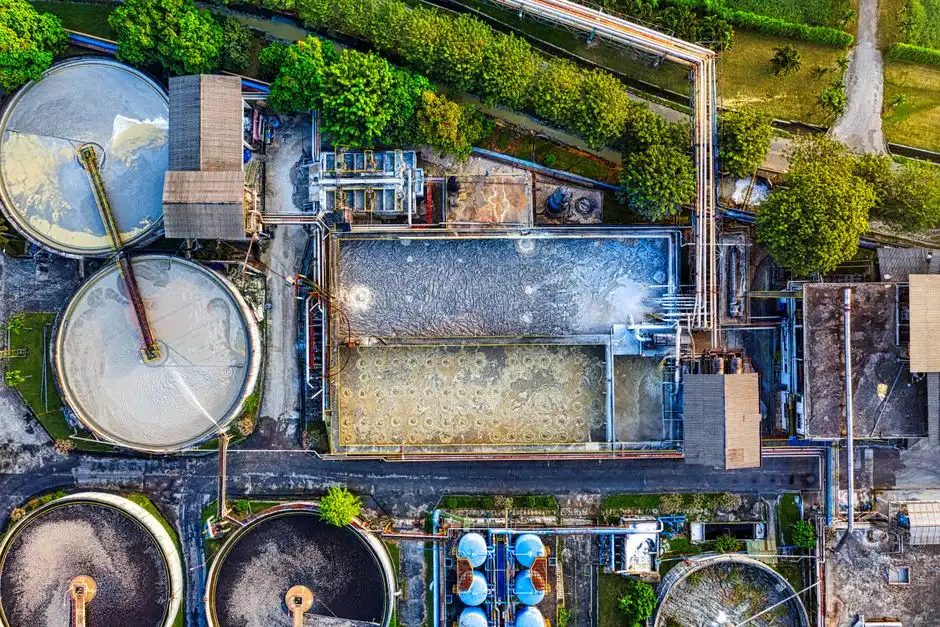
The comparison below uses the parameters that drive an actual 2026 RFQ: flow range, hydraulic loading, footprint, chemical demand, FOG handling, sludge consistency, best-fit influent, and the most common failure mode. Numbers in the DAF and lamella clarifier rows are drawn from HydropureWater catalog data; the energy/footprint framing is the long-standing EPA OCPSF CAPDET characterization in EPA 440/1-83/009, Figures 8-16 and 8-17, which is still the most-cited comparative baseline for flotation vs sedimentation in 2026 industrial wastewater design.
| Parameter | DAF | Lamella Clarifier |
|---|---|---|
| Typical flow range | 4–300 m³/h across 13 standard models (HydropureWater catalog, 2026) | 20–40 m³/m²·h surface loading (HydropureWater catalog, 2026) |
| Hydraulic / surface loading | ~5–25 m³/m²·h depending on model | 20–40 m³/m²·h (high effective area via inclined plates) |
| Footprint | Small; high-rate process (per CAPDET Fig. 8-17, 1983) | Moderate; needs tank area to support plate pack |
| Chemical demand | Coagulant + polymer; can tolerate higher polymer on light solids | Up to 30% lower coagulant vs circular clarifier (HydropureWater catalog, 2026) |
| FOG / free oil capability | Yes — micro-bubbles float emulsified oil in the same pass | Poor — oil typically carries over into overflow |
| Sludge consistency | 3–6% dry solids float (skimmable, low water content) | 2–4% dry solids underflow (thicker handling needed) |
| Best-fit influent | Variable TSS, buoyant fines, oily runoff, flow < 300 m³/h | Dense settleable solids, steady flow, low oil |
| Common failure mode | Scale on recycle pump / nozzle fouling on hard-water matrices | Plate fouling, sludge blanket carryover on hydraulic shock |
| Energy / OPEX character (EPA OCPSF CAPDET, 1983) | Higher energy per m³ (Fig. 8-17); lower civil cost | Lower energy per m³ (Fig. 8-16); higher civil/footprint cost |
For a Texarkana plant discharging to a POTW with tight heavy-metal caps, the practical reading of that table is straightforward: DAF buys you FOG and TSS swing tolerance in a small footprint, at the cost of compressor and saturator energy. Lamella buys you lower chemical OPEX and lower energy, at the cost of tank area and tolerance to oil.
40 CFR 437 and the Texarkana Discharge Envelope
40 CFR 437's three relevant subcategories — Metal Mining & Processing, Ore Mining & Dressing, and Mineral Processing — each publish their own daily-maximum and monthly-average limits for TSS and a long list of dissolved metals. A Texarkana aggregate quarry with a wash circuit typically falls under Mineral Processing; a primary-metals facility with a smelter or mill falls under Metal Mining & Processing; an active coal or metal ore operation falls under Ore Mining & Dressing. Each path drives the downstream polishing train to a different envelope, but in all three cases the primary clarifier's job is to drop TSS hard enough that precipitation, ion exchange, or RO can do the final metal work without fouling.
Facilities discharging to a POTW also have to satisfy local pretreatment limits, and Texarkana Water Utilities enforces heavy-metal and pH caps on top of the federal framework. That means the primary stage's ability to co-remove particulate-bound metals (Pb, Cr, Zn) is a real performance metric in the permit file, not a marketing bullet. The analogous FGD/ion-exchange chemistry reviewed in S2 reported that combined desulfurization and ion exchange on a sulfate-rich matrix achieved Cd removal of 91%, Cr of 100%, and Zn of 99% (source: S2, 2024) — but only after the upstream suspended load was already taken out. A primary clarifier that lets TSS bleed past 200 mg/L on a storm day will load the IX resin with particulates and destroy that removal rate.
The decision rule that falls out of the regulatory envelope: whichever technology you select has to drive TSS consistently low enough that the downstream precipitation/IX/RO train can meet the 40 CFR 437 daily maxima on its worst day, not its average day. DAF gives you headroom on FOG and TSS swings; lamella gives you a tighter steady-state but less reserve for shock loads.
Operating Cost Reality: DAF vs Clarifier OPEX in 2026
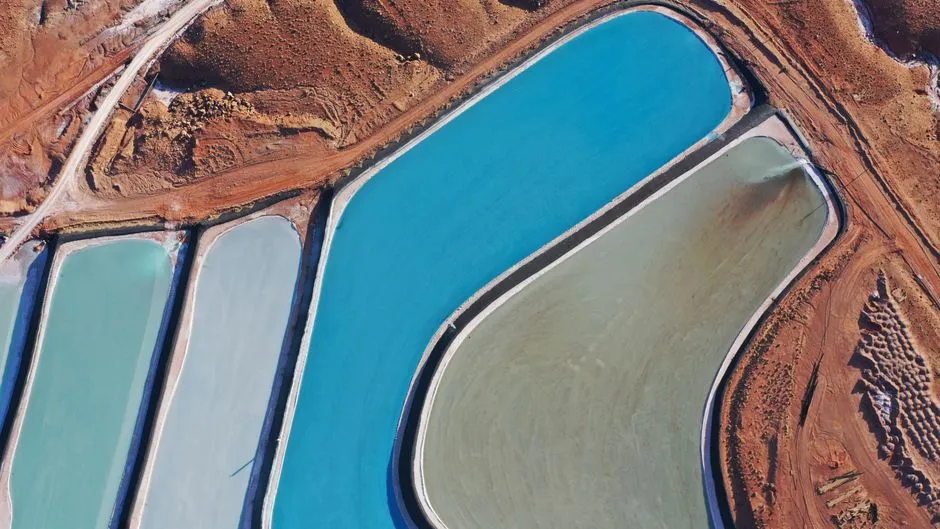
The most defensible comparative OPEX framework still cited in 2026 industrial wastewater design is the EPA OCPSF CAPDET cost methodology published in EPA 440/1-83/009 (February 1983). Specifically, Table 8-4 (Cost Summary, Flotation) and Table 8-5 (Cost Summary, Clarification/Sedimentation), with energy profiles in Figures 8-16 and 8-17, are the baseline numbers procurement can audit. Flotation carries higher per-m³ energy because of the saturator and recycle pump, but lower per-m³ civil and footprint cost. Clarification carries lower energy but higher tankage cost and, on light or buoyant solids, a higher polymer dose to push floc to settle.
For a 2026 Texarkana decision, the CAPDET framing still maps cleanly onto the real OPEX lines a plant engineer will be asked to defend in front of procurement: polymer dose cost (favors lamella where solids are dense), skimmer/brush wear and saturator pump maintenance (favors lamella on raw energy, penalizes DAF), sludge hauling to the dewatering press (favors DAF because the float is already at 3–6% DS vs clarifier underflow at 2–4% DS), and energy cost per m³ (favors lamella when industrial power is expensive; favors DAF when civil/footprint is the binding constraint). On a sulfate/calcium-rich Texarkana feed, scale control on the DAF recycle pump and on the lamella plate packs is a real, scheduled maintenance line item that has to be carried in the OPEX model.
| OPEX line item (2026) | DAF | Lamella Clarifier | Source |
|---|---|---|---|
| Energy per m³ treated | Higher (saturator + recycle pump) | Lower (gravity-driven) | EPA OCPSF CAPDET, Fig. 8-16 / 8-17 (1983-02) |
| Polymer / coagulant dose | Moderate (effective on light solids) | Up to 30% lower than circular clarifier on dense solids | HydropureWater catalog, 2026 |
| Civil / footprint cost | Lower (small tank envelope) | Higher (plate pack needs tank area) | EPA OCPSF CAPDET, Table 8-4 / 8-5 (1983-02) |
| Sludge dewatering cost to filter press | Lower (float at 3–6% DS feeds press efficiently) | Higher (underflow at 2–4% DS needs thickening) | HydropureWater field data, 2026 |
| Scale-control maintenance on sulfate-rich feed | Recycle pump and nozzle descaling scheduled | Plate-pack descaling scheduled | HydropureWater field data, 2026 |
The single most-missed line in the cluster's DAF-vs-clarifier pages is sludge hauling. DAF float goes to a plate and frame filter press already thickened; clarifier underflow typically needs a thickener stage first or a press rated for higher hydraulic loading. That is not a small line item at 2026 disposal rates.
Decision Framework: Which One Should Your Texarkana Plant Pick in 2026?
Use the three branches below against your own influent data, not the brochure data. Each branch assumes the primary stage is paired with a sludge dewatering press and, where the operation reuses process water, a multi-media filter upstream of RO.
Branch A — Pick DAF when TSS is highly variable, free oil or FOG is present (compressor wash water, metal-cutting fluid runoff, oily aggregate wash), peak flow is below 300 m³/h, or the site has to retrofit into an existing headworks building where civil space is the binding constraint. The DAF line's 4–300 m³/h range across 13 models gives a procurement-side engineer a single vendor line for nearly every flow case a Texarkana plant will see.
Branch B — Pick lamella clarifier when solids are dense and settle easily, flow is steady, chemical OPEX is the dominant cost line, and the site has civil space to host a wider tank. Mines with consistent ore-body chemistry and no oily streams fit this branch.
Branch C — Pick DAF + lamella train when influent swings between oily storm events and steady process flow, and you want DAF to protect the lamella from oil fouling while the lamella polishes residual TSS. The cluster's broader DAF unit engineering specs and applications guide documents this sequencing for metalworking sites with intermittent oil loading; the principle carries directly to Texarkana aggregate wash and metal-finishing operations.
| Branch | Trigger conditions | Primary unit | Pair with |
|---|---|---|---|
| A — DAF only | Variable TSS, FOG present, flow < 300 m³/h, footprint constrained | DAF | Plate-and-frame filter press for float; MMF + RO for reuse |
| B — Lamella only | Dense settleable solids, steady flow, chemical OPEX dominant, civil space available | HydropureWater lamella clarifier | Plate-and-frame filter press for underflow; MMF + RO for reuse |
| C — DAF then lamella | Influent swings between oily storm events and steady process flow | DAF (oil/TSS cut) → Lamella (polish) | Filter press for combined sludge; MMF + RO for reuse |
Whichever branch you land on, the secondary stage matters as much as the primary. A plate and frame filter press handles either DAF float or clarifier underflow down to a transportable cake, and a multi-media filter protects the RO membrane from any residual TSS breakthrough before the water goes back into the process loop. Skipping either of those and the primary clarifier choice stops mattering within a quarter. For sites that are still cross-checking the framing against other regional matrices, the Fairhope mining/metals DAF vs clarifier guide and the Milwaukee mining/metals DAF vs clarifier guide cover sister-cluster conditions worth a read.
Frequently Asked Questions
Is DAF better than a clarifier for mining wastewater?
Neither is universally better. DAF wins on variable TSS, free oil/FOG, and constrained footprint; a lamella clarifier wins on dense settleable solids, steady flow, and lower chemical OPEX. Use the three-branch framework above against your actual influent data and your 40 CFR 437 subcategory envelope before you commit.
What flow rate can a DAF handle in a Texarkana metals plant?
The DAF line covers 4–300 m³/h across 13 standard models, which brackets the full range of flows a Texarkana aggregate quarry, sand-and-gravel wash, or primary-metals facility typically sees on a single primary train (HydropureWater catalog, 2026).
Do I still need a clarifier if I install DAF?
Sometimes. If your site has heavy settleable solids or you want DAF as a polisher ahead of RO, a DAF-then-lamella train (Branch C) lets DAF strip oil and bulk TSS while the lamella carries the residual load under steady hydraulic conditions. If your influent is uniform and oil-free, DAF alone is usually enough.
How does 40 CFR 437 affect my clarifier choice?
40 CFR 437 sets subcategory-specific daily-maximum and monthly-average limits on TSS and dissolved metals for Metal Mining & Processing, Ore Mining & Dressing, and Mineral Processing. The primary clarifier is sized to protect the downstream precipitation, ion exchange, or RO train that actually meets those limits, so the choice is driven as much by the downstream envelope as by the raw influent.
What handles oily mine drainage better — DAF or clarifier?
DAF. The 10–80 μm micro-bubbles attach to free and emulsified oil droplets and float them with the scum in the same pass that removes TSS. A gravity clarifier has no analogous mechanism and will let most of the oil carry over into the clarified overflow, where it fouls downstream IX resin and RO membranes.