

Why Textile Mill Effluent Is a Special Case for DAF
Textile wet processing discharges a mixture that no generic DAF sizing guide accounts for: hot, surfactant-laden, dye-rich and loaded with synthetic sizing polymers. The four upstream unit operations each contribute a distinct pollutant signature that the DAF must handle in a single equalized stream:
- Desizing — PVA and carboxymethyl cellulose (CMC) at 60–90 °C, the highest temperature stream in the plant and the largest source of BOD/COD load per kg of fabric.
- Scouring — NaOH 5–10 g/L plus non-ionic surfactants at 70–95 °C, generating stable oil-in-water emulsions.
- Dyeing — reactive, disperse and vat dyes, with hydrolysed reactive dye contributing 10–30% of total COD.
- Printing — pigment residues, synthetic thickeners (typically 15–25 g/L) and urea, which are slow to biodegrade and tend to foam in the flotation tank.
Equalized textile influent lands in the bands published in the HydropureWater engineering table: oil 200–1,000 mg/L, TSS 200–800 mg/L and COD 800–2,000 mg/L, with hot streams routinely at 50–80 °C. The high temperature is the parameter that most generic DAF datasheets miss — Henry's constant for air roughly doubles between 25 °C and 70 °C, so the effective air-to-water ratio at a fixed 60 psi saturator pressure drops by 30–40% on hot influent. That is why a textile DAF must be specified and operated at the upper end of the saturator pressure band (60–70 psi) and the higher recycle rate (25–30%) to compensate.
The compliance driver in 2026 is unambiguous. Indian CETP inlet norms enforced by CPCB and the State Pollution Control Boards cap oil & grease at 100 mg/L and suspended solids at 100 mg/L for member mills, with enforcement accelerated by ZDHC MRSL 3.1 and buyer audit programmes sourcing from India, Bangladesh, Türkiye and Vietnam. Mills that cannot hit those numbers at the CETP manhole face production curtailment, not just fines — a board-level exposure that frames the DAF capex request as a continuity-of-operations investment.
| Process stream | Temp (°C) | Oil/FOG (mg/L) | TSS (mg/L) | COD (mg/L) | Key pollutant |
|---|---|---|---|---|---|
| Desizing (PVA/CMC) | 60–90 | 50–200 | 200–600 | 1,500–4,000 | Synthetic size, BOD |
| Scouring (NaOH + surfactant) | 70–95 | 500–1,500 | 300–800 | 2,000–5,000 | Emulsified oil |
| Dyeing (reactive/disperse) | 40–80 | 100–400 | 200–600 | 800–2,000 | Hydrolysed dye, salt |
| Printing wash | 30–50 | 200–600 | 400–1,200 | 1,000–2,500 | Thickeners, pigment |
| Equalized mixed influent | 50–80 | 200–1,000 | 200–800 | 800–2,000 | — |
How a DAF Oil Water Separator Works in a Textile Plant
A dissolved air flotation oil water separator is a four-stage physical-chemical train: equalize, coagulate, flocculate, then float. Each stage can be tuned to the textile auxiliaries in play, and getting any of them wrong collapses the removal rate regardless of how much is spent on the tank.
Stage 1 — Equalization and pH adjustment. A buffer tank with 4–8 hours of hydraulic retention dampens the temperature swing and the surge between batch dye-vessel discharges. The Durban University of Technology (DUT) RSM study found that pH 5 outperforms alkali dosing for synthetic sizing and oily emulsions, with 1 M H₃PO₄ identified as the most cost-effective acid at 85% removal in continuous operation (DUT, 2020). For mills with reactive-dye hydrolysate in the mix, a two-stage pH correction (acid break at pH 5, then neutralization to 6.5–8.5 before biological or MBR polishing) is standard practice.
Stage 2 — Coagulation. Dose 50–200 mg/L of cationic inorganic coagulant — alum, PAC or ferric chloride — to neutralize the negative zeta potential on oil droplets and disperse-dye micelles. The DUT jar-test comparison ranked cationic inorganics above polymeric organics on cost per kg of contaminant removed, even though polymers produced marginally lower conductivity in the clarified stream (DUT, 2020). Polyaluminium chloride at 30–45 mg/L is the working optimum for synthetic sizing agents when paired with a 15-minute flotation contact time.
Stage 3 — Flocculation. Dose 1–5 mg/L of anionic or non-ionic polyacrylamide (PAM) into a slow-mix chamber (G ≈ 20–50 s⁻¹, 10–20 min) to bridge destabilized droplets into 0.5–3 mm flocs visible to the naked eye. Overdosing here is the single most common cause of failed jar-to-full-scale scale-up; a PLC-controlled dosing skid is non-negotiable.
Stage 4 — Flotation. Recycle 10–30% of clarified effluent (or, in higher-temperature plants, 25–35% to compensate for Henry's-law losses) through a packed saturator at 40–70 psi, then discharge through a pressure-reduction valve into the contact zone. Micro-bubbles of 0.01–0.1 mm nucleate on the flocs, lifting them to the surface in 20–60 minutes of contact-zone retention. A spiral skimmer drives the float to a sludge hopper.
The choice of DAF over dispersed-air flotation is not aesthetic. Dispersed-air units generate ~1 mm bubbles that lift coarse oils but pass through the 0.01–0.1 mm fraction that dominates textile emulsions (Seven Seas, 2024). For PVA-stabilized emulsions, DAF is the only realistic primary separator.
Textile-Tuned Design Parameters and Removal Performance
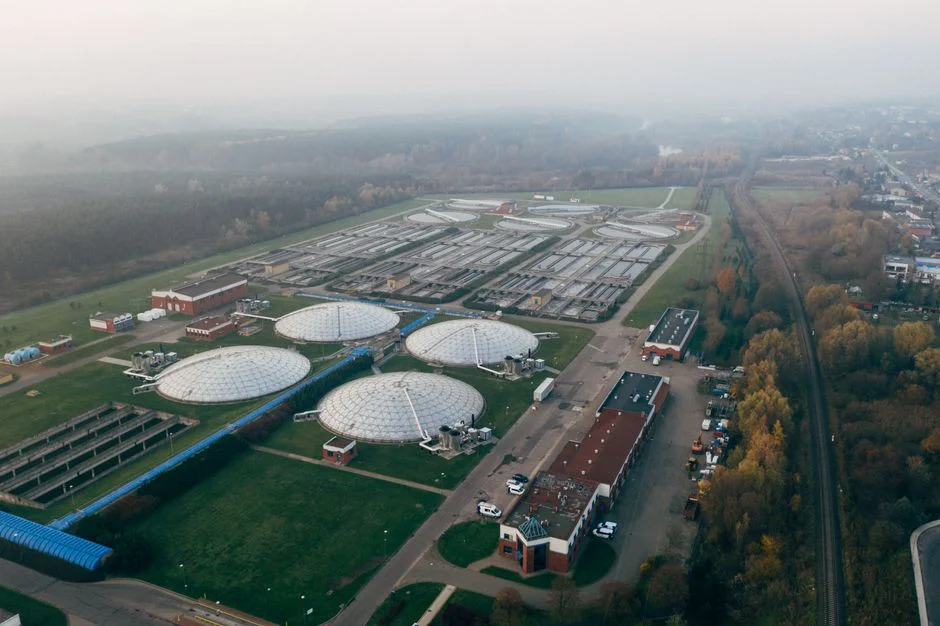
Four numbers must be locked into the datasheet before any vendor quote is taken seriously: hydraulic loading rate, contact-zone retention, saturator pressure, and recycle ratio. The ranges below come from the HydropureWater engineering table, validated against the DUT continuous-pilot envelope:
- Hydraulic loading rate: 5–15 m³/m²/h. Use 5–8 m³/m²/h for printing wash water and other thickener-laden streams; 10–15 m³/m²/h for desizing and scouring where FOG is high and residence time matters more than throughput.
- Contact-zone retention: 20–60 min. Twenty to thirty minutes is sufficient for low-FOG desizing lines; 40–60 min is needed for printing wash water where thickeners dampen bubble attachment.
- Saturator pressure: 40–70 psi (275–485 kPa). On hot textile influent (50–80 °C) specify the upper 60–70 psi band; the DUT RSM optimum of 300–425 kPa applies to ambient refinery wastewater, so the textile default should be higher.
- Air-to-water recycle ratio: 5–10% by volume at 25 °C, but 8–12% effective for hot streams, with a 25–30% recycle flow share to compensate for the lower gas solubility.
Defensible removal rates the engineer can put in front of a board: oil & grease >95% (HydropureWater, 2025-09), COD 75–85% (DUT, 2020), TSS 80–95%. A properly tuned DAF on textile influent reliably drops oil from 200–1,000 mg/L to <50 mg/L and TSS from 200–800 mg/L to <100 mg/L, which is the CETP inlet envelope most Indian and Bangladeshi mills are being held to in 2026.
Materials of construction should be specified against the chloride profile of the desizing permeate. 304 stainless is acceptable when chloride is below 200 mg/L; 316 stainless or FRP is required for higher-chloride streams or where salt-heavy reactive-dye baths dominate.
| Parameter | Textile default | Hot-stream adjustment | Source |
|---|---|---|---|
| Hydraulic loading (m³/m²/h) | 5–15 | 5–8 (high FOG) | HydropureWater DAF table |
| Retention (min) | 20–60 | 40–60 (printing wash) | HydropureWater DAF table |
| Saturator pressure (psi) | 40–70 | 60–70 at >60 °C | HydropureWater + DUT RSM |
| Recycle (% flow) | 10–30 | 25–30 hot | HydropureWater DAF table |
| Air-to-water ratio (vol%) | 5–10 | 8–12 hot | DUT RSM |
| Coagulant dose (mg/L) | 50–200 | 30–45 PAC (DUT optimum) | DUT, 2020 |
| Flocculant dose (mg/L) | 1–5 | 2–3 anionic PAM | HydropureWater DAF table |
| Oil & grease removal | >95% | — | HydropureWater, 2025-09 |
| COD removal | 75–85% | — | DUT, 2020 |
| TSS removal | 80–95% | — | HydropureWater, 2025-09 |
DAF-Only vs DAF Plus MBR: Choosing the Right Textile Train
The 2026 capex question is not whether to install a DAF — it is whether to stop at DAF for CETP discharge, or to add an MBR for in-plant reuse. The decision turns on three things: the mill's discharge target, the reuse economics, and the cost of membrane protection upstream.
DAF-only path. A correctly tuned textile DAF delivers oil & grease <50 mg/L, TSS <100 mg/L and COD <800 mg/L on the equalized stream — comfortably inside the CPCB CETP inlet envelope and the equivalent Bangladesh, Türkiye and Vietnam discharge consents. Capex is lower (single primary unit, no membrane replacement) and operations are stable on a 0.10–0.50 USD/m³ OPEX band dominated by polymer and sludge handling. The downside: the effluent is not reuse-grade. Total dissolved solids remain in the 3,000–8,000 mg/L range from dyeing salts, and colour persists.
DAF + MBR path. The MBR delivers <1 μm solid–liquid separation and a biologically polished effluent with COD typically <50 mg/L, suitable as RO feed for a 60–80% process-water reuse loop. Critically, the DAF must precede the MBR — an MBR fed raw textile effluent fouls within days. The DAF cuts oil to <50 mg/L and TSS to <100 mg/L, which is what protects the membranes and keeps cleaning intervals at the manufacturer's 6–12 month envelope. MBR CAPEX is of the same order as the DAF for a comparable flow, so a 200 m³/d reuse train typically lands in the 60,000–120,000 USD envelope for the MBR skid alone.
For a textile mill sizing its 2026 capex, the working decision rule is: influent FOG >200 mg/L or TSS >500 mg/L → DAF is mandatory; reuse target >50% of process water → add MBR downstream of the DAF. The two technologies are not substitutes; they are stacked unit operations. A dissolved air flotation system sized for the textile envelope, followed where reuse is required by an MBR membrane bioreactor system, is the configuration the procurement team should be evaluating.
| Criterion | DAF only (CETP discharge) | DAF + MBR (reuse) |
|---|---|---|
| Effluent oil & grease | <50 mg/L | <5 mg/L |
| Effluent TSS | <100 mg/L | <1 mg/L (turbidity) |
| Effluent COD | <800 mg/L | <50 mg/L |
| Reuse suitability | No | RO feed, 60–80% reuse |
| CAPEX envelope (200 m³/d) | 30,000–60,000 USD | 90,000–180,000 USD (incl. MBR) |
| OPEX envelope (USD/m³) | 0.10–0.50 | 0.30–0.80 |
| Membrane protection | N/A | DAF mandatory upstream |
| Compliance target | CETP inlet | Zero-liquid-discharge route |
CAPEX, OPEX and Footprint Benchmarks for a Textile DAF
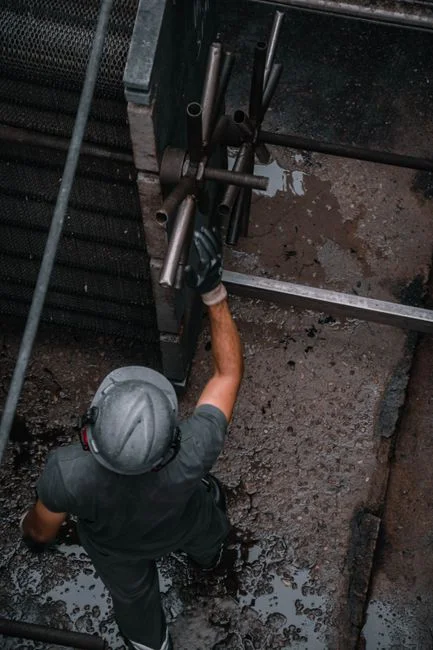
The textile-DAF CAPEX band published by HydropureWater is 50,000–500,000 USD for flows of 10–300 m³/h, with stainless-steel construction and full automation at the upper end. The DAF catalogue covers 4–300 m³/h across 13 standard models, which is the same flow envelope at typically 15–25% lower CAPEX for comparable material and instrumentation scope (HydropureWater field data, 2026).
OPEX runs 0.10–0.50 USD per cubic metre treated, dominated by coagulant, flocculant and sludge handling. Polymer cost is roughly 40% of OPEX, energy for the recycle pump and compressor another 25%, and the remainder is sludge dewatering and disposal. Energy per cubic metre at a 200 m³/d plant is typically 0.4–0.8 kWh/m³ — small relative to the chemical line item, but worth tracking for the EHS team's scope-2 reporting.
Footprint follows directly from the hydraulic loading rate. At 10 m³/m²/h, every 1 m³/h of design flow needs 0.1 m² of flotation surface, or roughly 0.3–0.5 m² of total DAF footprint including the saturator, skimmer enclosure and access walkways. A 200 m³/d plant (≈8.3 m³/h on a 24-hour basis) therefore lands at 25–40 m² of DAF footprint — small enough to fit inside an existing ETP shed without civil expansion.
Order-of-magnitude for the 2026 capex submission: a 200 m³/d textile DAF with 316 stainless contact zone, FRP saturator and full PLC scope sits in the 30,000–60,000 USD band; the MBR add-on for a 60% reuse train is of similar order, so a complete DAF + MBR package for 200 m³/d lands at 90,000–180,000 USD depending on material and reuse-loop scope. For a deeper comparison of primary-treatment technologies, the DAF vs clarifier decision framework walks through the same logic for high-TSS applications.
Sourcing Checklist: How to Specify a Textile-Grade DAF in 2026
Send the following technical data request to every shortlisted vendor before accepting a site visit. Any vendor that cannot answer in writing is not yet qualified.
- Hydraulic loading curve across the 5–15 m³/m²/h band, with the operating point stated for your specific influent envelope (oil 200–1,000 mg/L, TSS 200–800 mg/L, 50–80 °C).
- Saturator design: pressure rating, packing material, retention time (1–3 min) and documented tolerance to your influent temperature.
- Recycle pump curve and VFD scope, including NPSH and efficiency at the design point.
- Materials of construction with explicit chloride rating, plus a reference list of textile installations still in service after 5+ years.
- PLC scope including pH/temperature probes on the equalization tank, automatic polymer dosing interlocks, and remote telemetry.
Mandatory accessories: a PLC-controlled coagulant and flocculant dosing skid sized for the 50–200 mg/L and 1–5 mg/L dose bands; a sludge handling line to a plate-and-frame sludge filter press (target 18–22% dry solids for off-site disposal or incineration); and an upstream equalization tank with a high-efficiency sedimentation tank for grit and fibre removal before the DAF contact zone.
Pre-empt the three failure modes HydropureWater flags — saturator clogging, skimmer jamming, and polymer overdosing — by asking the vendor to address each in writing, with their recommended maintenance interval and the spare-parts package bundled into the proposal. Insist on an on-site jar test replicating the DUT RSM optimum (pH 5, 15 min flotation, 30–45 mg/L PAC) on a representative sample of your equalized influent before signing the purchase order. Any vendor that objects to a jar test is hiding something.
For mills evaluating broader ETP modernization, the textile wastewater treatment technology guide covers biological and tertiary options, while the DAF system cost and compliance guide gives a parallel CAPEX/OPEX breakdown for the Iran market that translates cleanly to India, Bangladesh and Türkiye.
Frequently Asked Questions
What removal rate can a textile DAF achieve for oil and grease?
A properly tuned textile DAF delivers >95% oil and grease removal on equalized influent of 200–1,000 mg/L, dropping the outlet to <50 mg/L (HydropureWater engineering data, 2025-09). For emulsified FOG from scouring, the figure is the same once the coagulation stage is correctly dosed — 50–200 mg/L of PAC or alum plus 1–5 mg/L of anionic polyacrylamide.
What hydraulic loading and retention time should a textile DAF be specified to?
Specify 5–15 m³/m²/h hydraulic loading and 20–60 minutes contact-zone retention. Use 5–8 m³/m²/h and 40–60 min for printing wash water with high thickener load; 10–15 m³/m²/h and 20–30 min for desizing and scouring where FOG is high but thickeners are absent.
When should a DAF be used instead of a lamella clarifier for textile effluent?
Use a DAF when influent FOG exceeds 200 mg/L, TSS exceeds 500 mg/L, or stable emulsions are present — which is the case for almost all scouring, dyeing and printing wash streams. A lamella clarifier is acceptable only for low-FOG (<200 mg/L) streams such as the dilute rinse water from a finishing range, where the cost premium of DAF cannot be justified.
What coagulant and flocculant doses are typical for textile DAF?
50–200 mg/L of cationic inorganic coagulant (PAC is the textile default, with the DUT RSM optimum at 30–45 mg/L for synthetic sizing) followed by 1–5 mg/L of anionic or non-ionic polyacrylamide. Overdosing polyacrylamide is the most common cause of failed jar-to-full-scale scale-up, so the dose must be controlled by a PLC-metered skid, not a hand valve.
Can DAF effluent be reused directly in the textile process?
Not directly. DAF effluent meets CETP inlet limits but contains 3,000–8,000 mg/L of total dissolved solids from dyeing salts and persistent colour. For 60–80% process-water reuse, an MBR (delivering <50 mg/L COD at <1 μm turbidity) plus RO polishing is required downstream of the DAF, which is why DAF and MBR are stacked unit operations rather than substitutes.