
Mongolia's Textile Wastewater Reality: Volumes, Contaminants, and Climate Constraints
Mongolia’s 500 textile factories discharge approximately 44,000 m³/day of industrial effluent, representing 30-40% of the country’s total industrial wastewater load (source: World Bank 2026). This effluent is characterized by high concentrations of organic pollutants and salts, typically presenting with COD levels of 500-3,000 mg/L, BOD₅ of 200-1,000 mg/L, and TSS between 100-500 mg/L. Color intensity remains a significant challenge, ranging from 500-3,000 Pt-Co, alongside salinity levels of 2,000-10,000 mg/L TDS and pH fluctuations between 6 and 11.
Operational design in Mongolia must account for extreme thermal stress, as temperatures in industrial hubs like the Bayanzurkh district frequently drop below -30°C (source: World Bank 2026). To prevent freezing and ensure biological stability, treatment infrastructure requires 50mm polyurethane tank insulation, submerged heating elements (0.5 kW/m³), or containerized, climate-controlled enclosures. Groundwater depletion in Ulaanbaatar has accelerated the necessity for water reuse, exemplified by the Amgalan Thermal Plant, which now recycles 138,000 m³/year of industrial effluent (source: World Bank 2026). The government’s new 50,000 m³/day Wastewater Recycling Plant is designed to offset 50M m³/year of freshwater demand, signaling a permanent shift toward circular industrial water management (source: Borgen Project 2025).
Mongolian Regulatory Framework: MNS 4943:2011, Emerging Reuse Standards, and World Bank Safeguards
Compliance for industrial discharge is governed by MNS 4943:2011, which mandates strict parameters for surface water release, while MNS 6298:2011 covers sewer discharge (source: World Bank 2026). As Ulaanbaatar’s central wastewater treatment facility remains near capacity, factories must increasingly treat effluent to high standards on-site to mitigate operational risk and potential fines under the strengthening polluter-pays enforcement regime.
| Parameter | MNS 4943:2011 (Surface) | Emerging Reuse Target (2030 WRG) |
|---|---|---|
| COD | ≤100 mg/L | ≤30 mg/L |
| BOD₅ | ≤30 mg/L | - |
| TSS | ≤50 mg/L | ≤10 mg/L |
| Color | ≤50 Pt-Co | - |
| pH | 6-9 | 6.5-8.5 |
Projects seeking international funding must align with World Bank Environmental and Social Standards (ESS3), which prioritize pollution prevention, resource efficiency, and climate resilience (source: World Bank 2026). For facilities exceeding 100 m³/day, an Environmental Impact Assessment (EIA) approved by the Ministry of Environment and Tourism (MET) is mandatory. The 2030 Water Resources Group (WRG) is currently pushing for industrial cooling reuse standards that target COD ≤30 mg/L and TSS ≤10 mg/L, aligning with the quality specifications of the Amgalan project (source: World Bank 2026).
Technology Comparison: MBR vs DAF vs Conventional A/O for Mongolian Textile Applications
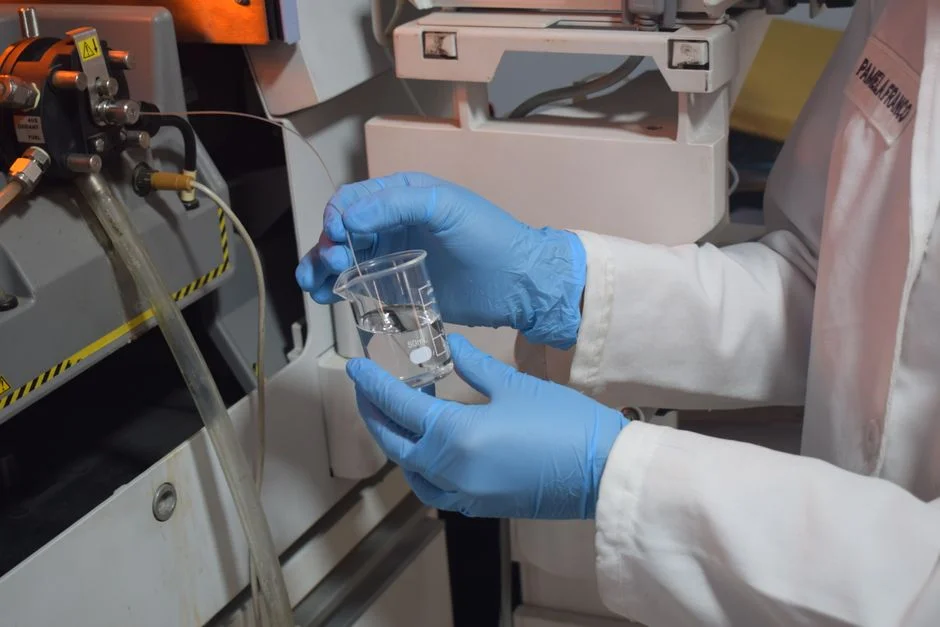
Selecting the appropriate equipment depends on whether the goal is simple regulatory compliance or full-scale water reuse. For applications requiring high-quality permeate suitable for cooling towers or process reuse, an MBR system for textile water reuse is the industry standard due to its ability to achieve COD <50 mg/L and TSS <5 mg/L in a compact footprint.
| Technology | Primary Function | Removal Efficiency | Cold Climate Suitability |
|---|---|---|---|
| MBR (DF Series) | Reuse/Advanced Treatment | 98% COD, 99% TSS | High (with insulation/heating) |
| DAF | Pretreatment/Color Removal | 85% Color, 95% TSS | Moderate (needs freeze protection) |
| Conventional A/O | Basic Discharge Compliance | 70-80% COD | Low (requires deep burial) |
For high-color, high-salinity dye streams, DAF pretreatment for textile dye removal serves as a critical first stage, removing up to 85% of color and 95% of TSS. This hybrid approach—using DAF upstream of an MBR—reduces membrane fouling by 40-60% and extends component lifespan by 2-3 years. While conventional A/O systems (such as the WSZ series) provide the lowest initial CAPEX for basic discharge, they lack the tertiary polishing required for modern reuse mandates. All systems operating in Mongolia must utilize 50mm insulation and, where applicable, internal heating to maintain biological activity at -20°C to -30°C ambient temperatures.
Equipment Sizing Worksheet: Flow, Load, and Redundancy for 10-500 m³/h Textile Lines
Accurate sizing for Mongolian textile operations must incorporate a safety factor to account for batch-dyeing peaks and seasonal production surges. Use the following baseline for design calculations:
- Design Flow: Average daily flow × 1.3 (batch factor) × 1.2 (seasonal factor) = Design Capacity.
- Organic Load: Assume 1,500 mg/L COD; target MBR MLSS of 8,000-12,000 mg/L with an F/M ratio of 0.1-0.2 kg COD/kg MLSS·d.
- DAF Sizing: Target hydraulic loading of 10-20 m/h with a recycle ratio of 20-30% to handle high-solids textile effluent.
- Redundancy: Implement N+1 membrane train configurations to ensure 24/7 dyeing operations.
- Future-Proofing: Ensure permeate pump stations are sized for 120% capacity to accommodate potential future RO polishing for industrial water reuse.
CAPEX/OPEX Benchmarks and IFC Blue Finance Eligibility for Mongolian Projects
Project financing is increasingly accessible through IFC-backed blue finance initiatives, such as the facility provided to Golomt Bank (source: World Bank 2026). These loans typically offer 5-7% interest rates with 7-10 year tenors for projects that achieve ≥30% water reuse and comply with World Bank ESS3 standards.
CAPEX Estimates (Installed, 2026 Mongolia):
- DAF 50 m³/h: $150,000–$220,000
- MBR 100 m³/day: $450,000–$650,000
- Hybrid DAF+MBR 200 m³/day: $1.1M–$1.5M
- Conventional A/O 200 m³/day: $300,000–$450,000
Operational costs are driven by energy (0.3-0.5 kWh/m³ for MBR) and chemical cleaning ($0.05/m³). With industrial water tariffs in Ulaanbaatar at approximately $0.85/m³, a 500 m³/day reuse system can yield significant annual savings, typically resulting in a 3-5 year payback period when leveraged with blue finance (source: World Bank 2026).
Procurement Checklist: Vendor Evaluation, Spare Parts, and Local Support in Mongolia
Successful procurement in the Mongolian market requires vetting vendors for both technical performance and logistical reliability.
- Certification: Ensure vendors hold ISO 9001/14001, CE, or ASME pressure vessel certifications.
- Cold-Climate References: Demand proof of operational installations in Central Asia or Northern China with -30°C winter performance.
- Spare Parts: Maintain a 10% inventory of MBR modules and critical pump seals locally; lead times from international suppliers average 8-12 weeks.
- Commissioning: Require a 12-month performance guarantee under -25°C influent conditions and on-site operator training.
- Customs: Utilize HS Code 8421.21 for water treatment equipment to ensure accurate 5% duty and 10% VAT processing, supported by MET environmental permits.
Frequently Asked Questions
What are Mongolia's textile wastewater discharge limits in 2026?
MNS 4943:2011 mandates COD ≤100 mg/L, BOD₅ ≤30 mg/L, TSS ≤50 mg/L, and color ≤50 Pt-Co for surface water discharge; pH must remain between 6 and 9.
Can MBR operate at -30°C in Mongolia?
Yes, provided the system includes 50mm polyurethane tank insulation, submerged heaters rated at 0.5 kW/m³, or is housed in a climate-controlled containerized enclosure. Systems like the DF Series are engineered for these thermal extremes.
Is water reuse mandatory for Mongolian textile factories?
Reuse is not currently mandatory but is heavily incentivized by IFC blue finance programs and the national push toward circular water economy models. Future standards are expected to target COD ≤30 mg/L for industrial cooling.
What is the cost of a 200 m³/day textile MBR system in Mongolia?
Installed CAPEX for a 200 m³/day MBR system typically ranges from $450,000 to $650,000, depending on the level of winterization and automation required for the specific site.
How to access IFC blue finance for textile wastewater in Mongolia?
Eligible projects must apply through partner institutions like Golomt Bank, providing an ESIA compliant with World Bank ESS3 standards and a technical plan demonstrating ≥30% water reuse (source: World Bank 2026).