Why textile and dyeing wastewater breaks conventional clarifiers
Reactive, acid, and disperse dyes create a residual stream fundamentally different from the municipal sewage a standard clarifier handles. Phenix City dyehouses typically discharge a stream containing residual dyes, sizing agents (PVA, starch), surfactants, and emulsified oils, with color often exceeding 500 Pt–Co units, temperatures of 30–60 °C, and pH fluctuating between 4 and 11. The primary challenge is that dye solids and emulsified oils have a density near that of water; gravity settling in a conventional clarifier is inefficient, causing fine flocs to escape with the overflow into the next stage.
DAF systems are engineered for this specific particle regime. These systems utilize microbubble buoyancy rather than gravity to separate low-density or finely suspended particles (wastewatermachinery.com, accessed 2026; dagyee.com, accessed 2026). Common operational issues include persistent color in the clarifier overflow, sludge carryover after dye changeovers, rising ADEM/NPDES color complaints, and excessive polymer dosing that still fails to meet TSS targets. While a settling clarifier treats dyehouse effluent as grit-laden river water, a DAF system treats it as the buoyant, surfactant-laden stream it is. The two units serve distinct needs, and the textile matrix aligns with DAF technology.
How a DAF unit actually separates dye solids
A DAF unit separates particles through a precise five-step sequence that engineers can audit against a P&ID.
- Chemical treatment — coagulant (typically ferric or polyaluminum) and flocculant (cationic polyacrylamide, 20–80 mg/L each) are dosed to form flocs capable of trapping bubbles.
- Air injection and contact — a side-stream of clarified water is pressurized to 3–5 bar in a saturator, with saturation pressure held at ≥ 5 bar (per the Selection Criteria in wastewatermachinery.com / dagyee.com, 2026).
- Separation — the pressurized stream is released through needle valves or proprietary nozzles; microbubbles 10–100 μm in diameter nucleate on the floc surfaces, reducing the aggregate's effective density.
- Sludge removal — a counter-current scraper skims the float layer (2–5% dry solids) off the surface while keeping the bottom of the tank quiescent to protect the sludge blanket.
- Water outlet — clarified effluent exits from the bottom; a fraction (recycle ratio typically 20–30% of throughput) returns to the saturator, closing the loop and reducing freshwater demand.
Bubble-floc attachment, rather than gravity, performs the separation. This allows hydraulic retention time to drop to 15–30 minutes compared to 2–4 hours in a clarifier, reducing the required footprint by a factor of three to five. For a detailed walkthrough of pipe, valve, and instrumentation, see the DAF process flow walkthrough.
DAF vs clarifier: head-to-head on the parameters that matter
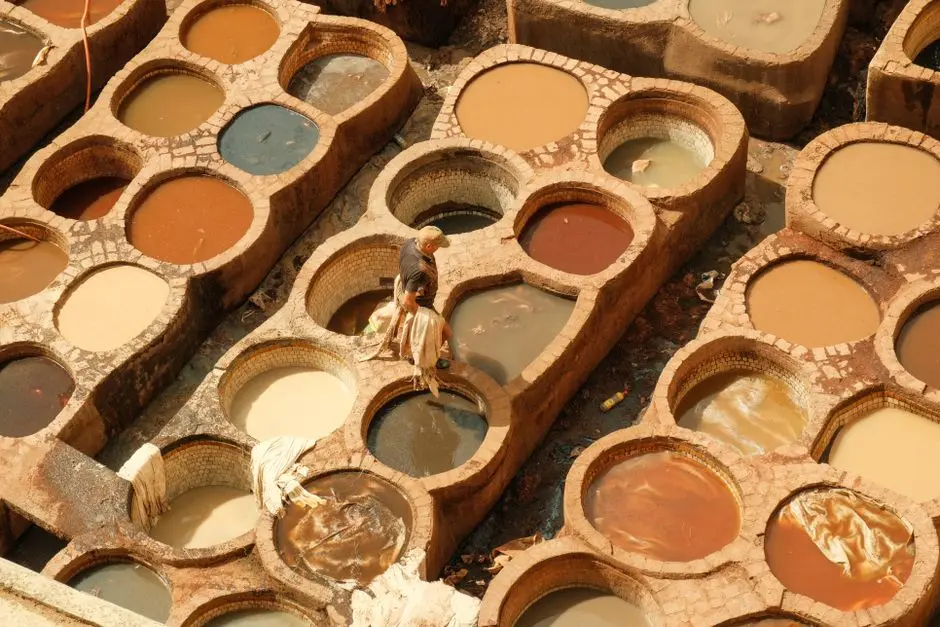
The DAF-vs-clarifier decision for a Phenix City textile plant depends on a parameter-level comparison. The table below outlines the engineering trade-offs based on manufacturer data (wastewatermachinery.com, 2026; dagyee.com, 2026) and standard settling-tank design.
| Parameter | Dissolved Air Flotation (DAF) | Conventional / Lamella Clarifier |
|---|---|---|
| Mechanism | Microbubble buoyancy attaches to floc; floats to surface | Gravity settling of denser particles; lamella plates shorten the fall path |
| Typical TSS removal (dye effluent) | 92–97% | 50–70% on low-density dye flocs |
| Typical COD removal | 60–80% | 20–40% without coagulant aid |
| Color removal | Strong — floc-bubble attachment captures dye particles | Weak — soluble dye fraction passes through |
| Footprint per m³/h | 0.05–0.1 m² | 0.3–0.5 m² |
| Hydraulic retention time | 15–30 min | 2–4 h |
| Sludge consistency | Float sludge 2–5% DS, easy to scrape | Bottom sludge 1–3% DS, larger volume |
| Best-fit feed | Dyes, surfactants, oils, low-density flocs | Heavy inorganic grit, high-TDS mineral loads |
DAF outperforms clarifiers regarding TSS, COD, color, footprint, and retention time, while clarifiers offer simplicity for inorganic loads. A common 2026 retrofit is to run a DAF system as the primary stage and a lamella as a sludge thickener on the float underflow.
DAF sizing for a Phenix City dyehouse: 3 to 120 m³/h at a glance
Engineers can determine the required model number by referencing the manufacturer datasheet covering the DAF-003 through DAF-120 range (wastewatermachinery.com, 2026; dagyee.com, 2026).
| Model | Flow (m³/h) | L × W × H (m) | Dry weight (kg) | Operating weight (kg) | Inlet / Outlet |
|---|---|---|---|---|---|
| DAF-005 | 5 | 4.0 × 2.4 × 2.2 | 1,600 | 7,000 | DN80 / DN80 |
| DAF-010 | 10 | 4.65 × 2.7 × 2.4 | 2,000 | 12,000 | DN100 / DN100 |
| DAF-020 | 20 | 5.9 × 3.2 × 2.5 | 3,000 | 22,000 | DN150 / DN150 |
| DAF-030 | 30 | 6.8 × 3.2 × 2.7 | 3,800 | 32,000 | DN150 / DN150 |
| DAF-040 | 40 | 8.0 × 3.6 × 2.7 | 5,000 | 45,000 | DN200 / DN150 |
| DAF-050 | 50 | 8.4 × 3.6 × 2.7 | 5,500 | 55,000 | DN200 / DN150 |
| DAF-060 | 60 | 9.9 × 3.8 × 2.9 | 6,000 | 66,000 | DN250 / DN200 |
Small-batch Phenix City dyehouses typically require the 5–20 m³/h range, while mid-size continuous lines utilize 30–60 m³/h capacities. Verify that facility headroom of 2.2–2.9 m is available before selecting a model.
Operating cost and OPEX drivers you can actually forecast
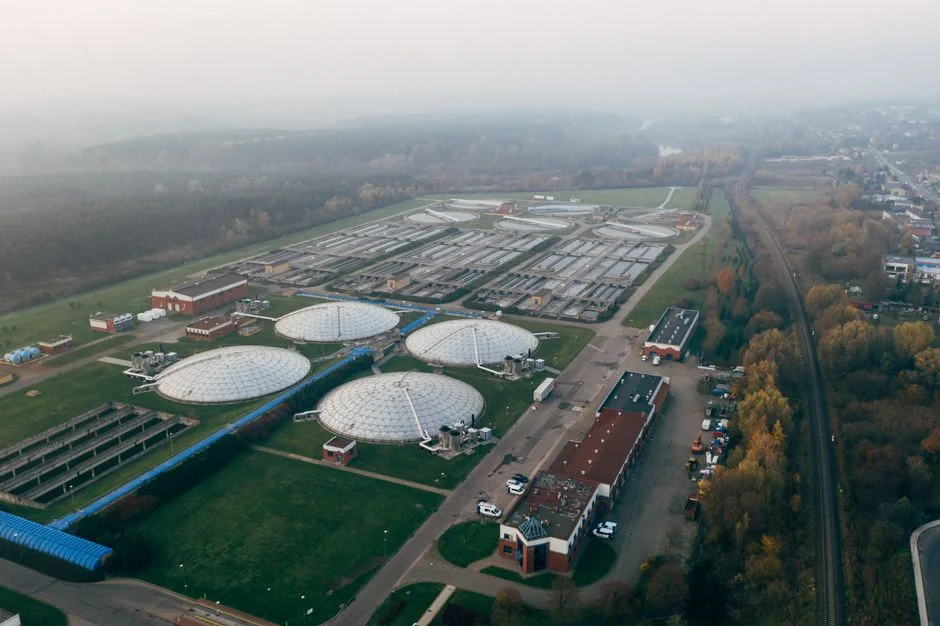
OPEX for a primary clarifier involves chemical usage, energy, sludge handling, and operator time, with DAF and lamella clarifiers differing in these categories.
- Chemical. DAF dosing typically requires 20–80 mg/L of coagulant and flocculant; however, the air-floc mechanism is more efficient per unit of TSS removed, often reducing total polymer consumption compared to sedimentation (wastewatermachinery.com, 2026; dagyee.com, 2026).
- Energy. DAF requires a saturator pump and a recycle pump (typically 2–5 kW combined for a 50 m³/h unit). A lamella clarifier lacks a saturator, resulting in lower parasitic load at the expense of footprint and retention time.
- Sludge handling. DAF float sludge (2–5% DS) is more easily dewatered than clarifier underflow (1–3% DS); pairing a DAF with a plate-and-frame filter press can reduce disposal mass by 40–60% and eliminate backwash requirements (wastewatermachinery.com, 2026).
- Operator time. Stable polymer dosing is the most critical variable; pairing the DAF with an automatic chemical dosing skid prevents the most common sources of TSS excursions.
While clarifier energy costs appear lower, the polymer demand required to push dye-floc TSS to permit levels often makes DAF more cost-effective in dyehouse mass balances.
Phenix City regulatory and site realities in 2026
Discharge from a Phenix City dyehouse into the local POTW or surface water in Lee or Russell County is subject to ADEM-administered NPDES pretreatment requirements. Color, TSS, BOD, and pH are primary compliance concerns, as reactive and disperse dye batches frequently push effluent color beyond 500 Pt–Co and pH outside the 6–9 range. The Chattahoochee basin is under increased scrutiny regarding PFAS, color, and whole-effluent toxicity, making current pretreatment programs more rigorous than in previous years.
DAF as a primary stage consistently reduces TSS below 30 mg/L (wastewatermachinery.com, 2026), mitigating organic and color shock on downstream biological systems. This separation of duties—DAF for color and TSS, and biology for dissolved COD and salts—is the configuration preferred by ADEM reviewers for 2026 compliance.
How to choose in 2026: a four-question decision framework
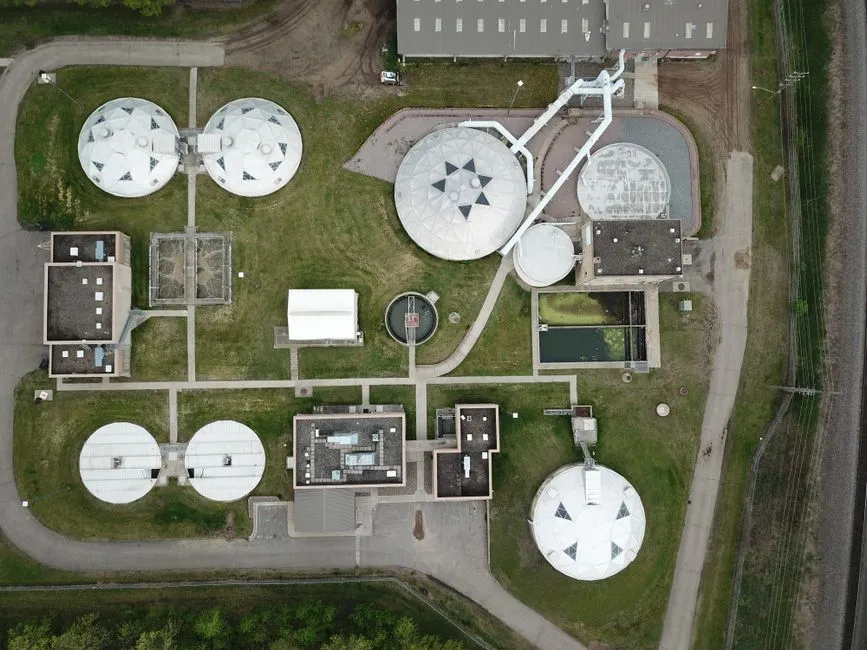
Follow these four questions to determine the appropriate technology.
- Is color or dye solids the dominant pollutant? Choose DAF. The microbubble mechanism is the only method that physically attaches to dye flocs.
- Is the load mainly heavy inorganic grit with low color? Choose a lamella clarifier, as gravity effectively handles inorganic settling.
- Is floor space under 200 m² for a 50 m³/h line? Choose DAF. The DAF-050 fits in approximately 30 m² of floor space, excluding aisles (wastewatermachinery.com, 2026; dagyee.com, 2026).
- Is capex the binding constraint and the load simple? Choose a HydropureWater lamella clarifier for now, with a planned DAF upgrade for future reactive-dye processing.
For most Phenix City dyehouses running reactive or disperse dyes, DAF is the optimal choice. For plants with different feed streams, see the DAF vs clarifier for chemicals wastewater or the DAF vs clarifier for mining wastewater guides.
Frequently Asked Questions
Is DAF or a clarifier better for removing dye color?
DAF is more effective. Color reduction on textile effluent relies on floc-bubble attachment of dye particles, a process that settling clarifiers do not perform. Manufacturer data indicates DAF routinely clears 92–97% TSS and 60–80% COD on dyehouse feed, with significant co-removal of color (wastewatermachinery.com, 2026).
What removal efficiency can a Phenix City dyehouse expect from a DAF primary stage?
<Frequently Asked Questions
Should a textile factory in Phenix City use DAF or a clarifier for dye wastewater?
Textile factories in Phenix City should typically select a dissolved air flotation (DAF) system over a gravity clarifier for dye wastewater due to the prevalence of low-density suspended solids, emulsified oils, and surfactants that do not settle by gravity. Clarifiers require particles with a specific gravity significantly greater than 1.0, whereas DAF utilizes micro-bubbles to lift particles with specific gravities as low as 0.95, ensuring capture of hydrophobic dyes and fine colloids. This selection supports compliance with Alabama Department of Environmental Management (ADEM) NPDES requirements for consistent TSS and color removal, particularly when effluent contains non-settleable organics common in reactive and disperse dye processes.
How much TSS and COD can a DAF remove from dyeing effluent compared to a clarifier?
A DAF unit typically achieves 85% to 95% removal of total suspended solids (TSS) and 60% to 80% reduction in chemical oxygen demand (COD) from dyeing