Why the Abu Dhabi Water Equation Forces a Treatment Choice
An Abu Dhabi hotel or resort in 2026 typically needs a packaged MBR or A/O package plant (WSZ-class) sized at roughly 0.20–0.35 m³ per guest-night, with screening, biological treatment, tertiary filtration and chlorination, designed to meet Abu Dhabi Environment Agency discharge limits and, where reuse is intended, irrigation-grade quality for landscape and garden irrigation — a use case already proven viable given that 77% of treated wastewater in Arab countries is reused for irrigation (Water, 2023-06).
The strategic context is unforgiving. The UAE consumes roughly 550 L of water per person per day, more than double the global average of 250 L per person per day, and generates over 460,000 m³ of wastewater annually with an 8–10% annual growth rate that is outpacing network capacity (Water, 2023-06). For a hospitality asset director, those figures convert directly into two questions: how much will the municipality actually take, and what is the cost of meeting a tighter on-site standard instead. Abu Dhabi has practised centralised municipal wastewater treatment since 1973, yet only about 5% of the emirate's treated water is currently reused (Water, 2023-06). A hotel that designs for on-site reuse is therefore operating ahead of the regulatory baseline, not behind it.
The regional reuse benchmark gives the target a number. With 77% of treated wastewater in Arab countries already going to irrigation versus only 14% in Latin America and 3% in Africa, the design direction is set: a hospitality plant should be specified so its effluent can irrigate a hotel's gardens, landscape areas, or — for larger desert resorts — on-site golf or feature lawns (Water, 2023-06). This shifts the procurement decision from "meets sewer rules" to "meets irrigation envelope", and the rest of this article walks through the engineering that flows from that choice. For comparable desert-climate specification logic, see the Ankara hotel wastewater treatment guide.
Influent Profile of a Desert Resort or City Hotel
Domestic hotel sewage typically presents BOD 200–400 mg/L, COD 400–800 mg/L, TSS 150–350 mg/L and FOG 50–150 mg/L before any kitchen or laundry pre-treatment, and the kitchen stream is the dominant BOD and FOG contributor while the laundry stream drives surfactant and pH swings (typical hospitality influent engineering bands, HydropureWater field data, 2026). The wider Arab-region wastewater characterisation puts typical sewage at roughly 99.9% water with 0.1% organic and inorganic solids including proteins, carbohydrates, fats and pathogens, which is the envelope a biological stage must metabolise (Water, 2023-06).
Peak hydraulics drive equalization sizing more than average concentration does. Design for a 2.0–2.5× peaking factor over the average daily flow during full-occupancy weekends and conference peaks; a 200-key resort averaging 0.27 m³ per guest-night at 80% occupancy produces a mean day of around 43 m³ but a peak day closer to 100–110 m³ once breakfast, pool turnover and back-of-house shifts stack up (typical hospitality hydraulic factors, HydropureWater field data, 2026). The kitchen FOG and laundry surfactant load is the main upset source; both justify a GX series rotary bar screen for coarse solids followed by a DAF system for fats, oils and grease before the biological stage, otherwise the aeration tank sees a 3–4× BOD shock after a banquet service. Pool backwash and spa discharge add high chlorine residual and high temperature (often 30–35 °C), both of which suppress nitrification; route those streams through a cooling/equalization buffer sized for at least 30 minutes of residence so the biological kinetics stay within design parameters.
| Parameter | Raw hotel sewage range | Main contributing sub-stream | Design implication |
|---|---|---|---|
| BOD (mg/L) | 200–400 | Kitchen + guest rooms | Standard-rate A/O or MBR sizing |
| COD (mg/L) | 400–800 | Kitchen, laundry, guest rooms | DAF pre-treatment if kitchen-heavy |
| TSS (mg/L) | 150–350 | Guest rooms, laundry lint | Bar screen + primary clarifier or MBR |
| FOG (mg/L) | 50–150 | Kitchen prep, dishwash | Mandatory DAF upstream of biology |
| NH₃-N (mg/L) | 20–50 | Guest rooms, laundry | Nitrification stage required for reuse |
| Temperature (°C) | 25–40 (pool/spa mixed) | Pool backwash, spa | Cooling/equalization buffer >30 min |
| Peak factor (×avg) | 2.0–2.5 | Occupancy, banquet, shift change | Equalization tank sized to peak day |
Three Treatment Trains Compared: Package A/O, MBR, and Septic + Polishing
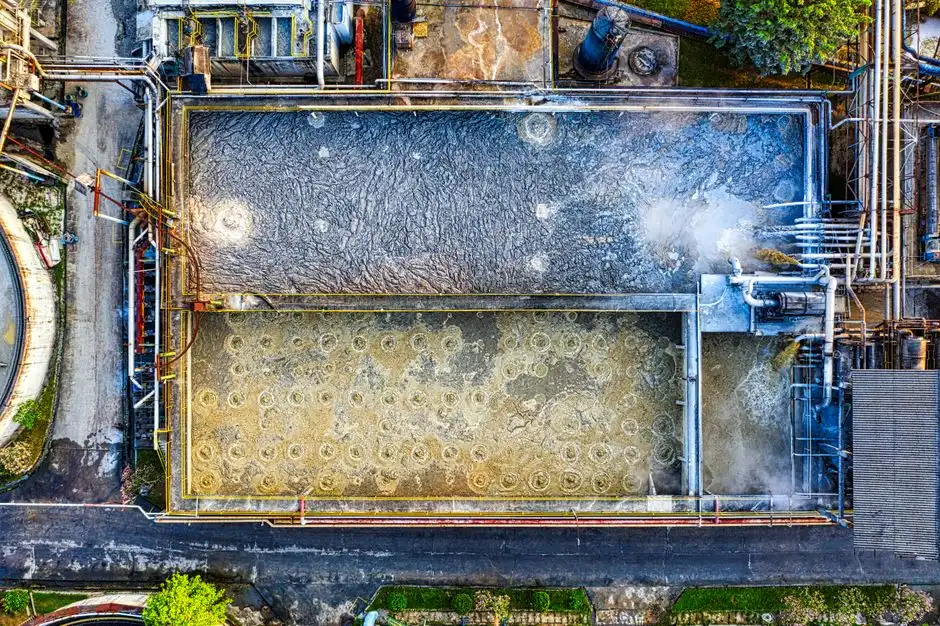
For a 10–500 m³/day hotel in the UAE the realistic options narrow to three architectures: a WSZ-class buried package plant using A/O biological contact oxidation, an integrated MBR with submerged PVDF membranes, or a septic tank followed by tertiary polishing. The WSZ series underground package sewage treatment plant covers roughly 1–80 m³/h, runs A/O contact oxidation, can be buried to free up the resort landscape, and requires no dedicated operator; it is the lowest CAPEX per cubic metre for smaller resorts that only need to meet discharge consent (per WSZ product specification, HydropureWater, 2026). The trade-off is effluent quality: typically BOD ≤20 mg/L and TSS ≤20 mg/L, which clears a sewer-discharge envelope but not a reuse envelope without downstream sand filtration and disinfection.
The MBR membrane bioreactor system covers 10–2,000 m³/day and pairs an A/O biological tank with submerged DF series PVDF flat sheet membrane modules at <1 μm pore size. Effluent routinely clears COD <30 mg/L and TSS <5 mg/L, which sits inside the irrigation envelope with only chlorination downstream; footprint is roughly 60% smaller than an equivalent conventional activated-sludge train, at the cost of higher membrane aeration demand (around 0.3–0.5 m³/min per m² of membrane area for scouring) and chemical clean-in-place every 6–12 months. The third option, septic tank plus sand filter and chlorine, is only viable for lodges below about 20 m³/day where the regulator accepts a basic discharge; for anything above that threshold in Abu Dhabi the Environment Agency generally expects biological treatment, not settling alone.
| Criterion | WSZ package plant (A/O) | Integrated MBR | Septic + polishing |
|---|---|---|---|
| Capacity band | 1–80 m³/h | 10–2,000 m³/day | <20 m³/day |
| Typical effluent BOD (mg/L) | ≤20 | <5 | 30–60 (post-polish) |
| Typical effluent TSS (mg/L) | ≤20 | <5 | 20–40 (post-polish) |
| Footprint | Small, fully buried | ~60% smaller than CAS | Smallest above-grade |
| Reuse readiness | Needs sand filter + Cl | Near-reuse with Cl only | Marginal; not for golf |
| Operator skill | Low (no membrane) | Medium (CIP, integrity) | Low |
| OPEX intensity | Lowest | Medium-high (membrane) | Low |
| Best fit in Abu Dhabi | 20–80 m³/day, sewer only | 20–500 m³/day, reuse planned | <20 m³/day, basic discharge |
Sizing Rule of Thumb for Abu Dhabi Resorts
For an Abu Dhabi hotel or resort, plan biological and equalization capacity at 200–350 L per guest-night, then add 50–100 L per employee per day for back-of-house staff, and apply a 2.0–2.5× peaking factor to the hydraulic buffer and equalization tank (HydropureWater sizing rule, 2026). The 0.20–0.35 m³ per guest-night band fits typical UAE hospitality occupancy: a full-service resort at 80% occupancy with two guests per key runs near the upper end, while a business hotel closer to the city centre sits at the lower end because its kitchen and laundry throughput per occupied room is lower.
Worked example: a 200-key desert resort at 1.6 guests per key, 85% occupancy, 0.30 m³ per guest-night produces an average day flow of 200 × 1.6 × 0.85 × 0.30 = 81.6 m³/day, call it 80 m³/day for design. Add 120 back-of-house staff at 75 L/employee/day and the average rises to 80 + 9 = 89 m³/day. Apply a 2.3× peaking factor for the equalization design flow and the surge buffer must absorb roughly 200 m³/day on a peak Saturday with a full banquet, pool party and laundry turnover stacked. The equalization tank itself is then sized at roughly 8–12 hours of average flow (about 30–45 m³) so the biological stage sees a smoothed diurnal curve rather than raw 2.3× peaks.
Treated Wastewater Reuse Targets for Hotel Landscaping
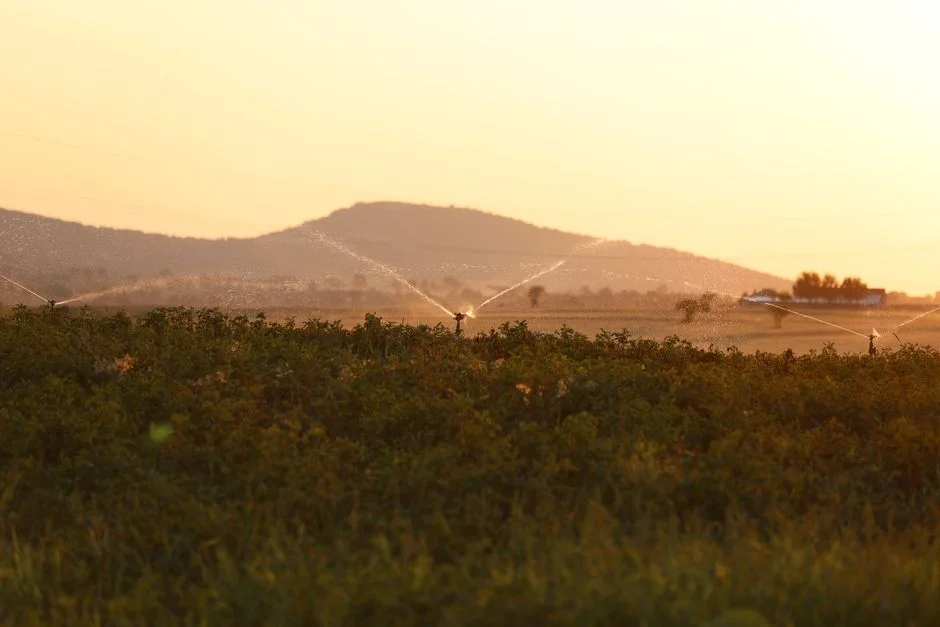
On-site reuse is the value driver in Abu Dhabi because the regional precedent already exists: 77% of treated wastewater in Arab countries is reused for irrigation, compared with 14% in Latin America and 3% in Africa, and the UAE itself generates about 600 million m³/year of treated municipal wastewater of which only around 7% comes from TWW in the supply mix — meaning the gap between current and potential reuse is the engineering opportunity for a hotel (Water, 2023-06). The typical reuse envelope for unrestricted landscape irrigation sets the bar at TSS ≤10 mg/L, turbidity ≤2 NTU, BOD ≤10 mg/L and fecal coliform ≤200 CFU/100 mL, consistent with WHO and Arab League reuse guideline bands (typical landscape irrigation reuse target, HydropureWater engineering reference, 2026). Tertiary disinfection is normally done with a chlorine dioxide generator or sodium hypochlorite dosed at 5–50 ppm contact concentration, the same band that Arab-region reuse plants use for secondary effluent polishing (Water, 2023-06). A multi-media filter ahead of disinfection removes the residual particulates that would otherwise shield coliforms from the biocide.
For golf-course or large landscape irrigation, the hydraulic envelope above is necessary but not sufficient. Add salinity monitoring (electrical conductivity in dS/m) and sodium adsorption ratio (SAR) checks before the irrigation pump, because a desert-climate baseline plus fertilizer salt load can push SAR above the 9–10 threshold at which soil structure starts to deteriorate on sandy emirati soils. The Arab region's average annual precipitation is less than 2% of the global average, so any salinity or SAR drift accumulates in the root zone rather than leaching out (Water, 2023-06).
| Parameter | Reuse target (unrestricted landscape irrigation) | Discharge limit (typical sewer consent) |
|---|---|---|
| BOD (mg/L) | ≤10 | ≤25 |
| COD (mg/L) | ≤50 | ≤125 |
| TSS (mg/L) | ≤10 | ≤30 |
| Turbidity (NTU) | ≤2 | — |
| Fecal coliform (CFU/100 mL) | ≤200 | ≤1,000 |
| Free chlorine residual (mg/L) | 0.5–1.5 (contact) | — |
| Chlorine dose (ppm) | 5–50 | — |
| SAR (for golf irrigation) | Monitor; <9 typical | — |
Decision Framework and Cost Band for 2026
Use this logic to short-list the train: for an average daily flow below 20 m³/day with no reuse intent, specify septic tank plus sand filter and chlorination as the simplest consenting path; for 20–200 m³/day with landscape or golf irrigation planned, specify an MBR so the plant clears the reuse envelope without retrofitting tertiary stages; for 20–80 m³/day where the destination is the municipal sewer, a WSZ series package plant offers the lowest CAPEX per cubic metre and the buried footprint keeps the resort's landscape intact (decision framework, HydropureWater, 2026). Beyond roughly 200 m³/day, the MBR remains the right answer because the membrane stage reduces the downstream sand filter and chlorine contact tank sizing, and the smaller biological volume offsets higher membrane OPEX.
Indicative CAPEX for packaged plants in the UAE typically scales with capacity and effluent grade; for a 50–100 m³/day MBR-class hospitality plant the equipment-supply band sits in the low six figures (USD) before civil works, while a WSZ-class package plant for the same flow generally lands 30–50% below that, with the gap closing as the flow rises (typical packaged plant CAPEX range, HydropureWater, 2026). OPEX is dominated by aeration energy and, for MBR, by membrane cleaning chemicals; plan 5–8% of CAPEX per year as a working OPEX band before site-specific energy tariffs. Both trains generate a waste-activated sludge stream that needs dewatering; the standard UAE hospitality practice is a plate-and-frame filter press fed by an automatic chemical dosing system for polymer conditioning, producing a cake at roughly 22–25% dry solids suitable for off-site disposal. The regulatory hook for any of these trains is the Abu Dhabi Environment Agency, which sets the discharge consent and the reuse permit; design the plant around the stricter of the two up front and the consent path becomes a paperwork exercise rather than a redesign.
Frequently Asked Questions
Which authority regulates hotel wastewater discharge in Abu Dhabi?
The Abu Dhabi Environment Agency regulates both sewer discharge consent and treated wastewater reuse permits for hospitality assets in the emirate, and design specifications should be prepared against its discharge limits even when the immediate outlet is a municipal sewer.
What are typical BOD and TSS numbers for a hotel's raw sewage?
Raw hotel sewage typically runs BOD 200–400 mg/L, COD 400–800 mg/L and TSS 150–350 mg/L before pre-treatment, with the kitchen stream driving the FOG load at 50–150 mg/L and the laundry stream driving surfactant swings (HydropureWater field data, 2026).
MBR or package plant for a 100-room Abu Dhabi hotel with landscape reuse?
For a 100-room hotel around 25–40 m³/day with on-site landscape irrigation, an MBR is the right train because it delivers TSS <5 mg/L and BOD <5 mg/L straight out of the membrane tank, so only chlorination is needed before irrigation; a WSZ package plant would still require downstream sand filtration and chlorine to reach the same envelope.
Can a hotel in Abu Dhabi legally reuse its treated wastewater for irrigation?
Yes, the Abu Dhabi Environment Agency issues reuse permits against an envelope of typically TSS ≤10 mg/L, BOD ≤10 mg/L, turbidity ≤2 NTU and fecal coliform ≤200 CFU/100 mL, and the regional precedent is strong since 77% of treated wastewater in Arab countries already goes to irrigation.
How is the waste sludge from a hotel MBR typically handled?
Waste-activated sludge from a hotel MBR or A/O plant is normally thickened and dewatered on site with a plate-and-frame filter press fed by an automatic polymer dosing system, producing a cake at 22–25% dry solids that is then containerised for off-site disposal per UAE practice (HydropureWater, 2026). For a comparable hospitality engineering case in another climate, see the Costa Rica hotel wastewater engineering guide and the MBR cost, technology, and compliance comparison.
Related Equipment
- WSZ series underground package sewage treatment plant — specifications, capacity range, and technical data