Why Costa Rica Resorts Need Real Engineering, Not Just a Green Leaf
A 2013 University of Colorado Boulder field study found that a CST-certified hotel in Costa Rica's central valley was discharging untreated black water into Quebrada Sin Nombre; 95% of sampled Odonate larvae were absent downstream of the property while present at the headwaters above it, with dissolved oxygen and pH readings consistent with sewage contamination (CU-Boulder Arts & Sciences Magazine, 2013). The same source notes that only about 5% of Costa Rica's wastewater receives treatment nationally, while roughly 60% of the population lives in the central valley around San José. That gap between the marketing of sustainability and the engineering reality of on-site treatment is the reason this guide exists.
The Costa Rica tourism market runs on two trust signals. The Certification for Sustainable Tourism (CST), created in 1997, rates hotels on a 1–5 leaf scale and grades them across roughly 130 sustainability indicators; a property needs 94% compliance for the top five-leaf rating (twoweeksincostarica.com, citing CST). The Bandera Azul Ecológica (Ecological Blue Flag) is a parallel government program that recognizes beaches, communities, and properties on environmental criteria. Both depend on auditable effluent data, not self-declared recycling, and both can be defended only when a resort hands an auditor a monthly flow meter reading, a BOD/COD logbook, and an irrigation-reuse volume — not a brochure.
This article is the 2026 engineering blueprint for that handoff. It covers influent loadings a Costa Rican resort actually generates, a side-by-side comparison of MBR, SBR, and constructed-wetland trains sized for tropical conditions, a decision matrix for selecting among them, the MINAE Decreto 31513-S / IDAAN compliance stack, and a defensible CAPEX/OPEX band a developer can bring to a vendor meeting.
Costa Rica Hotel Influent Profile: Loadings You Must Design For
A Costa Rican tropical resort typically generates 150–250 L per guest-night of combined black and gray water, with morning peaks of 2.5–3× average flow between 9 and 11 a.m. and a secondary early-evening peak around 6–8 p.m. (HydropureWater field data, tropical-resort portfolio, 2025-2026). The black/gray split runs 30–40% black water and 60–70% gray water; dual plumbing retrofits are rarely economic on existing properties, so designers size for combined influent with moderate fats, oils, and grease (FOG) loading from kitchens.
Temperature in coastal and rainforest zones stays steady at 24–30°C year-round, which accelerates biological kinetics but also accelerates membrane fouling and odor generation if equalization is undersized. Variable occupancy is the single largest design risk: high-season occupancy in a 200-room resort can hit 95–100% while low season drops to 40%, a 2.4× swing that drives equalization basin sizing of 6–8 hours of average dry-weather flow (ADWF) to smooth BOD shocks and protect downstream biological stages.
Typical raw influent concentrations measured at Costa Rican resort sites:
| Parameter | Unit | Typical range | Design value |
|---|---|---|---|
| Flow per guest-night | L | 150–250 | 200 |
| BOD5 | mg/L | 250–450 | 350 |
| COD | mg/L | 500–900 | 700 |
| TSS | mg/L | 200–400 | 300 |
| Total Nitrogen (TN) | mg/L | 40–70 | 55 |
| Total Phosphorus (TP) | mg/L | 8–15 | 11 |
| FOG | mg/L | 50–120 | 80 |
| Temperature | °C | 24–30 | 27 |
Per-guest BOD loadings land at 35–50 g BOD/guest-night — the number a designer multiplies by peak occupancy to size biological capacity. For a 150-room resort at 80% peak occupancy, that produces 4.2–6.0 kg BOD/day per 100 rooms, the basis for sizing aeration basin volume and SBR cycle time or MBR MLSS inventory. A pre-treatment stage (fine screen, grit removal, FOG trap for kitchen lines) is mandatory before any biological step; an equalization basin follows, sized for the 6–8 hour ADWF above, with coarse-bubble mixing to prevent septicity at low-occupancy nights.
Treatment Train Options for Tropical Resorts: MBR, SBR, and Constructed Wetlands
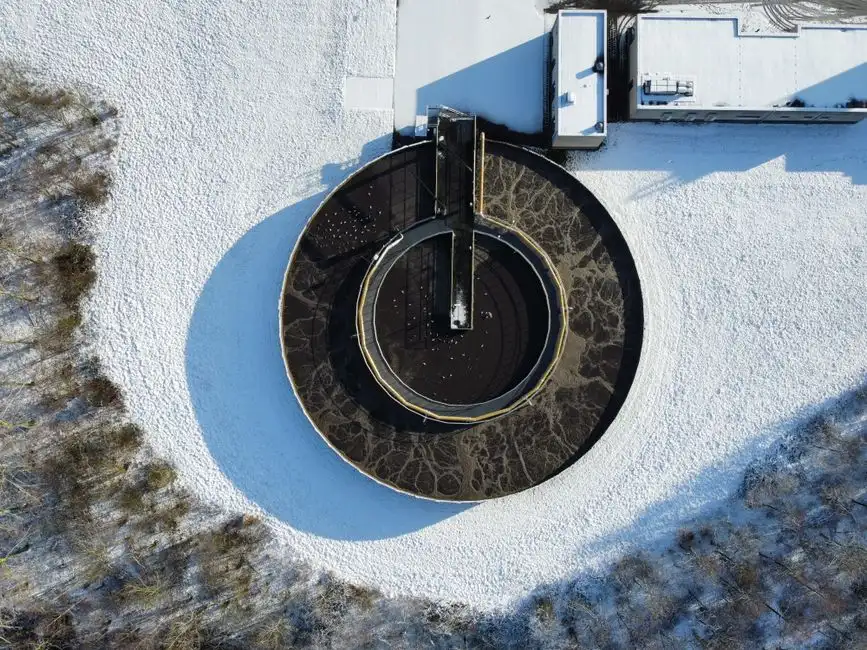
Three realistic trains suit a Costa Rican resort, each with a different footprint, energy, and operator profile.
MBR (submerged PVDF, 0.1–0.4 μm). A membrane bioreactor combines activated sludge with ultrafiltration, consistently producing ≤10 mg/L TSS and ≤50 mg/L COD at mixed liquor suspended solids (MLSS) of 8,000–12,000 mg/L. Compared to a conventional SBR at the same load, an MBR delivers roughly 60% smaller footprint because biomass concentration is 3–4× higher. Energy demand sits at 0.6–0.9 kWh/m³ for a packaged MBR with coarse-bubble scour, which is workable on a solar-plus-genset architecture typical of a Costa Rican resort. The core component is the MBR membrane bioreactor system, typically fitted with a PVDF flat sheet membrane module for tropical installations because flat-sheet geometry tolerates the 24–30°C mixed liquor better than hollow-fiber in long-term fouling tests (HydropureWater field data, 2025-2026).
SBR (sequencing batch reactor). A sequencing batch reactor runs fill, react, settle, decant, and idle phases in a single tank on 4–6 cycles per day, with each cycle typically 4–6 hours. CAPEX is lower than MBR (no membrane replacement line item) and the train is forgiving of shock loads, but the footprint is 50–80% larger and effluent TSS depends on a healthy settle phase that demands an attentive operator during peak tourist weeks when flows spike. SBR suits a property with land, steady grid power, and a trained in-house technician.
Constructed wetland (VF/HF hybrid). A subsurface vertical-flow and horizontal-flow hybrid wetland is the lowest-energy and lowest-CAPEX option, with documented tropical performance that can drop BOD from 250 mg/L to under 30 mg/L across 3–5 days of hydraulic residence time when sized at 5–8 m² per PE (person equivalent). Mosquito and odor control require standing-water elimination and even flow distribution, and a wetland alone rarely hits the fecal coliform and TSS thresholds for unrestricted irrigation reuse under MINAE Decreto 31513-S without downstream polishing. A wetland works as a polishing stage after an SBR or as a primary train only when the resort has the 2,000–6,000 m² of land and accepts lower reuse percentages.
Hybrid train (recommended for reuse). Most CST Elite properties aiming for 100% reuse — including the Osa Peninsula lodges referenced in commercial listings as treating 100% of wastewater for irrigation (twoweeksincostarica.com) — combine a biological stage (SBR or MBR) with UV or ClO2 disinfection, then a slow sand or multimedia filter, then an irrigation storage pond. A packaged version of the biological step is the underground package sewage treatment plant; disinfection is typically handled by a ClO2 disinfection generator sized for the design flow.
| Train | Footprint relative to MBR | Effluent BOD (mg/L) | Effluent TSS (mg/L) | Energy (kWh/m³) | Operator skill |
|---|---|---|---|---|---|
| MBR (PVDF, 0.1–0.4 μm) | 1.0× | ≤5 | ≤10 | 0.6–0.9 | Low–moderate |
| SBR (4–6 cycles/day) | 1.6–1.8× | 10–20 | 15–30 | 0.3–0.5 | Moderate–high |
| Constructed wetland (VF/HF) | 3.5–6.0× | 15–30 | 15–30 | 0.05–0.10 | Low |
| MBR + UV + slow sand + irrigation pond | 1.4–1.6× | ≤3 | ≤5 | 0.7–1.0 | Low–moderate |
Decision Matrix: Matching System to Resort Size, Site, and Reuse Goal
System selection for a Costa Rican resort is driven by five variables: room count, available land (m² per room), reuse target, energy supply, and in-house operator skill. The matrix below maps typical resort profiles to a recommended train; a cross-check against our MBR for hotel wastewater design guide is worthwhile for projects in the 40–80 room band.
| Resort profile | Recommended train | Design flow basis | Reuse target |
|---|---|---|---|
| 40–80 rooms, constrained footprint, irrigation reuse required, grid power available | MBR + UV + irrigation pond | 80 rooms × 2.0 guests × 200 L = 32 m³/day, peak 2.5× | ≥90% reuse for landscape irrigation |
| 80–200 rooms, available land ≥40 m²/room, steady power, trained operator | SBR + constructed-wetland polishing + UV | 150 rooms × 2.0 guests × 200 L = 60 m³/day | 70–90% reuse; remainder to infiltration or stream |
| 200–300+ rooms, low-density rainforest or coastal, sustainability as brand pillar, solar + genset | MBR + ClO2 + slow sand filter + drip irrigation, rainwater offset | 250 rooms × 2.0 guests × 200 L = 100 m³/day, peak 250 m³/day | 100% reuse, plus rainwater to offset potable |
| Off-grid, <40 rooms, deep rainforest, low CAPEX, willing to accept lower reuse % | Constructed wetland (VF/HF) + UV + irrigation pond | 30 rooms × 2.0 guests × 200 L = 12 m³/day | 50–70% reuse, balance to subsurface drip |
Three rules of thumb sharpen the selection. First, if available land is below 25 m²/room, MBR is the only realistic option — SBR and wetland footprints will not physically fit. Second, if the property markets itself as carbon-neutral or off-grid, the train must work at 0.6–0.9 kWh/m³, which excludes SBR-Plus-Polishing variants with deep-bed sand filters that draw 0.3 kWh/m³ on top of the SBR's own draw. Third, if the resort cannot guarantee an operator with at least 6 months of activated-sludge experience, MBR's automated backwash cycles are safer than an SBR's settle phase, which fails silently and shows up only when a downstream UV bank clogs. For projects in similar tropical-resort geographies, the Cebu resort wastewater guide gives a useful side-by-side on MBR vs. constructed-wetland selection in a comparable regulatory environment.
Costa Rica Compliance Stack: MINAE, IDAAN, and CST Engineering Inputs
Three regulatory and certification layers govern a resort's wastewater discharge and reuse in Costa Rica, and each one is satisfied with the same engineering data set.
MINAE Decreto 31513-S regulates the reuse of wastewater for irrigation and sets the typical thresholds an inspector will check: BOD ≤30 mg/L, TSS ≤30 mg/L, and fecal coliform ≤200 NMP/100 mL for restricted irrigation, with stricter limits for unrestricted landscape exposure (confirm current text against MINAE/Salud regulations at the time of permit filing). IDAAN — and, where applicable, the local ASADA — oversees municipal discharge and drinking-water supply; a resort outside the ASADA's sewered zone must treat and dispose of effluent on-site, and a resort inside the zone must demonstrate that on-site treatment matches or exceeds the ASADA's influent acceptance criteria before a discharge permit is granted.
CST and Bandera Azul audits convert the same numbers into a sustainability score. The CST grade sheet requests monthly flow (m³), monthly influent and effluent BOD/COD (mg/L), monthly reuse volume (m³), reuse percentage, and sludge management records. Bandera Azul adds visual and community-facing criteria. Both audits fail when the operator hands over only the marketing claim "we recycle 100% of our water" without the meter readings and lab analyses to back it — exactly the gap Nowakowski documented in the 2013 CU-Boulder study, where a "certified" hotel was in fact discharging black water to a stream and burning its recycling.
Engineering inputs the property must produce for any of the three: monthly influent/effluent BOD, COD, TSS, fecal coliform; daily flow meter total; reuse volume and destination (irrigation zone, hectare-age); sludge hauling manifests; calibration records for any in-line probes; and an alarm-log showing membrane-cleaning or SBR-cycle events. Without these, no certification program — CST, Bandera Azul, or a third-party LEED-equivalent — can defend the property against the next field study with a dissolved-oxygen probe and a sample jar. A useful counterpoint in a different but adjacent regulatory regime is the Lisbon hotel wastewater system guide, which documents the EU Urban Wastewater Treatment Directive's parallel audit-data requirements.
Cost Bands and 10-Year OPEX for a Costa Rica Resort WWTP
CAPEX for a packaged tropical-resort WWTP scales with design capacity, not room count alone, because the same room count at different occupancy produces different design flows. Typical 2026 installed-cost bands in USD:
| Train | CAPEX (USD per m³/day design capacity) | Energy (kWh/m³) | Membrane replacement interval | Sludge hauling (m³/yr per 100 rooms at 70% occupancy) |
|---|---|---|---|---|
| Packaged MBR (PVDF, skid-mounted) | 800–1,400 | 0.6–0.9 | 7–10 years | 30–45 |
| SBR (concrete, 2-tank) | 500–900 | 0.3–0.5 | N/A | 40–60 |
| Constructed-wetland-dominated train | 250–500 | 0.05–0.10 | N/A | 10–20 |
| MBR + ClO2 + slow sand + irrigation pond (hybrid) | 1,200–1,800 | 0.7–1.0 | 7–10 years | 30–45 |
For a 150-room resort at 70% average occupancy generating 42 m³/day of design flow, CAPEX lands at USD 33,600–58,800 for a packaged MBR, USD 21,000–37,800 for an SBR, and USD 10,500–21,000 for a wetland-dominated train. The hybrid reuse train at the top of the table runs USD 50,400–75,600 but is the only configuration that reliably hits 100% reuse — the benchmark the Osa Peninsula properties claim (twoweeksincostarica.com) — and therefore offsets potable-water CAPEX in the ROI narrative by eliminating 12,000–15,000 m³/year of municipal draw.
OPEX is dominated by energy, membrane replacement, sludge hauling, chemicals (hypochlorite, CIP agents, polymer), and operator hours. The 15–25% OPEX advantage MBR holds over a wetland-only train at high occupancy comes from a simple math: at 90% occupancy the MBR's higher energy intensity (0.75 kWh/m³ × 42 m³/day × 365 days = 11,500 kWh/yr ≈ USD 2,300 at USD 0.20/kWh) is more than offset by avoided potable-water purchase, avoided sludge volume, and the 100% reuse rate that satisfies MINAE Decreto 31513-S without a parallel polishing train. At 50% occupancy, the wetland wins on OPEX but loses on footprint and reuse percentage. Membranes in a well-operated MBR last 7–10 years (HydropureWater field data, 2025-2026), a line item that should be reserved in CAPEX from year one rather than treated as a surprise.
Frequently Asked Questions
What is the typical per-guest-night wastewater flow at a Costa Rican resort?
150–250 L per guest-night of combined black and gray water, with a design value of 200 L and morning peaks of 2.5–3× average flow between 9 and 11 a.m. (HydropureWater tropical-resort field data, 2025-2026).
Which treatment train is best for a 40–80 room Costa Rican resort with limited land?
A packaged MBR with PVDF flat-sheet membranes delivering ≤10 mg/L TSS and ≤50 mg/L COD, followed by UV or ClO2 disinfection and an irrigation storage pond. The train fits roughly 60% of the footprint an SBR would need at the same load.
What are the MINAE Decreto 31513-S reuse limits for irrigation at a hotel?
Typical thresholds are BOD ≤30 mg/L, TSS ≤30 mg/L, and fecal coliform ≤200 NMP/100 mL for restricted irrigation, with stricter criteria for unrestricted landscape exposure — confirm against the current MINAE/Salud regulatory text at permit filing.
How much does a packaged MBR WWTP cost for a Costa Rican resort?
USD 800–1,400 per m³/day of design capacity, installed. A 150-room resort at 70% occupancy (≈42 m³/day) lands at USD 33,600–58,800 in CAPEX, plus USD 2,000–3,500/year in energy and USD 5,000–9,000 reserved per membrane replacement cycle at year 7–10.
Does CST certification require audited wastewater data?
CST grades a property on roughly 130 sustainability indicators including water and wastewater management; auditors expect monthly flow, BOD/COD, and reuse records, not just a self-declared recycling rate. The 2013 CU-Boulder case study showed what happens when a "certified" property cannot produce those records.