Why Cebu Hotels Are Under the EMB Microscope in 2026
The Environmental Management Bureau (EMB) Region 7 has formally flagged multiple Cebu waterways as "at risk" under its river monitoring program, with the Sapangdaku River in Toledo City, Cebu documented for pH, dissolved oxygen, BOD, and COD excursions against DAO 2016-08 Water Quality Guidelines (AIMS Environmental Science, 2020-09). That classification cascades downstream: any hospitality project discharging inland or to a sewer that ultimately drains a flagged watershed now faces heightened scrutiny on Discharge Permit (DP) review and on-site compliance verification. DENR DAO 2021-19, the consolidated effluent standard of record in 2026, tightens FOG and ammonia caps relative to the older DAO 1990-35 and DAO 2016-08 frameworks it supersedes, with a binding ceiling of BOD ≤100 mg/L, TSS ≤100 mg/L, FOG ≤50 mg/L, and fecal coliform ≤200 MPN/100 mL.
Lapu-Lapu City, Mandaue, and Cebu City LGUs now require a Discharge Permit for any hotel above 30 rooms discharging to sewer or surface water; the DP application is filed with EMB Region 7 and triggers a Self-Monitoring Report (SMR) cadence, typically quarterly, that the property's chief engineer must sign. A 2026 DOT accreditation audit for any 3-star and above property cross-references DP validity — a hotel with an expired or pending DP cannot pass the accommodation standards review. For developers scoping a 2026 build, "just a septic tank" is no longer a defensible choice on Mactan-Cebu Island; a packaged biological system with documented effluent analytics is the new baseline.
Sizing the Cebu Resort: Hydraulic and Pollutant Loads
Design flow for a Philippine mid-scale resort starts at 150–250 L per guest per day, then adds food-and-beverage (F&B) loadings of 40–60 L per cover, laundry at 60–80 L per 100 kg of linen, and pool backwash. For a Tubod-style four-pool property with daily spring-fed turnover (per the Tubod Flowing Water Resort profile, Minglanilla, Cebu), pool backwash is typically calculated as 5–10% of total pool volume per day — so a 400 m³ combined pool inventory contributes 20–40 m³/day of backwash that must be routed through the treatment train, not bypassed to landscaping. Raw sewage characteristics for design purposes sit at BOD 250–400 mg/L, TSS 250–350 mg/L, and FOG 80–150 mg/L once kitchen flows are blended into the guest-room stream; the FOG number is what drives the 50 mg/L DAO 2021-19 cap and dictates whether a DAF stage is mandatory upstream of the biological reactor.
Resort occupancies are not flat. Sinulog week, Holy Week, and weekend peaks routinely push a 200-room property from 60% to 100% occupancy, so a peak-to-average factor of 2.0–2.5 should be applied to the average daily flow before sizing equalization, biological reactor volume, and disinfection contact time. The table below maps room count to design flow for a 2026 Cebu resort envelope.
| Room count | Avg. daily flow (m³/day) | Peak flow at 2.0–2.5× (m³/day) | Recommended reactor volume (m³) | Package plant class |
|---|---|---|---|---|
| 20–30 | 15–25 | 30–60 | 8–15 | WSZ A/O buried package |
| 50–100 | 40–80 | 80–200 | 25–50 | WSZ A/O or small MBR |
| 100–200 | 80–180 | 160–450 | 60–120 | MBR membrane bioreactor |
| 200–500 | 180–500 | 360–1,250 | 120–350 | MBR with flow-equalized feed |
Process Train: Pretreatment, Biological, Disinfection
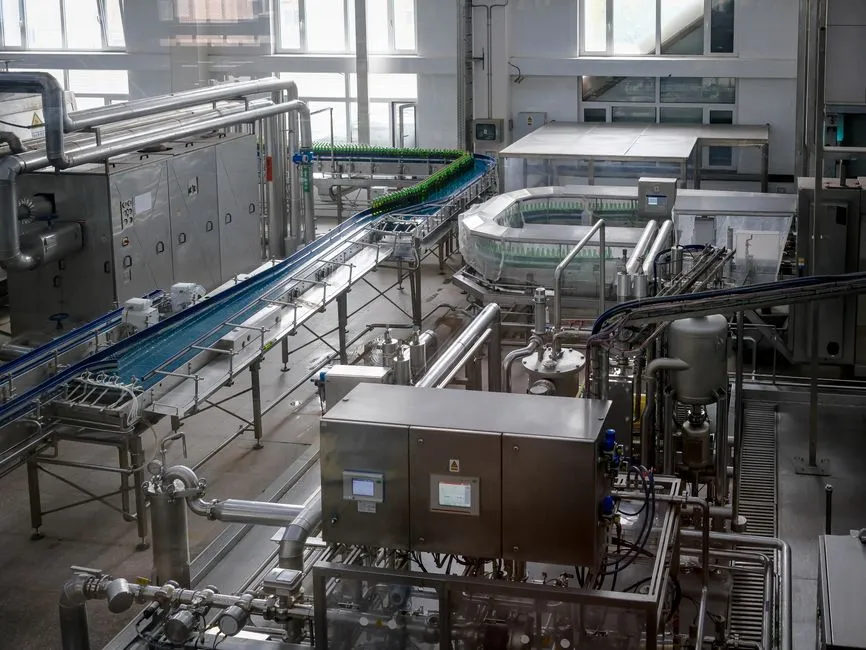
A defensible 2026 process train for a Cebu hotel runs headworks → FOG removal → biological → disinfection → sludge dewatering, with each stage sized against the 30–500 m³/day envelope that covers 95% of Mactan-Cebu's resort typology. Stage 1 headworks uses a rotary mechanical bar screen with 3–6 mm aperture and a 10–30 m³/h throughput band, which protects downstream membranes and clarifiers from ragging and stringy solids typical of laundry and F&B effluent. Stage 2 is a DAF pre-treatment unit sized for 30–60 min hydraulic retention time (HRT); the air-flotation mechanism delivers 60–90% FOG removal in a single pass, which is what gets raw 80–150 mg/L kitchen FOG down to the ≤50 mg/L cap before it ever hits the biological stage.
Stage 3 is the biological reactor, and this is where the MBR-versus-WSZ decision lives. An MBR membrane bioreactor system in the 10–2,000 m³/day range operates at MLSS 8,000–12,000 mg/L and F/M 0.05–0.15 kg BOD/kg MLSS·day, producing effluent BOD <5 mg/L and TSS <1 mg/L that is reuse-ready. A WSZ underground A/O package plant in the 1–80 m³/h range operates at MLSS 3,000–5,000 mg/L with a longer HRT, producing BOD ≤20 mg/L and TSS ≤20 mg/L — adequate for discharge but marginal for direct reuse. Stage 4 is disinfection with an on-site chlorine dioxide generator dosed at 5–10 mg/L residual for 30 min contact; ClO₂ is preferred over chlorine gas in a resort setting because it is generated on demand from sodium chlorite and HCl precursors, eliminating cylinder storage and the safety perimeter that a guest-occupied property cannot accommodate. Stage 5 sludge handling routes the 1–2% waste activated sludge stream to a plate-and-frame filter press targeting a 20–25% dry solids cake for off-site disposal. For deeper context on biological selection for hospitality, the IFAS for hotel wastewater 2026 guide walks through the HRT and SRT trade-offs that justify MBR selection at higher loads.
MBR vs Buried Package Plant vs Constructed Wetland
For a 20–500-room Cebu property in 2026, three process architectures are credible; the right pick depends on room count, site footprint, and whether the developer wants reuse-quality effluent or just compliant discharge. MBR wins on the metrics that matter for a 100–500-room Mactan beachfront resort — footprint is roughly 60% smaller than a conventional activated-sludge plant of equal throughput (per MBR product specification), and the membrane-stage effluent is suitable for toilet flushing and landscape irrigation, which directly offsets the higher CAPEX. WSZ underground A/O package plants win on the metrics that matter for 20–100-room heritage hotels in Cebu City and for any property where below-grade landscaping is non-negotiable — zero daily operator interface, the lowest installed cost in the class, and the entire reactor sits beneath a lawn or driveway.
Constructed wetlands only pencil out for <50 m³/day eco-resorts on large rural lots — Catmon, Sogod, and the western Cebu coast — where land is cheap, occupancy is low, and the owner accepts a polishing-tier effluent in exchange for zero energy and visible "green infrastructure" marketing. A 200-room Mactan beachfront property cannot dedicate 2,000–3,000 m² of prime beachfront to a free-water-surface wetland and remain financially viable. The decision rule is straightforward: room count >100 with a tight site → MBR; 20–100 rooms with a buried preference → WSZ; <20 rooms with a large lot → septic tank plus constructed-wetland polishing. The Casablanca hotel MBR guide and the Kuala Lumpur hotel wastewater guide provide analogous MBR-versus-package decision logic in other regional hospitality markets.
| Parameter | MBR membrane bioreactor | WSZ underground A/O package | Septic + constructed wetland |
|---|---|---|---|
| Effluent BOD (mg/L) | <5 | ≤20 | 20–40 |
| Effluent TSS (mg/L) | <1 | ≤20 | 20–30 |
| Footprint (per 100 m³/day) | ~25–35 m² | ~40–60 m² (buried) | ~400–600 m² |
| CAPEX per 100 m³/day | PHP 2.8–4.5 M | PHP 1.2–2.5 M | PHP 0.6–1.0 M |
| OPEX per m³ | PHP 40–60 | PHP 35–50 | PHP 8–15 |
| Automation / operator | PLC + 0.5–1 FTE | PLC, low-touch | Minimal, periodic desludging |
| Expandability | Modular, add modules | Limited to next standard size | Add wetland cells |
| Best fit | 100–500 rooms, Mactan beachfront | 20–100 rooms, Cebu City heritage | <20 rooms, large rural lot |
2026 Cost Bands and Payback for Cebu Resorts
2026 turnkey CAPEX in Cebu sits at PHP 1.2–2.5 M per 100 m³/day for a WSZ package (scope: FRP tankage, blowers, control panel, delivery, installation, commissioning) and PHP 2.8–4.5 M per 100 m³/day for an MBR turnkey (scope: equalization, MBR skid with membrane modules, CIP system, ClO₂ skid, control panel, install). OPEX runs PHP 35–60 per m³ treated, comprising blower and pump power at roughly 0.8–1.2 kWh/m³, ClO₂ precursor chemicals, membrane replacement amortized over a 5–7 year life, and 0.5–1 FTE operator.
Water reuse is where MBR pays back. A 200-room Mactan resort using MBR effluent for toilet flushing (at ~50 L per guest per day) and landscape irrigation (at ~5 L/m²·day across 2,000 m² of grounds) can offset 25–40% of municipal water cost — calculate by multiplying reused volume by the local Cebu City Water District commercial rate and subtracting the marginal ClO₂ and pumping cost. The table below summarizes 2026 Cebu CAPEX and OPEX bands a developer can take to a lender.
| System class | Turnkey CAPEX (per 100 m³/day) | OPEX (per m³ treated) | Membrane/equipment replacement cadence | Payback lever |
|---|---|---|---|---|
| WSZ A/O buried package | PHP 1.2–2.5 M | PHP 35–50 | Blowers 5–7 yr, pumps 3–5 yr | Lowest installed cost; no reuse credit |
| MBR membrane bioreactor | PHP 2.8–4.5 M | PHP 40–60 | MBR membranes 5–7 yr, CIP monthly | 25–40% water-cost offset from reuse |
| Septic + constructed wetland | PHP 0.6–1.0 M | PHP 8–15 | Liner 10+ yr, periodic desludging | Land-intensive; minimal operating cost |
Frequently Asked Questions
What wastewater treatment system does a Cebu hotel or resort need in 2026?
A 20–500-room Cebu property in 2026 typically requires a 30–500 m³/day packaged biological plant — an MBR membrane bioreactor for 100–500 rooms or a buried WSZ A/O unit for 20–100 rooms — preceded by a rotary bar screen and DAF, followed by chlorine dioxide disinfection, to meet DENR DAO 2021-19 limits of BOD ≤100 mg/L, TSS ≤100 mg/L, FOG ≤50 mg/L, and fecal coliform ≤200 MPN/100 mL.
How much does a packaged wastewater treatment plant cost for a Cebu resort?
2026 turnkey CAPEX in Cebu runs PHP 1.2–2.5 M per 100 m³/day for a WSZ package and PHP 2.8–4.5 M per 100 m³/day for an MBR system including membrane modules and CIP; OPEX is PHP 35–60 per m³ treated across both classes (HydropureWater field data, 2026).
Which is better for a Mactan beachfront resort, MBR or a buried package plant?
MBR is the better fit for a 100–500-room Mactan beachfront resort because it delivers reuse-quality effluent for toilet flushing and irrigation and occupies ~60% less footprint than a conventional plant; buried WSZ packages suit 20–100-room heritage properties in Cebu City where below-grade landscaping matters more than reuse.
What DENR permits does a Cebu hotel need before discharging wastewater?
Yes — any hotel above 30 rooms discharging to sewer or surface water in Lapu-Lapu, Mandaue, or Cebu City must secure a Discharge Permit from EMB Region 7 and file a quarterly Self-Monitoring Report; the DP is a prerequisite for 2026 DOT accreditation at the 3-star level and above, and an expired DP will fail the accommodation standards audit.