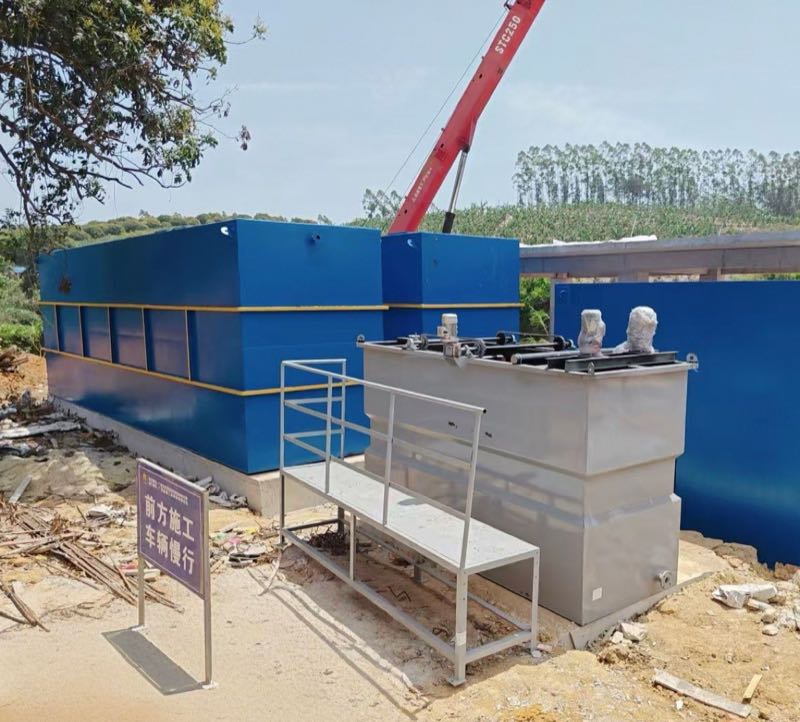
Why MBR Is Now the Default for Hotel Wastewater Design in 2026
Submerged membrane bioreactor (MBR) systems combine activated-sludge biology with submerged ultrafiltration membranes in a single tank, eliminating the secondary clarifier, sand filter, and most tertiary disinfection hardware that conventional activated-sludge (CAS) hotels still rely on. The footprint win is decisive on tight urban or resort sites: an integrated MBR delivers sub-1 µm filtration in roughly 60% of the footprint of a CAS train at the same daily flow, covering 10–2,000 m³/day in a single skid package such as the HydropureWater integrated MBR membrane bioreactor system. Three 2026 drivers are pushing hospitality developers toward this default: rising potable-water tariffs in water-stressed markets (UAE, Saudi Arabia, Singapore), tightening reuse mandates for new hotel builds, and stricter local discharge limits that make CAS effluent non-compliant without expensive tertiary polishing. Hospitality flows are also uniquely intermittent — breakfast peaks, banquet events, and weekend turnover produce 2–3× diurnal swings that punish clarifiers but are absorbed by MBR's high mixed-liquor tolerance and stable permeate quality.
Hotel Wastewater Influent Characteristics and Guest-Night Loading
Hotel flow and load must be calculated from guest-nights, not from total population equivalent, because occupancy and per-guest water use are the dominant variables. Standard 2026 design bands: 150–250 L per guest-night average, 350–450 L per guest-night peak, with luxury resorts trending higher due to spa, laundry, and pool backwash. Hotel sewage is medium-strength: COD 400–800 mg/L, BOD 200–400 mg/L, TSS 200–350 mg/L, oil and grease 40–80 mg/L, NH₃-N 20–50 mg/L, plus surfactant load from on-site laundry and cleaning chemicals (HydropureWater field data, 2026). Occupancy assumptions: 1.5–2.0 guests per occupied room, 0.6–0.85 seasonal occupancy for resort hotels, 0.85–1.0 for business hotels. Worked example: a 200-room business hotel at 85% occupancy × 1.7 guests × 200 L = 57.8 m³/day average, with a peak factor of ~2.0 yielding 115 m³/day design flow. FOG and surfactant spikes from kitchens and housekeeping must be tamed upstream by a dissolved air flotation (DAF) pre-treatment unit (4–300 m³/h) before the bioreactor, or the membrane tank will foul within weeks rather than years. For smaller properties, packaged plants like the WSZ series (1–80 m³/h, anoxic + aerobic + sedimentation + disinfection) are occasionally specified, but they cannot match MBR permeate quality for reuse.
| Parameter | Design value (2026) | Notes |
|---|---|---|
| Flow per guest-night (avg) | 150–250 L | Resort > business hotel |
| Peak flow per guest-night | 350–450 L | Apply 2.0 peaking factor to average |
| COD | 400–800 mg/L | Kitchen + laundry contributors |
| BOD | 200–400 mg/L | BOD/COD ≈ 0.5 |
| TSS | 200–350 mg/L | High vs. municipal due to food waste |
| Oil & grease | 40–80 mg/L | Must be reduced to <30 mg/L pre-MBR |
| NH₃-N | 20–50 mg/L | Drives nitrification SRT |
| Guests per occupied room | 1.5–2.0 | Higher at resort properties |
| Seasonal occupancy | 0.6–1.0 | 0.6–0.85 resort, 0.85–1.0 business |
MBR Process Design Parameters for Hotel Applications
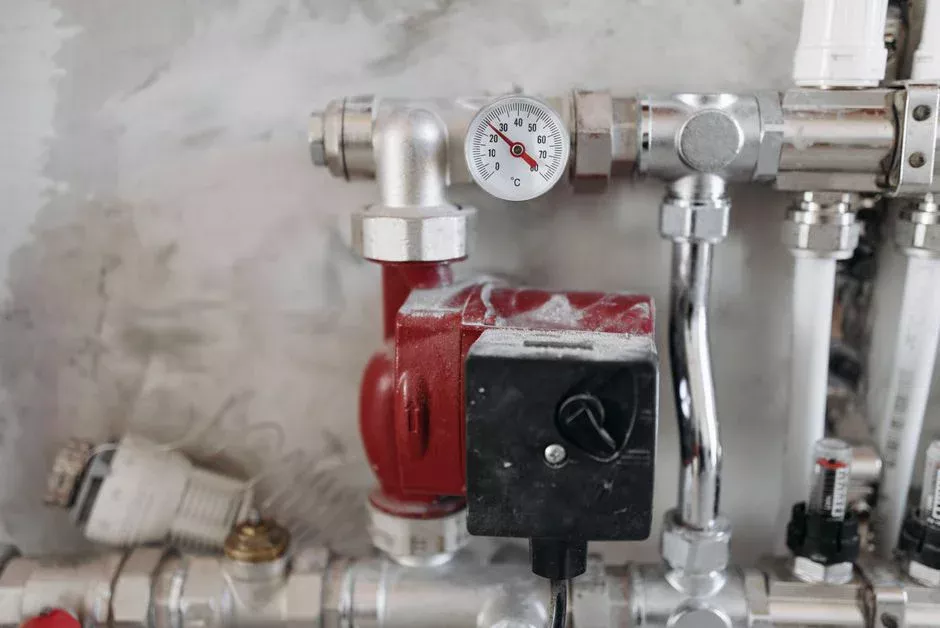
For hotel flows of 50–500 m³/day, a submerged flat-sheet MBR is sized with the following envelope: aeration-tank HRT 6–10 h, SRT 20–40 days, and MLSS 8,000–12,000 mg/L — well above the 3,000–5,000 mg/L typical of CAS, which is precisely what makes the downstream membrane flux stable. Design membrane flux for PVDF flat-sheet at 0.1 µm pore size is 15–25 LMH, with a 30 LMH short-term peak allowance for banquet or event surge days. Membrane area calculation: at 120 m³/day peak flow and 20 LMH operating flux over 24 hours, required area is 250 m² — two DF-series PVDF flat-sheet MBR membrane modules at 125 m² each, or one larger DF stack, deliver this with redundancy. Aeration demand splits into 0.3–0.5 m³ air per m³ permeate for biological oxygen transfer plus 0.2–0.3 m³/m³ for membrane scouring — this combined figure drives blower kW sizing and is roughly 10–20× lower than cross-flow hollow-fiber designs. Observed sludge yield is 0.3–0.5 kg MLVSS per kg COD removed; the wasted sludge is well-stabilized and dewaters directly on a HydropureWater plate-and-frame filter press to 18–22% DS without additional thickening. Hotel sewage runs 18–28 °C year-round in most regions, so biological kinetics are favorable and no heated reactor is needed — a CAPEX line item often overlooked by engineers copying municipal MBR designs from colder climates.
| Parameter | Design range | Hotel-specific note |
|---|---|---|
| HRT (aeration tank) | 6–10 h | Longer at lower occupancy peaks |
| SRT | 20–40 days | High SRT handles FOG & surfactant variability |
| MLSS | 8,000–12,000 mg/L | 2–3× CAS, requires high-efficiency air diffusers |
| Design flux (flat-sheet) | 15–25 LMH | 0.1 µm PVDF |
| Peak flux allowance | 30 LMH (<2 h) | For banquet/event surge |
| Air demand (biology) | 0.3–0.5 m³/m³ permeate | Drives blower kW |
| Air demand (membrane scour) | 0.2–0.3 m³/m³ permeate | Continuous coarse-bubble |
| Sludge yield | 0.3–0.5 kg MLVSS/kg COD | Direct dewatering to 18–22% DS |
| Reactor temperature | 18–28 °C | No heating required |
Flat-Sheet vs Hollow-Fiber MBR: Which Fits a Hotel Site?
Geometry choice matters more in hospitality than in municipal work because hotel sewage carries hair, lint, fibrous cleaning wipes, and food particles that foul hollow-fiber capillaries aggressively. The submerged flat-sheet DF module (0.1 µm PVDF, 80–225 m² per stack, 32–135 m³/day per unit) uses an integrated aeration-box scour that keeps the membrane surface clear and lets operators replace individual elements in minutes. Hollow-fiber delivers higher packing density per m² of plan area but is more sensitive to hair/fiber fouling, requires more frequent recovery cleans, and is harder to retrofit into a hotel plant room with low ceiling clearance. Cleaning on flat-sheet is in-place relax + backwash with low CIP chemical use; hollow-fiber typically demands monthly sodium hypochlorite and citric-acid recovery cleans. Decision rule for 2026 specs: specify flat-sheet submerged MBR for flows of 10–200 m³/day (the majority of hotels from boutique to mid-scale); consider hollow-fiber for >500 m³/day resort clusters where footprint per m² of membrane area outweighs fouling tolerance. The full flat-sheet MBR membrane engineering selection guide is worth reading before locking the spec.
| Criterion | Flat-sheet (DF series) | Hollow-fiber |
|---|---|---|
| Pore size | 0.1 µm PVDF | 0.03–0.1 µm PVDF/PES |
| Module area | 80–225 m² | 25–50 m² per rack |
| Energy intensity | 10–20× lower than cross-flow | Higher pumping loss |
| Hair/fiber tolerance | High (rigid sheet) | Low (capillary fouling) |
| Cleaning frequency | Relax + backwash weekly | Monthly CIP typical |
| Element replacement | Individual sheet, minutes | Module swap, hours |
| Best fit | 10–200 m³/day hotels | >500 m³/day resort clusters |
Effluent Targets, Reuse Loops, and Disinfection
MBR permeate from a properly designed flat-sheet system delivers COD ≤30 mg/L, BOD ≤5 mg/L, TSS ≤5 mg/L, turbidity ≤1 NTU, and NH₃-N ≤5 mg/L after nitrification — this is reuse-quality water straight out of the membrane tank, not just discharge-quality. Disinfection is typically chlorine dioxide at 1.5–2.5 mg/L with a 30-minute CT, applied via a chlorine dioxide generator (50–20,000 g/h capacity, compliant with EPA, EU 98/83/EC, and WHO guidelines for potable-equivalent reuse). Reuse allocation in a typical resort: toilet flushing 40–50% of treated flow, landscape irrigation 20–30%, cooling-tower makeup 15–25% — yielding a 60–70% reuse rate and a substantial reduction in municipal water purchase. Sites avoiding chlorine residual can specify UV at 40 mJ/cm² dose, which is sufficient for the low-TSS permeate MBR already produces. Compliance with the 2026 hospitality discharge and reuse matrix is achievable: China GB 18918-2002 Grade 1A, EU UWWTD 91/271/EEC, US EPA Title 22 (CCR Title 22 §60301 et seq.), Singapore PUB "NEWater" reuse criteria, and UAE Federal Law No. 24 of 1999 with local emirate addenda all map to MBR permeate plus ClO₂ or UV polishing.
CAPEX and OPEX Benchmarks for Hotel MBR Projects (2026)
2026 turnkey CAPEX (USD, including civil works, tanks, MBR modules, blowers, controls, and ClO₂ skid) bands by hotel size: boutique ≤80 rooms at $80K–$220K; mid-scale 80–250 rooms at $220K–$650K; resort 250–500 rooms at $650K–$1.8M; mixed-use >500 rooms at $1.8M–$4.5M. The flat benchmark for a developer's pro forma is $35–$75 per guest-night — a number that travels cleanly through board approval. OPEX runs $0.18–$0.32 per m³ treated, broken down as energy 45%, membrane replacement amortized over 8–10 years 25%, chemicals 12%, and labor 18%. At $2–$4 per m³ avoided potable purchase, 60% reuse on 100 m³/day saves $44K–$88K annually — a 4–7 year payback on the reuse-capable CAPEX premium. Membrane replacement is the single largest OPEX variable: PVDF flat-sheet elements last 8–10 years with proper maintenance, which is why geometry choice and pre-treatment (DAF) matter so much. For international project comparison, see the MBR cost and ROI benchmarks for hospitality projects in 2026 and the Saudi Arabia hotel sewage treatment plant price and compliance 2026 benchmarks.
| Hotel size | Rooms | CAPEX (USD, turnkey) | Per guest-night |
|---|---|---|---|
| Boutique | ≤80 | $80K–$220K | $35–$75 |
| Mid-scale | 80–250 | $220K–$650K | $35–$70 |
| Resort | 250–500 | $650K–$1.8M | $40–$75 |
| Mixed-use | >500 | $1.8M–$4.5M | $45–$75 |
Frequently Asked Questions

What MBR size handles a 100-room hotel?
A 100-room business hotel at 85% occupancy × 1.7 guests × 200 L = 29 m³/day average, ~58 m³/day peak — one DF-series flat-sheet module of 80 m² operating at 20 LMH covers this with redundancy (see DF-series PVDF flat-sheet MBR membrane module).
What reuse percentage is achievable with MBR in a hotel?
Resorts routinely hit 60–70% reuse across toilet flush, irrigation, and cooling-tower makeup; business hotels with limited irrigation area typically achieve 40–55%. MBR permeate quality (TSS ≤5 mg/L, turbidity ≤1 NTU) is the enabler.
How often does an MBR membrane need cleaning in a hotel?
Flat-sheet submerged MBR runs 6–12 months between recovery cleans with weekly in-place relax + backwash. Hollow-fiber typically needs monthly CIP, and pre-treatment with a dissolved air flotation (DAF) pre-treatment unit keeps intervals at the long end.
What is the membrane life expectancy in hotel service?
PVDF flat-sheet elements last 8–10 years with proper maintenance, recovery cleans, and FOG control upstream. Membrane replacement amortized over that horizon is the largest single OPEX line.
Does an MBR replace a septic tank?
Yes — a packaged MBR is a complete biological + membrane treatment train that replaces septic tank, clarifier, sand filter, and tertiary disinfection in one unit, and produces reuse-quality effluent that a septic tank cannot. For chronic operational issues such as foaming or bulking sludge that may surface during commissioning, see wastewater treatment troubleshooting for foaming and bulking sludge.