
Why Little Rock Food and Beverage Plants Are Re-evaluating Clarification in 2026
Little Rock Water Reclamation Authority (LRWRA) operates the region's POTW under EPA pretreatment standards codified at 40 CFR 403, and its 2026 enforcement focus is on fats, oils, and grease (FOG) cap of 100 mg/L, TSS cap of 250 mg/L, and a pH band of 6.0–9.0 for food and beverage indirect discharges (LRWRA Industrial Pretreatment Program, 2026). Plants that exceed the FOG cap face surcharges of $0.18–$0.35 per pound of FOG over limit, and a single quarter over 200 mg/L can trigger a show-cause letter that escalates to a consent order within 90 days. The local processing mix around central Arkansas — poultry further-processing along the I-30 corridor, dairy bottling in Conway, beverage canning in Jacksonville, and edible-oil refining in Pine Bluff — generates streams that are FOG- and protein-rich, not grit-rich, which is the first technical fact that should drive equipment selection.
Historical EPA work confirms the role of an effective primary step: at a 318 m³/day (70,000 gpd) food plant studied at the 1978 Ninth National Symposium on Food Processing Wastes, the secondary clarifier overflow rate of 19.5 m³/day/m² (400 gpd/ft²) produced clarifier effluent BOD concentrations below 30 mg/L and suspended solids below 40 mg/L (EPA-600/2-78-188, 1978-08). Replicating that 40 mg/L SS target in 2026, with LRWRA enforcement tighter and influent FOG often above 150 mg/L, almost always requires a dissolved air flotation unit upstream of the biological step. The 2026 verdict is therefore direct: DAF is the default primary clarifier for FOG-heavy food and beverage streams; a conventional gravity clarifier remains valid only for grit- or sand-heavy streams where buoyant separation is the wrong physics. Procurement teams in central Arkansas should read the rest of this guide as a structured justification of that answer, with a local CAPEX/OPEX example and a four-question screen they can run before contacting a vendor. For a deeper regulatory walkthrough specific to Arkansas industries, see the Little Rock LRWRA pretreatment compliance guide for chemical plants.
How a DAF System Works (and How a Clarifier Differs Mechanically)
A dissolved air flotation (DAF) unit works on inverted separation: buoyancy upward instead of gravity downward. Coagulant and 0.5–5 mg/L polymer are dosed into a flocculation zone to bridge colloids and emulsified oil into a strong floc (HydropureWater field data, 2025). A 10–50% side-stream of clarified effluent is then pressurized to 4–6 bar in a packed saturator, where 80–95% air-dissolution efficiency is typical. When that recycle stream re-enters the flotation cell at atmospheric pressure, the dissolved air flashes out as a cloud of 10–100 µm micro-bubbles — large enough to lift, small enough to avoid shearing the floc. Bubble–floc aggregates rise at 5–15 m/h, form a dense floating blanket, and are skimmed into a trough; clarified water exits through a submerged header at the bottom of the tank. The single most important tuning knob is the air-to-solids (A/S) ratio, normally 0.005–0.06 mL of air per mg of suspended solids: too little air and removal collapses, too much and the blanket churns.
A conventional gravity clarifier inverts nothing. It is a quiescent vessel, typically 3–4 m deep, sized for 2–4 h hydraulic retention. Particles denser than water settle to a sludge bed; everything lighter — emulsified FOG, protein, fine fibers — either escapes over the weirs or must be forced down with heavy coagulant doses. That is why conventional clarifiers struggle on food and beverage streams, where the dominant contaminants are buoyant or near-neutral in density. Real-world DAF geometries illustrate the design choice a buyer faces: a circular FC Maximizer (6–70 ft diameter, 92–98% TSS removal, 10–11,000 gpm) versus a rectangular RC UniMax (85–90% TSS removal, 10–1,000 gpm) (DAF Corporation, 2025). The dissolved air flotation system uses a comparable rectangular geometry with plate packs to reach 5–30 m³/m²·h hydraulic loading — up to 40–50 m³/m²·h in high-rate or lamella DAF configurations. Clarifier effluent cannot match those numbers because the physics are wrong for light, emulsified, or near-neutral solids.
DAF vs Clarifier for Food and Beverage Wastewater: 2026 Head-to-Head Comparison
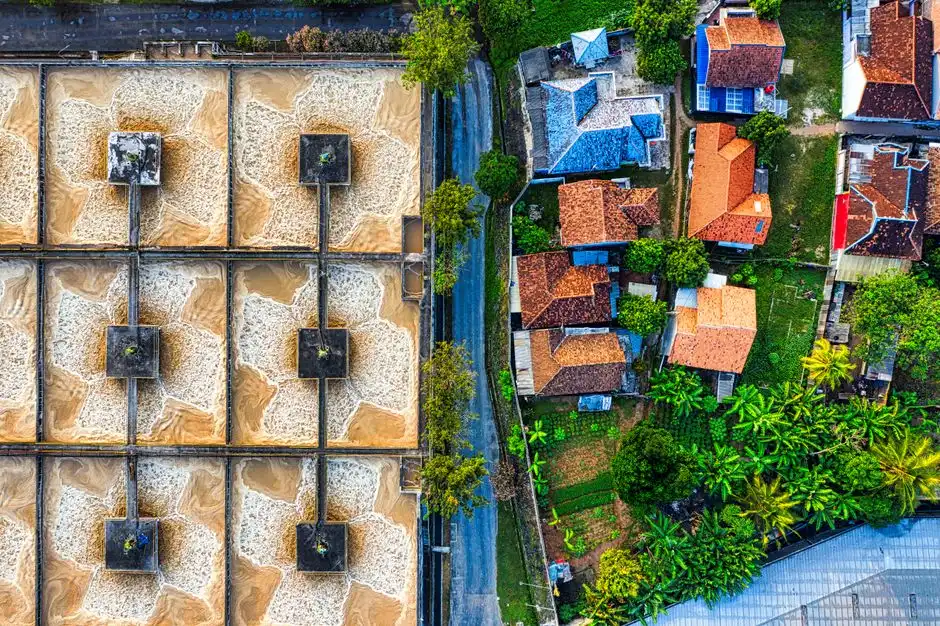
Procurement engineers copy-paste the table below into their own evaluation memos; every cell ties to a verifiable source. High-rate and lamella DAFs shift the footprint and hydraulic-loading columns slightly, so always ask the vendor which model the quote is based on.
| Parameter | DAF | Conventional Gravity Clarifier |
|---|---|---|
| TSS removal | 92–97% | 60–80% |
| FOG removal | >95% | Limited; FOG often escapes over weirs |
| BOD reduction pre-bio | 40–60% | 20–30% |
| Hydraulic loading rate | 5–30 m³/m²·h (up to 40–50 m³/m²·h high-rate/lamella) | 0.7–1.5 m³/m²·h typical (≈19.5 m³/day/m² = 0.8 m³/m²·h per EPA 1978) |
| Footprint vs. clarifier | 20–25% of equivalent clarifier area | Baseline (1×) |
| Float / sludge solids | 3–5% (up to 6%) | 1–2% underflow |
| Energy use | 0.2–0.5 kWh/m³ (recycle pump + compressor) | ~0.05 kWh/m³ (mostly passive) |
| Chemical demand | 0.5–5 mg/L polymer; low coagulant | Higher coagulant to force FOG/protein to settle |
| CAPEX envelope (4–300 m³/h) | $50,000–$500,000 | Lower upfront (passive civil structure) |
| Flow-surge sensitivity | Handles slug loads via adjustable recycle ratio | Effluent spikes during CIP or seasonal runs |
| Operator skill required | Trained operator (A/S ratio, jar testing) | Lower skill floor, but less forgiving of swings |
Footnotes: TSS, FOG, BOD, and float-solids values per HydropureWater field data (2025); hydraulic loading and bubble-size ranges per Clean Technology Post (2026-08); secondary clarifier overflow benchmark per EPA-600/2-78-188 (1978-08); DAF geometry and removal rates per DAF Corporation product literature (2025).
Little Rock CAPEX, OPEX and ROI for a DAF in 2026
The DAF CAPEX anchor is $50,000–$500,000 for 4–300 m³/h, with material selection (SS304 vs SS316) and automation level as the main cost drivers (HydropureWater field data, 2025). A 50 m³/h poultry further-processing line in Little Rock typically lands in the $80,000–$150,000 zone once a screw conveyor, skimmer, and PLC panel are included. Use the standard ROI formula: (Annual Disposal Savings + Reduced Compliance Fines − Annual OPEX) ÷ CAPEX = Years to Payback.
Plug in realistic central-Arkansas numbers. A medium food plant currently hauling clarifier underflow at 1–2% solids switches to DAF float at 3–5% solids and immediately cuts hauled volume by 50–70%, which saves roughly $40,000/yr in disposal fees (HydropureWater field data, 2025). Add a defensible $10,000–$25,000/yr in avoided FOG-surcharge exposure under the LRWRA cap, and subtract the new OPEX: 0.2–0.5 kWh/m³ for the recycle pump and air compressor, 0.5–5 mg/L of polymer, and routine maintenance. At Entergy Arkansas's 2026 industrial average near $0.09/kWh, the 50 m³/h line runs about $7,900–$19,700/yr in energy alone. The math lands at 1.5–3 year payback for high-FOG streams, and well outside that band only when FOG is genuinely below 100 mg/L or flow is under 10 m³/h. When the stream runs cool and low-FOG, a HydropureWater high-efficiency lamella clarifier can beat DAF on lifecycle cost — which is exactly the case the decision tree in the next section filters for. For broader OPEX benchmarking across unit operations, see the 2026 industrial wastewater OPEX breakdown guide.
2026 Decision Framework: Pick DAF or Clarifier in Four Questions
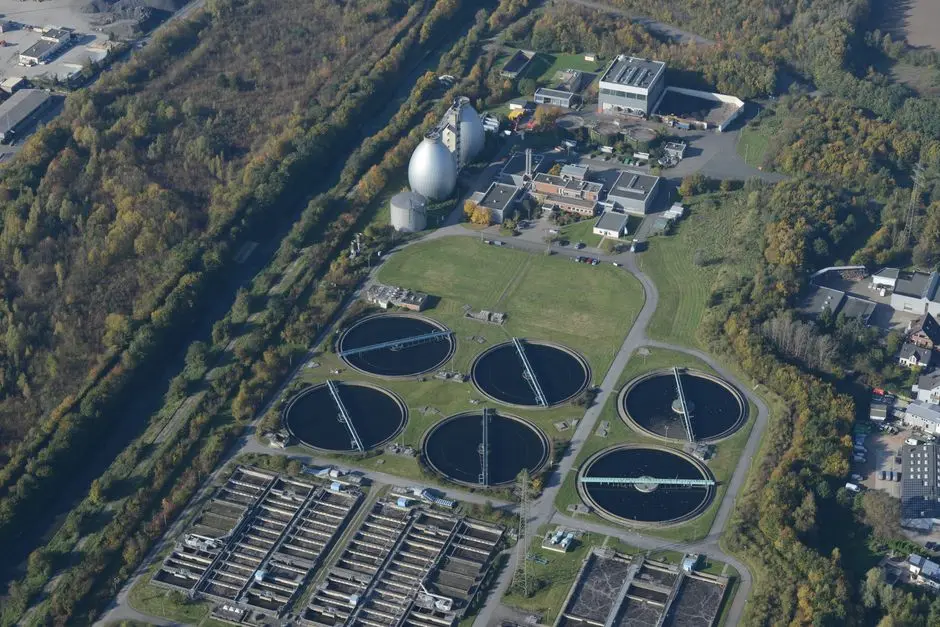
Run these four questions in order before calling any vendor. Each maps to a measurable influent or site characteristic.
- Is FOG above 150 mg/L, or is TSS dominated by light organics (proteins, fine fibers, emulsified oil)? If yes, the dissolved air flotation system is the right tool — micro-bubbles lift what gravity cannot. If the stream is grit- or sand-heavy, pick a clarifier instead.
- Does hydraulic variability exceed 2× (CIP cycles, seasonal production shifts, slaughter-day peaks)? If yes, a DAF absorbs the surge by ramping the recycle ratio, while a clarifier's effluent will spike and trigger an LRWRA non-compliance event.
- Is the footprint constrained by an urban Little Rock site or an in-building expansion? If yes, DAF wins outright at 20–25% of the clarifier area. If the plant has open land and FOG is low, a HydropureWater high-efficiency lamella clarifier may suffice.
- Will sludge disposal be a major OPEX line, and is the plant pursuing water reuse? If yes, DAF float at 3–5% solids — pushed to 25–35% by a downstream plate and frame filter press — halves or thirds hauling volume and feeds reuse polishing more cleanly than clarifier underflow.
If the answer to Q1 or Q2 is yes, request a DAF quote; if Q3 is the only yes and Q1 is no, a lamella clarifier often meets the spec at lower capital cost.
Integrating a DAF Into a Little Rock Food Plant: Pretreatment and Downstream Steps
A DAF is one unit in a treatment train, and the units around it determine whether the 92–97% TSS and >95% FOG numbers survive contact with real influent. Upstream, a GX series rotary mechanical bar screen at 2–6 mm aperture is essential: poultry lines shed bone fragments, packaging fibers, and feathers that will clog saturator nozzles and erode the recycle pump. Next, a PLC-controlled automatic chemical dosing system — tuned via weekly jar tests — delivers coagulant and 0.5–5 mg/L polymer so the floc is strong enough to ride 20–100 µm bubbles without shattering. For an OPEX-deep dive on polymer selection, see the 2026 chemical dosing cost optimization guide.
Downstream, DAF effluent typically feeds a biological step — an MBR integrated wastewater treatment unit, an SBR, or a conventional activated-sludge basin — to polish residual BOD. The 1978 EPA symposium data set a defensible secondary-clarifier overflow benchmark of 19.5 m³/day/m² (400 gpd/ft²), which an MBR largely replaces with membrane solids separation (EPA-600/2-78-188, 1978-08). On the sludge side, route DAF float directly to a plate and frame filter press to push cake solids from ~4% up to 25–35% before disposal, which is the line item that drives most of the $40,000/yr disposal savings used in the ROI example.
Frequently Asked Questions
When should a Little Rock food plant pick DAF over a conventional clarifier in 2026?
Choose a dissolved air flotation system whenever influent FOG exceeds 150 mg/L, TSS is dominated by light organics, or hydraulic surges exceed 2×. DAF delivers 92–97% TSS and >95% FOG removal at 5–30 m³/m²·h and pays back in 1.5–3 years (HydropureWater field data, 2025). A conventional clarifier only wins on grit- or sand-heavy streams where settling physics still apply.
What is the realistic 2026 CAPEX for a food-grade DAF in central Arkansas?
For 4–300 m³/h, the DAF CAPEX range is $50,000–$500,000, with a 50 m³/h poultry line typically landing at $80,000–$150,000 once a screw conveyor, skimmer, and PLC panel are included (HydropureWater field data, 2025). The same flow in a conventional clarifier costs less up front but 50–70% more in annual sludge-hauling OPEX because underflow solids stay at 1–2%.
How much sludge volume does a DAF actually cut?
DAF float reaches 3–5% solids versus 1–2% for clarifier underflow, which translates into 50–70% less volume hauled off-site — about $40,000/yr in disposal-fee savings for a medium food plant (HydropureWater field data, 2025). Pairing the DAF with a plate and frame filter press pushes cake solids to 25–35%, further shrinking the waste stream and improving haul economics.
Does a DAF meet LRWRA's 100 mg/L FOG and 250 mg/L TSS caps without a polish step?
For most food and beverage streams, a properly tuned DAF will hold LRWRA's 100 mg/L FOG and 250 mg/L TSS limits on its own, but a downstream biological step or MBR is recommended for BOD polishing to stay well below the 30 mg/L clarifier-effluent benchmark demonstrated at the 1978 EPA food-waste symposium (EPA-600/2-78-188, 1978-08). Always confirm against current LRWRA permit language and a jar-tested influent profile.