Why Copenhagen Hotels Need a Dedicated Treatment System in 2026
Copenhagen's 2025 carbon-neutral target is a binding municipal policy that explicitly couples energy and water stewardship — the city's CPH 2025 Climate Plan tracks Scope 3 water-related emissions alongside electricity and heating (per Veggies Abroad, 2025, summarizing the city plan). For a 200-room hotel, on-site wastewater treatment is now a line item in the sustainability report, not a back-of-house utility. Sewer connection still satisfies the law, but it forfeits the reuse credit that auditors increasingly ask for under Green Key and BREEAM-in-Use.
Two regulatory instruments set the compliance floor. The EU Urban Waste Water Directive 91/271/EEC defines the receiving-water quality obligations and is implemented in Denmark by Executive Order BEK nr 1448 of 13 June 2024 on municipal wastewater treatment, which tightens effluent limits to BOD₅ ≤15 mg/L and total nitrogen ≤8 mg/L for works serving more than 10,000 PE. For a 60–400-room hotel operating at 150–250 L per guest-night, even a 100-room property sits at the doorstep of the 10,000 PE threshold during peak season, so the strict limits apply.
Brand pressure compounds the legal one. Scandic, Manon Les Suites, Guldsmeden, Zoku, and Copenhagen Island already publish sustainability claims covering renewable electricity, plant-based kitchens, and PFAS-free amenities (Veggies Abroad, 2025; S1, 2025-12). Water reuse is the obvious next disclosure category — and the easiest one to retrofit with a packaged plant.
Hotel Wastewater Characteristics: What Makes It Different from Municipal Sewage
Hotel sewage is stronger in FOG and more hydraulically variable than domestic sewage, and Copenhagen's winter climate compresses the biological design margin. A defensible basis-of-design for a Nordic hotel in 2026 sits in the following envelope.
| Parameter | Typical hotel range | Compared to domestic sewage |
|---|---|---|
| Flow per guest-night | 150–250 L | 120–180 L |
| BOD₅ | 200–400 mg/L | 150–300 mg/L |
| COD | 400–800 mg/L | 300–600 mg/L |
| TSS | 200–300 mg/L | 200–350 mg/L |
| FOG (kitchen load) | 50–150 mg/L | 20–80 mg/L |
| Total nitrogen (TN) | 40–60 mg/L | 30–50 mg/L |
| Total phosphorus (TP) | 8–15 mg/L | 5–10 mg/L |
| Peak/average flow ratio | 2.5–4.0× | 1.5–2.5× |
Two operational signatures dominate the design. First, the diurnal curve: breakfast service (07:00–10:00) and evening check-in (17:00–20:00) produce peak flows 2.5–4× the daily average, while 02:00–05:00 drops to roughly 0.3× average. Equalization is not optional in a packaged plant. Second, ambient temperature swings from roughly +25 °C in July to −10 °C in January slow nitrification kinetics by a factor of 2.0–2.5 at 10 °C versus 20 °C; designers compensate with longer SRT, buried tanks, or insulated enclosures.
Emerging contaminants are already a procurement concern. PFAS from coated cookware, microplastics from textile laundering, and pharmaceutical residues from guest use are not yet regulated in the BEK 1448 effluent table, but Denmark's hotel culture is moving toward PFAS-free amenities (S1, 2025-12), and a well-designed MBR stage with downstream activated carbon or RO polishing is the most defensible pretreatment. A baseline of PFAS and micropollutant removal should be requested in the RFQ even where it is not yet a permit condition.
Three Treatment Architectures Compared: WSZ-A/O, MBR, and SBR
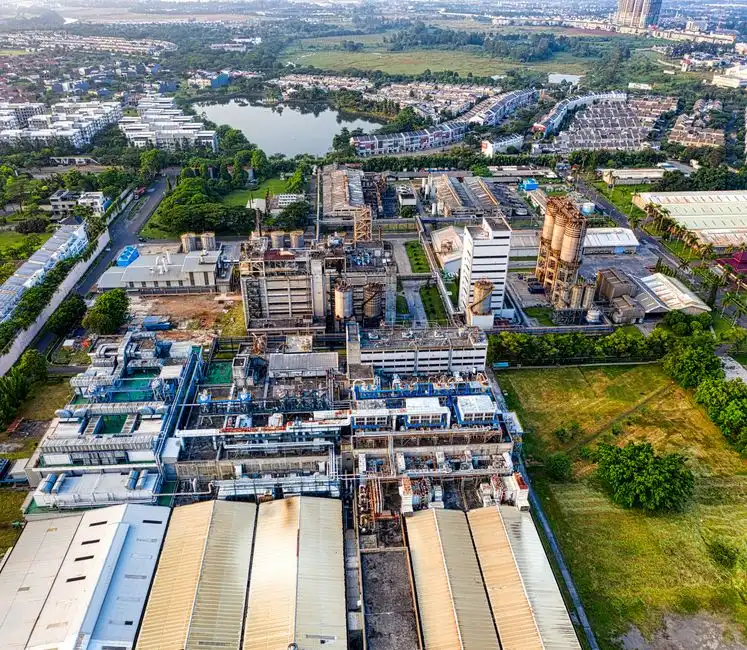
Three packaged architectures dominate the Copenhagen hotel segment in 2026. The choice is driven by footprint, reuse intent, and tolerance for open tanks in a Nordic winter.
- WSZ-A/O underground package plant. Anoxic/aerobic biological contact oxidation followed by sedimentation and chlorine disinfection, fully buried, factory-fabricated in 1–80 m³/h modules, and shipped with PLC automation. The WSZ underground package sewage treatment plant is the workhorse for 50–150-room urban hotels on tight sites because the lid doubles as a green roof or parking pad — a direct fit with the eco-aesthetic of properties such as Manon Les Suites and Guldsmeden (Veggies Abroad, 2025).
- MBR membrane bioreactor. Conventional activated sludge coupled with submerged PVDF membranes at 0.1 μm nominal pore size, typically delivered as a skid-rated 10–2,000 m³/day system. An integrated MBR membrane bioreactor system produces reuse-grade effluent in roughly 60% of the WSZ footprint and is the preferred option when toilet flushing or irrigation reuse is in scope.
- SBR sequencing batch reactor. Time-based fill/aerate/decant cycles in a single tank, with no separate clarifier. Simple control logic and good tolerance of shock loads, but open or semi-buried tanks lose heat fast in a Danish winter, and the footprint is the largest of the three. SBR is generally a fallback for sites that cannot accept a buried tank.
| Criterion | WSZ-A/O | MBR | SBR |
|---|---|---|---|
| Effluent BOD₅ (mg/L) | ≤15 | ≤5 | ≤15 |
| Effluent TN (mg/L) | ≤15 | ≤8 | ≤10 |
| Effluent TP (mg/L) | ≤1 (chemical) | ≤0.5 (chemical) | ≤1 (chemical) |
| Footprint (per m³/day) | ~0.3 m² | ~0.12 m² | ~0.4 m² |
| Cold-climate suitability | High (buried) | High (enclosed skid) | Low–medium (open tank) |
| Reuse readiness | Pre-disinfection only | Direct reuse with UV/ClO₂ | Disinfection required |
| CAPEX band (EUR/m³·d) | 180–280 | 320–480 | 220–340 |
| OPEX band (EUR/m³) | 0.18–0.30 | 0.30–0.45 | 0.22–0.35 |
For a premium Copenhagen hotel with reuse intent, an MBR with DF-series PVDF flat-sheet membrane modules is the engineering-default; for a budget property with no reuse target, the WSZ underground unit wins on CAPEX and on buried-footprint aesthetics.
Equipment Train: Screening, Biological, Disinfection, and Sludge Handling
The biological stage is the heart of the plant, but the upstream and downstream unit operations are what determine whether the system actually meets BEK 1448 in service. The recommended train for a 100–200 m³/day Copenhagen hotel is:
- Coarse screening — a GX-series rotary mechanical bar screen at 3 mm aperture to protect downstream pumps and membranes from textile fibers, hygiene products, and kitchen debris.
- FOG and grit removal — a dissolved air flotation system ahead of the biological stage. Hotel kitchen flows push FOG to 50–150 mg/L (see table above), and DAF is the most compact way to bring that below 30 mg/L before the aeration tank.
- Biological stage — A/O contact oxidation (WSZ) or membrane bioreactor (MBR), as selected from the comparison table above.
- Disinfection — a chlorine dioxide generator sized for a 0.5–1.0 mg/L ClO₂ residual at peak flow. ClO₂ is preferred over sodium hypochlorite at sites targeting reuse because it forms fewer regulated DBPs and is effective over a wider pH range.
- Sludge dewatering — a plate-and-frame filter press producing a 30–35% DS cake for off-site incineration or composting, sized at roughly 1.5–2.0 kg DS per m³ of treated flow.
Omitting the DAF stage is the single most common underspecification on hotel retrofits. Without it, FOG coats the membrane surface, increases CIP frequency, and shortens module life from 8–10 years to 3–5 years.
Worked Sizing Example: A 200-Room Copenhagen City Hotel
Take a 200-room property at 1.8 average occupancy and 200 L per guest-night, which sits in the middle of the Nordic hotel envelope from the characteristics table.
Average dry-weather flow: 200 × 1.8 × 200 L = 72,000 L/day, or 72 m³/day.
Peak flow (3× peaking factor): 216 m³/day, or roughly 9 m³/h on a 24-hour basis but 18–27 m³/h during the morning and evening peaks.
Recommended packaged plant: an MBR skid rated at 100 m³/day, installed at ~72% loading, with a parallel standby skid sized at 50% capacity. Each skid carries DF-series PVDF flat-sheet membrane modules at 150 m² total area, producing ~90 m³/day at 12–18 LMH flux and 8–10 kWh/m³ specific energy (HydropureWater field data, 2026). The 50% standby gives the maintenance team the redundancy that BEK 1448 and the hotel's own discharge permit effectively require during membrane CIP or cartridge replacement.
An alternative is two 50 m³/day WSZ underground modules in parallel with a common dosing panel. For a tight Copenhagen infill site where above-ground plant would compromise the architecture, the WSZ configuration is often preferred: the buried tank leaves the surface available for a green roof or courtyard, matching the visual language of Guldsmeden Bryggen and the Admiral Hotel (Veggies Abroad, 2025; S1, 2025-12). A JY-series integrated water purification unit can be specified as the reuse polish step if RO-quality laundry water is in scope.
Land take for the MBR option is roughly 80–110 m² including buffer tank and chemical room; for the buried WSZ option, plan roughly 140 m² of surface area that disappears beneath landscaping.
Water Reuse, Reclaim, and the Carbon-Neutral Hotel Agenda
Treated wastewater is the largest unused water resource on most hotel sites, and a well-designed reuse loop directly maps to Copenhagen's 2025 carbon-neutral plan by displacing potable demand (Veggies Abroad, 2025). Typical 2026 reuse targets and quality thresholds for hotel applications:
- Toilet flushing — BOD₅ ≤10 mg/L, TN ≤10 mg/L, E. coli ≤10 CFU/100 mL, achieved by MBR + UV or ClO₂ polishing.
- Landscape irrigation — TSS ≤5 mg/L and turbidity ≤2 NTU, achieved by MBR effluent alone; add nutrient dosing (N/P balance) for green-roof applications.
- Laundry — optional RO polish through a reverse osmosis unit to bring TDS below 100 mg/L and avoid scaling in commercial washers; pair with an automatic chemical dosing system for pH correction and chlorine residual maintenance.
Quantified at the 200-room example: reusing 50% of 72 m³/day = 36 m³/day = ~13,000 m³/year offset. That volume is equivalent to the water saved by approximately 340 Orbital-style showers operating at the 42–65 L savings per use reported for Hotel Axel in Copenhagen (Orbital Systems, 2018–2025). Reuse data is also marketing-grade content: Scandic Spectrum, Manon Les Suites, Zoku, and Copenhagen Island all publish sustainability metrics, and a quantified reuse figure slots directly into Green Key and BREEAM credit submissions. The safety floor for any human-contact reuse remains EU Drinking Water Directive 98/83/EC on the raw source, but the reuse line itself is governed by the local building code and the 2024 EU Water Reuse Regulation 2024/3017 minimum requirements.
2026 Procurement Checklist for Copenhagen Hotel Developers
Translate the engineering above into a vendor RFQ with these five hard requirements:
- Compliance and certification. CE marking, EN 12255 conformity for the biological stage, and a written performance guarantee of BOD₅ ≤15 mg/L and TN ≤8 mg/L at the design winter ambient of 5 °C in the aeration tank.
- Automation and service. PLC with remote SCADA, 24/7 alarm telemetry, and a service-level agreement committing to ≤48 h on-site response inside Denmark.
- Acceptance testing. Factory acceptance testing (FAT) at the manufacturer's site, site acceptance testing (SAT) with the client present, and a 24-month defect liability period — the standard for EU public procurement and increasingly the norm for Danish private hospitality tenders.
- Spare parts and training. Confirmed spare-parts inventory in the EU (Denmark or Germany) and operator training delivered in Danish or English with bilingual O&M manuals.
- Cold-climate evidence. At least two Nordic reference installations in service for ≥3 winters, with documented effluent compliance data through the heating season.
For peer-reviewed engineering context on similar cold-climate hospitality work, the Calgary hotel wastewater system guide covers a comparable climate envelope, while the Santiago hotel and resort wastewater treatment guide addresses a warmer, reuse-heavy counterpoint. For a Latin American regulatory comparison, the Bogotá hotel wastewater engineering guide is a useful parallel case study.
Frequently Asked Questions
What is the minimum effluent quality a Copenhagen hotel package plant must meet in 2026?
For a hotel whose peak load approaches 10,000 PE, Danish Executive Order BEK nr 1448 (2024) sets BOD₅ ≤15 mg/L and total nitrogen ≤8 mg/L, implemented under EU Urban Waste Water Directive 91/271/EEC. A well-designed MBR typically meets these limits with margin.
How many litres of wastewater does a Copenhagen hotel generate per guest-night?
Typical Nordic hotel flow is 150–250 L per guest-night, driven by shower, laundry, and kitchen use. A 200-room hotel at 1.8 occupancy and 200 L per guest-night generates roughly 72 m³/day on average, peaking near 216 m³/day during breakfast and check-in.
Can hotel wastewater be reused for toilet flushing or irrigation in Denmark?
Yes, under the EU Water Reuse Regulation 2024/3017 and Danish building code. Toilet-flushing reuse requires BOD₅ ≤10 mg/L, TN ≤10 mg/L, and E. coli ≤10 CFU/100 mL — achievable with an MBR followed by ClO₂ or UV disinfection. Irrigation reuse is generally permitted at TSS ≤5 mg/L with appropriate buffer zones.
Is an MBR or a buried WSZ package plant better for a small Copenhagen hotel?
For a 50–150-room urban hotel with no reuse target, the buried WSZ unit wins on CAPEX (€180–280 per m³/day) and on preserved surface area. For any hotel targeting toilet-flushing or irrigation reuse, the MBR delivers reuse-grade effluent in roughly 60% of the footprint, justifying the higher CAPEX (€320–480 per m³/day).
How does cold Nordic weather affect biological treatment design?
Nitrification slows by a factor of 2.0–2.5 when mixed-liquor temperature drops from 20 °C to 10 °C. At Copenhagen winter ambient (−10 °C air), designers compensate with buried or insulated tanks, longer SRT (15–25 days), or enclosed MBR skids with heat-traced piping. Open-tank SBR systems are the most vulnerable to cold performance loss.