Why EEPA Compliance Now Defines Every Fab and Data-Hall Project in Addis Ababa
EEPA Proclamation No. 200/2000, amended through the 2003 schedule and the 2023 Environmental Impact Assessment Directive, sets the binding 2026 numeric envelope for any industrial discharger to the Addis Ababa combined sewer: BOD₅ ≤ 50 mg/L, COD ≤ 200 mg/L, TSS ≤ 50 mg/L, free chlorine < 1 mg/L, and total chromium ≤ 0.5 mg/L at the point of discharge, verified by 24-hour composite sampling (per EEPA 2023 EIA Directive monitoring schedule). For a semiconductor back-end or hyperscale data-hall project in 2026, compliance is enforced at the meter, not the central plant: AAWSA will physically disconnect any industrial discharger exceeding the pretreatment envelope at the discharge point, and the 2023 EIA Directive now requires the Akaki, Bole Lemi, and Gelan industrial parks to complete an environmental audit before license renewal, with the FDRE Ministry of Industry cross-referencing EEPA standing as part of the renewal decision.
The financial exposure is asymmetric. EEPA enforcement records from 2023–2025 show administrative fines ranging from ETB 50,000 to ETB 500,000 per violation (per EEPA Proclamation No. 200/2000 and 2023 EIA Directive). The larger risk is the 7–14 day operational suspension after repeated breaches or unauthorized discharge. On a USD 5M/year fab line operating at the typical Ethiopian industrial margin of 8–12%, a single two-week shutdown exceeds USD 75,000 in lost contribution margin — and the 2023 EIA Directive gives EEPA authority to trigger that stoppage after a single inspection finding, not after multiple warnings (per EEPA 2023 EIA Directive enforcement provisions). EPC engineers scoping a 2026 RFQ should treat EEPA compliance as the design constraint, not a finishing touch: stream segregation, calcium precipitation of fluoride, and a containerized MBR are the difference between a license and a 14-day stoppage.
What Semiconductor and Data-Hall Wastewater Actually Looks Like in 2026
A modern semiconductor fab can use up to 10 million gallons of water per day (MGD) (per IDE Technologies, 2026), and that water reappears as five distinct streams that must be characterized before any unit process is selected. CMP (chemical mechanical polishing) slurry alone represents 30–40% of a fab's total wastewater volume and carries abrasive silica or ceria particles that foul any downstream membrane within hours if not settled or floated first. Wet-etch and stripping streams carry HF, HCl, H₂SO₄, and NH₃; HF pushes raw fluoride into the 50–500 mg/L range, and an unprotected biological stage will lose its MLSS within a single shift. UPW-loop blowdown and rinse water are low-TDS but high-purity streams, which makes them the prime reuse candidate — an RO polish at 65–75% recovery returns them to boiler feed or process wash. Ammonia wet-scrubber blowdown carries 50–500 mg/L NH₃-N and must be nitrified separately or air-stripped before it enters the main biological train. Data-hall cooling-tower blowdown and humidification drain are lower-strength (TDS 500–1,500 mg/L) but contribute 60–70% of total site volume and benefit most from direct RO reuse rather than sewer discharge.
These numbers are not interchangeable across projects. The table below maps the five streams to their typical concentration ranges and the unit process that must lead each train.
| Stream | Volume share | Key parameters | Lead unit process |
|---|---|---|---|
| CMP slurry wastewater | 30–40% of fab volume | Silica/ceria particles, suspended solids 500–5,000 mg/L | DAF (dissolved air flotation) or lamella settler |
| HF wet-etch and stripping | 10–20% of fab volume | F⁻ 50–500 mg/L, pH 1–3, traces of HCl/H₂SO₄ | Calcium precipitation → neutralization → MBR |
| Ammonia scrubber blowdown | 5–15% of fab volume | NH₃-N 50–500 mg/L, pH 9–11 | Air-strip or separate nitrification |
| UPW-loop blowdown / rinse | 20–30% of fab volume | TDS < 50 mg/L, low organics | Multimedia filter → RO at 65–75% recovery |
| Data-hall cooling-tower blowdown / humidification drain | 60–70% of data-hall volume | TDS 500–1,500 mg/L, silica 5–30 mg/L | Softener → RO reuse |
The 2026 Treatment Train: From Segregated Streams to EEPA-Compliant Effluent
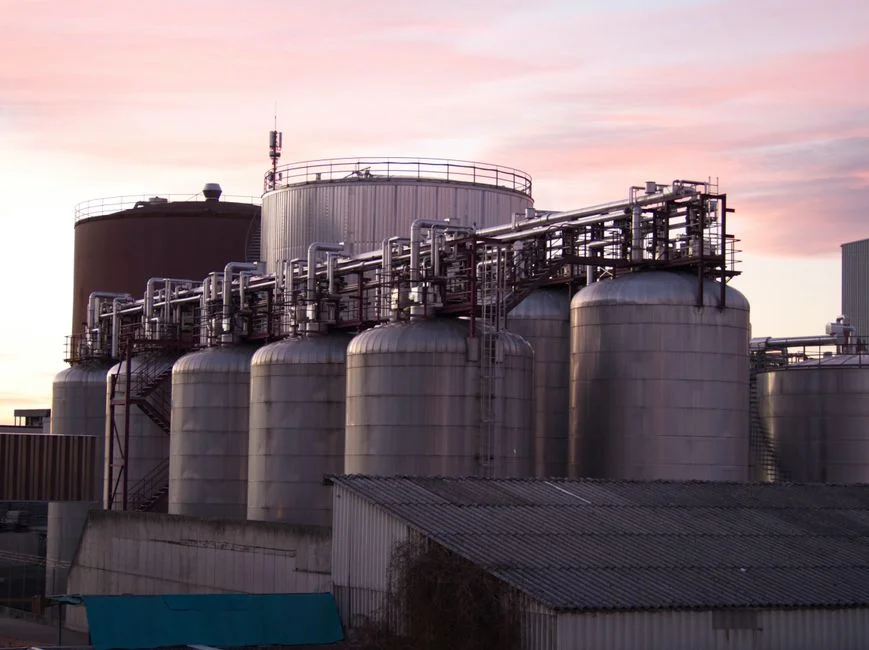
The canonical Addis Ababa industrial treatment train is a four-stage sequence — primary screening and equalization, DAF for suspended and emulsified pollutant removal, biological treatment in an MBR configuration, and tertiary filtration plus disinfection for reuse or compliant discharge (per Addis Ababa industrial wastewater engineering reference, 2026). For a 2026 fab project, fluoride and ammonia segregation is added between Stages 1 and 2, because sending raw HF effluent into a biological reactor is a guaranteed biomass kill.
Stage 1 — Rotary bar screen and equalization. A 3–6 mm rotary bar screen ahead of an equalization tank delivers 20–35% TSS removal and dampens pH/flow variation to under 2:1 before biology. A unit like the rotary mechanical bar screen for equalization is sized for peak instantaneous flow with a 1.5× safety factor, which matters at altitude because the lower atmospheric pressure reduces pump NPSH margin by roughly 5% per 1,000 m.
Stage 2 — DAF for FOG, colloidal TSS, and CMP slurry. An industrial DAF unit operating at 5–25 m/h hydraulic loading and 20–30% recycle removes 90–95% TSS and 85–95% oil and grease, including the silica and ceria particles from CMP that would otherwise blind a membrane. Between the DAF and the MBR, fluoride polishing is mandatory: lime or calcium chloride precipitation to < 10 mg/L F⁻, because the MBR biomass cannot tolerate a sustained fluoride spike above that ceiling. Without this precipitation step, raw HF streams kill the MBR biomass within hours (per Addis Ababa industrial wastewater engineering reference, 2026).
Stage 3 — MBR for organics and ammonia. A containerized MBR operating at MLSS 8,000–12,000 mg/L and HRT 8–14 h delivers BOD < 10 mg/L, COD < 60 mg/L, and TSS < 5 mg/L in roughly 60% smaller footprint than conventional activated sludge, which is the deciding factor on a constrained Bole Lemi or Akaki site. The MBR also tolerates the 4–8 hour weekly grid outages typical of Ethiopian industrial parks: operators can pause aeration, hold biomass in the tank, and restart within minutes (per Addis Ababa industrial wastewater engineering reference, 2026).
Stage 4 — Multimedia filter, RO, and ClO₂. A multimedia pre-RO filter holds Silt Density Index below 5, then a high-recovery RO system at 65–75% recovery returns 85–90% of the polished flow to UPW make-up or cooling-tower make-up. An on-site ClO₂ generator at 1–3 mg/L with 30-minute contact holds free chlorine under the 1 mg/L EEPA ceiling without forming trihalomethanes — a tradeoff that matters because NaOCl at the equivalent dose pushes free Cl above the limit or under-disinfects.
The performance envelope at each stage, with the unit process and the typical effluent parameter, is summarized below.
| Stage | Unit process | Key operating parameter | Effluent target |
|---|---|---|---|
| 1 | Rotary bar screen 3–6 mm + equalization | HRT 6–10 h, flow variation < 2:1 | 20–35% TSS removed; pH 6–9 |
| 2 | DAF + fluoride precipitation | Hydraulic loading 5–25 m/h; recycle 20–30%; Ca dose 1.5–2.5× stoichiometric | 90–95% TSS; F⁻ < 10 mg/L |
| 3 | MBR | MLSS 8,000–12,000 mg/L; HRT 8–14 h | BOD < 10; COD < 60; TSS < 5 mg/L |
| 4 | Multimedia filter + RO + ClO₂ | SDI < 5; recovery 65–75%; ClO₂ 1–3 mg/L, 30 min contact | EEPA compliance; reuse TDS < 500 mg/L; free Cl < 1 mg/L |
High-Altitude and Grid-Resilient Design: The Two Engineering Non-Negotiables
Generic global treatment guides fail in Ethiopia because they ignore three physical realities that are deterministic at the Akaki, Bole Lemi, and Gelan industrial parks. At 2,355 m elevation, atmospheric pressure drops to roughly 75% of sea-level standard, which derates blower and aerator mass-transfer output by 12–18%; the standard correction is to oversize aeration equipment by that margin or to specify high-efficiency disc diffusers with a guaranteed SOTE above 6.5 kg O₂/kWh at altitude (per Addis Ababa industrial wastewater engineering reference, 2026). The thinner air mass also reduces UV-C absorbance by pathogens, so UV disinfection systems must deliver roughly 20% higher dose — typically 40 mJ/cm² rather than the 33 mJ/cm² common at sea level — to achieve the same log reduction. For a fab project in 2026, that correction factor is non-optional: a UV skid sized for sea level will under-disinfect the MBR permeate during commissioning and force a re-spec.
Grid reliability is the second constraint. Under the 2026 EEU load-shedding schedule, industrial zones see 4–8 hours of planned outage per week, and unscheduled faults add another 2–4 hours. Without a battery-buffered PLC sized for at least 30 minutes of ride-through plus standby diesel rated for full biological and UV operation, an MBR will foul and lose its permeance within a single extended outage (per Addis Ababa industrial wastewater engineering reference, 2026). For fluoride and pH control, an automatic chemical dosing system with dual-redundant pumps and a chemical tank sized for a 7-day autonomy covers the longest realistic outage window in the 2026 EEU schedule. Pairing those two systems — battery ride-through plus dosing redundancy — is what separates a working Addis Ababa design from a generic global one.
Logistics is the third. Most process equipment is containerized into 20-ft or 40-ft ISO skids at the factory, cleared through Djibouti port, and hauled 800+ km overland to the project site. Civil works on site are limited to foundation slabs and interconnecting pipework, and replacement parts from China or Europe run 6–10 weeks lead time, so commissioning should include a 2-year consumables and critical spares kit (per Addis Ababa industrial wastewater engineering reference, 2026). For a fab or data-hall project on a 2026 RFQ, that logistics envelope belongs in the project schedule, not in the supplier's footnote.
Discharge to Sewer vs On-Site Reuse: A 2026 Decision Framework for Addis Ababa
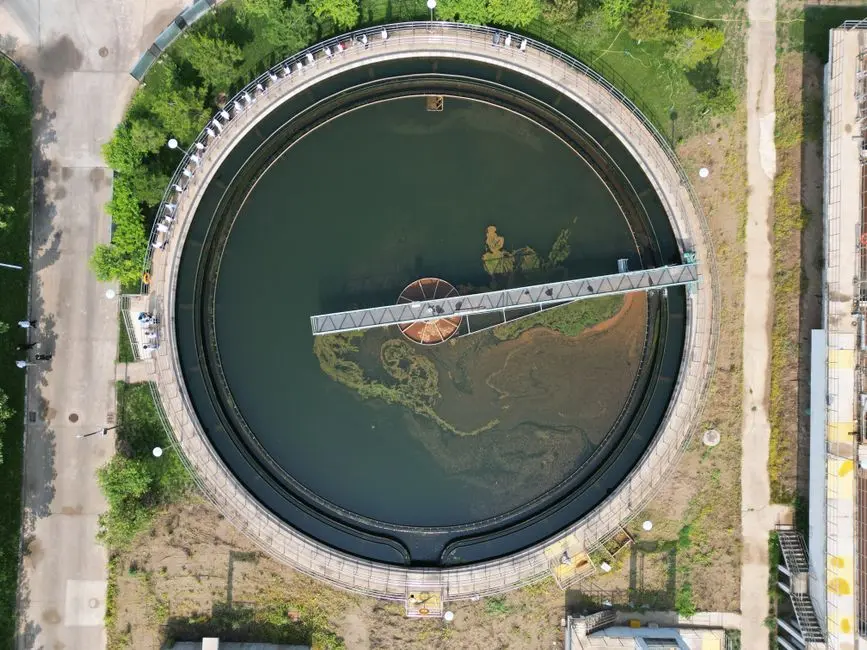
A modern fab uses up to 10 MGD (per IDE Technologies, 2026), and the route that water takes after treatment is a permitting and cost decision, not a treatment decision. Addis Ababa's municipal WWTPs already report capacity concerns at 64.5% of surveyed facilities and flow fluctuations at 86.4% (per PMC field study, 2025), so any project that depends on the central plant for routine compliance is exposed to both EEPA inspection findings and AAWSA disconnection at the meter. The on-site reuse path — multimedia filter + RO at 65–75% recovery — hits 85–90% plant reuse and feeds UPW polishing loops, but adds ETB 800–1,500 per wet ton for sludge disposal and roughly 0.8–1.6 kWh/m³ MBR power at the 2026 Ethiopia industrial tariff of approximately ETB 2.50/kWh (per Addis Ababa industrial wastewater engineering reference, 2026).
Discharge-to-sewer is the lower-CAPEX path: DAF + MBR + ClO₂ delivers EEPA compliance at the point of discharge without an RO stage, and is right for data-hall cooling-tower blowdown and back-end assembly rinse water where reuse economics are weakest. The decision rule that consistently holds in 2026 scoping work is: choose reuse when fab water intensity exceeds 3 MGD or the EEPA renewal audit flags non-revenue water; choose discharge when project flow is under 200 m³/day and on-site operators are limited. The matrix below gives the EPC engineer a defensible cut-line for the RFQ.
| Decision parameter | Discharge to AAWSA sewer | On-site RO reuse |
|---|---|---|
| Flow range suited | < 200 m³/day (data-hall, back-end assembly) | > 500 m³/day (front-end fab, ≥ 3 MGD) |
| Unit process scope | DAF + MBR + ClO₂ | DAF + MBR + multimedia filter + RO + ClO₂ |
| Power demand | 0.4–0.9 kWh/m³ (DAF-only scope baseline) up to 0.8–1.6 kWh/m³ (with MBR) | 1.2–2.0 kWh/m³ (MBR + RO at 65–75% recovery) |
| Reuse ratio | 0% (single-pass discharge) | 85–90% plant reuse |
| Sludge handling burden | DAF float only | DAF float + RO concentrate; ETB 800–1,500/wet ton disposal |
| Best fit | Data-hall cooling-tower blowdown, back-end rinse, low-flow pilots | Front-end semiconductor fab, ≥ 3 MGD, projects with EEPA non-revenue water findings |
2026 Cost Benchmarks and Project Schedule for an Addis Ababa Fab Treatment Plant
Budgeting a 2026 industrial wastewater treatment plant in Addis Ababa requires tiered CAPEX benchmarks, OPEX ranges differentiated by sector, and explicit power and sludge-handling cost lines. The figures below are FOB Djibouti for containerized MBR + DAF scope and exclude site civil works, taxes, and the import duty schedule applicable at the time of procurement; currency conversion assumes 1 USD ≈ 57 ETB for budget planning (per Addis Ababa industrial wastewater engineering reference, 2026).
OPEX splits cleanly. An MBR-equipped plant runs 0.8–1.6 kWh/m³, a DAF-only scope 0.4–0.9 kWh/m³, and at the 2026 Ethiopia industrial tariff of approximately ETB 2.50/kWh, energy alone runs ETB 2–4 per m³. Chemical OPEX dominates in fluoride and photoresist removal; energy OPEX dominates in CMP slurry handling. Sludge dewatering with a plate-and-frame filter press reaches 22–28% dry solids, and landfill disposal in Addis Ababa runs ETB 800–1,500 per wet ton delivered. Project timeline from FOB to commissioned-ready is 10–16 weeks for containerized skids: 7–14 days to clear Djibouti, then 3–5 days for the 800+ km overland haul, then on-site erection against a foundation slab only. Commissioning should include a 2-year critical spares kit because replacement lead times from China or Europe run 6–10 weeks and unplanned stoppages of that length are common in years 1–2.
| Tier | Capacity | Indicative CAPEX (FOB Djibouti) |
|---|---|---|
| Small fab / data-hall train (DAF + MBR + ClO₂) | < 500 m³/day | USD 350,000–800,000 |
| Mid-size fab (MBR + RO polish) | 500–2,000 m³/day | USD 1.2M–3.0M |
| Industrial-park shared facility | 2,000+ m³/day | USD 3.5M–8.0M+ |
Frequently Asked Questions
What is the EEPA BOD limit for industrial discharge in Addis Ababa?
EEPA Proclamation No. 200/2000 sets BOD₅ at ≤ 50 mg/L at the point of discharge to the Addis Ababa combined sewer, with compliance verified by 24-hour composite sampling per the 2023 EIA Directive monitoring schedule. A properly sized containerized MBR routinely delivers BOD < 10 mg/L, which sits inside the EEPA envelope with margin for routine influent variability (per Addis Ababa industrial wastewater engineering reference, 2026).
Can a containerized MBR system meet EEPA discharge limits in Addis Ababa?
Yes. A properly sized containerized MBR routinely delivers BOD < 10 mg/L, COD < 60 mg/L, and TSS < 5 mg/L, all inside the EEPA envelope, and is the preferred configuration because the roughly 60% smaller footprint fits 20-ft or 40-ft ISO logistics. MBR also tolerates the 4–8 hour weekly grid outages typical of Ethiopian industrial parks because the biomass can be held in the tank during an outage and restarted within minutes (per Addis Ababa industrial wastewater engineering reference, 2026).
How should fluoride from HF etching be handled before biological treatment?
Raw HF streams must be precipitated with lime or calcium chloride to below 10 mg/L F⁻ before the MBR; without this step, HF effluent will kill the MBR biomass within hours (per Addis Ababa industrial wastewater engineering reference, 2026). The stoichiometric calcium dose typically lands at 1.5–2.5× the theoretical requirement, and a downstream lamella or DAF stage captures the CaF₂ precipitate before it reaches the membranes.
How long does equipment take to clear Djibouti port and reach Addis Ababa?
Containerized WWTP skids typically clear Djibouti port in 7–14 days for standard ISO containers, then require 3–5 days for the 800+ km overland haul to Addis Ababa; total equipment logistics lead time from FOB to commissioned-ready is generally 10–16 weeks (per Addis Ababa industrial wastewater engineering reference, 2026). The 10–16 week band must be front-loaded into the project schedule because spare-parts replenishment from China or Europe runs 6–10 weeks lead time, and any rework after delivery compounds that delay. For cross-checking against similar emerging-market contexts, see the parallel Gaborone fab wastewater guide and the Dhaka fab compliance guide. For membrane-side troubleshooting during commissioning, the forward osmosis troubleshooting guide covers the flux-loss diagnostics that often show up in the first 90 days of a new fab RO train.