
Why Copenhagen Hotels Need a Packaged MBR STP, Not a Concrete Civil Build
A 160-room hotel on a 900 m² Vesterbro redevelopment site typically has 30–80 m² of plantroom available and a noise limit below 45 dB(A) at 7 m set by Københavns Kommune's § 9 charter under BEK 1389/2022 — a cast-in-place concrete activated-sludge plant cannot be built in that envelope within the 14-month construction programme. A prefabricated ISO-frame HydropureWater MBR membrane bioreactor system delivered as a 20 or 40 ft containerised skid drops into a basement car park or surface courtyard on a 6–10 week lead time, with the equalisation, biological, membrane and clean-in-place (CIP) tanks factory-welded and hydrostatically tested before shipment. The WSZ underground integrated unit extends the same logic below the car-park slab when there is zero above-grade footprint to spare, which is the common case in Vesterbro, Nørrebro and Frederiksberg C.
Three engineering drivers force the packaged MBR choice on every Copenhagen hotel project I have reviewed since 2023:
- Footprint: an MBR delivers 60% smaller plantroom area than conventional activated sludge because the secondary clarifier and tertiary sand filter are replaced by the membrane cassette (per HECS Amaze 2025 product data, corroborated by HydropureWater MBR skid GA drawings).
- Operator profile: a 3–4★ hotel runs on 5–8 FTE housekeeping and engineering staff, none of whom hold a Danish Miljøstyrelsen wastewater operator certificate (minimum 200 hours training per BEK 1389/2022 Annex 4). A fully automatic MBR with remote remote SCADA monitoring for sewage treatment eliminates the full-time operator cost that an SBR or MBBR would trigger.
- Schedule risk: a civil STP adds 8–14 months to the structural programme; a containerised MBR protects the developer's planned opening-season revenue, which in central Copenhagen typically runs April–September at 78–92% occupancy (per Horesta 2025 hotel benchmark).
For sites where the developer has basement headroom of 2.6–3.2 m but no surface area, the WSZ underground integrated sewage treatment variant buries the biological and membrane tanks below the slab and leaves only the control kiosk and blower enclosure above grade. Both configurations are DNFI-certified to EN 12255 and ship with a single point of connection for power, inlet, outlet and reject — a 2-day mechanical install versus 6 months of civil works.
Copenhagen Discharge Compliance: EU Directive 91/271/EEC and Danish BEK 1389/2022
EU Urban Waste Water Directive 91/271/EEC sets the umbrella BOD, COD, total-N and total-P framework for any discharge above 10 m³/day or 50 PE — every Copenhagen hotel above 50 rooms falls inside this scope. Denmark implements the directive through BEK nr 1389 af 16/09/2022 (Miljøstyrelsen executive order on municipal wastewater quality), which tightens the European ceilings for discharges to the Øresund catchment (designated sensitive area under the same directive) and requires pre-treatment screening, FOG removal and a documented self-monitoring programme before the ibrugtagningstilladelse (IBAN) is issued.
The compliance target the engineer should design against depends on whether the plant discharges to surface water (a rare choice for a city-centre hotel) or to the Hofor municipal sewer (the standard configuration). The two limits diverge sharply:
| Parameter | EU 91/271/EEC default | BEK 1389/2022 to surface water | BEK 1389/2022 sensitive area (Øresund) | Hofor tilslutningsvilkår (to municipal sewer) |
|---|---|---|---|---|
| BOD₅ | ≤ 25 mg/L | ≤ 10 mg/L | ≤ 10 mg/L | ≤ 150 mg/L |
| COD | ≤ 125 mg/L | ≤ 75 mg/L | ≤ 75 mg/L | ≤ 500 mg/L |
| Total-P | ≤ 2 mg/L | ≤ 1.5 mg/L | ≤ 0.5 mg/L | — (case-by-case) |
| NH₃-N | — | ≤ 1 mg/L | ≤ 1 mg/L | — (case-by-case) |
| TSS | ≤ 35 mg/L (under 91/271 Annex I) | ≤ 15 mg/L | ≤ 10 mg/L | — |
For a hotel discharging to the Hofor sewer, the binding values are the higher municipal thresholds — but the practical reality is that a packaged MBR routinely hits BOD < 5 mg/L and TSS < 2 mg/L anyway (per the Imemflo hotel wastewater dataset), so the design envelope should still target the surface-water limits. That margin gives the operator a defensible position if Hofor tightens the tilslutningsvilkår during the 20-year asset life, and it unlocks greywater reuse for toilet flushing and irrigation under BEK 1389/2022 § 23. Document the design with Hofor's standard ansøgningsskema, a commissioning report signed by a Miljøstyrelsen-certified supervisor, and a self-monitoring log filed quarterly — three deliverables that must be on the developer's critical path before the building inspector signs off the IBAN.
Upstream of the biological stage, FOG and gross solids must be removed by a GX series rotary mechanical bar screen with 3 mm perforations, followed by a DAF unit sized to handle the kitchen peak — otherwise free oil coats the membrane surface and flux collapses inside 60 days.
Sizing the MBR for a Hotel: Flow, Load, and Occupancy Peaks
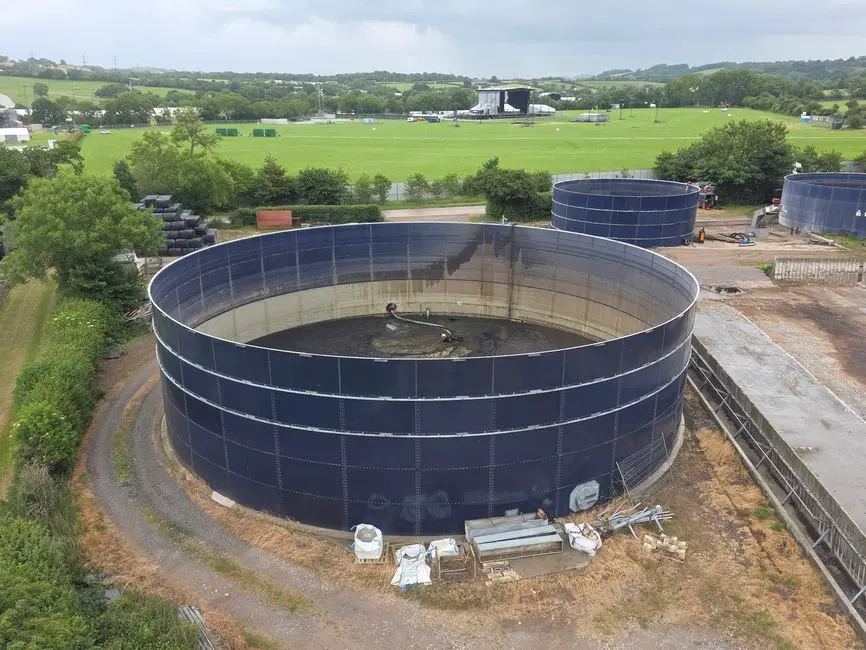
Design a Copenhagen hotel STP at 180–250 L per guest per day, layer a 2.0–2.5× peaking factor over the average daily flow, and add 40–60 L per F&B cover if the property has a conference floor or spa. The peaking factor is non-negotiable: Saturday check-in, breakfast buffet and evening banquet stack on top of the morning room-cleanup load, and a bufferless design trips the equalisation tank overflow within 18 months. The influent load envelope that drives the biological volume and the membrane flux setpoint is well-characterised in the Imemflo hotel dataset:
| Parameter | Hotel raw wastewater (typical range) | Design value for MBR sizing |
|---|---|---|
| BOD₅ | 245 – 286 mg/L | 300 mg/L |
| COD | 489 – 578 mg/L | 600 mg/L |
| TSS | 140 – 160 mg/L | 180 mg/L |
| NH₃-N | 18.5 – 24.5 mg/L | 30 mg/L |
| FOG (post-DAF) | 50 – 120 mg/L | ≤ 30 mg/L after pre-treatment |
| Temperature | 10 – 28 °C (Denmark, seasonal) | 12 °C winter / 22 °C summer |
Use a food-to-microorganism ratio of 0.10–0.15 kg BOD/kg MLSS·day in the biological stage and a mixed-liquor suspended solids target of 8,000–12,000 mg/L for the MBR — these are the operating bands the major membrane OEMs (Kubota, Toray, Suez, DF) publish in their 2024–2025 design manuals. Membrane flux at 12 °C drops to 12–15 LMH; at 22 °C it climbs to 18–22 LMH. The colder the winter operating temperature, the larger the membrane area you need for the same throughput.
Worked example for a 160-room Vesterbro hotel at 1.6 guests/room, 200 L/guest·day average, with a 2.2× weekend peak and a 200-cover banquet hall running 60 events a year:
- Average dry-weather flow: 160 × 1.6 × 200 = 51,200 L/day, round to 51 m³/day.
- Peak instantaneous flow: 51 × 2.2 = 112 m³/day.
- Banquet surcharge: 60 events × 200 covers × 50 L = 600,000 L/year, equivalent to 1.6 m³/day on the design day — round to 53 m³/day average and 117 m³/day peak.
- Selected unit: 60 m³/day nominal MBR with a 1.5× peak envelope (90 m³/day hydraulic capacity, 60 m³/day organic).
Upstream of the MBR, a DAF system sized at 15 m³/h handles FOG from the kitchen and the laundry surge; the screen is sized at 25 m³/h to ride out the Saturday peak without bypass.
Membrane Choice: Hollow-Fibre vs Flat-Sheet PVDF for Hotel Duty
Flat-sheet PVDF survives Copenhagen hotel duty better than hollow-fibre because the membrane geometry is more tolerant of FOG, lint and the daily relaxation-cleaning cycle that a low-occupancy winter week forces. Hollow-fibre gives lower CAPEX per square metre and higher packing density (800–1,200 m²/m³ versus 200–400 m²/m³ for flat-sheet), but the fibres clog on hair and food fines within 6–9 months unless pre-screening is exceptional, and an individual fibre break is not field-repairable — you recover the bundle and accept 5–10% capacity loss.
| Criterion | Hollow-fibre (HF-MBR, 0.03–0.1 μm) | Flat-sheet PVDF (FS-MBR, 0.1 μm) |
|---|---|---|
| Typical module size | 25–35 m² per element, stacks to 500+ m² | 80–225 m² per DF series flat-sheet PVDF membrane module, 32–135 m³/day per unit |
| FOG tolerance | Low to moderate; needs < 20 mg/L oil-in | Moderate to high; tolerates 30–50 mg/L with CIP |
| Hair / lint fouling | High risk; clings between fibres | Low risk; sheets shed solids with cross-flow |
| CIP recovery after fouling | 70–85% of clean-water flux | 90–98% of clean-water flux |
| Element-level repair | Not practical; replace bundle | Replaceable panels (1.0–1.5 m² each) |
| Energy (membrane scouring) | 0.3–0.6 kWh/m³ permeate (intermittent air) | 0.1–0.3 kWh/m³ permeate (continuous coarse-bubble) |
| Module replacement cost | DKK 600–900 per m² | DKK 800–1,400 per m² (HydropureWater DF series 2025 price list) |
| Indicative service life on hotel duty | 6–8 years | 8–10 years |
For a 60 m³/day hotel unit with roughly 300 m² of installed membrane, the flat-sheet premium is DKK 60,000–150,000 over the hollow-fibre equivalent — recovered inside the first membrane-replacement cycle through longer life and lower cleaning chemical consumption. Specify the CIP protocol as 0.5% NaOCl + 2% citric acid alternated weekly, with a relaxation backwash every 8–12 minutes; this is the regime that keeps a flat-sheet module inside 10–15% of its clean-water flux across an 8-year run. Build the skid as a 2-train modular configuration (2 × 30 m³/day) so one train can be taken off-line for maintenance while the other carries the weekend peak — this is standard practice on the HydropureWater DF skid drawings and the only way to avoid a capacity complaint during a 200-cover banquet.
CAPEX, OPEX and Membrane Replacement in DKK
Budget DKK 18,000–32,000 per m³/day of installed capacity for a packaged/containerised MBR in Scandinavia, including equipment, CIF Copenhagen freight, mechanical install, electrical and commissioning (HydropureWater 2025 Nordic price list, cross-checked against two EU competitor quotes I reviewed in 2025-09). For a 60 m³/day hotel unit that is DKK 1.08–1.92 million turnkey. The range is wide because containerised 20 ft skids with Chinese OEM equipment sit at the bottom of the band, while fully EU-assembled EN 12255-certified units with hot-galvanised frames and a Hofor-approved SCADA sit at the top.
| Cost line | Benchmark value (2026) | Notes |
|---|---|---|
| CAPEX, packaged MBR installed | DKK 18,000–32,000 per m³/day | Equipment + freight + commissioning |
| OPEX, all-in | DKK 4–7 per m³ treated | Energy + chemicals + sludge + service contract |
| Specific energy | 0.8–1.2 kWh/m³ | Aeration + permeate pump + mixers (Nordic grid ~DKK 1.10/kWh 2026) |
| NaOCl consumption (CIP) | 0.02–0.04 L per m³ permeate | 12.5% concentration |
| Sludge haulage | DKK 350–500 per m³ dewatered cake | 20–22% DS after lamella clarifier / plate-frame filter press dewatering |
| Membrane replacement reserve | DKK 800–1,400 per m² every 8–10 years | ~DKK 240,000–420,000 over the membrane life for 300 m² |
| Footprint value (central Copenhagen) | DKK 8,000–14,000 per m² | 40% plantroom saving vs SBR, capitalised into lifecycle |
The lifecycle arithmetic that defends the MBR at a value-engineering meeting runs over 20 years: at 21,900 m³/year treated (60 m³/day × 365), all-in OPEX is DKK 87,600–153,300 per year, plus the membrane sinking fund of DKK 30,000–52,500 per year, plus financed CAPEX of DKK 70,000–125,000 per year — giving a levelised water cost of DKK 9–15 per m³. A SBR is 20–30% cheaper on CAPEX but the plantroom area doubles, the effluent rarely hits BOD < 10 mg/L without tertiary polishing, and the operator cost is not avoided. On a 200-room central-Copenhagen site where basement area is valued at DKK 8,000–14,000 per m², the MBR's 40% footprint saving alone covers the CAPEX premium. The automatic chemical dosing system for FeCl₃ phosphorus polishing (DKK 60,000–120,000 installed) is a separate line item that must be carried in the model if the design envelope targets total-P ≤ 0.5 mg/L for the Øresund catchment.
Pre-Shipment Acceptance Checklist: 12 Items to Verify at the Factory
Put these twelve items on the Factory Acceptance Test (FAT) agenda before the unit leaves the workshop — the cost of fixing a missed item in Copenhagen is 8–10× the cost of catching it at FAT, and a Hofor pre-connection inspection is unforgiving on documentation gaps. Walk the unit with the manufacturer's QC manager and your own engineer; do not delegate this to a procurement agent.
- Hydrostatic test certificate for every membrane and biological tank (30 minutes at 1.5× design water level, no visible weep).
- Pressure-decay integrity test on every membrane module: ≤ 10 kPa/min decay at 30 kPa on a 0.1 μm flat-sheet (per HydropureWater DF series FAT protocol, 2025-11 revision).
- Blower and permeate pump performance curves matched to nameplate, with vibration < 4.5 mm/s RMS on the blower bearings.
- PLC programme dry-run with simulated analogue and digital inputs — verify every interlock, alarm and shutdown sequence against the cause-and-effect matrix.
- SCADA tag list cross-checked against the Hofor reporting template (daily flow, daily energy, monthly BOD/COD/total-P/NH₃-N composite sample results).
- Material certificates to EN 10204 3.1 for SS304 frames and permeate piping; SS316L for any chlorinated-water contact; UPVC or PP for aeration piping.
- Insulation of biological and membrane tanks to keep MLSS at 8–12 °C during a Danish winter at –15 °C ambient (verify heat-loss calculation, not just the lagging thickness).
- Enclosure heating sized for –15 °C ambient with a thermostat setpoint of +5 °C, plus heat-traced piping on the inlet, outlet and reject lines.
- Instrument-air dryer to prevent moisture carryover into the pneumatic actuators.
- Sound-power report from the manufacturer; noise target < 45 dB(A) at 7 m for residential-adjacent sites in Vesterbro, Nørrebro and Frederiksberg.
- Spare parts list priced and physically present in the shipping crate: one membrane panel, one set of diffuser membranes, one relay of each type, one year's CIP chemicals.
- CE declaration, EN 12255-7 conformity statement, and a Danish-language operating manual — Hofor will not accept a machine without a DA manual on file.
For residual disinfection ahead of greywater reuse, integrate a chlorine dioxide generator sized to deliver 0.3–0.5 mg/L ClO₂ residual at the reuse tank — a cheaper and more stable oxidant than sodium hypochlorite for closed-loop hotel plumbing.
Frequently Asked Questions
What is the right design flow per hotel guest in Copenhagen? Use 180–250 L per guest per day for a 3–4★ property, plus 40–60 L per F&B cover for conference and spa venues, and apply a peak factor of 2.0–2.5× over the average daily flow to size the equalisation tank and the membrane flux envelope (per BEK 1389/2022 design guidelines and Horesta 2025 occupancy data).
Do I need a chemical phosphorus removal stage after the MBR? Yes, to hit total-P ≤ 1.5 mg/L under BEK 1389/2022 (and ≤ 0.5 mg/L in the Øresund catchment) — specify FeCl₃ dosing at 5–15 mg/L per mg P removed, controlled by an online P analyser in a coagulant-flocculation stage after the membrane tank.
How often must the membranes be cleaned? Routine relaxation backwash every 8–12 minutes during permeation, a maintenance CIP every 1–3 months with 0.5% NaOCl + 2% citric acid alternated weekly, and a recovery CIP after every confirmed flux drop of more than 20% from the clean-water baseline — this regime keeps the flat-sheet PVDF module inside 10–15% of its clean-water flux across an 8-year run (HydropureWater DF series operating manual, 2025).
Can the MBR effluent be reused for toilet flushing or irrigation? Yes, MBR effluent typically runs < 5 mg/L TSS and < 1 NTU turbidity, suitable for non-potable reuse after UV or ClO₂ disinfection; a 200-room hotel can offset 30–45% of its municipal water consumption with a reuse loop on toilet flushing, irrigation and laundry make-up, at a payback of 4–7 years against Copenhagen water tariffs (per Hofor 2025 non-potable reuse guidance).
How long does delivery and commissioning take for a packaged MBR in Denmark? 8–12 weeks ex-works, 2–3 weeks sea/road freight to a Copenhagen site, and 2 weeks commissioning including Hofor witnessing — total 4–5 months from purchase order to handover, versus 14–18 months for a cast-in-place concrete STP.