Why Distillery Sludge Is a Different Engineering Problem
Spent wash sludge from molasses or grain distilleries sits at 70–80% volatile solids with melanoidin-bound extracellular polymers, a BOD/COD ratio near 0.4, and capillary suction time of 20–45 s — roughly three to four times the filterability penalty of municipal biosolids. Raw spent wash leaves the still at 80,000–120,000 mg/L COD, pH 3.5–5.0, and 60–90 °C, generated at 8–15 L per liter of ethanol produced (Arimi 2014; Springer chapter 2017). For a 100 KLPD molasses distillery, that translates to 800–1,500 m³/day of raw wastewater and roughly 8–15 m³ of wet dewatered cake per day once the train is closed. Municipal dewatering specs assume primary-plus-waste-activated sludge with stable floc structure; distillery sludge carries Maillard-reaction melanoidins and antimicrobial colorants (Arimi 2014) that inhibit conventional aerobic biomass, so any treatment train that skips a high-rate anaerobic front end will fail on footprint, energy, and cake quality. The downstream engineering problem is therefore not "dewater biosolids" but "dewater anaerobically digested, melanoidin-laden, high-VS solids with poor dewaterability" — and that reframes the entire polymer, G-force, and cake-handling math.
| Parameter | Spent wash (raw) | Distillery anaerobic digestate | Municipal biosolids (reference) |
|---|---|---|---|
| COD (mg/L) | 80,000–120,000 | 15,000–25,000 | 500–1,500 (waste activated) |
| BOD/COD ratio | ~0.4 | 0.2–0.3 | 0.4–0.6 |
| pH | 3.5–5.0 | 6.8–7.4 | 6.5–7.5 |
| Volatile solids (% of TS) | 70–80 | 55–65 | 60–75 |
| Capillary suction time (s) | 20–45 | 15–30 | 8–12 |
| Temperature (°C) | 60–90 | 30–37 | 15–25 |
For the high-rate anaerobic stage specifically, the operating envelope and the recurring failure modes are documented in the EGSB reactor troubleshooting reference. Treat the table above as the design basis: every downstream number — HRT, polymer dose, G-force, cake DS — flows from these influent and digestate properties.
Treatment Train Overview: Equalization to Cake
A closed-loop distillery sludge train runs in this order: cooling/equalization, pH correction, high-rate anaerobic digestion, optional aerobic polishing, sludge thickening, polymer conditioning, and mechanical dewatering. The cooling step matters because spent wash leaves the column at 60–90 °C; flashing it through a heat exchanger to 35–37 °C recovers 8–12% of plant steam demand and brings the stream into the mesophilic window before it hits the digester. pH correction with NaOH or Ca(OH)₂ to 6.8–7.4 — a 0.3–0.8 kg NaOH equivalent per m³ of spent wash — is mandatory for methanogens; below pH 6.0, VFA accumulation stalls the digester within 48–72 hours.
- Cooling/equalization basin: HRT 6–12 h, surface cooling to 35–37 °C.
- pH correction dosing: NaOH or Ca(OH)₂ to 6.8–7.4 (inline, with a automatic polymer dosing system for sludge conditioning reused for pH reagent on the equalization line).
- High-rate anaerobic digester (UASB or EGSB): 70–85% COD removal, 0.35–0.45 m³ biogas per kg VS destroyed.
- Solids screening at headworks: rotary bar screen for distillery headworks at 6 mm aperture to protect downstream digester distributors.
- Optional aerobic/MBR polish: COD polishing to <100 mg/L; MBR integrated treatment is the tightest option for recycle loops.
- Sludge thickening (gravity, belt, or DAF) to 4–8% DS.
- Polymer conditioning and mechanical dewatering.
Anaerobic conversion drops downstream sludge mass by roughly 50% versus raw primary settling because 70–85% of influent COD exits as biogas rather than as new biomass yield (0.05–0.10 kg VSS per kg COD removed, versus 0.30–0.45 for aerobic). For melanoidin inhibition specifically, vermifiltration (Jun 2018) and fungal pre-treatment with Trametes pubescens (OALib wine-distillery study) have demonstrated 40–60% melanoidin color removal upstream of the digester, which lifts achievable OLR by 15–25%.
Anaerobic Digester Sizing for Distillery Sludge
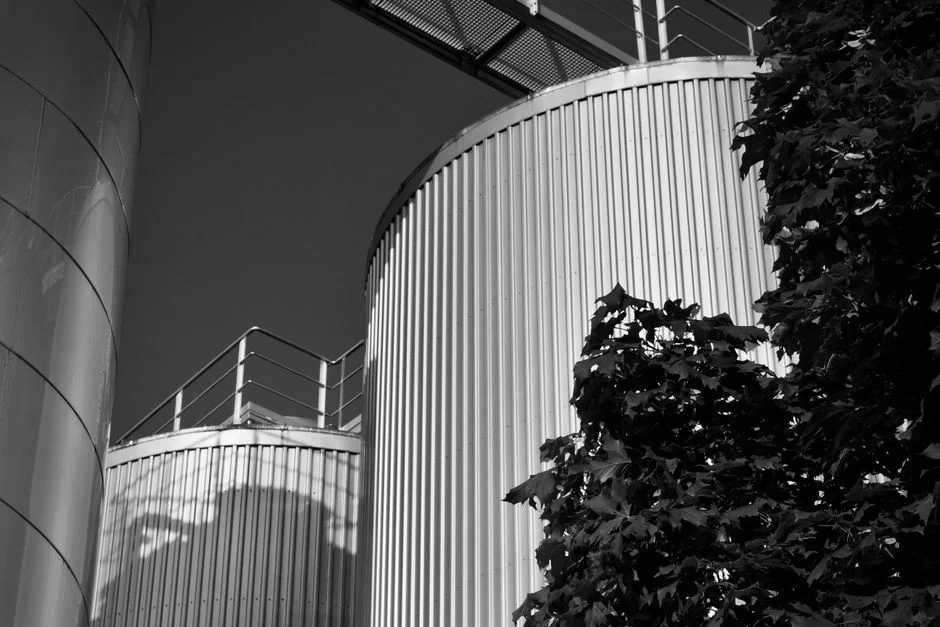
For high-rate anaerobic design, two operating envelopes apply. A UASB accepts 8–12 kg COD/m³/day at HRT 24–48 h and upflow velocity 0.7–1.2 m/h, achieving 70–85% COD removal in the 30–37 °C mesophilic range. An EGSB pushes 15–25 kg COD/m³/day at HRT 6–12 h and upflow velocity 4–8 m/h using effluent recirculation, which is why EGSB has become the default for distillery retrofits where footprint is constrained — see the EGSB reactor troubleshooting reference for the operating pitfalls. Biogas yield sits at 0.35–0.45 m³ per kg VS destroyed, with methane content 60–70%.
| Parameter | UASB | EGSB |
|---|---|---|
| OLR (kg COD/m³/day) | 8–12 | 15–25 |
| HRT (hours) | 24–48 | 6–12 |
| Upflow velocity (m/h) | 0.7–1.2 | 4–8 |
| COD removal (%) | 70–85 | 75–90 |
| Reactor footprint (relative) | 1.0× | 0.4–0.6× |
| Biogas CH₄ content (%) | 60–70 | 60–70 |
Worked sizing example for a 100 KLPD molasses distillery: 1,000 m³/day of spent wash at 100,000 mg/L COD = 100,000 kg COD/day. A UASB at 10 kg COD/m³/day needs 10,000 m³ of reactor volume; an EGSB at 20 kg COD/m³/day needs 5,000 m³. Daily biogas production at 75% COD removal and 0.40 m³/kg VS destroyed, with 80% VS in the digestate feed, is roughly 24,000 m³/day of raw biogas, or about 14,400–16,800 m³/day of methane — enough to fire a 4–6 MW CHP unit. The reactor volume drives the digester cost line; the gas volume drives the CHP revenue line, and the two are linked by the destruction efficiency and the VS fraction, not by independent assumptions.
Sludge Thickening and Conditioning Before Dewatering
Between the digester outlet and the dewatering feed, thickening and polymer conditioning set the cake quality. Gravity belt thickeners reach 3–6% DS, a standard dissolved air flotation (DAF sludge thickener for distillery applications) reaches 4–8% DS, and a conventional gravity thickener only manages 2–4% DS. DAF is preferred when the digestate carries a high fine colloidal fraction, which is the typical case for anaerobically digested distillery solids because the digester breaks floc structure and releases sub-100 µm colloids back into the liquor.
| Thickener type | Outlet DS (%) | Polymer demand (kg/t DS) | Best fit |
|---|---|---|---|
| Gravity thickener | 2–4 | 0 (no polymer) | Low-VS primary sludge |
| Gravity belt thickener | 3–6 | 1–3 | WAS-dominant streams |
| Dissolved air flotation | 4–8 | 2–4 | High fine colloid, distillery digestate |
Polymer conditioning is the second lever. Distillery digestate needs 3–8 kg active polymer per ton dry solids — roughly double the municipal 2–4 kg/t DS — because melanoidin-bound EPS sequesters cationic charge. Cationic polyacrylamide (CPAM) with 40–60% charge density and 8–12 MDa molecular weight is the standard. Run a cationic demand test (CDT) per batch: charge demand typically lands at 0.8–1.6 meq/L of centrate, and the optimal CPAM dose is the point where that demand collapses to <0.2 meq/L. Sludge age control and SRT stabilization in the upstream biological stage directly impact polymer demand — a 5-day swing in SRT can move dose by 1–2 kg/t DS, so the sludge age control and SRT automation discipline feeds back into dewatering OPEX.
Dewatering Equipment Comparison: Plate Press vs Decanter Centrifuge
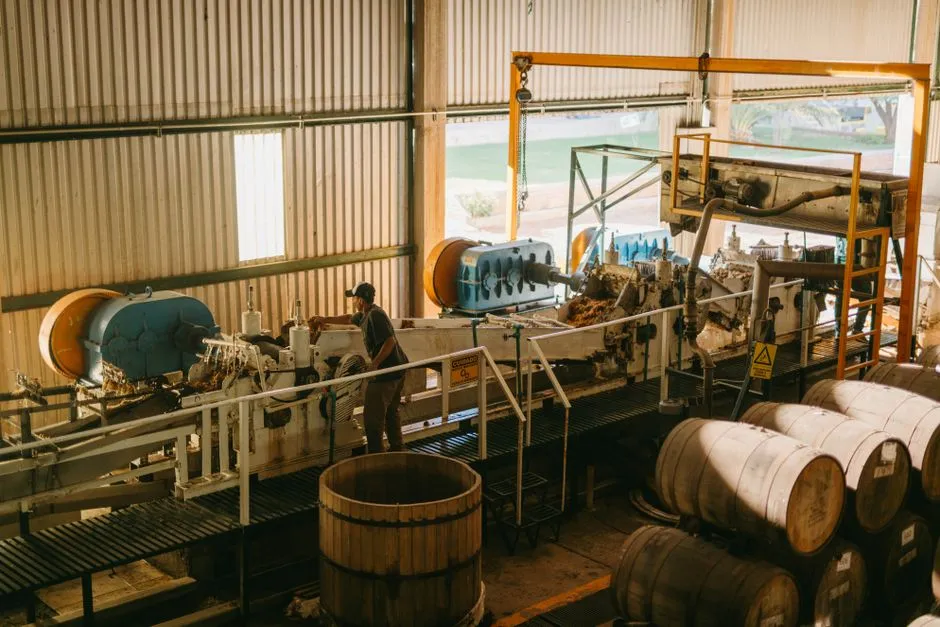
The selection decision comes down to four parameters: cake dry solids, solids capture, polymer demand, and OPEX. A plate and frame filter press for distillery sludge dewatering delivers 28–35% DS cake at 95–98% solids capture with 4–8 kg/t DS polymer demand, in batch cycles of 1–4 hours. A decanter centrifuge delivers 22–28% DS cake at 90–95% solids capture with 5–10 kg/t DS polymer demand, but it runs continuously at 2,000–4,000 G. Belt filter presses, the lowest-CAPEX option at 18–24% DS, are rarely specified for distillery sludge because high VS and high polymer demand push them outside their operating envelope within a season.
| Parameter | Plate and frame filter press | Decanter centrifuge | Belt filter press |
|---|---|---|---|
| Cake dry solids (%) | 28–35 | 22–28 | 18–24 |
| Solids capture (%) | 95–98 | 90–95 | 88–93 |
| Polymer demand (kg/t DS) | 4–8 | 5–10 | 3–6 |
| Operation | Batch (1–4 h cycle) | Continuous | Continuous |
| G-force / pressure | 7–15 bar feed | 2,000–4,000 G | Low pressure |
| Energy (kWh/m³ feed) | 0.3–0.6 | 1.2–2.0 | 0.2–0.4 |
| Footprint (relative) | 1.0× | 0.4–0.6× | 0.8–1.0× |
| CAPEX index (small plant) | 1.0× | 0.7–0.9× | 0.5–0.7× |
| OPEX index (per ton DS) | 1.0× | 1.2–1.5× | 0.9–1.1× |
Selection rule of thumb: feed flow under 20 m³/h favors a decanter centrifuge because the lower CAPEX and small footprint win; feed flow over 20 m³/h with landfill tonnage or cake-disposal cost as a binding constraint favors a plate press because the 6–10 percentage-point DS advantage cuts wet-tonnage by 25–40%. Space-constrained retrofits in existing tank farms almost always end up with a centrifuge despite the higher OPEX. Full design math for the centrifuge side is in the decanter centrifuge design guide.
2026 Compliance Targets and Cake Disposal Pathways
Effluent targets: India CPCB sets land-discharge COD <100 mg/L for distilleries; the EU Industrial Emissions Directive 2010/75/EU BAT-AEL band for waste water COD is 50–200 mg/L depending on receiving body. For pH and BOD cross-jurisdiction comparison, the pH discharge limit guide and the BOD discharge limit guide provide side-by-side reference tables. Cake disposal is governed by dry solids content: at 22–35% DS the cake passes the paint filter test and is non-hazardous landfill in most jurisdictions; above 30% DS it becomes a candidate for composting or soil amendment, which can flip disposal from a cost line to a revenue line. Biogas utilization at 35–40% electrical efficiency in a CHP unit recovers 1.4–1.8 kWh per m³ of biogas; surplus can be upgraded to biomethane at 95–98% methane content for grid injection or CNG displacement, where pipeline access exists.
2026 CAPEX and OPEX Benchmarks by Plant Size
For a defensible budget number, the following 2026 bands hold for a full EGSB digester + DAF thickener + plate press train, including civil works, instrumentation, and commissioning (HydropureWater field data, 2026):
| Plant size | CAPEX (USD) | OPEX (USD/m³ treated) | Biogas CHP offset | Payback (with CHP revenue) |
|---|---|---|---|---|
| <50 KLPD (small) | 350,000–800,000 | 0.8–1.5 | 10–20% of OPEX | 5–8 years |
| 50–150 KLPD (mid) | 1,200,000–2,800,000 | 0.5–0.9 | 25–40% of OPEX | 3–6 years |
| >150 KLPD (large) | 3,500,000–8,000,000 | 0.3–0.6 | 35–50% of OPEX | 2.5–5 years |
Polymer is the largest variable OPEX line after energy: 3–8 kg/t DS at USD 3–6/kg active polymer drives 30–50% of dewatering OPEX, which is why CDT dosing and CPAM selection deserve as much engineering attention as the dewatering equipment itself.
Frequently Asked Questions
Is anaerobic digestion or aerobic treatment better for distillery sludge?
High-rate anaerobic digestion (UASB/EGSB) is the front-runner: it removes 70–85% of COD while converting the organic load to biogas, and it cuts downstream sludge mass by ~50% versus aerobic-only treatment at 0.05–0.10 versus 0.30–0.45 kg VSS per kg COD removed.
How do I choose between a plate filter press and a decanter centrifuge?
Use feed flow and cake-disposal cost as the binding constraints: under 20 m³/h feed or space-constrained retrofits favor a decanter centrifuge; over 20 m³/h feed with landfill tonnage costs favor a plate press for its 28–35% DS versus 22–28% DS cake advantage.
What biogas yield should I expect from a distillery anaerobic digester?
Plan on 0.35–0.45 m³ biogas per kg VS destroyed at 60–70% methane; a 100 KLPD molasses distillery at 75% COD removal can produce 20,000–25,000 m³/day of raw biogas, supporting a 4–6 MW CHP unit.
What polymer dose is normal for distillery digestate dewatering?
Expect 3–8 kg active CPAM per ton dry solids — about double the municipal 2–4 kg/t DS — at 40–60% charge density and 8–12 MDa molecular weight, optimized by per-batch cationic demand testing.
What are the disposal options for dewatered distillery cake?
Cake at 22–35% DS passes the paint filter test for non-hazardous landfill in most jurisdictions; above 30% DS it becomes a candidate for composting or soil amendment, which can convert a disposal cost into a disposal revenue line.