What the pH Discharge Limit for Industry Actually Is in 2026
The pH discharge limit for industry in 2026 is typically 6.5–9.0 across most jurisdictions, with China requiring 6–9 under GB 8978, the US EPA setting 6.0–9.0 under 40 CFR Parts 405–471, the EU enforcing 6.0–9.0 under Directive 91/271/EEC, and Mexico allowing 5.0–10.0 under NOM-001-SEMARNAT-2021. Out-of-range effluent kills biological treatment and triggers heavy-metal leaching violations.
The 6.5–9.0 envelope is not an arbitrary band — it is the intersection of three independent chemistry and biology constraints. Below pH 6.0, sulfide-bearing streams release H₂S gas, sulfuric-acid corrosion of concrete sewers accelerates by a factor of 5–10 versus neutral pH, and amphoteric metal hydroxides (Zn, Cr, Al, Pb) redissolve into the water column, pushing dissolved heavy metals past categorical limits in the same 40 CFR parts. Above pH 9.0, nitrifying bacteria (Nitrosomonas, Nitrobacter) lose 50–90% of their ammonia-oxidation rate within 2 hours of exposure (HydropureWater field data, 2026), and calcium carbonate scaling on pipe walls, heat exchangers, and RO membranes rises exponentially above the CaCO₃ saturation index at pH 8.3.
For a multinational plant, the 6.5–9.0 band is the safe corridor. Anything inside that window protects downstream municipal biological treatment, prevents sewer corrosion, and keeps heavy metals in their precipitated hydroxide form so a clarifier or DAF can remove them. Anything outside it triggers enforcement. In 2026, regulators in India, China, and Mexico have moved from random spot checks to continuous online pH monitoring at the discharge point — a single 15-minute excursion can now generate an automatic violation flag (per CPCB 2024 amendment; per Mexico SEMARNAT 2021 update).
Country-by-Country pH Discharge Limits for Industrial Effluent
No single number fits every plant. The table below is the working reference I give every EHS manager who is auditing a multinational site in 2026. Always check the latest provincial or state notice — national limits are the floor, not the ceiling.
| Jurisdiction | Standard / Citation | pH Window | Scope / Notes |
|---|---|---|---|
| China | GB 8978-1996 (Integrated Wastewater Discharge Standard) | 6–9 | First-class pollutants (13) and 25 second-class categories; provincial tightening common in Jiangsu, Guangdong, Hebei |
| United States | EPA 40 CFR Parts 405–471 (Categorical Effluent Limits) | 6.0–9.0 | 56 industry subcategories — electroplating, metal finishing, textile, pulp & paper, petroleum refining, food processing |
| European Union | Council Directive 91/271/EEC, Article 7 | 6.0–9.0 | Industrial discharges to municipal sewers; IED 2010/75/EU sets 6.5–9.0 for direct discharge to receiving waters |
| India | CPCB Schedule VI (Industry-Specific Standards) | 6.5–9.0 (most); 6.0–9.0 (pharma, dyes, pesticides) | Tightened in 2024 amendment, fully enforced 2026; continuous online pH at outlet now standard |
| Mexico | NOM-001-SEMARNAT-2021 | 5.0–10.0 (general); 6.0–9.0 (rivers used as drinking-water source) | See the full Mexico-specific NOM-001 pH compliance guide |
| Kenya | NEMA Water Quality Regulations (2006, enforced 2026) | 6.5–9.0 | Effluent to inland surface waters; stricter for wetlands |
| Brazil | CONAMA Resolution 430/2011 | 5.0–9.0 | Federal floor; state CETESB (São Paulo) tightens to 6.0–9.0 |
| Saudi Arabia | PME (Presidential Metering & Environment) / NCEC | 6.0–9.0 | National ceiling; Royal Commission zones (Yanbu, Jubail) require 6.5–8.5 |
| Australia | State-level (EPA NSW, EPA Vic, DES Qld) | 6.5–9.0 | No single federal pH rule; licensing by site |
The pattern is clear: 6.0–9.0 is the most common window, with Mexico's 5.0–10.0 being a notable outlier. If you are designing one neutralization skid for a multi-jurisdiction client, target 6.5–9.0 as the safe center band and use online pH control with adjustable setpoints to swing to 6.0–9.0 or 6.5–8.5 where required.
Why pH Compliance Fails: Common Industrial Sidestreams

pH compliance fails because most process streams sit far outside the 6.5–9.0 envelope at the point of generation, and operators discover this only when the equalization basin overflows or the lab flags a monthly composite sample. Here is the typical sidestream map I use when walking a plant floor for the first time.
Acid sidestreams dominate in metalworking and electronics: metal pickling at pH 1–3, battery manufacturing at pH 0.5–2, and semiconductor wet-etch between pH 1–4 (HF, HNO₃, HCl-based) all need caustic neutralization, and the spent etchant can carry 5,000–50,000 mg/L of dissolved metals that precipitate as hydroxides once the pH crosses 8. See the wet-etching wastewater treatment guide for the chemistry specifics. Alkaline sidestreams dominate in textiles, food, and pulp: textile scouring at pH 10–13, food and dairy clean-in-place (CIP) at pH 11–12, kraft pulping at pH 11–13, and electroplating rinse water at pH 12–14 all need acid neutralization or CO₂ sparging.
Buffer-heavy streams — dairy whey, fermentation broth, dye-bath effluent with high phosphate or citrate — resist pH shift because the buffering capacity consumes 2–4× more reagent per pH unit than unbuffered streams. These streams are the ones that push a plant from single-stage to two-stage neutralization, and they are the most common reason a "simple" pH dosing skid fails its first commissioning.
Two-Stage Neutralization Process Flow and Equipment
A two-stage neutralization system is the standard answer when flow exceeds 5 m³/h, pH swings exceed 3 units, or the stream carries precipitable metals. The four-step equipment train is what you should see on any serious P&ID for a 2026 industrial pH adjustment skid.
Step 1 — Equalization basin. 4–24 hours of hydraulic retention time (HRT) with mechanical or submersible mixing. Target is to dampen the outlet to within ±1.5 pH units of the daily average; this lets the downstream reactors run at steady-state dose instead of chasing peaks.
Step 2 — Primary neutralization reactor. 10–30 minutes HRT, in-line pH probe, metering pump dosing 20–50% NaOH or 30–98% H₂SO₄. The reactor brings the stream into the rough target band (typically pH 7–9) and consumes 80–90% of the total reagent demand. Use an automatic chemical dosing system for pH adjustment with a PID-controlled metering pump here.
Step 3 — Secondary polishing reactor. Smaller vessel, 5–10 minutes HRT, tighter PID loop holding ±0.3 pH units to the discharge setpoint, 4–20 mA pH transmitter to the plant DCS or SCADA. This is the trim stage that catches reagent over-dosing from Step 2 and protects against excursions.
Step 4 — Solids separation. A lamella clarifier or DAF system for metal-hydroxide sludge removal after pH shift removes the precipitated metal hydroxides, followed by sludge thickening and a filter press. For high-rate or space-constrained sites, a lamella clarifier for pH-stage solids separation cuts footprint by 60–80% versus a conventional settling tank.
Reagent Selection and Stoichiometry
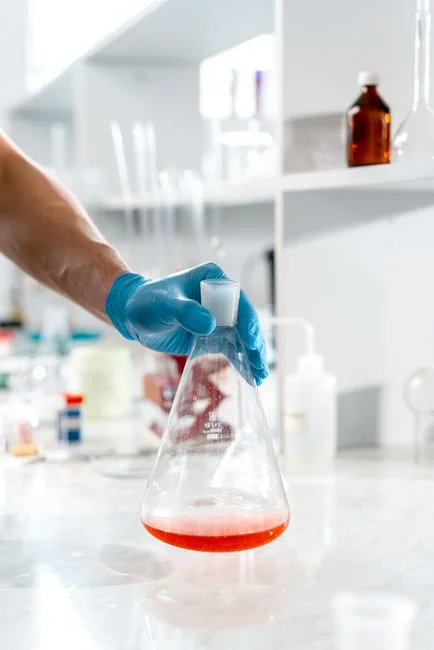
Choosing the right reagent is half chemistry, half operating-cost math. The table below is the working reference I hand to procurement.
| Reagent | Form / Concentration | Typical Use | Notes |
|---|---|---|---|
| NaOH (caustic soda) | 15–50% liquid | Default for acid neutralization | Soluble, fast reaction, higher cost per kg OH⁻ |
| Ca(OH)₂ (lime) | 10–20% slurry | Acid streams with high metals or COD | 40–60% cheaper per kg OH⁻, generates 2–4× more sludge |
| Na₂CO₃ (soda ash) | Powder or 10–15% solution | Food, beverage, low-strength acid | Mild, adds sodium, risk of CO₂ off-gas |
| H₂SO₄ (sulfuric acid) | 30–98% | Default for alkaline neutralization | Exothermic at >70%, sulfate residue can damage RO |
| HCl (hydrochloric acid) | 30–38% | Alkaline streams where chloride is acceptable | Cleaner reaction, more expensive, fumes |
| CO₂ (carbon dioxide) | Gas, on-site generation or bulk | Food, brewery, mildly alkaline (pH 9–10.5) | Safe, no chemical residue, limited solubility at high pH |
Stoichiometry: 1 kg of pure H₂SO₄ neutralizes 1.02 kg of NaOH. For a typical 1,000 mg/L alkalinity stream at 10 m³/h, expect 8–12 L/h of 50% NaOH to reach pH 7.0. Always oversize the metering pump by 20–30% to handle peak load and add a calibration cycle at every shift change.
Cost of pH Compliance in 2026: CAPEX and OPEX Ranges
Budget numbers for a packaged pH adjustment skid in 2026: $8,000–$25,000 CAPEX at 1–5 m³/h, $30,000–$120,000 at 10–50 m³/h, and engineered systems above 50 m³/h run $150,000+ (HydropureWater field data, 2026). An automatic chemical dosing system for pH adjustment typically accounts for 25–40% of total skid cost, equalization tanks 20–30%, instrumentation and control 15–20%, and the lamella or DAF solids-removal stage 15–25%.
On the OPEX side, reagent is 60–75% of total cost, power 10–15%, maintenance 5–10%, and lab plus online probes 5–10%. The OPEX benchmark is $0.05–$0.22 per m³ treated for a balanced 6.5–9.0 envelope using NaOH and H₂SO₄, with two-stage optimization typically cutting reagent 15–35% versus single-stage control by eliminating over-dosing (HydropureWater project data, 2026).
Compliance penalty reference: most jurisdictions fine $5,000–$50,000 per exceedance event plus production-line stop orders, and a single non-compliance event in 2026 typically costs more than a year of reagent OPEX. At a mid-sized plant (10–50 m³/h, 6,000 operating hours/year), the payback on a packaged skid is 6–18 months — sell it to finance that way.
How to Choose the Right pH Control Strategy for Your Plant

The decision matrix below is the framework I use when a client asks, "do we really need two-stage?" The honest answer is usually "no" for low-flow, narrow-swing streams — and "absolutely yes" once metals or wide pH swings enter the picture.
| Plant Condition | Recommended Strategy | Key Equipment |
|---|---|---|
| Flow <5 m³/h, pH swings <3 units, no metals | Single-stage dosing with PID loop | Equalization tank + one reactor + dosing pump + pH probe |
| Flow 5–50 m³/h, pH swings >3 units, mixed acids/alkali | Two-stage with equalization + dual reactor + online pH/ORP | EQ basin, primary and polishing reactors, dual metering pumps, DCS tie-in |
| High metals (Cu, Ni, Zn, Cr) at pH extremes | Two-stage + lamella clarifier or DAF, target pH per metal hydroxide minimum solubility | Cu 8.5–9.5, Ni 9.5–10.0, Zn 9.0–10.0, Cr 7.5–8.5 |
| Food, beverage, brewery, dairy | CO₂ over H₂SO₄ for alkaline streams to protect downstream RO and product quality | On-site CO₂ generation or bulk tank, sparging reactor |
If your plant is electroplating in Saudi Arabia or another high-temperature, high-salinity jurisdiction, see the electroplating wastewater treatment and pH control reference for region-specific reactor sizing. For high-COD dye and pharmaceutical effluent, the Fenton oxidation system for dye wastewater guide shows how pH adjustment to 3.0–4.0 for Fenton followed by re-neutralization to 6.5–9.0 fits into the two-stage train.
Frequently Asked Questions
What is the standard pH limit for industrial wastewater discharge? The standard pH discharge limit for industry in 2026 is 6.5–9.0 in most jurisdictions, with China, the US, the EU, and India using 6.0–9.0, and Mexico allowing 5.0–10.0 under NOM-001-SEMARNAT-2021.
How do you neutralize acidic industrial wastewater? Dose 30–50% NaOH in a two-stage reactor with online pH control; for high-COD streams, use lime (Ca(OH)₂) to also remove colloidal solids and reduce reagent cost by 40–60% per kg OH⁻.
What happens if industrial wastewater pH is too high or too low? pH below 6 corrodes sewer lines, releases H₂S, and redissolves heavy metals; pH above 9 kills nitrifying bacteria, scales pipes with CaCO₃, and violates 40 CFR 405–471 and EU Directive 91/271/EEC limits.
Do pH limits apply to every industry? Yes, but sector-specific categorical standards (40 CFR 405–471 in the US, CPCB Schedule VI in India) sometimes narrow the window to 6.0–8.5 for sensitive downstream uses such as drinking-water source catchments or aquaculture.
How much does an industrial pH adjustment system cost? A packaged pH adjustment skid runs $8,000–$120,000 CAPEX in 2026 depending on flow, with OPEX of $0.05–$0.22 per m³ treated using NaOH and H₂SO₄, and typical payback of 6–18 months once compliance penalties are factored in.