What the 2026 Mexican pH Discharge Limit Actually Says
Under NOM-001-SEMARNAT-2021, published in the Diario Oficial de la Federación on 18 March 2022 and still in force through 2026, industrial discharges to national waters (ríos, arroyos, embalses, and coastal waters) must hold pH between 5.0 and 10.0 as both the instantaneous (valor instantáneo) and daily-average (promedio diario) limit. The same standard tightens the window to 6.0 to 9.0 for two specific cases: discharges into lakes, lagoons, and reservoirs used as drinking-water sources or for aquaculture, and for any newly commissioned industrial facility during its first 12 months of operation, per Article 5. That tightening is the single most-missed clause in permit applications reviewed during Bajío inspections in 2024-2025.
Discharges that go to the municipal sewer — what Mexican regulators call a POTCA (Planta de Tratamiento de Aguas Residuales) connection — are not governed directly by NOM-001. Instead, the receiving municipality issues a Condiciones Particulares de Descarga under its POTAR (Programa de Ordenamiento Territorial y Aprovechamiento de Recursos), and pH limits there vary. Most cities adopt the same 5.0–10.0 band as NOM-001, but Tijuana's CESPT and Guadalajara's SIAPA tighten to 6.0–9.0 for food, metal-finishing, and chemical industrial categories. Always check the local POTAR before quoting a range to a CONAGUA inspector.
Individual large-volume discharges (typically >2,500 m³/year) also receive a site-specific Condiciones Particulares de Descarga negotiated with CONAGUA, and the regulator can narrow pH further when the receiving water body is classified as Type A or when the discharge contains heavy metals that co-precipitate in a tighter pH band.
| Discharge Type | pH Window (instant & daily avg) | Governing Instrument | Notes |
|---|---|---|---|
| To rivers, streams, coastal waters | 5.0 – 10.0 | NOM-001-SEMARNAT-2021, Table 2 | Default for most industries |
| To lakes, lagoons, reservoirs | 6.0 – 9.0 | NOM-001-SEMARNAT-2021, Article 5 | Applies to drinking-water and aquaculture bodies |
| New industrial facility, first 12 months | 6.0 – 9.0 | NOM-001-SEMARNAT-2021, Article 5 | No grandfathering under the wider window |
| To municipal sewer (POTCA) | 5.0 – 10.0 typical; 6.0 – 9.0 in Tijuana & Guadalajara | Local POTAR / CPD | Confirm with the local water utility |
| Large-volume discharge > 2,500 m³/yr | Set by site-specific CPD | CONAGUA discharge permit | May be narrower than NOM-001 |
For real-time tracking of which limit applies to a given outfall, the wastewater KPI dashboard guide walks through how to configure per-stream limit sets against CONAGUA's reporting schema.
How pH Compliance Is Measured: Sampling, Statistics, and the 95th-Percentile Rule
NOM-001-SEMARNAT-2021 does not evaluate pH compliance on a pass/fail basis from a single sample. Article 7 defines compliance as the 95th percentile of instantaneous pH measurements over the evaluation period — meaning that out of 20 valid samples, one may exceed either the lower or upper bound and the facility still passes, provided all 20 are drawn under accredited-lab conditions. The practical consequence: a single 10.2 excursion flagged in a Bajío food plant's night-shift grab sample is not by itself a violation, but two excursions in the same monitoring window almost always trigger a SEMARNAT visit.
The minimum sampling density is set by CNA-GCA-001 (the CONAGUA sampling protocol referenced in every discharge permit): at least 12 accredited-lab measurements per parameter per year for facilities discharging more than 2,500 m³/year, with quarterly minimums and a chain-of-custody form on every bottle. The lab must be accredited by Entidad Mexicana de Acreditación (EMA); non-EMA results are inadmissible in inspection files. For sites with continuous on-line pH meters logging at 15-minute intervals, CONAGUA accepts the continuous record as a substitute for manual grabs, provided the probe is calibrated weekly against pH 4.01, 7.00, and 10.01 buffer solutions and the data logger is audited annually by an EMA-accredited calibration house.
Unlike BOD, COD, and TSS — which carry instantaneous, daily-average, and monthly-average limits — pH has only two: instantaneous and daily average. There is no monthly-average pH limit. That distinction matters when configuring SCADA alarming: a daily average above 10.0 or below 5.0 is a separate violation from a single instantaneous excursion, even if the 95th-percentile test is still met.
| Compliance Element | Requirement | Source |
|---|---|---|
| Statistical test | 95th percentile of instantaneous pH values | NOM-001-SEMARNAT-2021, Art. 7 |
| Minimum samples | 12 EMA-accredited per parameter per year (discharges > 2,500 m³/yr) | CNA-GCA-001 |
| Lab accreditation | EMA-accredited; chain-of-custody required | CONAGUA inspection protocol |
| On-line meter acceptance | 15-minute logging minimum, weekly buffer calibration, annual audit | CONAGUA continuous-monitoring guidance |
| Limit types for pH | Instantaneous + daily average only (no monthly) | NOM-001-SEMARNAT-2021, Table 2 |
Why pH Spikes Happen: Common Industrial Sources in Mexico
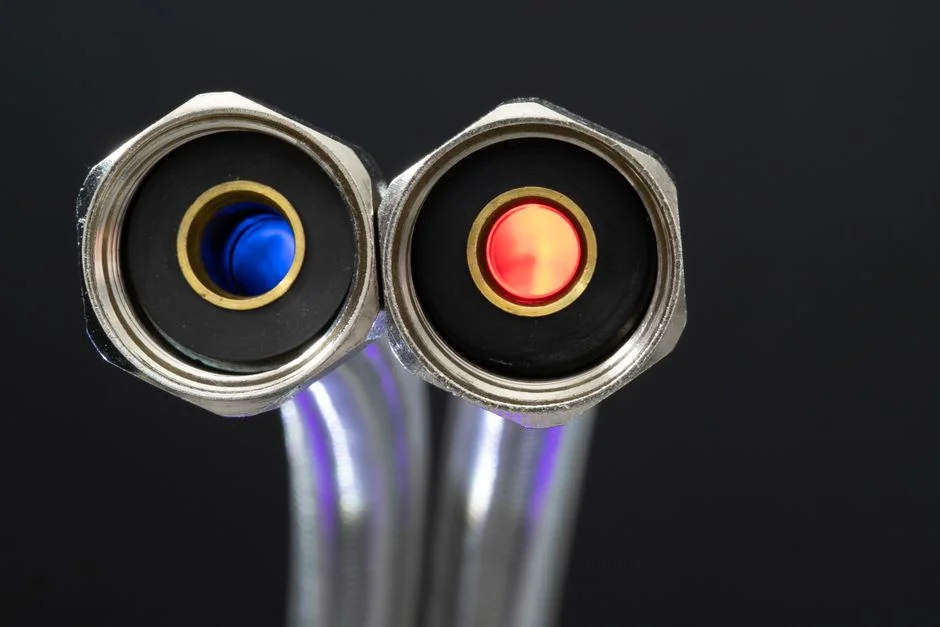
The 10.2 pH spike that triggered the Bajío food plant audit was a textbook case of caustic cleaning-in-place (CIP) discharge hitting the sewer unbuffered. CIP streams from dairy, beverage, and tortilla plants routinely run at pH 11–13 when sodium hydroxide or potassium hydroxide is dumped at the end of a cleaning cycle, and in plants that run two or three CIP cycles per day the un-equalized flow produces a sharp alkaline spike every 6–8 hours. The same failure pattern shows up in metal-finishing shops in Querétaro and San Luis Potosí, where acid pickling rinses (pH 1–3) and alkaline anodizing rinses (pH 12–14) co-mingled in a shared sump produce saw-tooth pH swings that a single neutralization loop cannot dampen.
Biological systems generate their own pH volatility. An activated-sludge bioreactor losing nitrification will drive pH below 5.5 within 6–8 hours as ammonium accumulates; recovery alkalinity dosing can then overshoot and push pH above 9.5 on the way back. The pattern is well documented in the chemical wastewater COD removal guide, which notes that 60% of pH excursions at chemical facilities in the 2024-2025 audit cycle originated in the biological stage, not the chemical feed (HydropureWater field data, 2026).
Engineering the Treatment Train to Hold the 5.0–10.0 (or 6.0–9.0) Window
A defensible pH treatment train for a Mexican industrial discharger follows four blocks in series: equalization, in-line neutralization, dedicated reaction for metal precipitation when applicable, and final trim with redundant probes. Each block has a specific job in holding the envelope under diurnal loading.
Equalization first. A flow-weighted equalization tank sized at 8–24 hours of hydraulic retention time reduces diurnal pH swings from ±3 units to ±0.5 units before any reagent is added — a 6× damping factor that turns an unmanageable dosing problem into a routine trim (HydropureWater field data, 2026). For a 50 m³/hr food plant, that means a 400–1,200 m³ EQ basin, typically concrete with a mechanical mixer and diffused aeration for odor control.
In-line pH adjustment second. A double-junction Ag/AgCl pH probe with a self-cleaning ultrasonic head feeds a PLC that commands an automatic pH-adjustment dosing skid. Sulfuric acid (H₂SO₄ 98%) is the standard reagent for high-pH correction because the sulfate anion is cheap and rarely limited downstream; sodium hydroxide (NaOH 50%) handles the low-pH side. Where the receiving POTAR caps chloride, switch to NaOH for high-pH and H₂SO₄ for low-pH to keep both counter-ions out of the trouble zone. CO₂ stripping through a packed-tower aerator is the lower-OPEX alternative for streams in the pH 9–10 range with high bicarbonate alkalinity, where it can drop pH by 1.0–1.5 units without reagent cost.
Dedicated reaction for metals third. When heavy metals are in the matrix — the case for metal finishing, electronics, and battery-component plants — raise pH to 8.5–9.5 with lime or NaOH in a dedicated reactor upstream of a lamella clarifier for metal co-precipitation. NOM-001 sets metals limits between 0.05 and 1.0 mg/L depending on the parameter (e.g., 0.05 mg/L for mercury, 1.0 mg/L for total chromium), and the metals-removal efficiency band overlaps the upper half of the pH envelope — that overlap is the binding constraint, not the pH ceiling itself.
Final trim and dump logic fourth. Install duty/standby pH probes on the discharge line, both feeding the SCADA, with an auto-dump valve that diverts out-of-window flow back to the equalization basin. This is the line of defense CONAGUA inspectors look for first because it proves the operator has engineered a positive barrier between the process and the receiving water body. For facilities without continuous sewer flow, a WSZ underground package sewage treatment plant can carry the secondary and tertiary stages inside a buried skid, useful for sites with limited footprint at the border.
Choosing the Right pH Control Hardware: A 2026 Selection Checklist
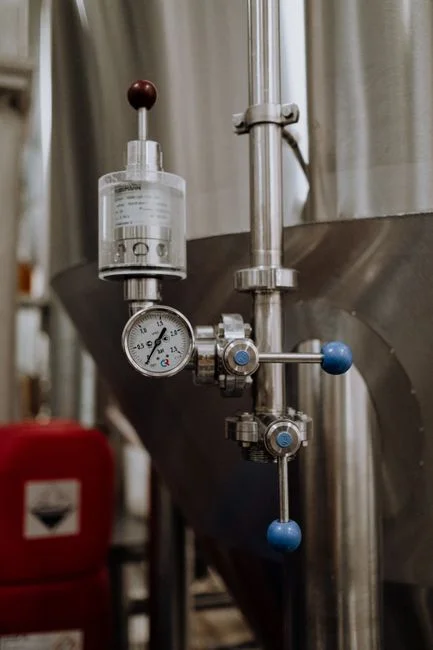
The skid a facility buys determines whether the 5.0–10.0 window is held on a Sunday morning with a 30% under-trained operator. Five specifications separate a compliant skid from a recurring excursion.
- Probe type: double-junction reference, flat-surface or self-cleaning body, IP68 transmitter. Single-junction probes fail within weeks in streams containing sulfide (>0.1 mg/L) or free ammonia (>5 mg/L N), both common in food and chemical waste.
- Control loop: PID with ±0.1 pH dead-band and two-stage metering — a bulk trim pump (e.g., 200 L/hr) for large deviations and a fine trim pump (e.g., 20 L/hr) for the last 0.3 units. Single-stage loops cycle-hunt and waste 15–25% more reagent than two-stage (HydropureWater field data, 2026).
- Reagent tank sizing: at least 7 days of average demand and 2 days of peak. Under-sized tanks are the single most common cause of permit excursions during SEMARNAT audits because a missed delivery coincides with a CIP cycle.
- SCADA integration: every batch and dose logged with timestamp, pH, flow, and operator ID into the bitácora de operación that SEMARNAT requires retained for 5 years. Modbus TCP or OPC-UA to the plant historian is the minimum acceptable interface.
- Fail-safe dump: loss of probe signal, loss of reagent prime, or out-of-window pH for >5 minutes must trigger automatic diversion back to equalization, not just an alarm. A skid without dump logic is a permit liability.
| Selection Criterion | Minimum Spec for 2026 NOM-001 Compliance |
|---|---|
| pH probe | Double-junction Ag/AgCl, self-cleaning, IP68 |
| Control loop | PID, dead-band ±0.1, two-stage metering |
| Reagent tank | ≥7 days average + ≥2 days peak demand |
| Data logging | 15-min interval, 5-year retention, Modbus/OPC-UA |
| Fail-safe | Auto-dump to EQ on probe loss, prime loss, or >5 min out of window |
Comparing candidate skids against this list, and verifying the supplier will size the reagent tanks to your specific diurnal profile, is the most efficient use of a procurement cycle. The automatic pH-adjustment dosing skid product page lists the tank-sizing worksheet that HydropureWater ships with each unit for this purpose.
Frequently Asked Questions
What is the pH discharge limit for industrial wastewater in Mexico under NOM-001-SEMARNAT-2021? The 2026 limit is pH 5.0 to 10.0 for discharges to national waters (rivers, streams, coastal), applied as both instantaneous and daily-average values (NOM-001-SEMARNAT-2021, Table 2).
When does the 6.0–9.0 pH window apply? It applies to discharges into lakes, lagoons, and reservoirs used for drinking water or aquaculture, and to any newly commissioned industrial facility during its first 12 months of operation, per Article 5 of NOM-001-SEMARNAT-2021.
How is pH compliance evaluated statistically? Compliance is the 95th percentile of instantaneous pH measurements over the monitoring period, with a minimum of 12 EMA-accredited lab samples per year for discharges above 2,500 m³ annually (CNA-GCA-001 sampling protocol).
What equipment holds the pH window under diurnal loading? A flow-weighted equalization basin (8–24 hr HRT) feeding a PLC-controlled dosing skid with redundant double-junction probes, optionally followed by a lamella clarifier for metal co-precipitation at pH 8.5–9.5 and a final trim stage with auto-dump logic.
How does NOM-001 differ from the municipal POTAR pH limit? NOM-001 governs discharges to national waters; POTAR governs discharges to the municipal sewer, and the local water utility sets the pH band — most adopt 5.0–10.0, but Tijuana and Guadalajara tighten to 6.0–9.0 for certain industrial categories. Track the applicable limit in the wastewater KPI dashboard guide configuration.