Why Saudi Arabia's 2026 PME Limits Reshape Electroplating Wastewater Design
Electroplating wastewater treatment in Saudi Arabia must meet PME/NCEC 2026 discharge limits of 0.1 mg/L for total chromium, 0.05 mg/L for Cr(VI), 0.1 mg/L for nickel, copper and cadmium, 0.5 mg/L for zinc, and 150 mg/L COD. The 2026 PME update tightened Cr(VI) by 50% versus the 2018 RCJY reference still embedded in some Modon tenancy contracts, and cut total chromium, nickel, copper, and cadmium limits from 0.2–0.5 mg/L down to 0.05–0.1 mg/L — a 30–50% reduction in allowable heavy-metal load per cubic metre discharged. pH is now locked at 6–9, TSS at 50 mg/L, and oil & grease at 10 mg/L. The compliance picture is no longer "treat to sewer" but "treat to reuse-grade, then prove it." In 2025 a Riyadh second-ring plating facility received a 60-day temporary closure order from MARA'h inspectors for effluent Cr(VI) at 0.42 mg/L — more than 8× the new ceiling — a pattern repeated in at least 14 documented PME enforcement actions across Jeddah, Dammam, and Yanbu in 2024–2025. Modon's 35+ industrial cities plus RCJY's Jubail and Yanbu clusters host an estimated 200+ active plating shops as of 2025, and Vision 2030 industrial-citation scoring now rewards plants that demonstrate closed-loop water reuse above 70%, not merely compliance with discharge ceilings. Any treatment train specified in 2026 that omits RO recovery or ZLD readiness is effectively a stranded-asset risk the moment a tenancy renewal lands.
Electroplating Wastewater Chemistry: Why Single-Stage Treatment Fails
Electroplating rinse water carries four coexisting contaminant classes that defeat any single-pass chemistry: free metal cations (Cu²⁺, Ni²⁺, Zn²⁺ at 20–200 mg/L), oxyanions (Cr(VI) as CrO₄²⁻/HCrO₄⁻ at 5–80 mg/L), complexed metals (Cu-EDTA, Ni-citrate from brighteners at 0.5–5 mg/L as metal), and cyanide complexes (Cu(CN)₃²⁻, Zn(CN)₄²⁻ at 0.5–10% in cyanide-bearing rinse lines). Ruan et al. (Chemosphere 2023) showed that organic-anion intercalated LDHs (OLDHs) form at pH ≤ 7 with Ksp 3.24×10⁻¹⁹, while inorganic-anion LDHs (ILDHs) form only at pH = 8 with Ksp 2.98×10⁻¹⁸ — a one-unit pH swing cannot precipitate both anionic Cr(VI) species and cationic Cu/Ni simultaneously. The practical consequence: simple NaOH precipitation to a single pH setpoint leaves residual Ni at 2–5 mg/L, more than 20× the 0.1 mg/L PME ceiling, and leaves Cr(VI) untouched because chromate does not precipitate as a hydroxide at any pH. Cr(VI) must first be reduced to Cr(III) under acidic conditions, then the combined Cr(III)+Cu+Ni+Zn stream can be precipitated as mixed hydroxide. Compounding the problem, sulfate, chloride, and borate from plating salts drive raw TDS to 1,000–5,000 mg/L, which slows floc kinetics by 30–50% and forces a downstream RO polish to hit both the dissolved-solids and the dissolved-copper limits simultaneously.
The 2026 Compliant Process Train: Step-by-Step Design
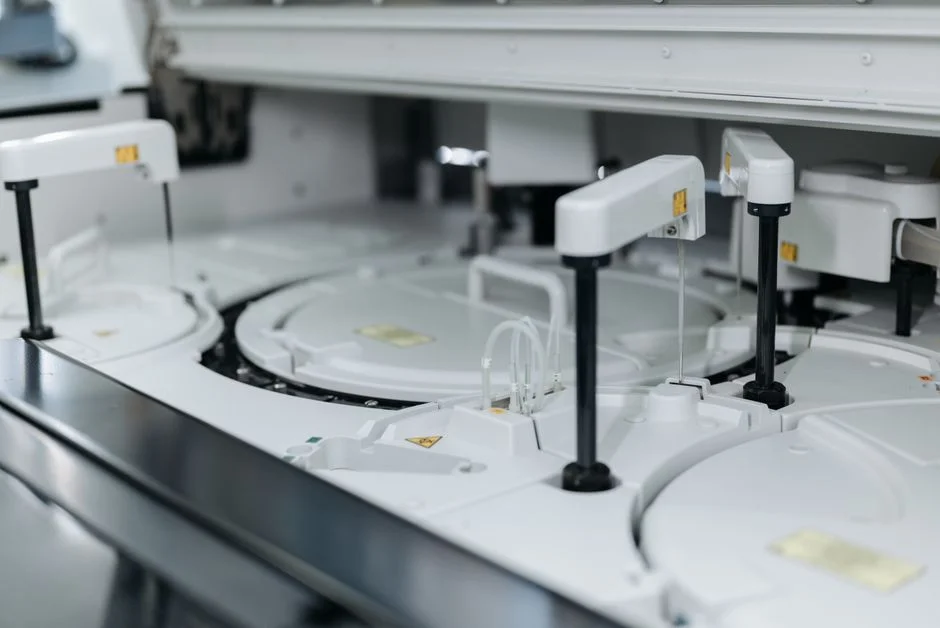
A defensible 2026 train for a 5–50 m³/h Saudi plating line runs in seven stages. The parameter envelope below is what should appear on a P&ID issued for tender.
| Stage | Unit operation | Key parameter | Operating range | Failure mode if skipped |
|---|---|---|---|---|
| 1 | Equalization | HRT | 8–24 h, pH 1.5–4.0 raw | Shock load to reduction stage, ORP probe overshoot |
| 2 | Cr(VI) reduction | ORP setpoint | < +250 mV, pH 2.0–2.5, 30–60 min | Cr(VI) passes through to RO, permeate non-compliant |
| 3 | Cyanide destruction | NaOCl dose | 2.73 g Cl₂/g CN⁻, pH 10.5–11.0 | CN⁻ carries through to MBR, toxic to biomass |
| 4 | Hydroxide precipitation | pH | 9.0–9.5, 30 min floc maturation | Residual Ni 2–5 mg/L > 0.1 mg/L PME limit |
| 5 | Lamella / DAF system for metal hydroxide floc removal or lamella clarifier for 20–40 m/h surface loading | Surface loading | 20–40 m/h (lamella), 4–25 m/h (DAF) | TSS carryover chokes MBR membranes within 72 h |
| 6 | MBR polishing stage | MLSS / pore | 8,000–12,000 mg/L, 0.1–0.4 µm PVDF | SS > 5 mg/L fouls RO, permeate SDI > 5 |
| 7 | RO system with 90–95% permeate recovery | Recovery / reject | 90–95% permeate, 50–100 mg/L Cu/Ni in reject | Discharge to sewer, lose reuse credit |
Step-by-step engineering notes. Step 1 equalization uses HDPE-lined concrete with mechanical agitator at 4–6 m/s tip speed; cyanide-bearing rinse streams are segregated to a dedicated alkaline chlorination line to avoid acid-side HCN evolution. Step 2 reduction is dosed by inline ORP probe in a PLC closed loop: FeSO₄·7H₂O at 1.5–2.0× stoichiometric dose (16 g FeSO₄ per g Cr(VI)) is preferred over NaHSO₃ where downstream iron-tolerant RO membranes are specified, because Fe²⁺ also coagulates colloidal metals. Step 3 alkaline chlorination proceeds to breakpoint — CN⁻ → CNO⁻ at pH 10.5 then CNO⁻ → CO₂ + N₂ at pH 8 after 30 min — with residual Cl₂ held below 1 mg/L before discharge to the precipitation basin. Step 4 uses NaOH (preferred for RO downstream) or lime (60–70% cheaper per kg but +30–40% sludge mass). Step 5 is the workhorse solids-separation step: DAF for flows below 15 m³/h where floc is light and buoyant, lamella for higher flows where footprint matters. Step 6 MBR operates at HRT 6–10 h with coarse-bubble aeration at 0.3–0.5 m³ air per m³ permeate, achieving effluent SS < 1 mg/L — a hard prerequisite for RO SDI < 3. Step 7 RO recovery of 90–95% sends a 50–100 mg/L Cu/Ni concentrate to evaporation pond, mechanical vapor recompression (MVR), or crystallizer depending on ZLD scope.
Sludge, Chemical, and Reagent Budgeting
OPEX line items for a Saudi 20 m³/d line scale predictably once the metal mass balance is fixed. Metal-hydroxide sludge yield runs 1.5–2.5 kg dry solids per kg of total heavy metals removed; for 20 m³/d at 200 mg/L influent mixed metals that is 6–10 t/d wet sludge at 20% DS, or roughly 1.2–2.0 t/d dry cake after a filter press for metal hydroxide sludge dewatering producing 30–35% DS. NaHSO₃ consumption is ~2.0 kg per kg Cr(VI) reduced, with 2026 KSA bulk pricing at $0.45–0.65/kg; FeSO₄·7H₂O at the same stoichiometric loading costs ~$0.18–0.28/kg but adds an Fe³⁺ load that downstream RO must tolerate. Anionic polyacrylamide flocculant dose is 1–3 mg/L at ~$2–4/kg landed in Dammam or Jeddah. PLC-controlled chemical dosing for reduction and precipitation typically cuts reagent overuse by 12–18% versus manual dosing and is a low-payback automation item.
| Reagent / consumable | Specific consumption | 2026 KSA bulk price | Notes |
|---|---|---|---|
| NaHSO₃ (Cr reduction) | 2.0 kg / kg Cr(VI) | $0.45–0.65/kg | Cleaner downstream than FeSO₄ |
| FeSO₄·7H₂O (alt. reductant) | 16 kg / kg Cr(VI) | $0.18–0.28/kg | Adds Fe³⁺ to RO feed |
| NaOH (precipitation) | 0.8–1.2 kg / m³ | $0.35–0.55/kg | Preferred when RO follows |
| Lime Ca(OH)₂ (alt.) | 1.5–2.0 kg / m³ | $0.12–0.18/kg | 60–70% cheaper, +30–40% sludge |
| NaOCl (cyanide destruction) | 2.73 g Cl₂ / g CN⁻ | $0.30–0.45/kg as Cl₂ | Only for cyanide-bearing lines |
| Anionic PAM flocculant | 1–3 mg/L | $2–4/kg | Prepare 0.1% solution |
| Metal hydroxide dry sludge | 1.5–2.5 kg / kg metal removed | Hazardous disposal $80–150/t | Classified KSA hazardous waste |
Cost Benchmarks: CAPEX and OPEX for a 20 m³/d Saudi Plant
For a 20 m³/d Saudi electroplating wastewater line, 2026 CAPEX for a complete reduction + precipitation + DAF + MBR + RO train runs $280,000–$520,000 depending on automation tier, material of construction (PP vs SS304 vs SS316), and whether a full ZLD block is included. A precipitation + DAF-only train sized for sewer discharge after PME compliance lands at $140,000–$240,000 — half the capital, but the plant forfeits the water-reuse credit and remains exposed to any future tightening of PME limits. OPEX per cubic metre treated runs $1.40–$2.80 for the full train, versus $0.65–$1.20 for the precipitation-only configuration. OPEX weighting is consistent across Saudi plants in our 2024–2025 commissionings: chemicals 35–45%, sludge disposal 15–25% (KSA hazardous-waste tipping is $80–150/t), energy 20–30%, labor 10–15%, maintenance 5–10%. The 2026 KSA industrial tariff at SAR 0.26/kWh (~$0.069/kWh) is roughly 40–60% below European industrial benchmarks, which shifts the OPEX balance toward chemical cost rather than pumping cost — a real reason to specify ORP-controlled NaHSO₃ dosing rather than over-stoich lime. RO recovery at 90–95% typically pays back the RO CAPEX premium in 18–30 months through water-reuse credit (industrial potable water in KSA runs SAR 5–9/m³ ≈ $1.30–2.40/m³) plus avoided PME discharge fees.
| Configuration (20 m³/d) | CAPEX 2026 (USD) | OPEX ($/m³) | Water recovery | PME compliance |
|---|---|---|---|---|
| Reduction + precipitation + DAF only (sewer discharge) | $140,000–$240,000 | $0.65–$1.20 | 0% | Yes, if RO not required |
| Full train + RO (reuse to rinse) | $280,000–$420,000 | $1.40–$2.20 | 90–95% | Yes, with margin |
| Full train + RO + MVR crystallizer (ZLD) | $420,000–$520,000 | $2.00–$2.80 | > 99% | Yes, zero liquid discharge |
Selecting a Saudi-Compatible Supplier: 6 Non-Negotiable Criteria
Six criteria separate a vendor that can actually deliver in Modon or RCJY from one that ships a generic skid from overseas. First, local service footprint: commissioning crew based in-kingdom and 48-hour spares dispatch from Dammam or Jeddah — anything slower is unacceptable when a $20,000-per-day plating line is idle. Second, ARAMCO-approved fabrication for process tanks in hydrocarbon-adjacent Modon plots, including documented welding procedure specifications. Third, bilingual O&M deliverables: Arabic/English P&IDs, HAZOP records, and operating manuals — MARA'h audits will ask for them. Fourth, documented PME-conforming reference plant commissioned within the last 36 months, ideally in a comparable Modon/RCJY tenancy. Fifth, skid-mounted, pre-wired modular trains to compress site erection from a typical 16–24 weeks for stick-built to 6–10 weeks for modular — a critical schedule variable for Modon tenants on a fit-out deadline. Sixth, PLC with bilingual HMI, remote telemetry, and integration-ready SCADA for client SAP/ERP reporting. The China-origin "SCR" framing — separation, concentration, recovery — described in the Springer 2024 chapter on electroplating wastewater is a useful benchmark for how a vendor should articulate a zero-emission narrative in 2026, even when ZLD is not strictly mandated.
Frequently Asked Questions
What is the 2026 PME limit for hexavalent chromium in Saudi Arabia? The 2026 PME/NCEC ceiling for Cr(VI) is 0.05 mg/L, with total chromium at 0.1 mg/L, down roughly 50% from the 2018 RCJY reference. Reduction to ORP below +250 mV at pH 2.0–2.5 with FeSO₄ or NaHSO₃ is mandatory; precipitation alone will not remove the oxyanion.
What does a 20 m³/d Saudi electroplating wastewater system cost in 2026? A full reduction + precipitation + DAF + MBR + RO train lands at $280,000–$520,000 CAPEX, with OPEX of $1.40–$2.80 per m³. A precipitation-only discharge-to-sewer configuration is $140,000–$240,000 CAPEX and $0.65–$1.20 per m³ but forfeits water-reuse credit.
Which process steps are non-negotiable for PME compliance in Modon or RCJY? Hexavalent chromium reduction, hydroxide precipitation at pH 9.0–9.5, and solids separation to < 50 mg/L TSS are mandatory. MBR and RO are not strictly mandated by PME text, but they are functionally required to hit the 0.1 mg/L Cu/Ni and 150 mg/L COD limits on real plating effluent at 1,000–5,000 mg/L TDS.
Can RO reject be discharged to a Modon evaporation pond? Yes for RO recovery up to 90–95%, provided the reject Cu/Ni concentration stays below the MARA'h hazardous-waste threshold and the pond is lined to RCJY/Modon specifications. For higher recovery or stricter Vision 2030 scoring, MVR or a crystallizer closes the loop.
Is zero liquid discharge required for electroplating in Saudi Arabia? No — current PME rules permit treated discharge to industrial sewer or evaporation pond. ZLD is encouraged under Vision 2030 industrial-city sustainability scoring, and for any plant targeting SAR 5–9/m³ water-reuse credit, an RO+MVR block pays back inside 30 months.