Why Online Copper Monitoring Matters in 2026
An online copper analyzer for wastewater is a continuous in-line instrument that measures dissolved Cu²⁺ in the 0.01–100 mg/L range, using colorimetric, ion-selective electrode (ISE), or adsorptive stripping voltammetry (ASV) methods. In 2026, plants must hold effluent below EPA 40 CFR 433 metal-finishing limits (3.38 mg/L Cu daily maximum), EU IED 2010/75/EU BAT-AELs (0.2–0.5 mg/L total Cu), and China GB 8978-1996 (1.0 mg/L Cu, Class I/II) — gaps that make real-time monitoring a compliance necessity rather than a nice-to-have.
The financial exposure is concrete. A single Cu discharge violation at a U.S. metal-finishing plant routinely triggers $10K–$50K/day in civil penalties plus mandated cleanup, and repeated non-compliance escalates to consent decrees that can shut a rinse line for weeks. Manual grab sampling cannot defend against this: a slug from a plating rinse tank can push Cu from 0.5 mg/L to 12 mg/L in under 8 minutes, then dissipate before the next composite sample is pulled. A continuous analyzer logs the spike, latches the alarm relay, and lets the PLC close a diversion valve before the slug reaches the outfall.
Against that exposure, instrument CAPEX for a colorimetric skid lands at $8K–$35K and an ISE at $4K–$15K, meaning a single avoided excursion repays the analyzer in 30–180 days for most U.S. and EU sites. The avoided-fine calculation is what finance responds to, and it is the most defensible justification for a 2026 capital request.
How an Online Copper Analyzer Works: Three Measurement Principles
Colorimetric analyzers dominate mid-range wastewater installations because they balance sensitivity, selectivity, and price. A peristaltic pump meters sample and reagent — typically bathocuproine disulfonate for Cu(I) at 484 nm, or 1-(2-pyridylazo)-2-naphthol (PAN) for total Cu near 560 nm — into a mixing coil, and a photometer reads absorbance against a stored calibration. A reducing agent (ascorbic acid or hydroxylamine) is added when total Cu is required, otherwise only dissolved Cu²⁺ is read. Cycle time is 5–15 minutes, reagent consumption is 1.5–2.5 L/week, and the method handles the 0.02–10 mg/L range most plants actually need.
Ion-selective electrodes (ISE) measure the Nernstian potential that develops across a Cu²⁺-selective membrane — about 29 mV per decade at 25 °C — and convert it to concentration via a calibration curve. The working range is 0.05–10 mg/L with response times of 30 seconds to 2 minutes, no reagent consumption, and a price band 40–60% below colorimetric. The buyer must check the interference matrix: sulfide, chloride above 1000 mg/L, and silver all bias the reading, so an ionic-strength adjustment buffer (ISAB) is dosed upstream of the membrane and a weekly cleaning protocol is mandatory when sulfide exceeds 1 mg/L.
Adsorptive stripping voltammetry (ASV / DP-ASV) pushes detection into the sub-ppb range by preconcentrating Cu on a mercury-film or bismuth-film working electrode held at a fixed potential, then stripping it off and reading the peak current. Detection floors of 0.001–0.01 mg/L are achievable, which is the only practical path when a plant is polishing effluent to ≤0.1 mg/L before reuse or before a Cu-sensitive RO membrane. The trade-off is electrode maintenance: mercury-film electrodes need weekly re-plating, bismuth-film electrodes last longer but drift, and a skilled technician is required — ASV is the right choice when the limit demands it, not by default.
No U.S. standard governs online Cu analyzer O&M directly; AWWA C670-15 covers online chlorine analyzers and is the closest analogue for analyzer O&M documentation, while ISO 17289 (water quality — determination of dissolved Cu) and China HJ 485-2009 cover sampling and laboratory methods that should appear in the QA/QC section of any spec.
Specifications That Actually Matter: A Parameter Comparison

The table below consolidates the operating parameters a buyer should require in any short-list quotation. Detection floor, response time, reagent use, and CAPEX band are the four numbers that determine whether an analyzer can meet a binding limit, alarm in time, run unattended, and fit the budget.
| Principle | Detection range | Accuracy | Response time | Reagent use | CAPEX band (2026) |
|---|---|---|---|---|---|
| Colorimetric (bathocuproine / PAN) | 0.02–10 mg/L | ±2% of reading | 5–15 min per cycle | ~2 L/week | $8K–$35K |
| Cu-ISE (ion-selective electrode) | 0.05–10 mg/L | ±5% of reading | 30 s – 2 min continuous | None (ISAB buffer only) | $4K–$15K |
| ASV / DP-ASV voltammetry | 0.001–1 mg/L | ±3–5% of reading | 3–10 min per cycle | Minimal (electrolyte) | $25K–$70K |
The detection floor must be matched to the binding regulatory limit, not the other way around. The second table shows the 2026 limit that each principle must hit in the four jurisdictions that drive most procurement decisions.
| Jurisdiction | Standard / clause | Total Cu limit (effluent) | Analyses comfortably covered |
|---|---|---|---|
| United States (metal finishing) | EPA 40 CFR 433 | 3.38 mg/L daily max | Colorimetric, ISE, ASV |
| European Union | IED 2010/75/EU BAT-AEL | 0.2–0.5 mg/L total Cu | Colorimetric, ASV; ISE borderline |
| China | GB 8978-1996 (Class I/II) | 1.0 mg/L Cu | Colorimetric, ISE, ASV |
| Japan | Water Pollution Control Act | 3.0 mg/L Cu | Colorimetric, ISE, ASV |
An EU-bound plant polishing to 0.2 mg/L needs either a colorimetric analyzer with sub-0.02 mg/L capability or an ASV skid; a U.S. metal-finishing plant targeting the 3.38 mg/L daily max can specify any of the three. This single check disqualifies the wrong principle before demo units are requested.
Choosing the Right Analyzer for Your Wastewater Stream
A defensible short-list starts with the binding limit, not the brochure. Step 1: fix the compliance number and apply a 50% safety factor so the analyzer's lower detection limit is anchored to a hard engineering value, not a vendor's "typical" claim. For a Chinese GB 8978 1.0 mg/L site, that means specifying ≤0.5 mg/L LOD; for an EU BAT-AEL 0.2 mg/L site, ≤0.1 mg/L.
Step 2: characterize the matrix. Plating rinse streams carry high Ni, Zn, and Fe that bias colorimetric Cu readings less than ISE — if the stream is single-metal, colorimetric is the safest default. Mixed industrial streams with variable pH (6.0–9.5) push the buyer toward ISE with a robust ISAB, or back to colorimetric with an in-line pH compensation probe. Trace-Cu polishing applications at or below 0.1 mg/L leave ASV as the only option; the same logic applies ahead of a Cu-sensitive RO membrane, where sustained overshoot of 0.05 mg/L fouls the membrane within days.
Step 3: confirm sample conditioning. Specify an in-line strainer at 50 µm, sample temperature held between 5–45 °C, and a flow-cell residence time of at least 2× the analyzer's response time so a single cycle reads a representative slug rather than a transient bubble.
Step 4: lock the output protocol. Require isolated 4–20 mA, Modbus RTU or Modbus TCP, and at least two programmable alarm relays; reject any analyzer that cannot store 90 days of data at 1-minute resolution, because EPA Title 40 SRP audits and EU IED reporting routinely request sub-hourly trend data. A spec written to these four steps defends itself against the inevitable vendor "we can customize that" conversation — and the analyzer selection follows an online phosphate analyzer for wastewater treatment plant guide follows the same logic, which is useful when a single skid is procured for both parameters. Output integration should also follow the architecture in a SCADA architecture guide for industrial wastewater plants so the analyzer's tags, alarms, and historians match the rest of the plant.
Where the Analyzer Sits in a Wastewater Treatment Train
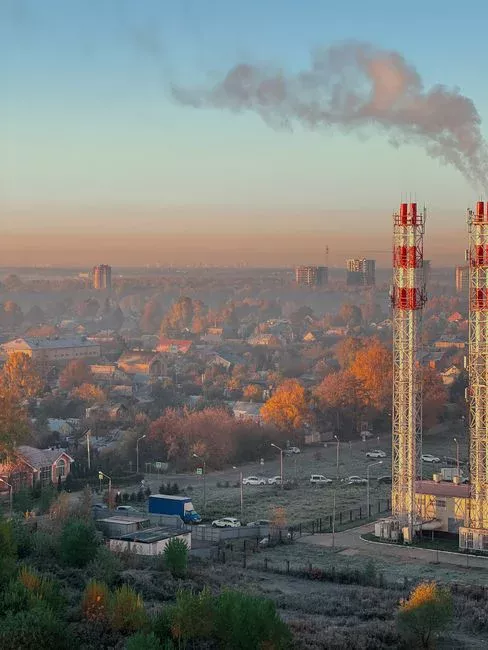
Placement determines whether the analyzer is a compliance reporter or a process controller. Four locations matter, and each has a different job. At the equalization-tank inlet, the analyzer is an alarm — it catches a slug before the slug enters the treatment train. Post-precipitation, it is a process controller: it verifies that pH-controlled Cu(OH)₂ removal is working, and it feeds back to the dosing pump. Post-filtration, it is the compliance reporter — the data logged here is what the regulator sees. Pre-RO, it is a membrane-protection trip; sustained readings above 0.05 mg/L should auto-divert flow away from the RO unit.
Dosing integration is the highest-value link. Alkaline precipitation with NaOH raises pH to 9.0–9.5, where Cu(OH)₂ solubility drops below 0.1 mg/L; tying the analyzer's 4–20 mA output to a PLC-controlled chemical dosing skid for Cu-precipitation feedback loops replaces time-based dosing with demand-based dosing. Plant case data shows 15–30% reduction in NaOH or lime consumption versus timer-based control, plus faster recovery from a pH excursion. A DAF system for Cu-bearing suspended solids in metal-finishing wastewater sits downstream of precipitation, and a post-DAF analyzer confirms the float has done its job before the clarifier.
Fouling is the failure mode operators actually see. Colorimetric flow cells foul fastest: oil and grease from a stamping rinse coat the cell window and bias absorbance, so a 10 µm pre-filter plus weekly acid wash is non-negotiable. ISE membranes foul chemically: sulfide above 1 mg/L blackens a Cu-ISE within 48 hours, so weekly cleaning with a 0.1 M EDTA / thiourea mix is the standard maintenance step. ASV working electrodes foul mechanically: biofilm and CaCO₃ scale must be polished off monthly, and the reference electrode must be refilled with internal electrolyte at the interval the manufacturer specifies.
Total Cost of Ownership: CAPEX, OPEX and Lifecycle
CAPEX 2026 bands are: ISE $4K–$15K, colorimetric $8K–$35K, and ASV $25K–$70K for an online skid, all excluding installation ($3K–$10K) and housing or analyzer shelter ($2K–$5K). Installation cost is dominated by sample-line plumbing, conduit for the 4–20 mA loop, and a dedicated 120/240 V circuit — these are usually the line items procurement forgets, and they are 20–40% of the equipment cost on a small skid.
OPEX 2026 splits clearly by principle. Colorimetric analyzers spend 40–55% of OPEX on reagents (bathocuproine, PAN, ascorbic acid, and cleaning solutions at roughly $400–$900/year), with service intervals of 6–12 months. ISE analyzers spend OPEX on electrode replacement ($400–$900/year for the Cu-ISE module) and ISAB buffer (~$200/year), with a 12-month service interval. ASV analyzers spend OPEX on mercury-film or bismuth-film electrode replacement ($1.2K–$2.5K/year) plus 30–60 hours/year of skilled labor, with a 3–6 month service interval. The table below summarizes the lifecycle economics for one analyzer stream.
| Cost line | Colorimetric | ISE | ASV |
|---|---|---|---|
| CAPEX (instrument only) | $8K–$35K | $4K–$15K | $25K–$70K |
| Installation + housing | $5K–$15K | $5K–$15K | $5K–$15K |
| Reagents / buffers / electrolytes | $400–$900/yr | $200/yr | $300–$600/yr |
| Electrode / membrane replacement | — | $400–$900/yr | $1.2K–$2.5K/yr |
| Skilled labor | Minimal | Minimal | $2K–$5K/yr |
| Service interval | 6–12 months | 12 months | 3–6 months |
| Total OPEX band | $1.5K–$4K/yr | $1.0K–$2.5K/yr | $4K–$9K/yr |
| Payback vs. manual lab | 12–24 months | 6–18 months | 24–48 months |
Payback math: replacing a daily lab Cu analysis at $25–$60/sample (365 samples/year) saves $9K–$22K/year in lab cost alone, and a single avoided excursion saves the rest. Against that, a colorimetric skid at $25K installed pays back in 12–24 months; an ISE at $10K installed pays back in 6–18 months; an ASV skid at $50K installed pays back in 24–48 months unless the binding limit forces the choice. Linking the analyzer to a PLC-controlled chemical dosing skid for Cu-precipitation feedback loops adds the 15–30% NaOH savings on top, which typically pulls the colorimetric payback under 12 months at a mid-size plating facility.
Frequently Asked Questions
What detection limit do I need to comply with EPA 40 CFR 433?
EPA 40 CFR 433 sets a 3.38 mg/L daily maximum for Cu in metal-finishing effluent. A practical engineering safety factor of 50% means specifying an analyzer with a lower detection limit of ≤1.0 mg/L, which all three principles meet comfortably (HydropureWater field data, 2026).
Is an ISE analyzer accurate enough for an EU IED BAT-AEL of 0.2 mg/L Cu?
Barely. Cu-ISE accuracy of ±5% at 0.2 mg/L is ±0.01 mg/L, but the working range starts at 0.05 mg/L and interferences (S²⁻, Cl⁻, Ag⁺) are not negligible; for a binding 0.2 mg/L BAT-AEL, colorimetric with sub-0.02 mg/L capability or ASV is the safer specification (per ISO 17289 sampling protocol).
How often must an online Cu analyzer be calibrated?
Colorimetric analyzers need a 2- or 3-point calibration every 7–14 days, ISE analyzers every 1–2 weeks with a daily single-point check, and ASV analyzers every 3–5 days plus a weekly standard addition check (per AWWA C670-15 O&M precedent for online analyzers).
Can one analyzer measure both dissolved and total Cu?
Yes — colorimetric analyzers switch between modes by adding or skipping the ascorbic-acid reduction step, while ISE and ASV read dissolved Cu²⁺ only. For total Cu on an ISE or ASV, an upstream acid digestion module is required, which adds $3K–$8K to the skid (HydropureWater field data, 2026).
What is the typical 2026 CAPEX for a compliant online copper analyzer installation?
Turnkey installed cost is $10K–$50K for an ISE or colorimetric skid and $35K–$90K for an ASV skid, including sample conditioning, shelter, and Modbus/4–20 mA integration into the plant SCADA. A global view of how this compares with other parameters is in the global chemical wastewater discharge compliance guide.