Why Online Phosphate Monitoring Is Now Standard in Wastewater Treatment
Phosphorus is the single most-likely-to-violate nutrient parameter at municipal and industrial WWTPs in 2026, because total phosphorus (TP) effluent limits have tightened across every major regulatory regime while influent loads from detergents, food processing, and agricultural runoff have stayed flat or risen. The EU Urban Waste Water Treatment Directive 91/271/EEC sets TP at 1–2 mg/L depending on plant size and sensitive-area designation, and China GB 18918-2002 Class IA discharge caps TP at ≤0.5 mg/L. US EPA nutrient criteria are state-specific, but many jurisdictions enforce 0.1–1.0 mg/L TP for discharges to impaired or sensitive waters. Phosphorus loading remains the primary driver of freshwater eutrophication, which is why regulators treat the parameter with zero discharge tolerance.
Grab sampling cannot meet these limits reliably. A 4–24 hour composite turnaround means operators dose coagulant blind, and field data shows flow-proportional or timer-based dosing overfeeds FeCl₃, PACl, or alum by 20–35% versus real-time feedback control (HydropureWater field data, 2026). That excess chemical cost, multiplied across 365 days at a 50,000 m³/d plant, is typically the line item that justifies the analyzer purchase on OPEX alone. For biological phosphorus removal (bio-P), Ahn et al. 2007 (Appl Environ Microbiol 73:2257–2270) established the polyphosphate-accumulating organism ecology that makes online PO₄-P control technically feasible: the biological signal exists, the question is whether the sensor can resolve it fast enough to close the loop.
For a broader view of where online instrumentation fits in 2026 plant automation, see the AI in Wastewater Treatment 2026 Trends: Engineering Data & Buyer Guide.
How an Online Phosphate Analyzer Works: Three Sensor Technologies Compared
An online phosphate analyzer for wastewater treatment plant service is a real-time instrument that measures orthophosphate (PO₄³⁻) concentration in the mixed liquor or effluent stream, typically using molybdenum-blue colorimetry, vanadomolybdate colorimetry, or ion-selective electrode (ISE) technology. Modern units achieve detection limits of 0.01–0.05 mg/L PO₄-P, response times under 5 minutes, and integrate directly with PLC-controlled chemical dosing systems to automate coagulant or polymer feed for phosphorus removal. Choosing the right sensor principle depends on your influent matrix, target range, and tolerance for reagent handling.
Molybdenum-blue colorimetric analyzers are the reference method for orthophosphate measurement and the most common choice for effluent compliance monitoring. Sample is drawn through an inline filter, mixed with ammonium molybdate and ascorbic acid in a heated reaction coil (residence time 2–4 minutes at 37–50 °C), then passed through a photometric cell reading absorbance at 880 nm. Detection limit sits at 0.01–0.05 mg/L PO₄-P with accuracy of ±2% of full scale. The trade-off is reagent consumption: 0.5–2 L of working reagent per week, with replenishment every 30–90 days depending on measurement frequency. Reagent cost typically runs USD 800–1,800 per year per stream (HydropureWater field data, 2026).
Vanadomolybdate (yellow) colorimetry uses a simpler reagent chemistry and is suited to higher measurement ranges of 0.5–50 mg/L PO₄-P, making it the standard choice for raw influent monitoring where the concentration would saturate a molybdenum-blue cell. Response time is 5–8 minutes, and reagent consumption is comparable to the molybdenum-blue method. This is the workhorse for head-of-plant load monitoring.
Ion-selective electrode (ISE) analyzers eliminate reagent handling entirely. The sensor responds to phosphate activity in the sample with a 30–90 second response time and accuracy of ±0.1 mg/L, which is sufficient for biological phosphorus removal control loops where the controlled variable is the anaerobic-zone PO₄-P trend rather than a tight absolute compliance number. ISE probes are vulnerable to fouling and require auto-clean every 24–72 hours; they are not recommended for final-effluent compliance reporting where trace-level precision matters.
| Parameter | Molybdenum-Blue Colorimetric | Vanadomolybdate Colorimetric | Ion-Selective Electrode (ISE) |
|---|---|---|---|
| Measurement range (mg/L PO₄-P) | 0.01–10 | 0.5–50 | 0.1–100 |
| Detection limit (mg/L PO₄-P) | 0.01 | 0.5 | 0.1 |
| Response time (90% step) | 3–5 min | 5–8 min | 30–90 s |
| Reagent consumption | 0.5–2 L/week | 0.5–1.5 L/week | None |
| Best application | Effluent compliance, low-range | Influent, high-range | Bio-P control loop, trend monitoring |
| Typical annual reagent cost (USD) | 800–1,800 | 600–1,400 | 0 (consumables only) |
Colorimetric units share a common process flow that the engineer should expect to see in any P&ID: sample draw → inline filtration (typically 0.45 µm or 0.2 µm cross-flow membrane) → reagent mixing pump → reaction coil with temperature control → photometric flow cell → waste drain, with an automatic back-flush cycle on the filter every 6–24 hours. The filter is the most failure-prone component and must be sized for the suspended solids load of the sample stream.
Key Specifications to Evaluate Before Buying

A procurement specification should lock down at least eight parameters before vendors are asked to quote, because analyzer pricing varies by a factor of three to five across the same project scope depending on these choices.
Measurement range and stream count. A single 0.01–50 mg/L PO₄-P range covers both effluent and most secondary influent streams, but a dedicated influent analyzer with a higher upper limit (up to 100 mg/L) is justified at plants receiving high-strength food or fermentation waste. Specify whether one analyzer multiplexes multiple sample streams or whether each stream gets a dedicated instrument; multiplexing saves CAPEX but introduces sample-line lag.
Response time and sample conditioning. Under 5 minutes is the practical ceiling for closed-loop dosing control. As a warning benchmark, the 2010 Springer data reconciliation study documented ultrafiltration sample-prep units that pushed response times past 1 hour, which renders the signal useless for coagulant trim. If the spec calls for bio-P control in an SBR or plug-flow reactor, response time under 2 minutes is preferable and rules out most colorimetric units without accelerated reaction coils.
Enclosure, outputs, and integration. Specify IP65 / NEMA 4X minimum for any outdoor or wet-well installation. Analog 4–20 mA plus Modbus TCP (or Profibus, Profinet depending on PLC family) is the de facto standard for SCADA integration. Confirm that the analyzer supports remote calibration verification and that the diagnostic log is exportable, because that is what your regulator will ask for during an inspection.
Auto-clean and reagent interval. Auto-clean every 24–72 hours is normal; anything longer than 7 days suggests a probe that will drift between service visits. For colorimetric units, calculate reagent replacement cost over a 12-month operating horizon before comparing purchase prices — a USD 4,000 cheaper analyzer that costs USD 1,500/year more in reagent breaks even in under three years.
| Specification | Minimum acceptable | Recommended for compliance | Recommended for control loop |
|---|---|---|---|
| Measurement range (mg/L PO₄-P) | 0.05–20 | 0.01–10 | 0.01–50 (effluent + influent) |
| Detection limit (mg/L PO₄-P) | 0.05 | 0.01 | 0.02 |
| Response time (90% step) | ≤10 min | ≤5 min | ≤2 min |
| Auto-clean interval | ≤7 days | 24–72 h | ≤24 h |
| Enclosure rating | IP65 / NEMA 4X | IP65 / NEMA 4X | IP66 / NEMA 4X |
| Outputs | 4–20 mA | 4–20 mA + Modbus TCP | 4–20 mA + Modbus TCP + Profinet |
| Reagent replacement interval | ≤90 days | 30–60 days | 30–60 days |
Integrating the Analyzer with Chemical Dosing: Closing the Control Loop
The reason to buy an online phosphate analyzer is to stop overdosing coagulant. The signal chain runs: analyzer 4–20 mA output → PLC analog input module → PID controller block → analog output module → variable-frequency drive on the dosing pump → coagulant injection point. Setpoint is typically the regulatory TP limit converted to a PO₄-P concentration at the analyzer's sample point, with a proportional band sized to the dose-response curve of the specific coagulant being used. FeCl₃ at 40% solution typically requires 1.0–1.5 mol Fe per mol P removed, but the real plant-specific ratio must be titrated during commissioning.
Closed-loop feedback control reduces coagulant consumption by 20–35% versus flow-proportional or timer-based dosing, based on municipal WWTP operating data (HydropureWater field data, 2026). At a 50,000 m³/d plant dosing 15 mg/L FeCl₃, that saving is on the order of USD 40,000–90,000 per year in chemical cost alone, which is what pays back the analyzer and dosing skid in 12–24 months.
Signal filtering is critical. Raw online sensor data carries outliers from air bubbles passing the optical cell, electrical glitches, and sample-line pump pulsations. A 3–5 minute moving average in the PLC compensates for these transients without slowing the control response to a meaningful process change, per the 2010 Springer data reconciliation paper on typical online sensor error sources. Without filtering, the dosing pump will hunt and the chemical savings evaporate. The injection-side hardware is typically delivered as a factory-tested PLC-controlled chemical dosing skid with calibration columns, pulsation dampeners, and back-pressure valves pre-piped and pre-wired. For a deeper treatment of PLC integration in a related industrial wastewater context, see the PLC Control for Food Processing Wastewater Plant: 2026 Engineering Guide.
2026 Compliance Limits: Mapping Your Discharge Region
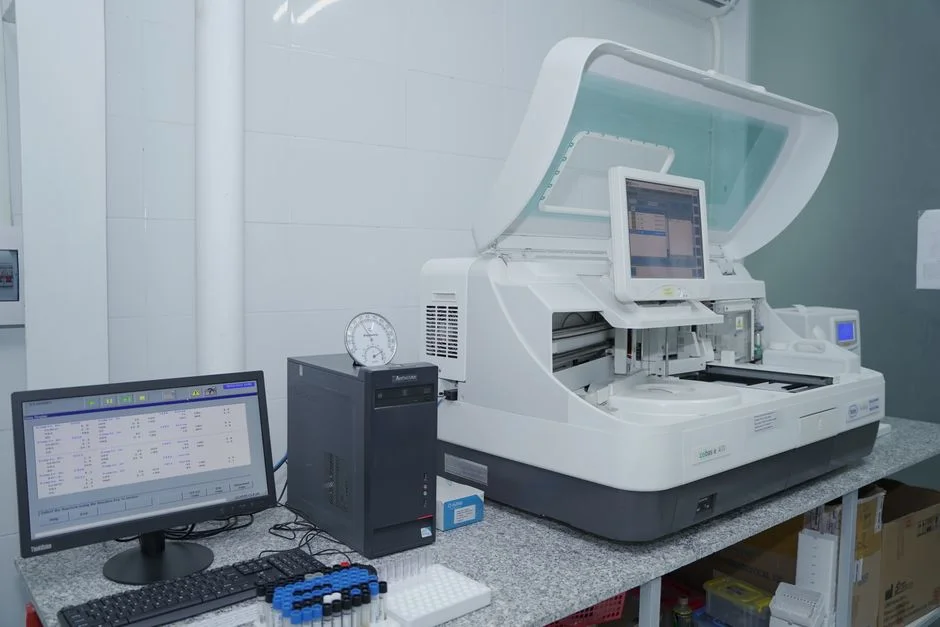
Choose your analyzer detection limit at 5–10× below your regulatory TP limit to leave calibration headroom and to account for the difference between the analyzer's orthophosphate-only reading and the laboratory TP measurement, which includes polyphosphates and organic phosphorus that the online sensor does not see. As a working rule, if your permit is 0.5 mg/L TP, the analyzer should resolve 0.05 mg/L PO₄-P or better; if your permit is 2 mg/L TP, a 0.1–0.2 mg/L detection limit is sufficient.
| Region / Standard | Effluent TP limit | Notes |
|---|---|---|
| EU — UWWTD 91/271/EEC, >100,000 PE | 2 mg/L (1 mg/L in sensitive areas) | Sensitive areas per national designation; many coastal states apply 1 mg/L universally |
| EU — UWWTD 91/271/EEC, 10,000–100,000 PE | 2 mg/L | Standard compliance tier |
| China — GB 18918-2002 Class IA | ≤0.5 mg/L | Tightest standard in routine application; requires analyzer DL <0.1 mg/L |
| China — GB 18918-2002 Class IB | ≤1.0 mg/L | Most municipal plants outside sensitive waters |
| US — EPA nutrient criteria (state-specific) | 0.1–1.0 mg/L TP | Florida, Chesapeake, Great Lakes states typically 0.1–0.5 mg/L |
For plants pursuing phosphorus recovery as a side benefit of compliance tightening, the orthophosphate-selective nature of the online analyzer is also an enabler for struvite or vivianite precipitation control. See the broader context in the Nutrient Recovery Trends 2026: Technologies, Markets & Industrial Guide.
Frequently Asked Questions
How does an online phosphate analyzer compare to a lab method for compliance reporting? Online analyzers measure orthophosphate only, while the regulatory TP method (EPA 365.4 or equivalent) digests all phosphorus species. For permit compliance, the laboratory TP analysis remains the legally binding measurement, but the online PO₄-P reading is the operator's early-warning signal and the input to the dosing control loop. Most plants run both in parallel for the first 6–12 months to establish the PO₄-P-to-TP correlation.
What is the typical annual reagent cost for a colorimetric phosphate analyzer? For a single-stream molybdenum-blue unit measuring every 15 minutes, plan USD 800–1,800 per year in reagent consumption, plus USD 200–400 for replacement pump tubing and filter membranes. Multiply by the number of sample streams to size the operating budget.
Can the analyzer integrate with an existing SCADA system without a PLC replacement? Yes, if the SCADA already polls Modbus TCP or accepts 4–20 mA analog inputs, the analyzer drops in as a new measurement point. Most modern units support both simultaneously, so the engineering scope is typically limited to adding an analog input card and a few PLC function blocks for the PID loop.
What is the realistic payback period for a closed-loop dosing installation? At a 50,000 m³/d municipal plant dosing 15 mg/L FeCl₃, the 20–35% chemical saving repays the combined analyzer and dosing-skid CAPEX in 12–24 months, based on the operating data referenced in the control-loop section above. Smaller plants see longer paybacks (3–5 years) and should evaluate ISE-based units to minimize reagent OPEX.