Why Galvanizing Wastewater Challenges Conventional RO
Hot-dip and electro-galvanizing rinse streams run 2,000-15,000 mg/L TDS at pH 1-4 (acid chloride or sulfate pickling) or pH 12-14 (alkaline zinc), with zinc 50-2,000 mg/L, iron 10-500 mg/L, and TSS 20-300 mg/L. Spiral-wound RO is the default membrane choice, but on this envelope it fouls so fast that recovery is capped around 60-70% before flux decay forces a chemical cleaning every 2-4 weeks. Four fouling mechanisms drive that behavior: metal hydroxide scaling (Zn(OH)2 and Fe(OH)3 precipitate inside the feed channel when pH drifts), calcium carbonate and calcium sulfate scaling from carryover hardness in make-up water, colloidal silica and iron floc blinding the membrane surface, and microbiological fouling in alkaline zinc baths where temperature stays at 35-45°C. Per VSEP's published comparison, spiral-wound RO fails because it is limited by solubility (CaSO4, SiO2) and Silt Density Index, while vibratory systems are limited only by osmotic pressure — that single distinction is what pushes achievable recovery from 70% to 90-95% on the same feed water. Before you specify a membrane, get a 24-hour composite analyzed and answer one question: what feed envelope are you discharging today, and what recovery do you need to meet your reuse or ZLD target?
Influent Characterization: What Your RO Must Treat
Galvanizing rinse water is not a single stream — the upstream process dictates the envelope. Acid chloride pickling rinse typically runs 3,000-12,000 mg/L TDS with chloride 1,500-8,000 mg/L; sulfate pickling rinse runs 2,000-8,000 mg/L TDS with sulfate 800-4,000 mg/L; alkaline zinc rinse runs 2,000-15,000 mg/L TDS at pH 12-14 with zinc 200-2,000 mg/L. The table below lists the parameters an engineer should pull from a representative composite before sizing the RO.
| Parameter | Typical range | Membrane selection impact |
|---|---|---|
| TDS | 2,000-15,000 mg/L | Drives osmotic pressure and operating pressure |
| Conductivity | 3-20 mS/cm | Inline surrogate for TDS, used for recovery trim |
| Hardness as CaCO3 | 200-3,000 mg/L | Sets antiscalant dose and CaSO4 scaling risk |
| Chloride | 500-8,000 mg/L | Pushes metallurgy to 316L / Duplex; limits 304 SS |
| Sulfate | 200-4,000 mg/L | CaSO4 Ksp governs max recovery without antiscalant |
| Zinc | 50-2,000 mg/L | Rejection target >99% in a single pass |
| Iron | 10-500 mg/L | Rejection 95-98% as Fe3+; Fe2+ passes 60-80% |
| TSS | 20-300 mg/L | Must drop below 30 mg/L before any RO |
| Oil & grease | 5-50 mg/L | Must be <1 mg/L even for vibratory RO (per VSEP) |
| Temperature | 25-45°C | Flux-corrected; >35°C requires climate trimming |
| SDI15 | Variable | Must be <5 for spiral-wound, <3 for high-rejection BW |
Two parameters decide the membrane technology, not the membrane model: SDI15 and free oil. If the 15-minute silt density index sits above 5, spiral-wound elements will foul in 60-90 days regardless of the cleaning protocol. If free oil exceeds 1 mg/L, even vibratory systems lose flux — a DAF clarification stage in the galvanizing RO pretreatment train is non-negotiable. Chrome passivate rinse is a separate stream because hexavalent chromium passes RO membranes at 40-60% rejection; it must be reduced to Cr(III) with NaHSO3 or FeSO4 at pH 2-3 and precipitated upstream. Sampling protocol: 24-hour flow-weighted composite, temperature-corrected conductivity logged on a portable meter, metals sample preserved with HNO3 to pH <2, and a parallel grab sample to flag shift-to-shift variation.
Pretreatment Train Before the RO
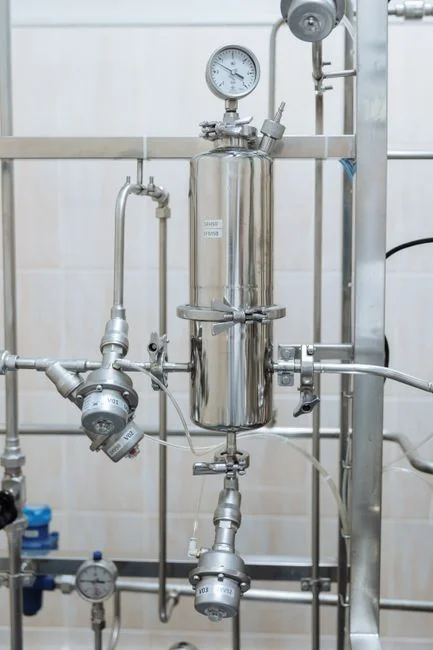
Skipping a stage is the single most common reason spiral-wound RO fails on galvanizing streams inside 12-18 months. The train is sequential because each stage solves a specific failure mode the next stage cannot tolerate.
Stage 1 — pH correction. Sulfuric or hydrochloric acid dosing to 6.5-7.5 keeps zinc and iron in solution as soluble sulfates/chlorides and prevents Zn(OH)2 precipitation on the membrane surface. A PLC-controlled pH correction and antiscalant dosing skid sized for 2-10 mg/L antiscalant (typically a phosphonate or polymeric blend rated for high-zinc, high-chloride feeds) is the minimum.
Stage 2 — coagulation and clarification. A lamella clarifier for hydroxide sludge settling after pH correction, or a DAF unit when emulsified oils from stamping pre-clean ride into the galvanizing line. Target TSS below 30 mg/L and oil below 5 mg/L exiting this stage.
Stage 3 — multimedia filtration. A multi-media filter rated to deliver SDI15 below 5, typically sand + anthracite + garnet with an air-scour backwash every 8-24 hours. Differential pressure across the bed is the loading alarm.
Stage 4 — cartridge guard. 5 μm polypropylene cartridges as the RO guard, with a ΔP alarm at 0.7-1.0 bar signaling premature loading in stages 1-3.
Stage 5 — chrome reduction (if applicable). NaHSO3 or FeSO4 at pH 2-3 to convert Cr(VI) to Cr(III), followed by precipitation/clarification at pH 8-9 to drop the chromium below 0.5 mg/L before the rest of the train.
For an integrated skid combining the membrane system and these pretreatment stages, the HydropureWater industrial RO skid with 95% recovery and PLC automation is the reference design point. The complete train is what the membrane vendor's glossy datasheet never shows.
Membrane Selection: Spiral-Wound vs Vibratory vs DTRO
Spiral-wound brackish elements (BW30-class polyamide) give 99% nominal salt rejection and lowest CAPEX, but on galvanizing feed recovery is capped at 60-75% and chemical cleaning runs every 2-4 weeks. Vibratory RO (VSEP-class) reaches 90-95% recovery because the membrane vibrates at high frequency to keep the boundary layer turbulent, so flux decay is decoupled from feed TSS, oil, and hardness — it is limited only by osmotic pressure, per the VSEP technical brief. DTRO (disc-tube) uses an open-channel geometry that resists fouling from precipitated metal hydroxides, accepts 30,000-80,000 mg/L TDS concentrate, and runs at 80-90% recovery — a good fit for the concentrate-polishing step in a ZLD system. Ceramic RO is an emerging option with extreme chemical and thermal tolerance (pH 0-14, up to 90°C), but CAPEX is 3-5x polymeric and only justifies itself on hot-dip rinse streams that exit the bath above 60°C.
| Parameter | Spiral-wound BW | Vibratory RO | DTRO | Ceramic RO |
|---|---|---|---|---|
| Nominal salt rejection | 99.0-99.5% | 98-99% | 98-99% | 99+ % |
| Recovery on galvanizing feed | 60-75% | 85-95% | 80-90% | 80-90% |
| CAPEX factor (vs spiral-wound) | 1.0x | 2.0-2.8x | 1.8-2.4x | 3.0-5.0x |
| OPEX factor | 1.0x | 0.7-0.9x | 0.8-1.0x | 0.9-1.1x |
| Fouling tolerance (SDI15) | <5 | Up to ~15 with oil <1 mg/L | Up to ~10 | Up to ~20 |
| Chemical cleaning frequency | Every 2-4 weeks | Every 8-16 weeks | Every 6-12 weeks | Monthly to quarterly |
| Best-fit feed envelope | Pretreated, <5,000 mg/L TDS | High TSS/oil, 5,000-50,000 mg/L | Concentrate polishing, 30,000-80,000 mg/L | High-temp, aggressive chemistry |
Decision rule: feed SDI15 >5, free oil >2 mg/L, or a recovery target >80% means stepping up from spiral-wound. Concentrate TDS above 30,000 mg/L means routing that stream to DTRO or directly to a thermal evaporator. For a related CAPEX and OPEX benchmark for RO on steel mill wastewater, the same envelope logic applies — steel pickling and galvanizing share a fouling fingerprint.
Operating Parameters and Expected Rejection Rates
On a well-pretreated galvanizing feed, spiral-wound brackish elements run at 12-18 LMH flux; vibratory RO reaches 20-30 LMH on the same feed because the shear keeps the boundary layer thin. Rejection performance is the number a plant manager will ask for in the first meeting: zinc >99%, iron 95-98% (provided the feed is oxidized to Fe3+; Fe2+ passes at 60-80% and is the most common cause of "high iron in permeate" complaints), total chromium 95-99%, TDS 95-99%, and conductivity in the permeate typically below 50 μS/cm — well within DI-grade rinse reuse targets. Operating pressure sits at 10-30 bar for brackish RO depending on feed TDS, climbing to 40-70 bar for high-recovery concentrate polishing. The relationship between recovery and concentrate TDS is the one to memorize: 70% recovery produces concentrate at roughly 2-3x feed TDS, while 90% recovery pushes concentrate to 5-7x feed TDS. Energy consumption is 0.8-2.5 kWh/m³ permeate with an energy recovery device, versus 15-25 kWh/m³ for thermal evaporation — that 10-30x energy delta is the core economic argument for the RO step. Antiscalant selection for high-chloride feeds should avoid phosphate-based blends (calcium phosphate scaling) and instead use a polymeric dispersant rated for zinc and high chloride — see the 12 OPEX-reduction strategies applicable to the RO operating envelope for the chemical-cost line item.
Integrating RO with a ZLD Pathway
Zero liquid discharge means the only liquid leaving the site boundary is reclaimed permeate; all concentrate is crystallized to a solid cake. The dominant architecture is two-step: RO recovers 85-95% as reusable permeate, and the RO concentrate goes to a mechanical vapor recompression (MVR) or multiple-effect evaporator (MEE) for final volume reduction. Crystallizer output is a mixed metal hydroxide cake (Zn/Fe/Ca) suitable for metals recovery or secure landfill, and the distillate returns to the RO feed tank rather than being discharged. A single-step alternative — feeding the entire stream to DTRO at 80-90% recovery and sending concentrate directly to a crystallizer — is mechanically simpler but carries higher energy intensity because more water reaches the thermal stage. Per HydropureWater field data, 2026, RO cuts the evaporator load by 80-90% versus sending raw rinse water to thermal treatment, which is the dominant economic argument for the RO step in any ZLD design. The MEE/MVR evaporator cost model that the RO concentrate feeds into is the second half of the budget conversation. For broader electroplating effluent treatment context for heavy-metal discharges, ZLD is increasingly the regulatory default in India, China, the EU, and the Middle East.
2026 Cost Envelope: CAPEX, OPEX, and ROI
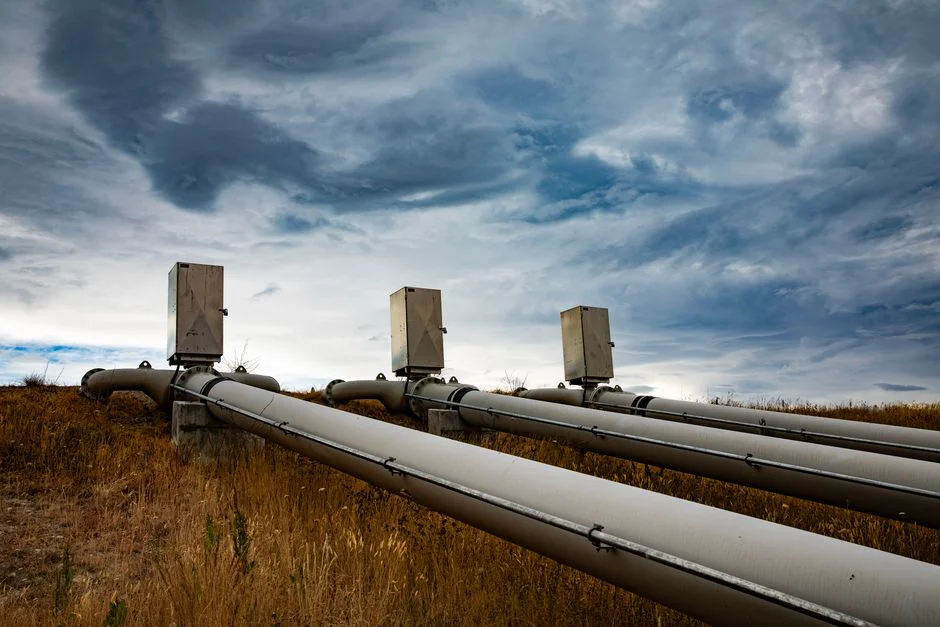
2026 installed CAPEX for a 5-50 m³/h galvanizing RO system runs $180K-$1.2M, with the full pretreatment train adding 40-60% on top of the membrane skid itself. OPEX lands in the $0.22-$0.78/m³ treated band, split roughly as energy 35-45%, antiscalant and other chemicals 15-25%, membrane replacement 15-20%, and labor 10-15%. At industrial water tariffs of $1.50-$4.00/m³ in most regions, an 80% recovery on a 20 m³/h line saves $200K-$550K per year in combined water and sewer charges. Simple payback lands at 18-36 months at current rates; ZLD-mandated sites see shorter payback because compliance is non-optional and discharge fees are non-zero.
| Cost line | 2026 low | 2026 high | Driver |
|---|---|---|---|
| RO skid CAPEX (5-50 m³/h) | $180K | $1.2M | Capacity, recovery, membrane type |
| Pretreatment train CAPEX adder | +40% | +60% | pH correction, DAF, MMF, cartridge, chrome reduction |
| OPEX per m³ treated | $0.22 | $0.78 | Feed TDS, recovery, energy tariff |
| Annual water + sewer savings (20 m³/h, 80% recovery) | $200K | $550K | Local tariff, discharge fee |
| Simple payback | 18 months | 36 months | ZLD-mandated sites skew shorter |
| Sensitivity to $0.05/kWh electricity swing | $0.04/m³ | $0.08/m³ | OPEX change |
Quote the operating envelope, not a single point estimate. A $0.05/kWh swing in electricity changes OPEX by $0.04-$0.08/m³ — large enough to flip the payback inside 24 months. If the site is on a ZLD mandate, the question stops being "does RO pay back" and becomes "how fast can the membrane skid be installed."
Frequently Asked Questions
What is the minimum pretreatment for spiral-wound RO on zinc rinse water? pH correction to 6.5-7.5, coagulation and clarification or DAF to drop TSS below 30 mg/L, multimedia filtration to SDI15 <5, and 5 μm cartridge guard. Skipping any stage typically causes spiral-wound failure inside 12-18 months (HydropureWater field data, 2026).
What zinc rejection can I expect from a single-pass RO on galvanizing rinse? Zinc rejection is >99% on any well-maintained brackish or high-rejection RO element, provided feed pH is held at 6.5-7.5 to keep zinc in the soluble Zn2+ form and prevent Zn(OH)2 precipitation on the membrane surface.
Which antiscalant works for high-chloride zinc feeds? A polymeric dispersant or phosphonate blend rated for high-zinc, high-chloride service — avoid phosphate-based formulations because calcium phosphate scaling becomes the limiting factor above 2,000 mg/L chloride.
Can RO alone achieve zero liquid discharge on galvanizing wastewater? No. RO is bounded by osmotic pressure and concentrate solubility; the final 5-15% of volume must go to an MVR evaporator or MEE plus crystallizer to close the loop, as confirmed by HydropureWater field data, 2026.
What is typical membrane life on galvanizing service? Spiral-wound elements last 18-30 months with proper pretreatment; vibratory and DTRO membranes last 36-60 months because they tolerate higher TSS and require fewer chemical cleanings.