Why Faridabad Hospitals Need a Dedicated Treatment Train in 2026
Hospital wastewater treatment in Faridabad in 2026 must satisfy India's Biomedical Waste Management Rules (liquid-waste handling under Rule 18) plus HSPCB consent conditions, which typically require effluent COD ≤ 250 mg/L, BOD ≤ 30 mg/L, TSS ≤ 100 mg/L, and fecal coliform < 230 MPN/100 mL before discharge or reuse. A 2026-ready train combines fine screening, equalisation, biological treatment (MBR or SBR), and ClO₂ or ozone disinfection. MBR pilots report COD < 50 mg/L and coliform below detection — comfortably below the discharge ceiling.
The compliance stack is multi-layered. Biomedical Waste Management Rules 2016, as amended in 2022 and 2024, govern liquid waste under Rule 18 with segregation, storage, and disposal duties that sit alongside the Water Act 1974 consent issued by HSPCB. On top of that, the National Mission on Reuse of Treated Water pushes hospitals above 100 beds toward ≥ 35% reuse for non-potable end-uses, which directly shapes the unit operations a designer selects. A comparable engineering roadmap from the hospital wastewater treatment in Tamale engineering guide shows how the same regulatory logic plays out in a different hydrological setting.
Faridabad adds two local pressures. The IMT Faridabad industrial cluster discharges mixed effluent to the Yamuna floodplain, and HSPCB tightens residual chlorine and total coliform clauses for hospitals in the NCR shadow — Amrita Hospitals Faridabad already runs an STP + ETP pairing that 100–800-bed facilities are now expected to match. Engineers also have to keep 'hospital wastewater' (sewage-like liquid from kitchens, laundries, toilets) separate from 'biomedical liquid waste' under Rule 18 (lab chemicals, radioisotope effluent, cytotoxic drugs) until the two streams converge at the discharge point.
Influent Characteristics Hospitals in Faridabad Must Design For
A 100–300-bed Faridabad hospital typically generates 80–250 m³/d of mixed wastewater with a peak-to-average ratio of 2.5–3.0, driven by morning OT cycles, dialysis shifts, and outpatient sample loads. The Springer 2019 multicentre study from Slovakia and Czechia remains the cleanest reference set for pharmaceutical residue loading: cotinine 6,700 ng/L, bisoprolol 5,200 ng/L, metoprolol 2,600 ng/L, tramadol 2,400 ng/L, sulfamethoxazole 1,500 ng/L, and ranitidine 1,400 ng/L (Mackuľak et al., Environ Sci Pollut Res, 2019). The same study reported that modified Fenton and boron-doped diamond electrode oxidation removed > 90% of these micropollutants and achieved complete removal of antibiotic-resistant bacteria.
Realistic Faridabad influent bands sit in the table below. Nuclear medicine wards add I-131 and Tc-99m traces that require delayed-storage decay tanks before discharge.
| Parameter | Typical Faridabad hospital influent | MBR + NaOCl pilot (200 m³/d, Scientific.Net) | HSPCB / BMW Rule 18 limit |
|---|---|---|---|
| COD (mg/L) | 400–900 | < 50 | ≤ 250 |
| BOD₅ (mg/L) | 180–350 | < 10 | ≤ 30 |
| TSS (mg/L) | 150–400 | < 5 | ≤ 100 |
| NH₃-N (mg/L) | 20–60 | < 10 | ≤ 50 |
| Fecal coliform (MPN/100 mL) | 10⁶–10⁷ | Not detected | < 230 |
| Pharmaceutical residues (ng/L) | 100–6,700 (cotinine) | > 90% removal by AOP | Not numerically fixed; AOP advised |
Monsoon shifts the envelope. Infiltration at older Faridabad hospitals lifts hydraulic load 30–50% between July and September, diluting COD and BOD by 15–25% but spiking TSS to 500–700 mg/L from silt ingress. Designers should size equalisation for 12-h HRT rather than the textbook 6 h to absorb these surges without shocking the MBR.
The 2026 Process Train That Meets HSPCB and BMW Rules
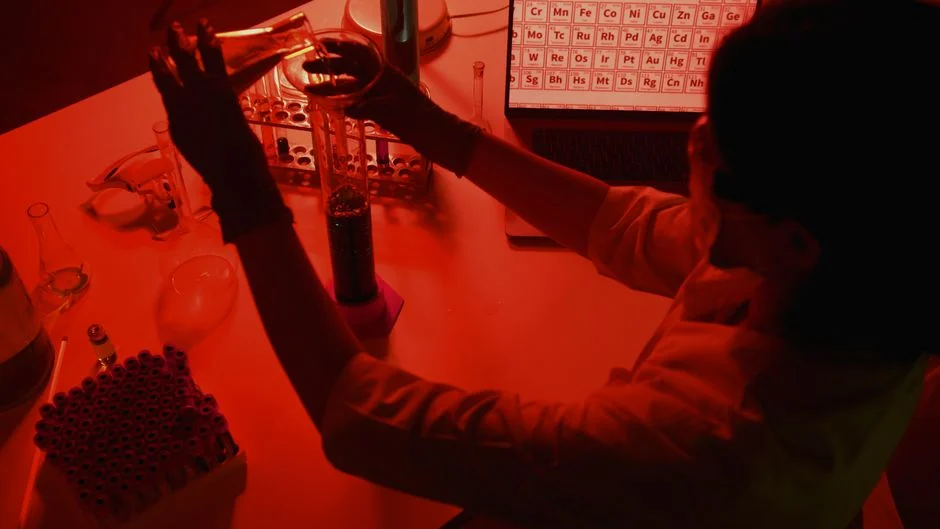
A defensible 2026 process train for a Faridabad hospital runs in seven stages, each justified by a specific operating envelope and an Indian regulatory anchor.
Step 1 — Headworks. A GX series rotary bar screen for hospital headworks at 3–5 mm opening followed by a 1 mm fine screen removes rags, suture packaging, and plastic before the equalisation tank; this protects downstream membranes from tear damage, which is the single biggest cause of MBR downtime.
Step 2 — Equalisation. An 8–12 h HRT buffer damps the 4–6 h surgery-cycle surges typical of Indian hospitals, and keeps organic loading to the MBR below 0.08 kg BOD/kg MLSS·d.
Step 3 — Primary solids removal. A DAF unit is preferred when TSS exceeds 300 mg/L — high-solids kitchen and laundry streams are common in Indian hospitals — and the compact hospital effluent unit integrates this stage for sites under 150 m³/d.
Step 4 — Biological stage. A submerged PVDF MBR at 0.1 µm pore size delivers the 60% footprint saving over conventional activated sludge and produces a consistent effluent envelope; the integrated MBR system for hospital wastewater in Faridabad packages aeration, membrane cassette, and backwash in a single skid.
Step 5 — Disinfection. A chlorine dioxide generator (50–20,000 g/h capacity range) is preferred over chlorine because ClO₂ does not form trihalomethanes when reacting with hospital pharmaceuticals, and it remains biocidal across pH 6–9, which is the operating range HSPCB inspectors check first.
Step 6 — AOP polishing (optional). For cancer centres and nuclear medicine hospitals, modified Fenton or ozone strips antibiotic-resistant bacteria and recalcitrant APIs; the Springer 2019 data confirm > 90% removal for the six indicator compounds listed above. Background on selection is in the AOP process guide for pharmaceutical residues.
Step 7 — Reuse loop. Treated water storage with online TOC and residual ClO₂ monitoring feeds toilet flushing, horticulture, and cooling-tower make-up, which is the reuse envelope HSPCB now expects under the National Mission on Reuse.
| Stage | Unit operation | Design parameter | Compliance anchor |
|---|---|---|---|
| 1. Headworks | Rotary bar screen + fine screen | 3–5 mm + 1 mm | BMW Rule 4 segregation |
| 2. Equalisation | Equalisation tank | 8–12 h HRT | Hydraulic buffering |
| 3. Primary | DAF (if TSS > 300 mg/L) | Air: solids 0.02–0.05 | Sludge pre-thickening |
| 4. Biological | Submerged MBR (PVDF, 0.1 µm) | MLSS 8,000–12,000 mg/L | HSPCB COD ≤ 250 mg/L |
| 5. Disinfection | ClO₂ generator | 0.5–1.0 mg/L residual, 30 min contact | Fecal coliform < 230 MPN/100 mL |
| 6. AOP (optional) | O₃ or modified Fenton | O₃ dose 5–15 mg/L | Pharmaceutical residue ≥ 90% removal |
| 7. Reuse | Storage + online TOC/ClO₂ | TOC < 5 mg/L | National Mission on Reuse ≥ 35% |
Three Technology Options Compared: MBR vs. SBR vs. Conventional ASP
For a 100-bed Faridabad hospital generating ~80–150 m³/d, the technology choice usually comes down to three trains. Conventional activated sludge with a secondary clarifier is the lowest CapEx option but produces the highest sludge volume and rarely meets residual coliform clauses without a dedicated tertiary stage — a poor fit for HSPCB's 2026 tightening. SBR cuts footprint modestly and simplifies controls, but effluent variability makes reuse licensing harder. MBR delivers the cleanest effluent envelope and the smallest site footprint, which matters on the dense IMT Faridabad plots most hospitals occupy.
| Criterion | MBR + ClO₂ | SBR + UV/O₃ | Conventional ASP + clarifier |
|---|---|---|---|
| Effluent COD | ≤ 50 mg/L | 60–80 mg/L | 80–120 mg/L |
| Effluent turbidity | < 1 NTU | 5–15 NTU | 10–30 NTU |
| Footprint (relative) | 0.4× | 0.7× | 1.0× |
| Sludge yield | 0.2–0.3 kg/kg BOD | 0.4–0.5 kg/kg BOD | 0.5–0.7 kg/kg BOD |
| CapEx (₹ lakh, 100 m³/d) | 55–75 | 40–55 | 30–45 |
| OpEx (₹/m³) | 55–75 | 50–70 | 45–60 |
| Reuse suitability | Toilet flush, cooling tower | Toilet flush, horticulture | Horticulture only |
| Best fit | < 300 beds, space-constrained urban | > 300 beds, greenfield with land | Not recommended for HSPCB 2026 |
The MBR + ClO₂ pairing is the right default for Faridabad hospitals under 300 beds. SBR + UV/ozone earns its place on greenfield sites above 300 beds where land budget allows a larger reactor footprint and a simpler control philosophy.
2026 Cost Benchmarks and Payback for Faridabad Hospitals
Capital cost for a 50–200 m³/d hospital STP in Faridabad sits in the band of ₹35–₹90 lakh (≈ USD 42K–108K) in 2026, covering civil works, the MBR skid, ClO₂ system, and SCADA. OpEx lands at ₹45–₹85 per m³, with power (0.8–1.2 kWh/m³ for MBR aeration) and ClO₂ precursor chemicals (HCl + NaClO₂) accounting for 55–65% of the running cost. A plate-and-frame filter press for hospital sludge reduces wet sludge volume by ~80%, which directly lowers BMW Rule 8 disposal cost and shortens the payback window by 6–9 months.
The financial lever is reuse. Toilet flushing and landscaping reuse cuts freshwater draw by 35–55%, and at the ₹80/kL municipal tariff Faridabad MC charges commercial consumers, payback on the CapEx band above lands at 2.8–4.0 years. An automatic chemical dosing system holds ClO₂ residual in the 0.5–1.0 mg/L window without operator intervention, and pairing it with remote monitoring for hospital wastewater plants in 2026 typically cuts operator man-hour cost by 30–40% — a line item the CFO will recognise immediately.
Step-by-Step: HSPCB Consent and BMW Rule 18 Compliance
Five steps take a Faridabad hospital from raw site to a defensible consent-to-operate file.
- Pre-consent site assessment. Characterise every wastewater stream — black/grey water, kitchen, laundry, dialysis, lab, radioisotope, cytotoxic — and segregate Rule 18 liquids from the sewage-like stream with colour-coded piping before they converge.
- Engage a CPCB/HSPCB-approved designer. Submit Form XIII under the Water Act 1974 and a BMW authorisation application under Rule 10; the designer must be on the HSPCB empanelled list or the file stalls at the受付 desk.
- Install continuous effluent monitoring. pH, COD, TSS, residual ClO₂, and fecal coliform online analysers with telemetry push to the CPCB server — HSPCB cross-checks this feed during inspections.
- Operate under BMW Rule 18 SOPs. Maintain colour-coded piping, separate storage tanks with 48–72 h decay for radioisotope effluent, a daily logbook, and a quarterly third-party audit report.
- Annual compliance and renewal. File the annual HSPCB return, sludge manifest under BMW Rule 8, and treated-water reuse log; trigger consent renewal 90 days before expiry to avoid the lapsed-consent penalty under Section 25 of the Water Act.
Frequently Asked Questions
What is the HSPCB discharge limit for hospital wastewater in Faridabad? COD ≤ 250 mg/L, BOD ≤ 30 mg/L, TSS ≤ 100 mg/L, fecal coliform < 230 MPN/100 mL, and residual chlorine ≥ 1 mg/L after a 30-minute contact time — these are the typical consent conditions HSPCB writes into 2026 hospital CTOs.
Does BMW Rule 18 cover liquid waste from hospital laboratories? Yes. Rule 18 brings chemical, radioisotope, and cytotoxic liquid waste into the BMW framework, requiring separate collection, storage, and either pre-treatment or decay-before-discharge before the stream joins the STP headworks.
How much does a hospital STP cost in Faridabad for 2026? A 50–200 m³/d MBR + ClO₂ plant lands at ₹35–₹90 lakh CapEx and ₹45–₹85 per m³ OpEx, with a 2.8–4.0 year payback when reuse displaces ≥ 35% of freshwater draw at Faridabad MC's commercial tariff.
Is chlorine dioxide better than chlorine for hospital effluent? Yes. ClO₂ does not form trihalomethanes with residual pharmaceuticals, stays biocidal between pH 6 and 9, and meets the WHO/EPA drinking-water disinfection criteria at 0.5–1.0 mg/L residual — the same dose envelope HSPCB accepts in Indian hospital CTOs.
What is the best technology for a 100-bed hospital in Faridabad? MBR + ClO₂ is the right default for sites under 300 beds because it produces COD ≤ 50 mg/L, turbidity < 1 NTU, and undetectable fecal coliform on a footprint 60% smaller than conventional activated sludge — a working reference is the hospital wastewater treatment in Halifax engineering guide and the parallel hospital wastewater treatment in Yangon compliance guide, both of which run comparable MBR trains.