Why Yamoussoukro Hospital Effluent Needs More Than Conventional Sewage Treatment
The Yamoussoukro Regional Hospital Centre (CHR Yamoussoukro) discharges an effluent that is fundamentally different from the domestic sewage that the standard Ivorian ANDE discharge limits were calibrated against. A 2023 UMT PRESS study screened the CHR treatment plant influent and identified 24 pharmaceutical compounds (PhCs) across five therapeutic classes that rarely appear in residential sewage: antibiotics (sulfonamides, fluoroquinolones, beta-lactams), analgesics (paracetamol, diclofenac), antidiabetics (metformin), beta-blockers (atenolol, propranolol), and iodinated contrast media (iohexol, iopamidol). Several of these classes — particularly antibiotics and contrast media — pass through conventional primary clarification and trickling filters largely untouched, and they drive the selection pressure for ESBL-resistant E. coli in receiving waters.
The Springer Chlorella sp. LH2 study (2024) gave a defensible influent envelope for hospital wastewater in tropical West Africa: BOD5 192 ± 8.62 mg/L, COD 245 ± 9.15 mg/L, BOD5:COD ratio 0.77. That ratio is high enough to be classified as biodegradable, but the COD sits well above the 200 mg/L BOD5 / 430 mg/L COD profile of a typical domestic sewage, and the residual fraction is dominated by the dissolved PhCs and hospital disinfectants that a municipal works does not see. The CHR's approximately 300-bed reference capacity sets the design envelope: at 1.0–1.4 m³/bed/day, the plant must handle 300–420 m³/day with strong diurnal peaks from morning outpatient clinics, pharmacy washouts, and laundry cycles. Designing against a generic ANDE domestic-discharge standard without a dedicated hospital train will under-size disinfection, miss the PhC removal step, and produce an effluent that fails the Ivorian Ministry of Health 2024 AMR surveillance circular.
2026 Ivorian Regulatory Framework: ANDE, CIAPOL, and Ministry of Health Limits
The compliance envelope for hospital wastewater treatment in Yamoussoukro is set by ANDE Arrêté n° 01164 / MINEDD / 2020 (still the controlling instrument in 2026), the CIAPOL monitoring protocol for surface-discharge facilities, and the Ivorian Ministry of Health 2024 circular on antimicrobial-resistance surveillance. The 300-bed CHR discharges to a drainage channel that ultimately reaches the Bandama River basin, so the Lake Kossou / Bandama watershed protection overlay also applies: no discharge to surface water during the dry-season low-flow months (December–March) without demonstrated assimilative-capacity modelling.
For the design engineer, the table below consolidates the numerical limits the plant must hit. The WHO 2023 healthcare wastewater guideline (E. coli ≤ 10 CFU/100 mL for irrigation reuse) is shown as a tighter voluntary target — adopting it at design stage is a low-cost insurance policy against future regulation tightening and against donor-funding audits.
| Parameter | ANDE 2020 / CIAPOL hospital discharge limit | WHO 2023 healthcare guideline (voluntary target) | Analytical method |
|---|---|---|---|
| BOD5 | ≤ 40 mg/L | ≤ 25 mg/L | 5-day BOD, 20 °C |
| COD | ≤ 150 mg/L | ≤ 125 mg/L | Closed reflux, dichromate |
| TSS | ≤ 50 mg/L | ≤ 30 mg/L | Gravimetric, 103–105 °C |
| Total nitrogen | ≤ 15 mg/L | ≤ 10 mg/L | Persulfate digestion + UV |
| Total phosphorus | ≤ 2 mg/L | ≤ 2 mg/L | Ascorbic acid, 880 nm |
| Total coliforms | ≤ 1,000 CFU/100 mL | — | Membrane filtration, m-FC agar |
| E. coli (reuse / AMR surveillance) | — | ≤ 10 CFU/100 mL | Chromogenic agar, 44 °C |
| ESBL-resistant E. coli | Monthly monitoring per MSHP 2024 circular | — | Selective plate + disc diffusion |
AMR surveillance is the obligation most often missed. The MSHP 2024 circular requires monthly heterotrophic plate counts and selective ESBL screening on the treated effluent, not just on clinical isolates. A packaged plant that meets the ANDE coliform limit with chlorination alone will still fail this obligation if the PhC load is not reduced upstream.
Process Train Comparison: Three Defensible Designs for a 200–500 Bed Ivorian Hospital
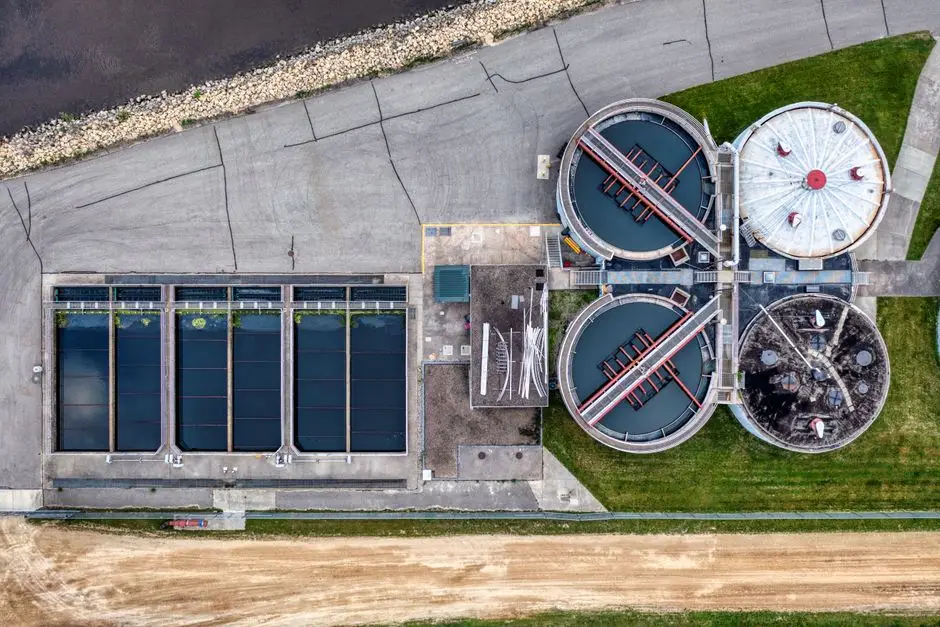
Three process trains are realistic for a CHR-class facility. All three share the same pre-treatment — a rotary mechanical bar screen at 3 mm spacing for cotton gauze, IV-bag fragments, and ward rags, followed by a fine equalization tank sized for 6–8 hours of peak flow to flatten the morning-clinic surge. The decision comes at the biological and disinfection stage.
| Criterion | Option A — CAS + chlorination | Option B — SBR + UV | Option C — Submerged MBR + ClO2 (recommended) |
|---|---|---|---|
| Indicative CAPEX, 200 m³/day | USD 220,000–280,000 | USD 320,000–420,000 | USD 380,000–500,000 |
| Footprint (m²) | 180–220 | 120–150 | 80–110 |
| BOD5 removal | 85–92% | 90–95% | 97–99% |
| PhC removal (24-compound UMT list) | 30–50% (partial) | 45–65% (partial) | 75–90% (biodegradation + sorption) |
| Effluent TSS | 15–30 mg/L | 10–20 mg/L | ≤ 5 mg/L |
| Disinfection in high-NH3 effluent | Poor — free chlorine tied up as chloramines | UV transmittance drops with residual COD | ClO2 retains CT ≥ 30 mg·min/L; no THMs |
| Power, kW (200 m³/day) | 18–22 | 22–28 | 25–32 |
| Intermittent-flow tolerance | Poor | Good (batch mode) | Good (equalization upstream) |
Option C is recommended because the 0.1 μm PVDF membrane barrier physically excludes most suspended PhC carriers and biomass-bound antibiotic residues, while on-site ClO2 generation delivers a residual that remains biocidal in the high-ammonia effluent typical of tropical hospital diurnal peaks. ClO2 also does not form trihalomethanes, which is the failure mode that has stopped several West African CAS + chlorine plants from passing AMR audits. The recommended core packages are the submerged MBR membrane bioreactor system paired with the on-site chlorine dioxide (ClO2) generator.
Recommended Design: Packaged MBR + ClO2 Skid for Yamoussoukro Conditions
Step-by-step, sized for the 300-bed reference case at 1.2 m³/bed/day = 360 m³/day average and 540 m³/day peak. All equipment is pre-skidded for containerized shipment from Abidjan port to the CHR.
Step 1 — Screening. A rotary mechanical bar screen with 3 mm bar spacing and a 0.75 kW drive handles the cotton gauze, IV-bag fragments, and ward rags that routinely jam conventional fine screens. Sized for 540 m³/day peak with 2× headroom.
Step 2 — Equalization. A 90 m³ equalization tank provides 6 hours of buffer at average dry-weather flow, with coarse-bubble aeration to prevent septicity at 28–32 °C ambient. A submersible mixer (4 kW) keeps solids in suspension during the morning outpatient surge.
Step 3 — Biological treatment. A submerged MBR with DF series PVDF flat sheet membrane modules (0.1 μm nominal pore size, integrated aeration box) operated at 15–20 L/m²·h flux with a 20–30 day sludge age. The long SRT is deliberate: it drives robust nitrification of the high-ammonia ward effluent and gives the biomass time to biodegrade the bulk of the 24 PhCs detected at the CHR.
Step 4 — Disinfection. An on-site ClO2 generator at 500 g/h class, fed by a batched chemical dosing system delivering sodium chlorite + HCl precursors. Target dose: 0.8–1.2 mg/L ClO2 residual after a 30-minute contact tank, giving a CT ≥ 30 mg·min/L for virus and antibiotic-resistant bacterial inactivation. On-site generation eliminates the chlorite transport hazard that has disqualified bulk hypochlorite from several West African tender schedules.
Step 5 — Sludge handling. Waste activated sludge at 0.6–0.8 kg DS per m³ treated is thickened in a sludge holding tank and dewatered on a plate and frame filter press to ≥ 22% DS cake, then routed to the hospital's existing licensed incinerator (or autoclaved at 134 °C / 18 min before landfill) to break the AMR transmission loop. Total connected load for the 360 m³/day plant: 28–34 kW; PLC automation allows unattended operation with one daily site visit by the hospital's existing technical staff.
CAPEX and OPEX Benchmarks for a 2026 Yamoussoukro Hospital WWTP

The numbers below are turnkey, in Abidjan/Yamoussoukro logistics zone pricing as of Q1 2026, including civil works, containerized equipment, sea/air freight to Abidjan, customs clearance, installation, and commissioning. They sit at the upper end of the neighbouring Ghana sewage treatment plant cost data and are consistent with the MBR subsystem cost basis in the MBR cost analysis for industrial applications in 2026.
| Plant size (m³/day) | Equivalent beds | CAPEX turnkey (USD) | OPEX (USD/m³) |
|---|---|---|---|
| 50 | ~100 | 180,000–250,000 | 0.40–0.65 |
| 200 | ~400 | 350,000–500,000 | 0.32–0.55 |
| 400 | ~800 | 550,000–650,000 | 0.28–0.45 |
OPEX structure at 200 m³/day: electricity 35–45%, ClO2 precursor chemicals 20–25%, membrane replacement amortized over a 5–7 year life 10–15%, labour 10–15%, consumables and analytical 5–10%. A small PV + battery buffer covering 15–20% of the connected load typically pays back in 4–5 years at current Yamoussoukro grid reliability and diesel costs (USD 1.20–1.45/L at the pump in early 2026).
7-Point Supplier Qualification Checklist for Ivorian Hospital WWTP Procurement
- Certifications. Verify ISO 9001 (quality) and ISO 14001 (environmental) at the equipment manufacturer; the membrane modules and ClO2 generator must be CE-marked or carry equivalent conformity documentation.
- Acceptance testing. Insist on a documented factory acceptance test (FAT) at the manufacturer's facility and a 72-hour site acceptance test (SAT) with influent/effluent sampling by an independent Ivorian laboratory accredited to ISO 17025 — the SAT report is the document CIAPOL will ask for.
- Tropical deployment track record. Confirm the manufacturer has shipped a packaged MBR WWTP to a tropical West African site before; cold-chain membrane logistics and customs clearance into Côte d'Ivoire are the two failure points that sink first-time exporters.
- Warranty and spares. Require a 24-month comprehensive warranty with on-site response within 72 hours in Abidjan, and a guaranteed 10-year spare-parts supply commitment for membrane modules and ClO2 reactor parts.
- Disinfection compliance. Check that the ClO2 generator carries WHO drinking-water compliance documentation and EU Drinking Water Directive 98/83/EC conformity per the manufacturer's spec sheet.
- Documentation and HMI language. Bilingual (French/English) O&M manuals, PLC HMI in French, and a one-week hands-on training for the hospital's technical staff before final handover — non-negotiable for Ivorian facilities with limited skilled-labour depth.
- Reference clients. Request and call at least one Ivorian or Ghanaian hospital where the same supplier delivered a comparable MBR + ClO2 system in the last 36 months; this is the single best predictor of a successful Yamoussoukro deployment.
Frequently Asked Questions
What is the 2026 ANDE discharge limit for hospital wastewater in Côte d'Ivoire?
The controlling instrument is ANDE Arrêté n° 01164 / MINEDD / 2020, requiring BOD5 ≤ 40 mg/L, COD ≤ 150 mg/L, TSS ≤ 50 mg/L, total nitrogen ≤ 15 mg/L, total phosphorus ≤ 2 mg/L, and total coliforms ≤ 1,000 CFU/100 mL. Monthly ESBL-resistant E. coli monitoring is also mandatory under the Ivorian Ministry of Health 2024 circular.
How much does a packaged hospital WWTP cost in Yamoussoukro?
Turnkey CAPEX for a 200 m³/day (≈400-bed) facility in 2026 runs USD 350,000–500,000 including civil works, containerized equipment, and commissioning; OPEX sits at USD 0.32–0.55 per m³ treated, dominated by electricity and ClO2 precursor chemicals.
Why is ClO2 preferred over chlorine or UV for Yamoussoukro hospital disinfection?
On-site ClO2 generation retains biocidal action in the high-ammonia effluent produced by tropical hospital diurnal peaks and does not form trihalomethanes when reacting with antibiotic residues — unlike free chlorine, which is consumed as chloramines and generates regulated DBPs. UV transmittance falls with residual organics from pharmacy washouts, making UV alone unreliable without upstream MBR polishing.
What is the typical lead time for a packaged MBR + ClO2 plant shipped to Abidjan?
From PO to SAT at the CHR Yamoussoukro site, expect 18–26 weeks for a 200–400 m³/day turnkey plant: 10–14 weeks manufacturing, 3–4 weeks sea freight to Abidjan plus customs clearance, 4–6 weeks site installation and commissioning, and 1 week of operator training before final handover.