Why Ghana Needs Engineered Sewage Treatment in 2026
Sewage treatment plant costs in Ghana are driven by GS 1212:2019 effluent limits of BOD ≤50 mg/L, COD ≤250 mg/L and TSS ≤50 mg/L. EPA permitting still runs under L.I. 1652. Typical Accra and Kumasi influent runs BOD₅ 250–400 mg/L at 28–32°C, so packaged SBR, MBBR or MBR units of 50–500 m³/day dominate near-term bids.
Procurement pressure is rising with urban load: Accra (~5.0 million), Kumasi (~3.4 million), and the Tema/Takoradi coastal industrial corridor still rely mainly on septic tanks, lagoons, and informal drains. Earlier industry summaries often cited under 15% urban sewer connection. The 2021 Population and Housing Census reports only 3.2% of urban households dispose of wastewater through a sewerage system, and 2.3% nationally (Ghana Statistical Service, 2021). The Ministry of Sanitation and Water Resources 2025–2030 capital plan is funding decentralized STPs across 16 regional capitals, which is generating near-term procurement for packaged 50–500 m³/day units.
Three drivers force action in 2026. Cholera and typhoid outbreaks have been traced to fecal contamination of urban drains (Ghana Health Service bulletins, 2025). The post-2024 Akora River remediation order has EPA-Ghana auditing discharges. Mining and beverage plants (Guinness, Coca-Cola, Fan Milk) also need on-site polishing to reuse targets.
Ambient air temperatures of 26–32°C year-round accelerate biological kinetics but also drive NH₃ volatilization and odor complaints in uncovered basins. Seasonal storm ingress hits partially separated catchments in Accra and Tema between April and October, so equalization volume is a first-order design choice.
What Are EPA-Ghana Schedule II Effluent Limits for an STP?
EPA-Ghana effluent limits for an STP are set by Ghana Standard GS 1212:2019 (Environmental Protection – Requirements for Effluent Discharge), not by the numeric tables inside L.I. 1652. According to GS 1212:2019 as tabulated in the World Bank Asafo ESIA (May 2024), sewage plant discharges to surface water must meet BOD ≤50 mg/L, COD ≤250 mg/L, and TSS ≤50 mg/L. The same table sets ammonia as nitrogen ≤1 mg/L, nitrate as N ≤50 mg/L, total phosphorus ≤2 mg/L, oil and grease ≤5 mg/L, pH 6–9, and total coliforms ≤400 counts/100 mL.
L.I. 1652 (Environmental Assessment Regulations, 1999) still governs registration and Environmental Permit issuance for Schedule 1 undertakings; it is the permitting pathway, not the concentration schedule.
Earlier buyer guides often quoted oil and grease ≤10 mg/L and total phosphorus ≤5 mg/L for municipal discharge. The 2019 Ghana Standard sets oil/grease at 5 mg/L and total phosphorus at 2 mg/L (GSA, 2019; World Bank ESIA, 2024). Many chlorine-only plants now add UV or chlorine dioxide polish to stay inside the coliform and nutrient envelope. Older project notes also listed total nitrogen ≤15 mg/L as a design target alongside NH₃-N ≤1 mg/L on sensitive waters; keep that nitrogen design envelope unless the site-specific EPA permit states otherwise.
For context, the WHO 2006 recreational water guideline is ≤200 CFU/100 mL for shellfish harvesting, so the Ghanaian total-coliform bar is a step below that shellfish criterion but tighter than many older African national standards. Permitting runs on a 3-year Environmental Permit cycle. An Environmental Assessment is required for any plant ≥200 m³/day, with quarterly self-monitoring reports filed to the EPA regional office. Failure to file remains the most common enforcement trigger, ahead of exceedance events themselves.
| Parameter | EPA-Ghana Schedule II limit (surface water) | Typical raw sewage in Accra/Kumasi |
|---|---|---|
| BOD₅ | ≤50 mg/L | 250–400 mg/L |
| COD | ≤250 mg/L | 500–900 mg/L |
| TSS | ≤50 mg/L | 300–600 mg/L |
| NH₃-N | ≤1 mg/L (sensitive waters) | 30–50 mg/L |
| Total nitrogen | ≤15 mg/L | 40–60 mg/L |
| Total phosphorus | ≤5 mg/L | 6–12 mg/L |
| Fecal coliforms | ≤400 CFU/100 mL (post-2024) | 10⁶–10⁷ CFU/100 mL |
| pH | 6–9 | 6.5–7.5 |
Use the table above as the legacy design checklist still circulating in Ghanaian bid packages. Overlay GS 1212:2019 where the permit cites the Ghana Standard. Watch phosphorus at 2 mg/L, oil/grease at 5 mg/L, and total coliforms at 400 counts/100 mL. Municipal hybrid specs for Accra and Kumasi networks are expanded in our Ghana municipal sewage treatment plants 2026 engineering specs guide.
Influent Characteristics for Typical Ghanaian Sewage
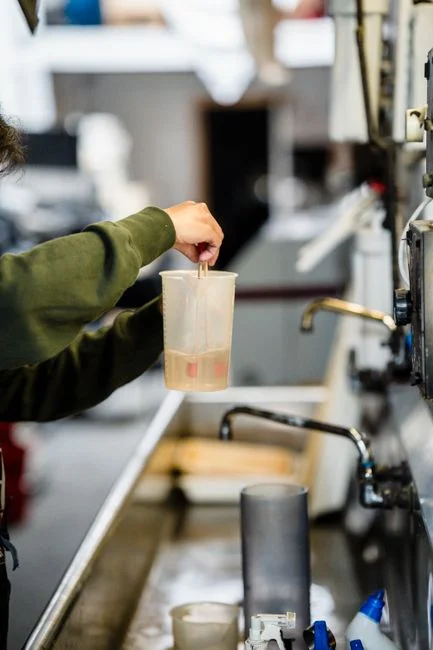
Under-sizing is the most common cause of failure for biological units in Ghana. It almost always starts when an engineer applies the textbook European default of 200 mg/L BOD. Unsewered urban catchments in Greater Accra and Ashanti typically run BOD₅ 250–400 mg/L, COD 500–900 mg/L, TSS 300–600 mg/L, NH₃-N 30–50 mg/L, and total phosphorus 6–12 mg/L (HydropureWater field data, 2026). Peak-to-average ratios of 2.5–3.5× occur during the 06:00–09:00 and 18:00–21:00 windows.
Storm ingress in partially separated networks can push instantaneous hydraulic loading 4× above the daily average — that ratio drives equalization volume, not the daily mean flow.
High ambient temperature (28–32°C) cuts the required HRT in biological reactors by roughly 30% versus temperate design, but it also raises odor and ammonia-stripping risk in uncovered basins. Covered or buried configurations are preferred near residential boundaries. Most plants we size for estate housing in Accra run equalization at the lower end of a 6–8 h HRT band when peak factors stay near 2.5×. Mining-estate sewage in Tarkwa and Obuasi is a special case.
Sulfate of 300–800 mg/L and occasional pH of 5.5–6.5 from acid mine drainage cross-connections require pH correction upstream of the biological stage. Sulfate-reducing bacteria must also be counted in sludge yield calculations.
| Parameter | Greater Accra / Ashanti range | Temperate textbook default | Design implication |
|---|---|---|---|
| BOD₅ | 250–400 mg/L | 200 mg/L | Increase aeration tank volume 25–50% |
| COD/BOD ratio | 2.0–2.4 | 1.8–2.0 | Higher inert COD → larger sludge yield |
| Peak factor | 2.5–3.5× | 1.8–2.5× | Equalization basin ≥6 h HRT |
| Ambient temperature | 28–32°C | 10–18°C | HRT reduced ~30%, but odor risk rises |
| NH₃-N | 30–50 mg/L | 20–30 mg/L | Nitrification sized for higher loading |
Which STP Technology Fits Ghana Sites Best?
STP technology choice for Ghanaian sites sits on a clear trade-off among capital cost, footprint, effluent quality, and operator skill. Septic and Imhoff tanks only suit <20 m³/day single-building applications. Their effluent typically runs BOD₅ 80–150 mg/L, so a polishing step is required to meet EPA-Ghana / GS 1212 limits. Treat them as primary treatment upstream of a packaged biological plant.
Conventional activated sludge (CAS) remains the lowest-CAPEX option per m³ at flows above 2,000 m³/day, with BOD₅ ≤30 mg/L under proper SRT control. It needs a separate secondary clarifier, a larger footprint, and operators competent in MLSS and sludge wasting. That profile does not match a typical 5-person estate or municipal operator team.
SBR consolidates reaction and settling in a single tank, which cuts civil cost and fits 100–2,000 m³/day, with BOD₅ ≤20 mg/L and NH₃-N ≤5 mg/L typical; the trade-off is decanter mechanism maintenance. MBBR is robust to hydraulic and organic shock, requires no sludge recirculation, and retrofits cleanly into existing concrete basins — BOD₅ ≤20 mg/L and NH₃-N ≤5 mg/L, with a footprint between CAS and MBR. MBR couples activated sludge with submerged PVDF membranes at 0.1 μm nominal pore size. It delivers BOD₅ ≤5 mg/L, TSS ≤5 mg/L, and NH₃-N ≤1 mg/L suitable for direct reuse.
The trade-off is a 60% smaller footprint than CAS but 20–35% higher CAPEX and energy use of 0.6–0.9 kWh/m³ treated. For residential estates and small municipalities the modular benchmark is the Underground Package Sewage Treatment Plant (WSZ Series) (1–80 m³/h, fully automated, no on-site operator required). Where reuse is the driver, the MBR membrane bioreactor system is the spec to defend, and the Ghana-specific MBR cost envelope is detailed in our MBR wastewater treatment system in Ghana costs guide.
| Technology | Flow range (m³/day) | BOD₅ effluent (mg/L) | NH₃-N effluent (mg/L) | Footprint vs CAS | Operator skill |
|---|---|---|---|---|---|
| Septic / Imhoff | <20 | 80–150 | 20–40 | ~120% | Basic |
| CAS | >2,000 | ≤30 | ≤5 (with nitrification) | 100% | High |
| SBR | 100–2,000 | ≤20 | ≤5 | ~70% | Medium |
| MBBR | 50–5,000 | ≤20 | ≤5 | ~50% | Low–medium |
| MBR | 20–5,000 | ≤5 | ≤1 | ~40% | Medium |
Sewage Treatment Plant Costs in Ghana (CAPEX & OPEX, 2026)
Sewage treatment plant costs in Ghana are quoted at the 2026 mid-rate of roughly GHS 12–15 per USD. The spread is wide because labor, civil works, and import duties vary sharply between Accra, Kumasi, and Tamale. For a civil-built plant, expect SBR at GHS 25,000–45,000 per m³/day, MBBR at GHS 30,000–55,000, and MBR at GHS 45,000–85,000. A containerized WSZ-pattern plant runs GHS 35,000–70,000 per m³/day in the 50–500 m³/day range.
OPEX covers energy at the 2026 ECG industrial tariff (~GHS 1.6–2.0/kWh), chemicals, sludge hauling, and two operators. Typical bands are GHS 0.55–0.90/m³ for SBR, GHS 0.70–1.10/m³ for MBBR, and GHS 0.85–1.40/m³ for MBR.
What Does a 200 m³/day STP Cost?
A 200 m³/day civil-built SBR sized for Schedule II / GS 1212 discharge typically runs GHS 5.5–9.0 million turnkey in 2026. A containerized package on the same duty is GHS 8–12 million including shipping, installation, and 12 months of commissioning support. The line item that catches buyers out is grid backup. Regional capitals log 6–12 hours of outage per month.
A 100 m³/day plant needs about 80 kVA of diesel generation or a 60 kWh battery hybrid to keep aeration online — add GHS 350,000–600,000 to CAPEX. Worked example: a 500 m³/day MBR for a Kumasi residential estate. Turnkey CAPEX is GHS 28–38 million and monthly OPEX around GHS 155,000. Payback is 4–5 years against Accra Water Company trucked sewerage at GHS 25–40/m³.
The full envelope is laid out in our 2026 municipal sewage treatment plant price guide, with a Ghana-local ROI breakdown in the wastewater treatment plant cost in Ghana engineering breakdown.
| Flow (m³/day) | Technology | CAPEX (GHS, turnkey) | OPEX (GHS/m³) | Notes |
|---|---|---|---|---|
| 50 | Containerized (WSZ) | 2.5–3.5 million | 0.85–1.30 | Plug-and-play, 12-week install |
| 200 | SBR civil-built | 5.5–9.0 million | 0.60–0.90 | Needs equalization + sludge |
| 500 | MBR civil-built | 28–38 million | 0.90–1.40 | Adds ClO₂ + filter press |
| 2,000 | MBBR civil-built | 75–110 million | 0.70–1.10 | Lowest energy per m³ |
Pre-Treatment, Sludge Handling, and Reuse Loop
The STP does not end at the biological reactor. Headworks, sludge dewatering, and disinfection decide whether the plant runs for 10+ years or fails on membranes within 18 months. For headworks, specify a GX rotary mechanical bar screen at 5–10 mm aperture ahead of the grit chamber. Rags, sachets, and plastics are the largest cause of pump and membrane fouling in Ghanaian plants (HydropureWater field data, 2026).
For high-strength or FOG-laden catchments — food estates, abattoirs, school cafeterias — add a dissolved air flotation system (4–300 m³/h) ahead of the MBR. That step removes emulsified fats that would otherwise blind the membranes.
Waste activated sludge at 0.5–1.2% dry solids needs thickening on a rotary drum or gravity belt. A plate and frame filter press for sludge dewatering (1–500 m² filtration area) then reaches 22–28% dry cake for landfill or co-composting with municipal green waste. Reuse closes the loop. MBR permeate polished through a chlorine dioxide generator (50–20,000 g/h ClO₂) hits fecal coliforms <10 CFU/100 mL.
That water suits grounds irrigation, toilet flushing, and cooling-tower make-up, and often pays back ClO₂ capex inside 3 years by displacing purchased water. The economics of the dewatering step are detailed separately in our filter press OPEX breakdown for 2026.
How to Select a Sewage Treatment Plant Supplier in Ghana
A wrong supplier shortlist costs more than a wrong technology pick. The due-diligence list below separates manufacturers that will still answer the phone in year three from those that ship a container and disappear.
- Verify ISO 9001:2015 manufacturing, CE or equivalent electrical certification, and at least one West Africa reference plant operating two years or more — ask for commissioning records and EPA discharge test reports.
- Demand a complete scope: process design, P&ID, general arrangement, civil interface drawing, PLC program with source code, English O&M manual, and 12 months of on-site support with operator training.
- Confirm a Ghana or ECOWAS regional agent with stocked spares — aerator diaphragms, membrane modules, and UV lamps have 2–5 year replacement intervals; 6-week ocean freight from China is the most common reason plants fall out of compliance.
- Compare containerized versus civil-built for the actual site. Containerized skips civil works where contractor capacity is thin and ships in 12–16 weeks. Civil-built becomes cheaper per m³ above 1,000 m³/day and is easier to repair locally.
- Evaluate 10-year whole-life cost, not turnkey price — membrane replacement, energy, and operator labor can swing total cost of ownership by 40%.
- Size equalization for peak factors of 2.5–3.5× and ambient 28–32°C nitrification kinetics before locking tank volumes.
- Match disinfection to GS 1212:2019 total coliform ≤400 counts/100 mL, with UV at 30–40 mJ/cm² or ClO₂ at 1–2 mg/L residual where reuse is planned.
Who This Is For / Next Step
Estate, mining-camp, and municipal STP buyers in Greater Accra, Ashanti, and coastal industrial zones are the primary readers of this cost and process guide. Look elsewhere if you need only a household septic tank under 20 m³/day with no EPA permit. For a duty-specific CAPEX/OPEX sheet matched to your influent and GS 1212 target, request a Ghana STP quotation with flow, BOD, and reuse intent noted.
Frequently Asked Questions
What is the typical CAPEX for a 200 m³/day sewage treatment plant in Ghana?
A 200 m³/day civil-built SBR plant sized for EPA-Ghana / GS 1212 effluent runs GHS 5.5–9.0 million turnkey in 2026. A containerized packaged plant on the same duty is GHS 8–12 million including shipping, installation, and 12 months of commissioning support. The MBR variant adds 30–45% to CAPEX in exchange for reuse-grade permeate and a 60% smaller footprint (HydropureWater field data, 2026).
How long does it take to install a packaged sewage treatment plant in Ghana?
From purchase order to commissioned plant, expect 14–20 weeks for a containerized packaged STP: 6–8 weeks ocean freight from China, 2–3 weeks site civil and electrical, and 2–4 weeks commissioning and EPA test runs. A civil-built plant extends to 6–9 months, dominated by civil works duration rather than equipment lead time.
Which technology is best for coastal high-temperature sites in Ghana?
MBR or MBBR is recommended for coastal sites such as Tema, Sekondi-Takoradi, and Cape Coast because both handle high NH₃-N loading and tolerate 28–32°C ambient temperatures without loss of nitrification. MBR is the better choice if the treated water is destined for cooling-tower or toilet-flushing reuse, because permeate TSS is consistently below 5 mg/L.
Does the treated water need disinfection to meet EPA-Ghana limits?
Yes. GS 1212:2019 sets total coliforms at ≤400 counts/100 mL for sewage plant discharge, and biological treatment alone typically leaves 10⁴–10⁵ CFU/100 mL. Either UV (30–40 mJ/cm² dose) or chlorine dioxide at 1–2 mg/L residual is the standard polish. Chlorine dioxide is preferred for reuse because it does not form trihalomethanes under the same conditions as free chlorine.
What is the lifespan of an MBR membrane in Ghanaian conditions?
PVDF MBR membranes typically last 5–8 years in Ghanaian sewage service, with the upper end reached when chemical cleaning is performed every 3–6 months using 1,000–2,000 mg/L NaOCl soak and 1–2% citric acid for biofouling. The dominant failure mode is irreversible fouling from fats, oils, and grease, which is why a properly sized DAF pre-treatment stage is a worthwhile insurance policy (HydropureWater field data, 2026).