Why Kano’s Industrial Wastewater Treatment is a 2025 Priority
Kano’s industrial wastewater treatment landscape in 2025 demands solutions tailored to seasonal contamination spikes and strict NESREA compliance. Pharmaceutical and food industries in Sharada and Bompai face dry-season BOD levels up to 450 mg/L (vs. NESREA’s 30 mg/L limit) and heavy metals like cadmium (0.08 mg/L) exceeding WHO standards by 8x. This guide provides Kano-specific technical specs, cost benchmarks ($50K–$2M for turnkey systems), and a step-by-step equipment selection framework to meet effluent limits while optimizing ROI.
A factory manager in the Sharada Industrial Area today faces a landscape far more volatile than a decade ago. Non-compliance is no longer a manageable oversight; NESREA enforcement in 2024 has ramped up, with fines ranging from ₦500,000 to ₦5 million per violation depending on the severity of the discharge. Beyond legal penalties, the economic cost of untreated effluent is mounting. In 2024, approximately 30% of Kano’s food processing exporters faced contract rejections from multinational buyers due to inadequate water quality documentation and trace contaminants in the supply chain (Top 3 news report).
The environmental stakes are equally high. During the dry season, the lack of dilution in local water bodies causes BOD and COD levels to spike to 15x the legal limit. Heavy metals such as cadmium (0.08 mg/L) and lead (0.2 mg/L) have been detected in downstream irrigation channels, linked directly to kidney damage and long-term health risks in agricultural communities surrounding Bompai (Top 1 study). While the Kano State government is nearing completion of centralized treatment plants in Bompai and Sharada (slated for Q1 2026), these facilities are designed for secondary polishing. Every factory remains legally mandated to provide on-site pretreatment to meet primary effluent standards before discharge into the public sewer (Top 3).
Kano’s Wastewater Contamination Profile: Seasonal Data and Industry-Specific Risks
Selecting the right treatment technology requires a granular understanding of how Kano’s climate affects effluent chemistry. The most critical factor for Kano-based engineers is the "dry season effect." Between November and May, the reduction in river flow and groundwater levels means that industrial discharges are not diluted, leading to massive spikes in conductivity and mineral concentration.
In the pharmaceutical sector, COD levels frequently hit 900 mg/L during peak production cycles. In the textile industry, high concentrations of chromium (0.15 mg/L) from dye houses exceed WHO limits by 500%. For food processors, fats, oils, and grease (FOG) create significant blockages and biological oxygen demand that traditional sedimentation cannot handle alone.
| Parameter | Pharma (Dry Season) | Food (Dry Season) | Textile (Dry Season) | NESREA Limit | WHO Standard |
|---|---|---|---|---|---|
| BOD (mg/L) | 450 | 400 | 350 | 30 | 20 |
| COD (mg/L) | 900 | 850 | 1,100 | 80 | 60 |
| Conductivity (μS/cm) | 3,500 | 2,800 | 4,200 | N/A | 800 |
| Chromium (mg/L) | 0.02 | 0.01 | 0.15 | 0.03 | 0.03 |
| Cadmium (mg/L) | 0.08 | 0.005 | 0.04 | 0.01 | 0.01 |
Conductivity in Kano’s industrial zones often spikes to 3,500 μS/cm in the dry season, compared to 800 μS/cm during the wet season (Top 1). This fluctuation can shock biological treatment systems if equalization tanks are not properly sized. heavy metals like arsenic from pesticides and lead from paints are persistent in the Bompai area, requiring specialized chemical precipitation or membrane filtration to remove (Top 1, Top 2).
NESREA Compliance Checklist: Effluent Limits and Enforcement Risks for Kano Industries

Compliance in 2025 is governed by the NESREA National Environmental (Sanitation and Wastes Control) Regulations. For procurement officers, the checklist below outlines the mandatory thresholds and the operational protocols required to avoid plant shutdowns.
| Parameter | NESREA Standard (2025) | Sampling Frequency | Enforcement Trigger |
|---|---|---|---|
| BOD5 | < 30 mg/L | Monthly | Fines for 3+ violations |
| COD | < 80 mg/L | Monthly | Shut down for >800 mg/L |
| TSS | < 30 mg/L | Weekly | Fines for visible turbidity |
| pH | 6.0 – 9.0 | Daily (Online) | Immediate correction order |
| Heavy Metals | Cd < 0.01, Pb < 0.05 | Quarterly | Legal prosecution |
Beyond the numbers, NESREA mandates specific pretreatment infrastructures. All industries must install primary screening, pH adjustment systems, and sedimentation units before discharging to government-managed plants (Top 3). Documentation is critical: factories must maintain daily flow logs, weekly internal lab reports, and annual third-party audits performed by NESREA-accredited consultants. Failure to provide these records during a spot inspection is often the primary trigger for administrative fines ranging from ₦500k to ₦5M (NESREA 2024 Guidelines).
Step-by-Step Treatment Process for Kano’s Industrial Wastewater
To achieve 2025 compliance levels, a multi-stage treatment train is essential. The process flow must account for the high solids content in textile effluent and the complex organic loads in pharmaceutical wastewater.
1. Pretreatment: Screening and Equalization
The first line of defense involves removing large debris. For Kano’s textile mills, which often discharge rags and dye fibers, rotary screens for textile rags are essential to prevent downstream pump failure. Equalization tanks are then used to buffer the dry-season spikes in concentration, ensuring a steady flow to the primary treatment units.
2. Primary Treatment: Solids and FOG Removal
For food processing plants in Sharada, DAF systems for Kano’s food processing and textile industries are the most effective way to remove fats, oils, and grease (FOG removal >95%). If the effluent has high Total Suspended Solids (TSS), optimizing sedimentation for Kano’s high-TSS effluent via lamella clarifiers can reduce the load on biological stages by up to 60%.
3. Secondary Treatment: Biological Oxidation
This stage removes dissolved organics (BOD/COD). For pharmaceutical plants with high-strength waste, MBR systems for Kano’s pharmaceutical and heavy metal-laden effluent offer 95% COD removal efficiency. For food processors with more biodegradable waste, Anaerobic-Oxic (AO) systems (WSZ Series) provide 90% BOD removal at a lower energy cost (2025 vendor benchmarks).
4. Tertiary Treatment and Sludge Handling
Tertiary treatment involves sand filtration and disinfection. Chemical dosing for pH adjustment and metal precipitation in Kano is utilized here to ensure heavy metals like chromium and lead are stabilized. Finally, sludge must be dewatered using plate-and-frame filter presses to achieve 95% dry solids, making disposal safer and cheaper (Top 1 study).
DAF vs. MBR vs. Chemical Dosing: Which System is Right for Your Kano Factory?
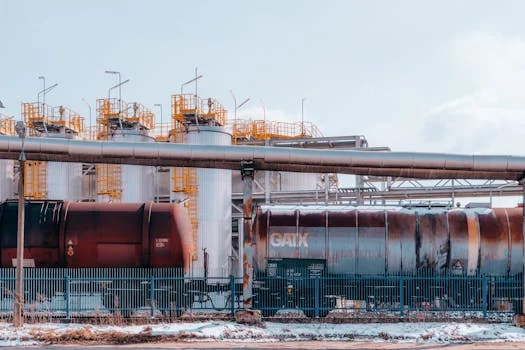
Choosing between Dissolved Air Flotation (DAF), Membrane Bioreactors (MBR), and Chemical Dosing depends on your specific industry footprint and the nature of your contaminants.
| Criteria | DAF | MBR (DF Series) | Chemical Dosing |
|---|---|---|---|
| Best Use Case | Food (FOG removal) | Pharma (High COD/Metal) | Textile (pH/Precipitation) |
| BOD Removal | 40–60% | 95–99% | 20–30% |
| Footprint | Medium | Small (Compact) | Very Small |
| Energy Use | 0.3 kWh/m³ | 0.8–1.2 kWh/m³ | 0.1 kWh/m³ |
| CapEx | $50k – $300k | $80k – $800k | $20k – $100k |
| Compliance | Primary/Secondary | Tertiary (Reuse) | Pretreatment Only |
Engineers can follow this 2025 decision tree: If your effluent contains >500 mg/L COD and heavy metals, select an MBR system for its high removal efficiency and ability to produce reuse-quality water. If your primary concern is >1,000 mg/L FOG (common in food processing), a DAF system is the industry standard. For facilities where BOD is already <200 mg/L but pH or metals are slightly over the limit, a chemical dosing system may suffice for compliance (2025 engineering rule of thumb).
For more detailed information on membrane technology, learn more about MBR systems for Nigerian industries.
Cost Breakdown and ROI Calculator for Kano’s Wastewater Treatment Projects
Budgeting for a wastewater project in Kano requires balancing the initial capital expenditure (CapEx) against long-term operational costs (OpEx) and the cost of non-compliance.
Capital benchmarks for 2025 indicate that DAF systems range from $50 to $300 per m³/h of capacity, while MBR systems, due to their advanced membrane components, range from $800 to $1,200 per m³/day of throughput. Operational costs in Kano are heavily influenced by electricity and chemical prices, with MBR systems costing approximately ₦600–₦1,200 per m³ treated ($0.4–$0.8/m³) (Top 3 news report).
| Cost Category | Example: 50 m³/h Food Plant (DAF) | Example: 20 m³/h Pharma Plant (MBR) |
|---|---|---|
| Estimated CapEx | ₦45,000,000 ($90,000) | ₦65,000,000 ($130,000) |
| Annual OpEx | ₦5,000,000 | ₦8,500,000 |
| Fines Avoided/Year | ₦3,500,000 | ₦5,000,000 |
| Water Reuse Savings | ₦4,000,000 | ₦12,000,000 (High reuse) |
| Payback Period | 2.5 Years | 3.2 Years |
The ROI is driven not just by avoiding NESREA fines (which can exceed ₦5M/year for repeat offenders), but by the retention of high-value export contracts. For many Kano-based manufacturers, the ability to pass a water quality audit is the difference between a 30% revenue growth or a complete loss of international market access (Top 1, Top 3). You can also compare Kano’s costs to Lagos’s wastewater treatment benchmarks to see how regional logistics affect pricing.
Local Supplier Checklist: How to Choose a Wastewater Treatment Vendor in Kano

Procuring industrial equipment in Kano requires vetting vendors for their ability to support systems long-term. Many projects fail within 24 months due to a lack of spare parts or technical expertise for seasonal recalibration.
- NESREA Certification: Does the vendor have documented proof of systems that have passed NESREA audits in Kano?
- Local Support: Do they have a technician based in Kano or Kaduna who can respond within 24 hours to a system failure?
- Spare Parts Inventory: Are replacement membranes (for MBR) or scrapers (for DAF) stocked locally in Nigeria?
- Case Studies: Can they provide references from other factories in the Sharada or Bompai industrial estates?
- Performance Guarantees: Does the contract include a guarantee of 90% BOD/COD removal efficiency?
Red flags to watch for include vendors who do not request a water quality analysis before quoting, or those who offer "all-in-one" solutions without an equalization tank (crucial for Kano's dry season spikes). Ensure your contract includes O&M training for your on-site engineers and at least a 1-year comprehensive warranty (Top 3 news report).
Frequently Asked Questions
How many water treatment plants does Kano State have in 2025?
As of 2025, two major government-owned industrial wastewater treatment plants in Bompai and Sharada are nearing completion (expected Q1 2026). However, these plants require industries to perform primary on-site pretreatment to meet discharge standards before the effluent enters the public system (Top 3).
What are the three types of industrial wastewater treatment?
The three types are: 1) Physical (screening, sedimentation, DAF), 2) Chemical (coagulation, flocculation, disinfection), and 3) Biological (MBR, Activated Sludge, AO). Kano’s pharmaceutical and textile industries typically require a combination of all three to meet heavy metal and COD limits (Top 1, Top 2).
How much does a wastewater treatment plant cost in Kano?
DAF systems typically cost between ₦25M and ₦150M. MBR systems, which offer higher treatment quality, range from ₦40M to ₦400M depending on capacity. Chemical dosing systems are the most affordable at ₦10M to ₦50M, but they have limited removal capabilities compared to biological systems (2025 vendor benchmarks).
What are the NESREA effluent limits for Kano industries?
The primary limits are BOD < 30 mg/L, COD < 80 mg/L, and TSS < 30 mg/L. For heavy metals, cadmium must be below 0.01 mg/L and lead below 0.05 mg/L. pH must be maintained between 6.0 and 9.0 (Top 4 PDF).
Can untreated industrial wastewater be used for irrigation in Kano?
No. Effluent currently found in Bompai’s irrigation channels contains chromium (0.15 mg/L) and cadmium (0.08 mg/L), which exceed WHO limits by 5–8x. This poses severe health risks to consumers of local produce and can lead to the long-term contamination of agricultural soil (Top 2).