Hospital Wastewater Treatment in Egypt: 2026 Engineering Specs, Zero-Risk Compliance & Cost-Optimized Equipment Guide
Hospital wastewater in Egypt requires specialized treatment to meet Decree 92/2013’s TSS (<30 mg/L), BOD (<30 mg/L), and COD (<100 mg/L) limits, while eliminating pathogens and pharmaceutical residues. A 2024 Ain Shams Hospital study identified 12 priority drugs in effluent, including antibiotics and analgesics, demanding advanced oxidation or membrane filtration. Systems must handle 0.5–2 m³/bed/day, with influent COD up to 1,200 mg/L—far exceeding municipal wastewater. This guide provides 2026 engineering specs, cost benchmarks (EGP 2M–35M CAPEX), and equipment selection criteria for zero-risk compliance.
Why Hospital Wastewater in Egypt Demands Specialized Treatment
Hospital effluent is significantly more complex than standard municipal sewage due to the presence of recalcitrant organic compounds and highly infectious agents. In Egypt, the rapid expansion of healthcare facilities in urban centers like Cairo and Alexandria has placed immense pressure on existing infrastructure, which often fails to neutralize the specific chemical and biological threats found in medical waste streams. Unlike domestic sewage, hospital wastewater contains three distinct categories of hazardous contaminants: pathogens (including fecal coliform, multi-drug resistant bacteria, and viruses), pharmaceuticals (antibiotics, analgesics, and hormones), and high-strength conventional pollutants (COD, TSS, and FOG).
A landmark study conducted at Ain Shams Hospital detected 12 priority pharmaceutical compounds in untreated effluent, with ciprofloxacin concentrations reaching 50–200 μg/L and paracetamol as high as 100–500 μg/L. These substances are not typically removed by standard aerobic processes used in municipal plants. the influent strength of medical facilities is drastically higher than urban averages. While municipal wastewater in Egypt typically presents a Chemical Oxygen Demand (COD) of 250–500 mg/L, hospital influent frequently ranges from 500 to 1,200 mg/L. This disparity necessitates high-intensity treatment trains to prevent the contamination of the Nile and local groundwater supplies.
Regulatory compliance in Egypt is governed primarily by Law 48/1982 and Decree 92/2013. While these regulations set general discharge limits, they do not explicitly address pharmaceutical residues. Consequently, engineering consultants often look to WHO standards, particularly the requirement for fecal coliform levels to remain below 1,000 CFU/100mL for safe reuse or environmental discharge. The following table outlines the typical influent parameters and flow requirements for Egyptian hospitals based on bed capacity.
| Hospital Size (Beds) | Avg. Flow (m³/day) | Influent COD (mg/L) | Influent BOD (mg/L) | Influent TSS (mg/L) |
|---|---|---|---|---|
| 50-Bed Clinic | 25 – 100 | 500 – 800 | 200 – 400 | 200 – 500 |
| 200-Bed General | 100 – 400 | 600 – 1,000 | 250 – 500 | 300 – 600 |
| 500-Bed Tertiary | 250 – 1,000 | 800 – 1,200 | 300 – 600 | 400 – 800 |
Treatment Process Design: 4 Stages to Meet Egypt’s Discharge Limits
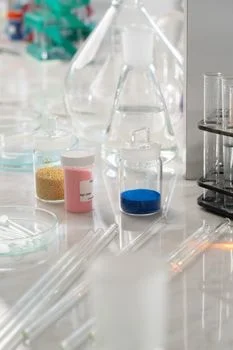
To achieve consistent compliance with Decree 92/2013, a multi-stage treatment approach is required. This ensures that both physical solids and dissolved chemical compounds are systematically removed. The engineering design must account for the high variability in hospital water usage, which peaks during morning clinical hours and drops significantly at night.
Stage 1: Pretreatment (Screening & Equalization)
Mechanical pretreatment is the first line of defense. Rotary mechanical bar screens (GX Series) are essential for removing 3–6 mm solids, such as medical plastics, bandages, and large organic matter, which can damage downstream pumps. Following screening, equalization tanks are critical. These tanks must be sized for a Hydraulic Retention Time (HRT) of 6–12 hours to buffer hydraulic flow spikes and neutralize pH. For a 50-bed hospital, this typically requires a 15–30 m³ reinforced concrete or coated steel tank equipped with air mixing to prevent anaerobic odors.
Stage 2: Primary Treatment (DAF or Sedimentation)
Primary treatment focuses on the removal of suspended solids and fats, oils, and grease (FOG) from hospital kitchens and laundry facilities. A dissolved air flotation (DAF) machine is often superior to traditional clarifiers in hospital settings because it can remove 90–95% of TSS and 60–70% of FOG. Alternatively, lamella clarifiers can be used where space is limited, reducing the footprint by 80% compared to conventional settling tanks, though they require precise chemical dosing of Polyaluminum Chloride (PAC) at rates of 50–100 mg/L.
Stage 3: Secondary Treatment (Biological & Filtration)
The biological stage is where the bulk of organic degradation occurs. Standard A/O (Anaerobic/Oxic) systems, such as the WSZ integrated sewage treatment system, achieve 85–92% COD removal with an HRT of 12–24 hours. However, for hospitals requiring higher effluent quality or those with limited space, a high-efficiency MBR system is the gold standard. MBR technology combines biological treatment with membrane filtration, achieving 95%+ COD removal and producing effluent with TSS near zero. This is particularly effective in removing the pharmaceutical residues identified in the Ain Shams study.
Stage 4: Disinfection (Advanced Oxidation)
Disinfection is the most critical stage for medical facilities. While UV radiation is effective for clear water, hospital effluent often has residual turbidity that shields pathogens. An on-site chlorine dioxide generator is preferred because ClO₂ is a stronger oxidant than chlorine and does not produce harmful trihalomethanes. It is highly effective at degrading antibiotic residues and achieves a 99.9% pathogen kill rate at a dosage of 5–10 mg/L.
| Parameter | ClO₂ Dosage (mg/L) | Contact Time (min) | Removal Efficiency (%) |
|---|---|---|---|
| Fecal Coliform | 5 – 8 | 30 | >99.9% |
| Antibiotics | 8 – 10 | 45 | 80 – 90% |
| Viruses | 5 – 10 | 30 | >99.9% |
System Comparison: MBR vs. DAF+A/O vs. Chlorine Dioxide for Egyptian Hospitals
Choosing the right system depends on the hospital’s specific discharge requirements, available space, and technical capacity of the staff. In Egypt, where land prices in urban centers are high and water reuse is becoming a national priority, the decision framework usually shifts between three primary configurations.
Membrane Bioreactor (MBR) systems offer the highest performance but come with higher capital costs. They are ideal for urban hospitals where discharge must meet stringent reuse standards for landscape irrigation. Conversely, a combination of DAF and A/O (Anaerobic/Oxic) processes provides a robust, mid-range solution that balances cost and compliance. For very small clinics that discharge directly into a well-maintained municipal sewer, a high-level disinfection system using chlorine dioxide may suffice as a standalone pretreatment measure, provided the municipal authority allows it under Law 48/1982.
| Feature | MBR System | DAF + A/O System | ClO₂-Only (Pre-Sewer) |
|---|---|---|---|
| CAPEX (Avg.) | EGP 15M – 20M | EGP 5M – 8M | EGP 2M – 3M |
| COD Removal | >95% | 80 – 90% | <20% (Disinfection only) |
| Pathogen Kill | 99.99% | 95 – 98% | 99.9% |
| Footprint | Ultra-Compact | Moderate | Minimal |
| Pharma Removal | High | Moderate | High (Oxidation) |
Operational considerations are equally important. An MBR system for high-efficiency hospital wastewater treatment requires skilled maintenance, including weekly membrane cleaning with 0.5–1% sodium hypochlorite and membrane replacement every 5–7 years. DAF+A/O systems are more forgiving but require consistent chemical management for coagulation and flocculation. Chlorine dioxide systems have fewer moving parts but necessitate a hazardous material license for the storage of sodium chlorite (NaClO₂), a requirement strictly enforced by Egyptian civil defense authorities.
Cost Breakdown: CAPEX and OPEX for Hospital Wastewater Treatment in Egypt (2026)
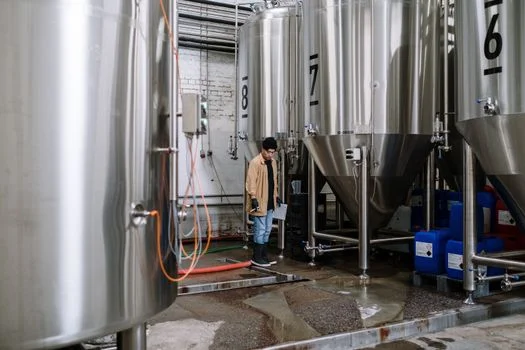
Budgeting for a hospital wastewater treatment plant (WWTP) in Egypt requires a clear distinction between the initial capital expenditure (CAPEX) and the long-term operational expenditure (OPEX). While international benchmarks exist, local costs are influenced by the fluctuating exchange rate of the Egyptian Pound and the availability of locally manufactured components versus imported specialized membranes or sensors.
For a 200-bed hospital, which is a common size for private and public facilities in Egypt, the total CAPEX for a turnkey MBR system is approximately EGP 15M to EGP 20M. This includes the compact medical wastewater treatment system for clinics, civil works, and installation. If the hospital opts for a DAF+A/O configuration, the cost drops to roughly EGP 8M to EGP 12M. These figures are significantly more relevant than the urban WWTP data often cited in Egyptian municipal studies, which focus on mega-projects like the New Cairo plant serving millions of residents.
| Hospital Size | MBR CAPEX (EGP) | DAF+A/O CAPEX (EGP) | ClO₂-Only CAPEX (EGP) |
|---|---|---|---|
| 50-Bed | 4M – 6M | 2M – 3.5M | 1.5M – 2M |
| 200-Bed | 15M – 20M | 8M – 12M | 4M – 6M |
| 500-Bed | 30M – 35M | 20M – 25M | 10M – 12M |
OPEX is often where hospital administrators face the most frustration. For an MBR system at a 200-bed facility, annual operating costs average EGP 1.5M. This is distributed across electricity (40%), membrane replacement reserves (30%), labor (20%), and chemicals (10%). In contrast, a DAF+A/O system has a lower OPEX of EGP 800K/year but higher chemical costs due to the constant need for polymers and PAC. Hidden costs such as Ministry of Environment permit fees (EGP 50K–200K) and operator training (EGP 20K–50K) must be factored into the 2026 fiscal planning to avoid project delays. For insights on how other regions manage these costs, facility managers can compare cost benchmarks for hospital wastewater treatment in emerging markets.
Compliance Checklist: How to Meet Egypt’s Hospital Wastewater Standards
Ensuring that a hospital wastewater system remains compliant requires a disciplined approach to design, construction, and ongoing monitoring. Failure to meet Decree 92/2013 standards can result in heavy fines, legal action from the Ministry of Health, and potential closure of the facility.
- Design Phase: Validate that the system is sized for peak flows, not just daily averages. A 200-bed hospital producing 400 m³/day with a COD of 800 mg/L should ideally utilize a 100 m³/day MBR or a 150 m³/day DAF+A/O system to ensure adequate buffer capacity.
- Construction Phase: Verify that the equalization tank provides at least 6 hours of HRT. Ensure that all tanks are waterproofed to prevent cross-contamination of groundwater, a common failure point in older Egyptian facilities. Install calibrated flow meters and dedicated sampling ports for regulatory inspections.
- Disinfection Validation: Maintain a chlorine dioxide residual of at least 0.5 mg/L after a 30-minute contact time, as per 2024 WHO guidelines. This ensures that even the most resilient pathogens are neutralized before discharge.
- Operational Logs: Maintain daily logs of effluent COD, TSS, and pH. The Ministry of Environment requires quarterly compliance reports. Automated sensors integrated into the control panel can simplify this process and provide real-time alerts if parameters exceed limits.
- Reuse Requirements: If the hospital intends to reuse treated water for green area irrigation, the effluent must meet the WHO standard of <1,000 CFU/100mL fecal coliform. While MBR systems naturally achieve this, DAF+A/O systems will require an additional sand filtration stage to ensure safety.
For facility managers considering different disinfection technologies, it is helpful to understand when to use UV vs. chlorine dioxide for hospital wastewater, especially regarding the maintenance of residual protection in storage tanks.
Frequently Asked Questions
Q: What are Egypt’s discharge limits for hospital wastewater?
A: According to Decree 92/2013, hospital effluent must meet TSS <30 mg/L, BOD <30 mg/L, and COD <100 mg/L. For facilities discharging into the municipal sewer, Law 48/1982 requires pretreatment to ensure the waste does not damage the public network.
Q: How much does a hospital wastewater treatment plant cost in Egypt?
A: CAPEX ranges from EGP 2M for a small 50-bed clinic using basic disinfection to EGP 35M for a large 500-bed hospital using MBR technology. OPEX typically ranges from EGP 300K to EGP 1.5M per year depending on the system’s complexity.
Q: Can hospital wastewater be reused for irrigation in Egypt?
A: Yes, provided it meets the WHO standard of <1,000 CFU/100mL fecal coliform. MBR systems are the most reliable way to achieve this, though other systems can comply if paired with advanced filtration and disinfection.
Q: What is the best disinfection method for hospital wastewater in Egypt?
A: An on-site chlorine dioxide generator for hospital effluent disinfection is generally considered the best option. It provides superior pathogen kill and degrades pharmaceutical residues more effectively than chlorine or UV without producing toxic byproducts.
Q: Do I need a permit for a hospital wastewater treatment plant in Egypt?
A: Yes. You must apply for a discharge permit from the Ministry of Environment. The process involves submitting engineering designs and environmental impact assessments, with fees ranging from EGP 50,000 to EGP 200,000. To see how other high-density urban areas manage this, read about how Taipei hospitals achieve 99.9% pathogen kill in wastewater.