Hospital wastewater treatment in India must handle COD often in the 150–800 mg/L range, plus pathogens, antibiotic residues, and low biodegradability that municipal sewage plants are not designed for. Typical 500-bed campuses generate about 150–200 m³/day. Compliant trains combine equalization, biological treatment (often MBR or MBBR), and disinfection so BOD can reach ≤30 mg/L on surface-water routes and fecal indicators stay within consent limits. Capital outlay for core plant commonly sits between ₹5L and ₹50L, scaled to beds, flow, and discharge route.
Why Indian Hospital Effluent Needs Specialized Treatment
Compliant Indian hospital plants in 2026 use equalization, biological treatment, and ClO₂ or ozone disinfection, with core CAPEX typically ₹5L–₹50L by bed count. Surface-water BOD stays ≤30 mg/L at 27°C. Earlier tables used COD ≤50 mg/L; current EPR hospital summaries more often cite COD ≤250 mg/L with fecal coliform ≤250 MPN/100 mL.
Hospital effluent in India often shows a biodegradability index below 0.3, so conventional activated sludge alone underperforms on organics and residuals (HydropureWater field data, 2025). The matrix mixes pharmaceutically active compounds (PhACs), disinfectants, mercury from dental amalgams, and oncology radioisotopes that inhibit biomass and allow breakthrough if tertiary barriers are missing.
Antibiotic-resistance gene loads in Indian hospital effluent are reported 10–100 times higher than domestic sewage (per WHO 2024 guidelines). Untreated discharge to municipal sewers therefore creates a public-health exposure pathway. A 500-bed Mumbai hospital typically discharges 150–200 m³/day with COD above 400 mg/L; primary-plus-secondary municipal trains rarely neutralize that pathogen and chemical profile without dedicated hospital pretreatment.
| Parameter | Domestic Wastewater (mg/L) | Hospital Wastewater (mg/L) | Technical Impact |
|---|---|---|---|
| BOD₅ | 100–300 | 50–500 | Requires high-rate aeration |
| COD | 200–450 | 150–800 | Low BOD/COD ratio hinders biology |
| Antibiotic Residues | Trace | High (μg/L to mg/L) | Induces antibiotic resistance |
| Heavy Metals | Minimal | Variable (Hg, Ag, Pb) | Toxic to biomass in STPs |
CPCB Standards for Hospital Wastewater: 2026 Compliance Requirements
Central Pollution Control Board rules require healthcare facilities to treat liquid waste before sewer or surface-water discharge. Consent packs still commonly list pH 6.5–8.5, BOD ≤30 mg/L for surface routes, and TSS ≤100 mg/L. Earlier guidance used COD ≤50 mg/L for some surface-water targets. Environment (Protection) Rules hospital inland-surface summaries widely applied in 2026 instead cite COD ≤250 mg/L with BOD (3-day, 27°C) ≤30 mg/L (Spans Envirotech summary of EPR hospital standards, June 2026). Earlier guidance also used fecal coliform <100 MPN/100 mL for surface water; the same 2026 hospital-standard summary lists fecal coliform ≤250 MPN/100 mL and total coliform ≤1,000 MPN/100 mL for inland surface discharge.
Monitoring practice has moved toward online data for larger Red Category sites. Monthly testing remains typical for hospitals above 200 beds, with quarterly reporting for smaller facilities (per CPCB 2023 guidelines). Penalties for breaches commonly run ₹50,000 to ₹5 lakh per violation, and Delhi/NCR or Bengaluru SPCBs have issued shutdown directions where legacy plants missed consent upgrades.
| Pollutant | CPCB Limit (Sewer Discharge) | CPCB Limit (Surface Water) | Monitoring Frequency |
|---|---|---|---|
| pH | 6.5–9.0 | 6.5–8.5 | Continuous (Online) |
| BOD (3 days at 27°C) | 350 mg/L | 30 mg/L | Monthly/Quarterly |
| COD | Not Specified | 50 mg/L | Monthly/Quarterly |
| Fecal Coliform | <1000 MPN/100mL | <100 MPN/100mL | Monthly |
| Ammoniacal Nitrogen | 50 mg/L | 50 mg/L | Monthly |
What CETP discharge standards apply in India?
CETP discharge standards in India follow the CETP’s SPCB consent and the member industry’s inlet acceptance limits, not a single nationwide hospital-only number. Hospitals that send effluent to a common effluent treatment plant must still pretreat to the CETP’s published inlet COD, oil and grease, and toxicity caps so the shared biology does not fail. Most plants we size for 100–300 bed campuses keep an on-site equalization-plus-biological step even when a CETP is available, because laundry and OT peaks otherwise shock the common plant.
Final CETP outlet limits then track industrial Schedule VI / consent values for the receiving sewer or water body. Confirm both the hospital CTO and the CETP membership agreement before freezing design COD or coliform set-points.
Hospital wastewater treatment in India: process flow and engineering specs
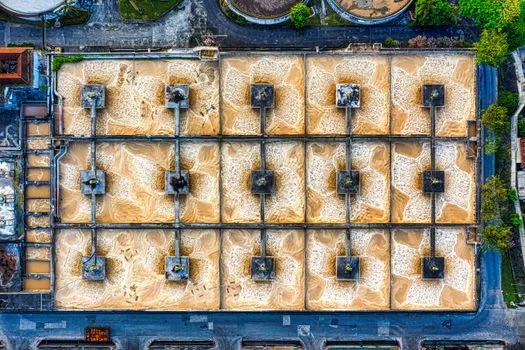
Primary treatment starts with fine screening at 1–5 mm bar spacing to catch surgical debris, then grit removal and equalization. Equalization damps laundry and ward-cleaning peaks. Retention of 6–12 hours is common on hospital sites, while recent EPR-aligned design notes often target about 6–8 hours HRT for flow smoothing (Spans Envirotech hospital STP design summary, 2026).
Secondary treatment uses biological oxidation. An MBR system for hospital wastewater with 99% pathogen removal typically holds MLSS at 3–5 g/L with HRT of 8–24 hours and membrane flux around 15–25 LMH. The membrane barrier removes bacteria that clarifiers miss. Where organic load is moderate but chemical spikes are high, a Medical & Hospital Wastewater Treatment System with ozone polishing can break down stubborn PhACs before discharge.
Tertiary polishing finishes disinfection. A chlorine dioxide generator for hospital effluent disinfection is often dosed at 1–3 mg/L with at least 30 minutes contact time. Hospital sludge is managed as hazardous waste: dewater on a filter press to about 20–30% solids, then send cake to authorized secured landfills under CPCB Hazardous Waste Rules.
| Treatment Stage | Equipment/Process | Engineering Specification | Expected Removal |
|---|---|---|---|
| Pre-Treatment | Fine Screen + Equalization | 1-5mm mesh; 8hr HRT | 30% TSS, 10% BOD |
| Biological | MBR (Membrane Bioreactor) | Flux: 15-25 LMH; MLSS: 5g/L | 98% BOD, 95% COD |
| Disinfection | Chlorine Dioxide (ClO₂) | Dose: 2 mg/L; Contact: 30 min | 99.9% Pathogens |
| Sludge Handling | Plate & Frame Filter Press | Pressure: 7-10 bar | Dry cake (30% solids) |
Technology Comparison: MBR vs. DAF vs. Chlorine Dioxide for Hospital Effluent
Membrane bioreactors suit dense urban campuses in Mumbai and Delhi because they need about 60% less land than conventional STPs. MBR effluent often reaches COD below 30 mg/L at the plant outlet, though membranes need chemical cleaning and typical module replacement every 5–7 years.
Dissolved air flotation fits kitchens, laundry FOG, and dental or orthopedic solids. DAF can remove 90–95% of TSS when micro-bubbles float floc to a skimmer. CAPEX for a 100 m³/day DAF skid is often ₹15L–₹25L versus ₹30L–₹50L for MBR, but coagulant and flocculant dosing raises chemical OPEX and operator load.
Chlorine dioxide has replaced bulk liquid chlorine on many new hospital designs because it attacks antibiotic-resistant bacteria without forming the same trihalomethane load. While UV disinfection alternatives for hospital wastewater avoid chemical residual, high turbidity can cut UV dose delivery, so ClO₂ remains the more forgiving choice when solids spikes are frequent. Compact campuses that need a packaged biological-plus-oxidation train often specify the same medical wastewater system used for PhAC polishing upstream of discharge.
| Technology | Primary Benefit | CAPEX (100 m³/day) | Footprint Requirement |
|---|---|---|---|
| MBR | Highest water quality/Reuse | ₹30L – ₹50L | Very Low (0.5 m²/m³) |
| DAF | FOG & Metal Removal | ₹15L – ₹25L | Medium (1.2 m²/m³) |
| ClO₂ Generator | Pathogen & ARB Neutralization | ₹5L – ₹10L | Minimal (Skid-mounted) |
| MBBR | Ease of operation | ₹20L – ₹35L | High (1.8 m²/m³) |
Cost Benchmarks for Hospital Wastewater Plants (2026)
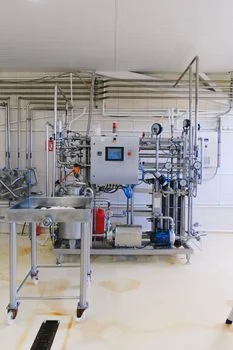
Small hospitals (50–100 beds) usually budget ₹5L–₹15L for a basic compliant package. Medium campuses (100–300 beds) land near ₹15L–₹30L, while large tertiary sites (300+ beds) often exceed ₹50L for automated MBR trains. Those figures cover process equipment, pumps, and panels; civil works sit outside the range.
OPEX is dominated by power and chemicals. MBR air scour typically drives ₹0.5–₹2 per m³ treated; DAF can run ₹0.3–₹1 per m³ when coagulant prices are stable. Reuse for HVAC towers and garden irrigation can offset ₹10–₹20 per m³ versus municipal makeup water, and avoiding a single ₹5 lakh CPCB fine can pay for a disinfection skid in one enforcement cycle.
| Hospital Scale | Daily Flow (m³) | Estimated CAPEX | Monthly OPEX (Est.) |
|---|---|---|---|
| Small (50-100 beds) | 25–50 | ₹5L – ₹15L | ₹15,000 – ₹25,000 |
| Medium (100-300 beds) | 50–150 | ₹15L – ₹30L | ₹30,000 – ₹60,000 |
| Large (300+ beds) | 150–500 | ₹30L – ₹65L | ₹70,000 – ₹1,50,000 |
Do municipal water boards require net-zero equipment upgrades?
Municipal water boards in India do not apply a uniform “net-zero equipment upgrade” mandate to every hospital STP under CPCB hospital effluent rules. Boards and SPCBs do push metering, leakage control, and treated-water reuse where city water is scarce. Designing for flush and garden reuse with MBR-quality effluent is the practical upgrade path most urban hospitals take when municipal tariffs rise.
As of mid-2026, CPCB still has not issued a formal numeric discharge limit for antibiotic-resistant organisms in hospital effluent, even though monitoring studies continue (Spans Envirotech summary of CPCB AMR status, June 2026). Future-proof trains therefore add reliable disinfection now, rather than waiting for a net-zero label on the nameplate.
Does sulfide precipitation treat arsenic in hospital wastewater?
Sulfide precipitation for arsenic is an industrial metals-treatment tool, not the default hospital wastewater path. Most Indian hospital loads are organics, pathogens, and PhACs; arsenic spikes are uncommon unless a specific lab or industrial affiliate discharges into the same drain. When arsenic appears above consent limits, isolate that sidestream and treat it chemically before it dilutes the main biological plant.
Equipment Selection Checklist for Compliant Hospital Plants
Start with a lab characterization of raw influent (typically ₹10K–₹50K) covering COD, TSS, and indicator pathogens. Off-the-shelf packages fail within months when disinfectant shocks or FOG were never measured. State-level nuances matter; a regional compliance guide for hospital wastewater in Chhattisgarh shows how SPCB consent language can differ from a national summary table.
Match technology to the discharge route next. Flush and garden reuse usually needs MBR-grade solids and coliform control. Size for the 8:00–13:00 peak, not the daily average, or biomass washes out. Score vendors on healthcare references, transparent membrane or chemical OPEX, and local service cover for monthly CIP.
| Selection Criteria | Weightage | Red Flags |
|---|---|---|
| Compliance Track Record | 40% | No references in the healthcare sector |
| Process Engineering Depth | 30% | One-size-fits-all approach without influent testing |
| OPEX Transparency | 20% | Unclear membrane replacement or chemical costs |
| After-Sales Support | 10% | No local service presence or AMC options |
Who this is for / Next step
This guide is for plant engineers, facility managers, and EPC teams specifying on-site treatment for Indian hospitals from about 50 beds upward. Look elsewhere if you only need municipal sewage connections with no healthcare-specific consent, or if your sole stream is solid biomedical waste routed to a CBWTF. For a sized flowsheet and budget band against your lab data, request a hospital wastewater treatment quote with bed count, discharge route, and recent influent COD.
Frequently Asked Questions
What are the penalties for non-compliant hospital wastewater in India?
Fines commonly range from ₹50,000 to ₹5 lakh per recorded non-compliance event. Under the Environment Protection Act framework, repeat breaches can trigger withdrawal of Consent to Operate, temporary shutdowns, and personal liability for responsible directors (per CPCB 2023 guidelines). Budgeting a reliable disinfection and monitoring package is usually cheaper than one enforcement cycle on a large campus.
Can hospital wastewater be treated only in municipal STPs?
No. Hospital effluent carries PhACs and antibiotic-resistant bacteria that municipal STPs are not designed to remove to healthcare consent levels. Sending untreated hospital drains into municipal sewers breaches CPCB/SPCB norms and can seed resistance into community waterways. On-site pretreatment or a dedicated hospital STP remains the compliant default for bedded facilities.
What disinfection method works best against antibiotic-resistant bacteria?
Chlorine dioxide at 1–3 mg/L or ozone at 2–5 mg/L are the workhorse options, with reported 99.9% kill rates on resistant strains when contact time and dose are controlled. Standalone UV often underperforms when turbidity is high unless paired with strong solids removal or advanced oxidation (per WHO 2024 guidelines). Pick the oxidant after measuring transmittance and residual limits in your consent.
How much space does a hospital wastewater plant need?
MBR packages are the most compact option, typically about 0.5–1 m² per m³/day of design capacity. MBBR or conventional activated sludge often need 1.5–2 m² per m³/day once clarifiers and sludge areas are included. Where plot area is zero at grade, underground integrated tanks are used, provided access for membrane or blower service remains clear.
What maintenance does an MBR hospital plant require?
Plan monthly chemical clean-in-place, quarterly membrane integrity checks, and routine blower inspection. Membrane modules are commonly replaced every 5–7 years when fine screening and equalization stay online. Skipping pre-treatment is the fastest way to foul membranes and erase the compliance margin the barrier was bought to provide.