What Makes Coal Chemical Effluent a Treatment Challenge in 2026
Coal chemical wastewater carries a pollutant mix that municipal activated sludge was never designed to handle, and that is why dedicated coking and gasification effluent trains are standard practice in 2026. Typical influent from a Chinese coking plant runs COD 1,500–5,000 mg/L, NH3-N 200–800 mg/L, total phenols 200–1,500 mg/L, total cyanide 10–100 mg/L, thiocyanate 100–500 mg/L, and pH 8–10, with TDS 3,000–15,000 mg/L where gasification scrubbers feed the same equalization tank (industry engineering benchmarks; specific site values depend on coal type and process). Phenols and cyanide are the binding constraints: free cyanide above 0.5 mg/L inhibits Nitrosomonas activity by roughly 50%, and monohydric phenols above 50 mg/L collapse nitrification within hours, which is the engineering reason that a stripping or chemical-oxidation step always sits upstream of the biological reactors.
Shock loading is the second constraint, and it is unique to coal-to-liquids and coal-to-methanol operations. Evaporator condensates and gas-wash wastewater can push NH3-N above 1,500 mg/L for several hours when a distillation column cycles, and the equalization basin must be sized to absorb that pulse before it reaches the aeration tank. A third driver is salinity: Inner Mongolia, Shaanxi, and Xinjiang coal chemical hubs now default to zero-liquid-discharge configurations because groundwater drawdown in the Yellow River basin and the Junggar basin makes any brine disposal politically infeasible. A 2026 spec for a coal chemical effluent treatment plant therefore has to satisfy three constraints at once — phenols/cyanide toxicity, ammonia shock, and saline brine — which no single unit operation can do alone.
2026 Effluent Discharge Standards: GB 21522-2008 and Sector Updates
The compliance envelope for any 2026 bid is the GB 21522-2008 emission standard for the coking and coal gasification sector, supplemented by GB 8978-1996 amendment packages issued through 2024–2025 that removed legacy grandfathering for older coking plants. The full parameter set a designer works against is consolidated below.
| Parameter | GB 21522-2008 limit (mg/L, except pH) | Notes for 2026 spec |
|---|---|---|
| pH | 6–9 | Online pH meter on equalization outlet |
| COD | ≤200 | Some provincial interpretations require ≤150 in reuse loops |
| BOD5 | ≤100 | Rarely a binding parameter for coking plants |
| Suspended solids (SS) | ≤70 | MBR effluent typically runs <10 |
| NH3-N | ≤40 | ≤25 in Shanxi/Shaanxi Yellow River basin tributaries |
| Total nitrogen (TN) | ≤60 | ≤40 in some provincial interpretations |
| Total phosphorus (TP) | ≤3 | Driven by chemical dosing for phosphorus removal |
| Total phenols | ≤0.5 | Stripping + A2/O + Fenton typically reaches <0.3 |
| Total cyanide | ≤0.2 | Chlorination or Fenton oxidation is most common polish |
| Petroleum oils | ≤10 | DAF outlet typically <30 pre-biology, <5 post-MBR |
For new builds in 2026, the practical target is direct reuse to GB/T 19923-2005 reclaimed water limits (COD ≤30 mg/L, NH3-N ≤10 mg/L, conductivity ≤1,000 µS/cm) for cooling tower makeup, which adds an RO stage to the train. The 2024–2025 GB 8978 amendment package closed the legacy loophole that allowed plants built before 2012 to keep discharging to the older COD 500 / NH3-N 75 envelope, so any retrofit spec written now must be designed against the GB 21522 column above, not the old number.
Standard 7-Stage Process Flow for a Coal Chemical Effluent Treatment Plant
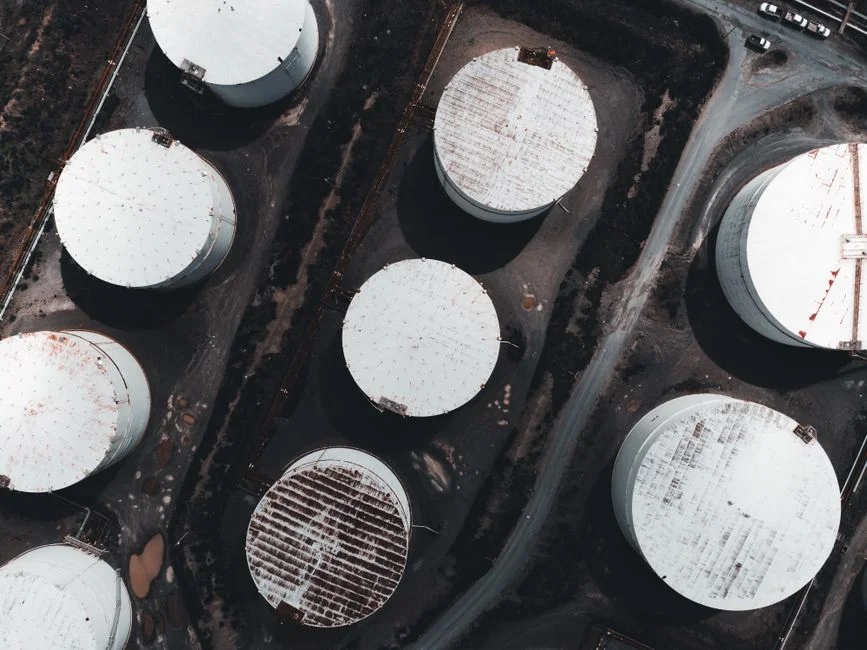
The reference train that meets the table above in 2026 is a 7-stage flow. Each stage has a defensible removal efficiency and a defined equipment boundary, which is what makes the train reproducible in a bid package.
- Equalization and oil/water separation. Mechanical bar screen at 6–10 mm aperture feeds a DAF unit, with polyaluminum chloride dosed at 30–50 mg/L to break tar and emulsified oil emulsions. A dissolved air flotation system in the 4–300 m³/h capacity range typically takes tars and oils down to ≤30 mg/L before the water enters the stripper.
- Ammonia and phenol stripping. Steam-heated stripper at pH 10.5–11.5 and 95–105 °C removes 80–90% of free ammonia and 30–50% of volatile phenols, recovering the ammonia as 18–20% ammonium sulfate byproduct. This stage is what makes downstream nitrification feasible; without it, free NH3 in the aeration tank stays above 100 mg/L and Nitrosomonas never establishes.
- Biological treatment (A2/O preferred). Anaerobic → anoxic → aerobic configuration with aerobic HRT 24–48 h, MLSS 3,500–5,000 mg/L, DO 2–4 mg/L, and F/M 0.08–0.15 kg BOD/kg MLSS·d. A2/O outperforms straight A/O on TN because the anoxic zone recycles nitrate from the aerobic effluent back through the denitrification loop, which is how the 60 mg/L TN limit is met without methanol dosing.
- MBR membrane polishing. Submerged PVDF flat-sheet membranes at 0.1 µm pore size, operating flux 12–18 LMH, vacuum 5–25 kPa, with mixed liquor sustained at 8,000–12,000 mg/L. The integrated MBR membrane bioreactor configuration delivers a 60% footprint reduction versus conventional secondary clarification because it eliminates the clarifier and the sludge recycle return line, and the membrane barrier decouples hydraulic retention from solids retention, which is exactly the property needed to absorb ammonia shocks.
- Advanced oxidation. Fenton (H2O2 0.5–1.5× COD, Fe²⁺ 0.05–0.2× COD, pH 3–4, 60–120 min reaction) is preferred when CAPEX dominates the bid and achieves 40–60% COD reduction on the recalcitrant fraction. Ozone at 50–200 mg O3/L dose over 30–60 min is preferred when OPEX dominates and the plant also needs decolorization. Either route is sized to drop residual COD to ≤80 mg/L ahead of the carbon stage.
- Sand filter and activated carbon. A multi-media filter polishes turbidity to ≤1 NTU ahead of RO, and downstream activated carbon absorbs residual COD and color that the Fenton or ozone step leaves behind.
- Reverse osmosis and ZLD. An industrial RO system at 70–75% recovery (single pass) or up to 95% (two-pass with brine recirculation) produces reuse-quality permeate. Concentrate goes to a mechanical vapor recompression evaporator plus crystallizer for ZLD sites, where the salt cake is sent to a licensed HW48 disposal or co-processed in a cement kiln.
The whole train is sized as a single mass balance: if the influent phenol load is at the upper end of the 1,500 mg/L band, the stripper must be sized for 50% removal rather than 30%, and the Fenton dose must move from 1.0× COD to 1.5× COD to keep the carbon stage from breaking through.
Comparing Biological and Membrane Options for the Main Treatment Stage
The single most consequential equipment decision in a coal chemical bid is the choice of biological reactor plus solids separation. The matrix below compares the four credible options on removal efficiency, footprint, and CAPEX/OPEX index (1.0 = A2/O+MBR baseline).
| Option | COD removal | NH3-N removal | TN removal | Footprint (m² per 1,000 m³/d) | Shock-load tolerance | CAPEX index | OPEX index |
|---|---|---|---|---|---|---|---|
| Conventional activated sludge + clarifier | 70–85% | 60–80% | 30–50% | 180–240 | Low | 0.85 | 0.90 |
| SBR (sequencing batch reactor) | 80–90% | 85–95% | 50–65% | 120–160 | Moderate | 0.95 | 0.95 |
| IFAS (hybrid biofilm + activated sludge) | 85–92% | 90–96% | 60–75% | 90–130 | High | 1.05 | 1.00 |
| A2/O + MBR (flat-sheet PVDF) | 90–96% | 95–99% | 70–85% | 70–110 | High | 1.00 | 1.00 |
A2/O+MBR is the 2026 default for new coal chemical plants because it delivers the highest combined TN and COD removal in the smallest footprint and tolerates the cyclic loading that coking operations generate. For legacy plants that cannot expand civil works, IFAS is a defensible retrofit — the biofilm carriers are added directly to the existing aeration tank, and the gain in nitrification capacity typically avoids the need for a new basin. The IFAS path is detailed in the IFAS hybrid reactor guide. The trade-off the engineer has to flag in the spec is sludge character: MBR mixed liquor at 8,000–12,000 mg/L MLSS is noticeably harder to dewater than conventional activated sludge at 3,000–4,000 mg/L, which is why the next section covers sludge handling as a separate line item rather than a footnote.
Sludge Handling and Chemical Dosing Auxiliaries

Coal chemical wastewater produces 30–50 g of dry solids per m³ treated, almost all of it biological waste from the A2/O and MBR stages. A plate and frame filter press at 0.6–0.8 MPa filtration pressure and 1–500 m² filtration area will drop biological sludge to ≤60% cake moisture in a PLC-controlled automatic cycle, which is the moisture band that lets the cake be trucked to a licensed HW48 disposal site or co-processed in a cement kiln. Chemical conditioning is non-negotiable: an automatic chemical dosing skid preparing polyaluminum chloride at 30–50 mg/L plus PAM flocculant at 3–10 mg/L is the standard pre-treatment ahead of the press, and the skid is delivered fully pre-wired and skidded for fast installation.
Two design notes that often get missed: the filter press must be sized for the higher MBR sludge volume, not the lower conventional activated sludge volume, otherwise cake moisture creeps above 65% and the cake will not pass HW48 acceptance criteria; and the cyanide residue in coal chemical sludge is high enough that it must be classified as HW48 hazardous waste in China, which means landfill is not an option and the bid must include either a licensed disposal contract or a cement-kiln co-processing agreement.
2026 CAPEX and OPEX Envelope by Plant Capacity
Procurement managers need a defensible budget band they can take into a board meeting before the bid analysis, not a quote. The ranges below are engineering estimates for a 7-stage coal chemical effluent treatment plant on a greenfield site, excluding land cost and excluding concentrate disposal contracts. Currency is USD per m³/day of treatment capacity for CAPEX, and USD per m³ of treated water for OPEX.
| Plant capacity | CAPEX (USD/m³/d, no ZLD) | CAPEX with ZLD (+25–40%) | OPEX (USD/m³, biology + MBR + Fenton) |
|---|---|---|---|
| ≤1,000 m³/d | 1,200–1,800 | 1,500–2,500 | 0.55–0.85 |
| 1,000–5,000 m³/d | 900–1,400 | 1,150–1,950 | 0.45–0.70 |
| ≥5,000 m³/d | 700–1,100 | 900–1,550 | 0.40–0.60 |
OPEX is dominated by electricity at 0.15–0.30 USD/m³ (the MBR aeration and recirculation pumps are the largest single load) and Fenton H2O2 at 0.10–0.20 USD/m³, with PAM and PAC adding another 0.03–0.06 USD/m³. ZLD adds 1.20–2.50 USD/m³ from evaporator steam and crystallizer salt disposal, which is why the ZLD decision should be driven by water-scarcity pricing, not by a generic environmental target. A fully automated plant with online COD/NH3-N analyzers and AI-driven aeration control cuts OPEX by 12–18% versus manually operated plants — the AI process control guide covers the architecture, and the 2026 OPEX breakdown covers the line-item math. For a deeper read on how those Fenton costs are bounded, the chemical wastewater COD removal guide walks through the dose-response curve.
5-Criterion Supplier Evaluation Framework
Technical content is only useful if it converts into a procurement action. The five criteria below can be pasted directly into an RFP for a 2026 coal chemical effluent treatment plant, and each maps to a specific deliverable the bidder must produce.
- Coal chemical reference plants. Minimum 3 operating coking or CTL references in the last 5 years, with plant name, capacity, influent/effluent quality, and discharge test reports available for a buyer site visit. Generic municipal references do not count.
- Equipment integration. The supplier must own or directly integrate the bar screen, DAF, biological, MBR, advanced oxidation, RO, and evaporation stages. Multi-vendor interfaces are the single largest source of post-handover downtime in coal chemical plants, and the spec must reject them up front.
- COD and ammonia shock-load resilience. The performance warranty must cover NH3-N peaks to 1,500 mg/L for at least 4 hours, with full biological recovery to the GB 21522 envelope within 24 hours. The bidder must produce a dynamic simulation or operating data to back this claim.
- Compliance documentation. Within 2 weeks of contract award, the bidder must deliver a P&ID, mass balance, electrical load list, and HAZOP. If the supplier cannot commit to that timeline, their engineering capacity is too thin to deliver the plant.
- Local service. A regional engineering and spare-parts depot within 300 km of the plant site, with a 24-hour response SLA for biological stage upsets. CTL plants in Inner Mongolia cannot wait 48 hours for a service engineer to fly in from the coast.
Frequently Asked Questions
What COD and ammonia levels can a coal chemical effluent treatment plant achieve in 2026? The GB 21522-2008 envelope of COD ≤200 mg/L and NH3-N ≤40 mg/L is the discharge floor; an A2/O + MBR + Fenton + RO train typically delivers COD ≤80 mg/L, NH3-N ≤5 mg/L, and total phenols ≤0.3 mg/L at the biological effluent, with the RO permeate running COD ≤30 mg/L for cooling-tower reuse.
Why is MBR preferred over conventional secondary clarification for coal chemical wastewater? MBR decouples hydraulic retention time from sludge retention time, which lets the operator sustain MLSS at 8,000–12,000 mg/L. The higher biomass absorbs ammonia shock loads that would wash a conventional clarifier out, and the 0.1 µm membrane barrier removes suspended solids and most colloids in one step, eliminating the need for a polishing clarifier.
Is zero-liquid-discharge (ZLD) mandatory for new coal chemical plants? ZLD is the regulatory default in Inner Mongolia, Shaanxi, and Xinjiang because of Yellow River basin and Junggar basin groundwater concerns, and provincial EIA reviewers now require MVR evaporator + crystallizer packages for new CTL and coal-to-methanol builds. Plants in lower-stress basins may discharge brine under permit, but the 2026 trend is firmly toward ZLD even where it is not strictly mandated.
How much does a 5,000 m³/d coal chemical wastewater plant cost in 2026? CAPEX is in the band of 900–1,400 USD per m³/d without ZLD, or 1,150–1,950 USD per m³/d with ZLD, giving a total installed cost of roughly 4.5–7.0 million USD for the non-ZLD case and 5.75–9.75 million USD with ZLD. OPEX runs 0.45–0.70 USD/m³ for the biological + MBR + Fenton core, with ZLD adding 1.20–2.50 USD/m³ for steam and salt disposal.